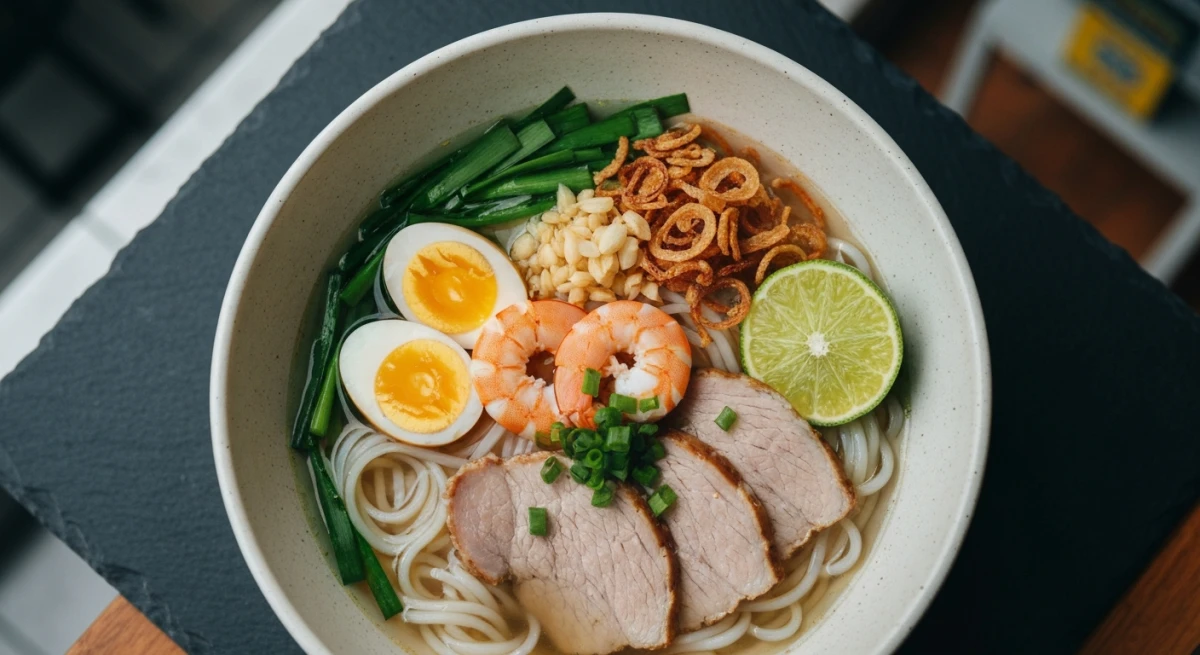
As dusk falls over the energetic streets of Saigon, a sensory symphony begins to play. Amidst the hum of thousands of motorbikes, a distinct, intoxicating aroma rises from roadside stalls and hidden alleyways. It is the unmistakable scent of bruised lemongrass simmered for hours, sweet beef bones, and the pungent, savory undertone of fermented shrimp paste. This is the scent of Bún Bò Huế—Vietnam's most complex, fiery, and deeply comforting noodle soup.
While Phở has long claimed the global spotlight as Vietnam's culinary ambassador, many local food lovers and adventurous travelers will tell you that Bún Bò Huế is the true king of the Vietnamese noodle pantheon. Originating from the royal city of Huế in Central Vietnam, this dish has found a second home in the southern metropolis. In Ho Chi Minh City, local chefs have adapted, elevated, and perfected this imperial masterpiece, creating a vibrant culinary subculture.
Finding the absolute best bun bo hue in ho chi minh requires stepping off the main tourist drags and venturing into the labyrinthine residential alleys where multi-generational family recipes are closely guarded. Whether you are seeking a refined, clean broth sweetened with rock sugar or a robust, oil-slicked bowl loaded with pig's trotters and floating beef fat, this comprehensive guide will take you on a culinary journey to discover the legendary spots that define the best bun bo hue in ho chi minh.
Decoding the Masterpiece: Anatomy of a Perfect Bowl
To appreciate what makes a bowl of Bún Bò Huế truly outstanding, one must understand the delicate balance of flavors and textures that compose this legendary dish. Unlike Phở, which relies on a clear, lightly spiced aromatic broth, Bún Bò Huế is an uncompromising explosion of taste. Let's break down the anatomy of this imperial soup:
The Broth
The soul of Bún Bò Huế lies entirely within its rich, mahogany-hued broth. A masterpiece of slow-cooking, the broth is prepared by simmering massive quantities of beef shinbones, pork leg bones, and beef knuckles for at least six to eight hours. The defining flavor profile comes from two indispensable ingredients: fresh lemongrass and mắm ruốc (fermented Huế shrimp paste). Lemongrass stalks are bruised to release their citrusy, herbaceous oils, while the mắm ruốc is diluted and carefully added to infuse the soup with a deep, earthy umami base. The trademark red color and spicy kick come from a layer of oil infused with annatto seeds, dried chili flakes, and sautéed shallots.
The Noodles
While Phở uses flat, delicate rice sticks, Bún Bò Huế features thick, cylindrical rice vermicelli (bún). These noodles are noticeably thicker than standard rice noodles, offering a dense, slippery, and satisfyingly chewy texture. Their robust structure is designed to hold up against the bold flavors of the spicy beef broth without absorbing too much liquid or turning mushy.
The Proteins
A classic bowl of Bún Bò Huế is a meat-lover's dream, featuring an array of traditional toppings that represent different textures and cuts:
- Nạm (Beef Flank/Brisket): Thinly sliced, tender beef with ribbons of fat that melt in the mouth.
- Tái (Rare Beef): Slices of tender beef sirloin cooked gently by the piping hot broth just before serving.
- Gân (Beef Tendon): Simmered until gelatinous, offering a chewy, melt-in-your-mouth texture.
- Giò Heo (Pork Knuckle): A large, bone-in segment of pork leg, slow-cooked until the skin is soft and the meat pulls away effortlessly.
- Chả Cua (Crab Meatballs): Ground pork and crab meat mixed with spices, shaped into fluffy, savory balls.
- Huyết (Congealed Pig's Blood): Dark, maroon cubes with a silky, jelly-like texture that absorb the savory broth.
The Essential Herbs
No bowl of Bún Bò Huế is complete without its accompanying plate of fresh herbs. This mountain of green provides a refreshing contrast to the rich, spicy broth. It typically features shredded banana blossom (bắp chuối), which adds a crunchy, slightly astringent texture; split water spinach (rau muống chẻ); fresh bean sprouts; lime wedges; and aromatic herbs like Thai basil and mint.
Sài Gòn Style vs. Authentic Central Style
As Bún Bò Huế migrated 1,000 kilometers south from the imperial capital of Huế to the bustling streets of Saigon, it underwent an evolutionary transformation. Today, diners in Ho Chi Minh City can choose between two distinct culinary philosophies: traditional, authentic Central style and the modified Sài Gòn style.
Authentic Central Style
Traditionalists argue that true Huế-style Bún Bò should be aggressively savory, intensely aromatic, and unapologetically pungent. The broth is thinner but possesses a sharper, saltier flavor profile driven heavily by a generous hand of mắm ruốc. It is baseline spicy—often featuring a deep layer of fiery chili oil that sets your lips tingling from the very first sip. The noodles are sometimes slightly thinner, and the herb plate is modest, focusing heavily on raw scallions, cilantro, and raw banana flower.
The Sài Gòn Adaptation
In contrast, the Sài Gòn adaptation caters to the southern Vietnamese palate, which traditionally favors sweeter, milder, and more balanced flavors. To achieve this, Southern cooks often simmer the broth with rock sugar and pork bones, giving it a rounder, sweeter finish that tames the sharp pungency of the fermented shrimp paste. Furthermore, the Southern version is served with a veritable forest of fresh, raw vegetables and herbs, allowing diners to dilute the richness of the soup to their liking. Sài Gòn-style bowls also tend to feature a wider variety of processed meats, such as various types of chả (Vietnamese sausages) and larger cuts of meat.
The Definitive List: Where to Find the Best Bún Bò Huế in Ho Chi Minh City
If you want to experience the absolute peak of this iconic dish, here are the six legendary establishments that serve the best bun bo hue in ho chi minh.
1. Bún Bò Huế Mỡ Nổi Cô Như (District 3)
- Address: 274/29 Vo Van Tan Street, Ban Co Ward, District 3, Ho Chi Minh City
- Opening Hours: 11:00 AM – 8:00 PM
- Price Range: ~45,000 VND
Hidden deep within a labyrinthine residential alley in District 3, Bún Bò Huế Mỡ Nổi Cô Như is a legendary local gem that caught the attention of the Michelin Guide as a selected establishment. What makes this spot incredibly unique—and a cult favorite among Saigon's most dedicated foodies—is its signature mỡ nổi (floating beef fat).
When you order a bowl here, you can request a serving of mỡ nổi directly in your soup or in a small bowl on the side. These are glistening, rich, and deeply savory chunks of slow-rendered beef fat that have absorbed the lemongrass and chili flavors of the broth. When eaten, they dissolve instantly on the tongue, unleashing a wave of velvety, luxurious flavor. Even without the fat, Cô Như's broth is a masterpiece. It leans toward the comforting, sweeter Southern style but maintains a brilliant depth of flavor from hours of bone-simmering. Be prepared for a bustling, authentic street food atmosphere where you will sit on low plastic stools alongside locals.
2. Bún Bò Huế 14B (District 4)
- Address: 14B Street 46, Vinh Hoi Ward, District 4, Ho Chi Minh City
- Opening Hours: 6:00 AM – 8:00 PM
- Price Range: ~45,000 – 65,000 VND
Awarded a prestigious Michelin Bib Gourmand, Bún Bò Huế 14B is a tiny, unassuming stall in District 4 that operates primarily as a takeout joint, though a few metal tables are set up along the narrow street for those who want to eat on the spot. Do not let its humble appearance fool you; this stall serves one of the most concentrated and deeply flavorful broths in the entire city.
The secret to 14B's success is the sheer volume of bones and aromatics used in their daily brew. The broth is incredibly rich, heavily infused with sweet caramelized onions, roasted garlic, and a massive amount of lemongrass. It has a slightly thicker consistency than most, carrying a robust beefy flavor that lingers on the palate. A standard bowl here is packed to the brim with high-quality toppings, including thick slices of perfectly tender beef tendon, melt-in-your-mouth beef flank, and house-made fish and pork cakes.
3. Bún Bò Huế Ngự Bình (Bình Thạnh District)
- Address: 872 Xo Viet Nghe Tinh, Ward 25, Binh Thanh District, Ho Chi Minh City
- Opening Hours: 10:00 AM – 11:59 PM
- Price Range: ~40,000 – 60,000 VND
For those seeking a taste of authentic Central Vietnam, Bún Bò Huế Ngự Bình is an absolute must-visit. Run by Cô Hương, a native of Huế who migrated to Saigon over 25 years ago, this restaurant is named after Mount Ngự Bình, a famous landmark in her home province.
Unlike many Saigon establishments that rely heavily on artificial seasonings, Ngự Bình prides itself on a clean, pure broth (nước lèo trong). Cô Hương slow-simmers over 15 kilograms of beef and pork bones for seven hours every day, clarifying the liquid repeatedly to ensure it remains beautifully transparent yet packed with deep, natural sweetness. Instead of regular sugar, she uses rock sugar (đường phèn) to achieve a subtle, non-cloying sweet finish. Another major draw here is the house-made chả lụa (Vietnamese pork sausage), which is incredibly bouncy, meaty, and flavorful. Combined with tender beef shank and a perfectly cooked pork knuckle, this bowl is a masterclass in culinary craftsmanship.
4. Bún Bò Huế Hạnh (Tân Bình District)
- Address: 135 Banh Van Tran, Ward 7, Tan Binh District, Ho Chi Minh City
- Opening Hours: 6:00 AM – 1:15 PM, 4:00 PM – 9:00 PM
- Price Range: ~55,000 VND
Operating for over three decades, Bún Bò Huế Hạnh is a beloved neighborhood institution in Tân Bình District. Run by a family with deep roots in Huế, this local eatery has captured the hearts of multiple generations of diners by refusing to compromise on traditional techniques.
What sets Hạnh apart is the flawless balance of its broth. It is savory and robust, carrying a pronounced lemongrass aroma and a solid baseline of satay spice that slowly builds as you eat. The satay chili oil used here is made fresh daily, offering a bright, fruity heat rather than a dull, burning spice. The portions at Hạnh are notably generous. A standard bowl comes loaded with tender sliced beef, a substantial chunk of gelatinous beef tendon, a perfectly textured piece of huyết, and a giant, fluffy crab meatball (chả cua) that is delightfully light and savory.
5. Bún Bò Đông Ba (District 1)
- Address: 207B Nguyen Van Thu, Da Kao Ward, District 1, Ho Chi Minh City
- Opening Hours: 7:00 AM – 9:00 PM
- Price Range: ~65,000 – 85,000 VND
Conveniently located in the heart of District 1, Bún Bò Đông Ba is one of the most famous and accessible spots for travelers looking to experience high-quality Bún Bò Huế. Named after the historic Đông Ba Market in Huế, this long-standing establishment bridges the gap between traditional Central flavors and the accessibility required for international visitors.
The broth at Đông Ba is rich, deeply aromatic, and carries a distinct, fragrant punch of lemongrass and authentic Huế shrimp paste. It is slightly more expensive than street-side stalls, but the premium pricing is fully reflected in the quality and cleanliness of the ingredients. The beef cuts used here are premium, featuring beautifully marbled flank and perfectly cleaned beef shank. Their crab balls are incredibly flavorful, packed with real crab meat and seasoned to perfection. The dining environment is clean, spacious, and fan-cooled, making it an excellent, low-stress entry point.
6. Bún Bò Huế 31 (District 1)
- Address: 31 Mac Dinh Chi, Da Kao Ward, District 1, Ho Chi Minh City
- Opening Hours: 6:00 AM – 10:00 PM
- Price Range: ~50,000 – 75,000 VND
A legendary lunchtime destination for local office workers, Bún Bò Huế 31 is located on Mạc Đĩnh Chi street in District 1. If you visit this spot during the peak lunch hours (11:30 AM to 1:30 PM), you will find it packed to capacity with locals slurping down bowls of steaming noodles in a high-energy, fast-paced environment.
Bún Bò Huế 31 is famous for serving a highly consistent, classic Sài Gòn-style bowl. The broth is rich, intensely savory, and slightly sweet, with a beautiful layer of red annatto oil floating on top. The toppings are exceptionally fresh, and they are particularly famous for their tái (rare beef), which is sliced incredibly thin and added raw to the bowl, cooking instantly in the piping hot soup to guarantee maximum tenderness.
How to Eat and Order Bún Bò Huế Like a Local
Sitting down at a bustling street food stall can sometimes feel intimidating for travelers. To help you navigate your dining experience and enjoy your soup to the absolute fullest, follow these local insider tips:
Customizing Your Order
While most places offer a standard "Tô Đặc Biệt" (Special/Combo Bowl) which includes a little bit of everything, you can easily customize your proteins if there are certain ingredients you prefer to avoid. Here are some useful phrases to use or show to the vendor:
- No blood pudding: "Không lấy huyết"
- No pork knuckle: "Không lấy giò"
- Rare beef only: "Chỉ lấy thịt tái"
- Extra noodles: "Thêm bún"
- Extra broth: "Thêm nước lèo"
Dressing Your Bowl
When your steaming bowl of noodles arrives at your table, do not dig in immediately. Part of the magic of Vietnamese dining is customizing the flavor profile to your exact liking using the condiments provided at the table:
- Taste the broth first: Before adding anything, take a spoonful of the pure broth to appreciate the cook's hard work.
- Add lime and chili: Squeeze a wedge of fresh lime into the soup to add a bright acidity that cuts through the rich fat. If you want more heat, add a small spoonful of the house-made chili satay.
- Add the herbs: Grab a handful of the shredded banana blossom, split water spinach, and herbs, and submerge them directly into the hot broth. The heat will wilt them slightly, softening their texture.
- Pickled garlic: Many locals love adding a few slices of pickled white garlic. The sweet-sour-tangy crunch pairs beautifully with the savory beef.
Essential Table Etiquette
- The wet napkins (khăn lạnh): You will often find wrapped wet wipes on your table. Note that these are not free; they usually cost around 2,000 to 5,000 VND each, which will be added to your final bill. If you do not use them, you will not be charged.
- Drinking water: It is common to order a glass of trà đá (iced green tea) to accompany your meal. It is incredibly refreshing, cheap (around 2,000 to 5,000 VND), and acts as a perfect palate cleanser.
- Fried dough sticks (quẩy): Some Southern spots will offer a plate of crispy, golden fried dough sticks on the table. Dipping these crunchy sticks into the spicy, lemongrass-infused broth of Bún Bò Huế is an absolute game-changer. They absorb the soup like a sponge, delivering an explosion of flavor with every bite.
Frequently Asked Questions (FAQ) about Bún Bò Huế
Is Bún Bò Huế spicy?
Yes, Bún Bò Huế has a natural baseline of spice due to the chili oil and dried chili flakes simmered in the broth. However, most restaurants in Ho Chi Minh City cook the broth to a moderate, approachable spice level. If you prefer a fiery bowl, you can easily increase the heat by adding the fresh chili satay and sliced bird's eye chilies available on your table.
What is the dark red, jelly-like block in the soup?
That is huyết, which is congealed pig's (or sometimes beef's) blood. It is a highly traditional ingredient in Vietnamese noodle soups. It has a very mild, slightly salty flavor and a silky, tofu-like texture. It does not taste metallic or strong. If you prefer not to eat it, simply ask for "không lấy huyết" when ordering.
Is Bún Bò Huế gluten-free?
Generally, yes. The noodles used in Bún Bò Huế are made entirely from rice flour and water. The broth is made from slow-simmered bones, lemongrass, herbs, and spices. However, you should exercise caution regarding the chả (Vietnamese sausages), as some commercial varieties may use wheat flour or wheat starch as a binder. If you have severe celiac disease, it is best to stick to fresh beef cuts (tái, nạm) and ask for no sausages.
How does Bún Bò Huế differ from Phở Bò?
While both are Vietnamese beef noodle soups, they are fundamentally different. Phở utilizes flat rice noodles, and its broth is clear, delicate, and spiced gently with star anise, cinnamon, clove, and ginger. Bún Bò Huế utilizes thick, round vermicelli noodles, and its broth is bold, fiery, and defined by a heavy presence of lemongrass, chili, and fermented shrimp paste (mắm ruốc). Bún Bò Huế also features a much wider variety of proteins, including pork knuckle and crab balls.
Can I order Bún Bò Huế without pork?
While the primary meat highlighted in the name is beef (bò), the broth itself is almost always brewed using a combination of both beef and pork bones to achieve a balanced sweetness. Additionally, toppings like chả (sausages), huyết (blood pudding), and giò heo (pork knuckle) are pork-based. If you do not eat pork, you can ask for a beef-only bowl (chỉ lấy thịt bò), but please note that the underlying broth will still contain pork bone extracts.
Conclusion
While Phở may be the darling of global Vietnamese dining, Bún Bò Huế is the soul-stirring, fiery masterpiece that captures the true depth and complexity of Vietnam's street food culture. In Ho Chi Minh City, this imperial soup has been embraced and elevated into an art form. From the luxurious, fat-slicked bowls at Bún Bò Huế Mỡ Nổi Cô Như to the clean, traditional, bone-sweetened broth at Ngự Bình, there is a bowl of Bún Bò Huế in Saigon to satisfy every craving.
When you visit Ho Chi Minh City, do not miss the chance to pull up a low plastic stool, order a piping hot bowl of Bún Bò Huế, dress it with a mountain of fresh herbs and lime, and take a bite of the most flavorful, complex, and satisfying noodle soup Vietnam has to offer. Your culinary journey through Saigon will never be the same again.


