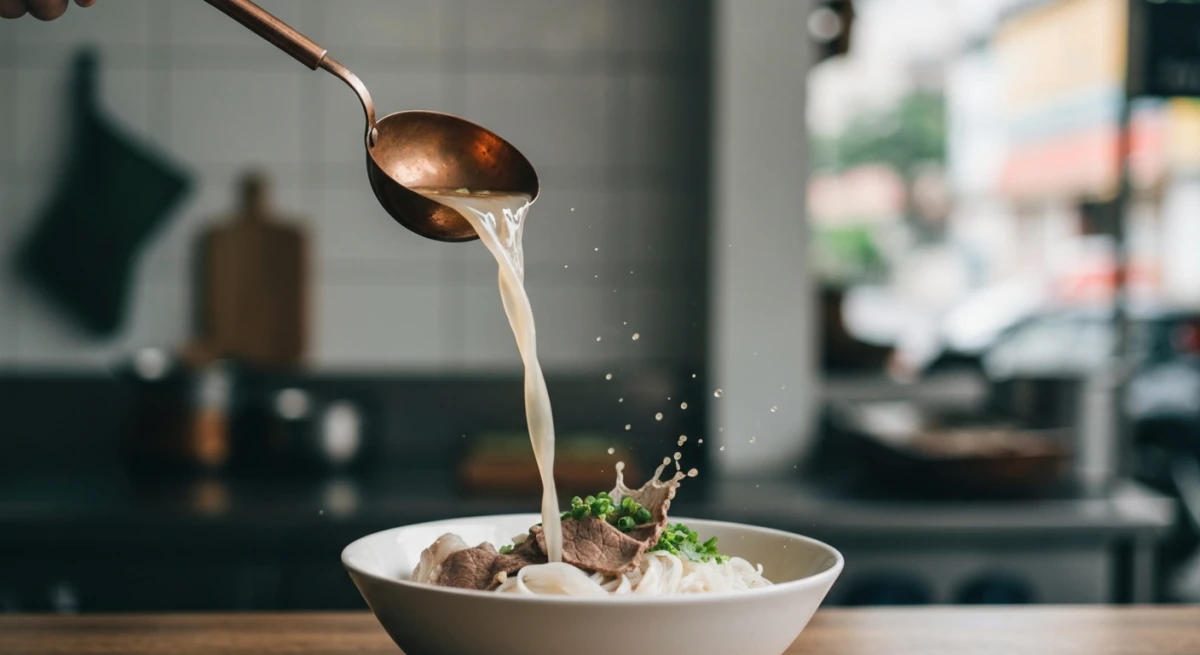
To follow the culinary footprint of Anthony Bourdain in Ho Chi Minh City—the roaring, high-octane southern Vietnamese metropolis still widely known as Saigon—is to discover a city of endless energy, sensory overload, and unmatched street food. Bourdain famously called Vietnam his "first love" and his "place of dreams," returning time and again across his career. If you are planning a trip to retrace his legendary footsteps, this comprehensive guide covers the iconic eateries he visited, from the legendary Lunch Lady to the theatrical flying rice of District 3, showing you exactly where to eat, what to order, and how these spots have evolved today.
Retracing the Steps: Why Anthony Bourdain Fell in Love with Saigon
Bourdain first arrived in Ho Chi Minh City in 2000 while filming the first season of A Cook's Tour. He was a middle-aged chef from New York who had barely traveled outside the Western hemisphere. What he found in Saigon changed the course of his life and career forever. The chaos of millions of motorbikes, the heady aroma of roasting pork, fish sauce, and exhaust fumes, and the warmth of the local people shook him out of his culinary cynicism. "My old life was suddenly never gonna be good enough," he famously wrote.
Over the next fifteen years, across No Reservations and Parts Unknown, Bourdain returned to Vietnam repeatedly, leaving behind a map of culinary landmarks that transformed how the Western world views Vietnamese street food. Retracing his steps in Ho Chi Minh City is not just about eating; it is about embracing his philosophy: to sit on a low plastic stool, look around, and find beauty in the chaos. The city has grown, modernized, and developed a gleaming skyline, but the soul of its street food scene remains exactly as Tony found it.
1. The Lunch Lady: Master of the Daily Rotating Broth
The tiny, open-air stall of Nguyen Thi Thanh, better known to the world as "The Lunch Lady," is located at 23 Hoàng Sa, Phường Đa Kao, District 1. Set along the leafy, murky banks of the Thị Nghè Canal, this humble spot became a global phenomenon after Bourdain visited during the 2009 No Reservations episode "Vietnam: There's No Place Like Home."
What makes the Lunch Lady unique—and what fascinated Bourdain—is her weekly rotating soup schedule. Unlike most Vietnamese street vendors who spend decades perfecting a single dish, Nguyen Thi Thanh cooks a different regional noodle soup every day of the week, ensuring her neighborhood patrons never grow bored. Here is her traditional weekly lineup:
- Monday (Bún Thái): A spicy, sour Thai-inspired broth bursting with shrimp, squid, beef, and lemongrass.
- Tuesday (Bún Mọc / Miến Gà): A comforting, clean pork broth with wood-ear mushroom meatballs or glass noodles with chicken.
- Wednesday (Mì Gà Tiềm / Cà Ri Gà): Rich Chinese-style stewed herbal chicken or a creamy, aromatic Vietnamese chicken curry.
- Thursday (Bún Mắm): A bold, fermented fish-paste noodle soup native to the Mekong Delta, loaded with eggplant, roasted pork, shrimp, and thick rice vermicelli.
- Friday (Bún Bò Huế): The legendary lemongrass-spiced beef and pork noodle soup from central Vietnam.
- Saturday (Bánh Canh Cua): A thick, viscous crab noodle soup featuring tapioca noodles, fresh crab meat, and quail eggs.
When Bourdain pulled up to her stall in a sidecar motorcycle, he slurped down a bowl of her soup, noting that it was like "discovering new neighborhoods every few mouthfuls." Today, her fame has skyrocketed. She has been featured in the Michelin Guide as a Bib Gourmand recommendation, and her legendary recipes have even traveled across the globe to a sister restaurant in Vancouver, Canada. Despite the heavy influx of international tourists and slightly elevated prices (a bowl now costs around 40,000 to 55,000 VND), sitting under her blue tarp on a humid Saigon morning while scooters roar past remains a vital, life-affirming culinary rite of passage.
2. Bánh Xèo 46A: Sizzling Giant Crepes in the Al Fresco Heat
Located in a bustling, narrow alleyway at 46A Đinh Công Tráng, District 1, Bánh Xèo 46A is an absolute institution. Bourdain visited this legendary open-air shop during his 2005 No Reservations run and returned in 2009. Bánh xèo, which literally translates to "sizzling cake," is a giant, crispy Vietnamese crepe made of rice flour, coconut milk, and turmeric, filled with pork belly, whole tiny shrimp, and fresh mung bean sprouts.
The magic of 46A lies in its visceral cooking method. At the front of the restaurant, facing the street, a line of veteran cooks stands over blazing charcoal-fired burners, furiously swishing yellow batter in heavy iron woks. The intense heat of the wood fire gives the crepes an incomparable smoky depth and a shatteringly crisp texture that modern gas stoves can never replicate.
Bourdain loved the raw, unpolished nature of this experience, writing, "I don't want to eat this in a dining room with chairs and a carpet." To eat bánh xèo like a local—and like Tony—you must roll up your sleeves and use your hands. Rip off a piece of the piping-hot crepe, place it onto a broad, bitter mustard leaf or a crisp sheet of lettuce, pack it with fresh herbs like rau răm (Vietnamese coriander), húng quế (Thai basil), mint, and perilla, roll it into a tight bundle, and dip it generously into the sweet, garlicky nước chấm fish sauce. It is a brilliant play of textures and temperatures: the hot, greasy, savory crunch of the pork and shrimp meeting the cold, crisp, aromatic bite of the greens and the sweet-sour zip of the sauce.
3. Cơm Niêu Sài Gòn: The Theater of Smashed Clay Pot Rice
Tucked away in District 3 at 59 Hồ Xuân Hương, Cơm Niêu Sài Gòn offers a completely different kind of culinary drama. Bourdain first dined here with his local fixer and lifelong friend, Linh, during A Cook's Tour in 2002. He was so captivated by the sheer theatricality of the restaurant that he made it a focal point of his 2009 return in No Reservations.
The star of the show here is Cơm Đập (literally meaning "smashed rice"). Long-grain white rice is baked in small, unglazed clay pots over charcoal until a golden, deeply caramelized crust forms on the outer edge. To serve, a waiter cracks the clay pot with a small wooden mallet, shatters the crockery, extracts the pristine disk of crispy rice, and flings it across the dining room—frequently over the heads of ducking diners—to a colleague waiting ten to fifteen feet away with a plate. The hot, crispy rice is then drizzled with a rich scallion oil (mỡ hành) and toasted sesame seeds.
Bourdain wrote that it was "the one place visitors shouldn't miss," praising its home-style southern Vietnamese dishes that accompany the rice. While you watch clay pots fly through the air, make sure to order his favorite accompaniments: Thịt Kho Tàu (melt-in-your-mouth braised pork belly and hard-cooked eggs in coconut water), Cá Kho Tộ (firm catfish caramelized in a sticky, savory black pepper sauce inside a clay pot), and Rau Muống Xào Tỏi (stir-fried water spinach with enough garlic to ward off a legion of vampires). Today, the restaurant has a polished, upscale feel, but the recipe, the theatrical flying rice, and the deep, comforting flavors of southern home cooking remain completely unchanged.
4. Snail Streets and "Nhậu" Culture: True Happiness on a Low Plastic Stool
In Vietnam, eating is rarely just about sustenance; it is a social event, a sensory celebration, and an art form known as Nhậu—the culture of communal drinking, eating, and shouting with friends over ice-cold beer and small, intensely flavorful dishes. And nothing defines the soul of Saigon's Nhậu culture quite like eating sea snails (ốc).
In his 2009 No Reservations episode, Bourdain and his guide Hà headed to District 3's Nguyễn Thượng Hiền Street (often called "Snail Street") to indulge in this local obsession. Sitting on low, brightly colored plastic stools on the pavement, with the headlights of thousands of passing motorbikes illuminating their table, they dined on a feast of various gastropods and shellfish.
Snails in Saigon are prepared in a staggering array of styles. Bourdain's favorites included Ốc Hương (sweet snails) sautéed in a rich, tangy, sticky tamarind glaze (ốc xào me), where you suck the sweet sauce off the shell before extracting the tender meat, and Càng Ghẹ Rang Muối (crab claws tossed in a dry, fiery chili-salt crust). Modern food pilgrims can visit Quán Ốc A Sòi (237-239 Nguyễn Thượng Hiền) or venture to District 4's Vinh Khánh Street to experience this firsthand. Eating snails is an interactive, messy, and deeply satisfying ritual. As Bourdain famously observed, there is a profound happiness in sitting on the street, drinking a cold beer, and slurping something delicious out of a shell while the world spins wildly around you.
5. The Ghostly Footsteps: Gone, Changed, and Modernized Saigon Classics
A city as dynamic and fast-paced as Ho Chi Minh City is bound to change, and several places Bourdain visited over his career have evolved or vanished entirely, leaving behind ghostly footprints that tell the story of a modernizing Vietnam.
- La Bibliothèque (Madame Dai's): During his 2002 A Cook's Tour episode, a formal-suited Bourdain dined at this legendary, book-lined colonial-style restaurant. Owned by Madame Dai, a French-educated lawyer and political figure who defied regimes, the restaurant was a portal to old-world Saigon. Today, Madame Dai has passed away, and the restaurant is closed. It stands as a nostalgic memory of a transitional era in Saigon's history.
- The Cobra Heart (Nhà Hàng Hương Rừng): In A Cook's Tour, Bourdain participated in a traditional, controversial multi-course cobra meal, swallowing a beating snake heart and washing it down with green snake bile and rice wine at a "jungle flavors" restaurant in Saigon. In the years since, Vietnam has significantly strengthened its wildlife protection laws, and mainstream cultural attitudes have shifted away from consuming exotic wildlife. While snake restaurants still exist in remote pockets, legendary city-center spots like Hương Rừng are gone or no longer offer these dishes, reflecting a more conservation-minded, modern culinary landscape.
- The Evolution of Street Food: While some classic spots remain, Ho Chi Minh City's government has periodically cracked down on sidewalk vendors to clear pedestrian walkways. This tension between the raw, chaotic energy of traditional street stalls and the desire for organized, modern development is a defining theme of 21st-century Saigon. Yet, as Bourdain predicted, the culinary soul of the city has refused to be sanitized—it simply shifts down new alleyways, adapting and thriving in the gaps of the concrete jungle.
Essential Practical Tips for Your Bourdain-Inspired Culinary Pilgrimage
If you are planning to follow the Anthony Bourdain Ho Chi Minh City itinerary, keep these practical, battle-tested tips in mind to maximize your experience:
- Embrace the Two-Wheeled Choreography: Saigon is not a pedestrian-friendly city. To truly experience it like Tony, book a vintage Vespa food tour or use ride-hailing apps to travel by scooter. Being part of the flowing torrent of motorbikes is part of the magic.
- Time Your Visits Carefully: The Lunch Lady opens early and her cauldrons of broth are usually empty by 2:00 PM. To avoid disappointment and secure a plastic stool, aim to arrive between 11:00 AM and noon. Bánh Xèo 46A is best visited for an early, atmospheric dinner as the heat of the afternoon begins to break.
- Do Not Fear the Street Food: Many travelers are afraid of getting sick, but street food in Saigon is often fresher than hotel buffets because of the massive daily turnover. Look for places with high local traffic, where you can see the food being cooked fresh over hot coals right in front of you.
- Order Beyond the Familiar: Do not just stick to Phở and Bánh Mì. Saigon's culinary landscape is vast. Try the snail dishes, the caramelized fish in clay pots, and the daily rotating noodle specials. Let your palate be as adventurous as Bourdain's was.
- Learn the Philosophy of the Low Stool: Retracing Bourdain's steps is not about ticking off boxes on an itinerary; it is about an attitude of humility, curiosity, and respect. Sit on the curb, speak with the locals using gestures and smiles, and enjoy the beautiful, chaotic choreography of Saigon life.
Frequently Asked Questions (FAQ)
Is The Lunch Lady still open in Ho Chi Minh City? Yes, Nguyen Thi Thanh (The Lunch Lady) is still actively cooking and running her legendary street stall at 23 Hoàng Sa, District 1. She continues to serve her famous rotating menu of daily noodle soups.
What did Anthony Bourdain eat at Bánh Xèo 46A? Bourdain ate her giant, crispy Vietnamese crepes (bánh xèo), stuffed with pork, whole shrimp, and mung beans. He also enjoyed fresh spring rolls (gỏi cuốn) and bò lá lốt (minced beef wrapped in wild betel leaves and grilled over charcoal).
Where did Anthony Bourdain eat clay pot rice in Saigon? Bourdain ate clay pot rice at Cơm Niêu Sài Gòn (currently located at 59 Hồ Xuân Hương, District 3), where he famously watched waiters fling crispy baked rice pancakes across the dining room.
Did Anthony Bourdain prefer Ho Chi Minh City or Hanoi? Bourdain had a deep, distinct love for both cities. He appreciated Ho Chi Minh City for its raw, high-octane energy, chaotic scooter culture, and complex, sweeter southern flavors. He loved Hanoi for its moody, romantic atmosphere, French colonial architecture, and the lighter, more balanced northern dishes like bún chả and bún ốc.
Conclusion: The Path to True Happiness and Wisdom
In his iconic travelogues, Anthony Bourdain taught us that food is a gateway to empathy, a universal language that breaks down barriers and connects strangers across the globe. Retracing his journey through Ho Chi Minh City is a powerful reminder of this philosophy. From the rich, bubbling broth of the Lunch Lady's canal-side cauldrons to the clatter of shattered clay pots at Cơm Niêu Sài Gòn, the culinary soul of Saigon remains as vibrant, unyielding, and delicious as ever. So, skip the sterile fine-dining rooms, find a low plastic stool on a busy curb, order a cold Tiger beer, and dive into the beautiful, chaotic, and wonderful world of Saigon. As Tony himself once said: "Fellow travelers, this is what you want. This is what you need. This is the path to true happiness and wisdom."