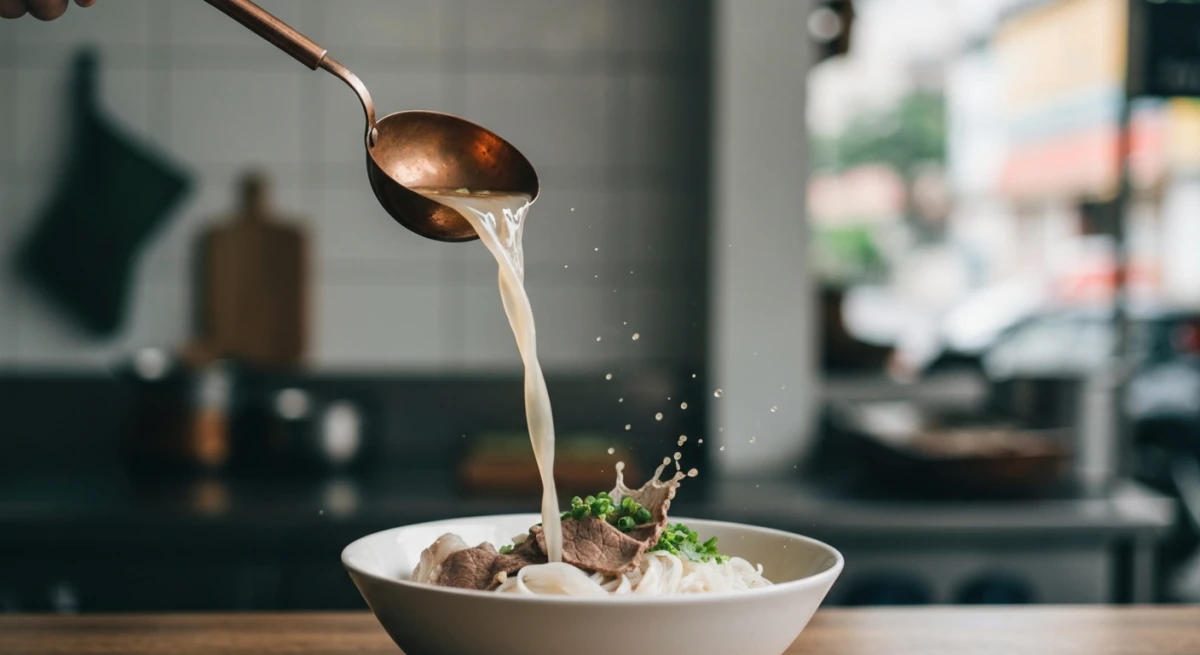
The air in Ho Chi Minh City is thick with the sweet, caramelized scent of charcoal-grilled pork, the pungent aroma of simmering beef bone broth, and the sharp, bright fragrance of freshly torn herbs. To truly understand this chaotic, beautiful metropolis, you have to eat your way through it. While there are countless ways to explore the city's culinary landscape, embarking on a saigon walking food tour is the single best way to slow down, step off the tourist trail, and experience the street food scene exactly as the locals do.
Sitting on a tiny blue plastic stool on a bustling sidewalk, with motorbikes whizzing past just inches from your shoulder, you get more than just a meal—you get a front-row seat to the heartbeat of Saigon. This comprehensive guide covers everything you need to know to plan the ultimate culinary adventure, whether you choose to join a curated guided tour or set out on a self-guided journey through the city's historic labyrinth of alleys.
Why Choose a Walking Tour Over a Motorbike Tour?
If you've researched food tours in Ho Chi Minh City, you've undoubtedly seen endless advertisements for scooter-based food tours. While zooming through traffic on the back of a motorbike is an exhilarating rite of passage, a walking food tour offers distinct advantages that a scooter ride simply cannot replicate.
1. Intimacy and Pace
On a motorbike, you are whisked from point A to point B, insulated from the micro-neighborhoods in between. A walking food tour forces you to slow down. It allows you to peer into open doorways, smell the ingredients before you see them, and notice the small, multi-generational family businesses operating out of the front rooms of historic tube houses.
2. Exploring the Hẻm (Alleys)
Saigon's best food is rarely found on main boulevards. It is tucked deep inside the hẻm—the intricate maze of narrow residential alleys that spiderweb through the city. Many of these alleys are too congested or narrow for group motorbike travel, but they are perfectly suited for pedestrians. Walking allows you to navigate these hidden passages safely and discover tucked-away food stalls that don't show up on Google Maps.
3. Safer for Mindful Travelers
Let's be honest: Saigon's traffic can be terrifying. For travelers who feel anxious about weaving through millions of motorbikes with only a helmet for protection, a walking tour offers a far more relaxed, low-stress environment. You can focus entirely on the flavors, textures, and stories behind the food rather than clinging tightly to a stranger's shoulders in rush-hour traffic.
4. Direct Vendor Interaction
When you walk up to a stall, you have the time to watch the vendor assemble your dish. You can see the precise fold of a summer roll, the sizzle of a pancake hitting a hot pan, and the theatrical pour of a traditional drip coffee. It invites a level of human connection and cultural exchange that a fast-paced scooter tour often skips.
The Best Districts for a Saigon Walking Food Tour
Saigon is divided into numbered and named districts, each possessing its own distinct culinary identity. To get the most out of your walking tour, you must target the areas where street food culture thrives in its most authentic form.
District 1: The Tourist Hub with Hidden Pockets
While District 1 is the commercial center and home to famous landmarks like the Notre-Dame Cathedral and Ben Thanh Market, parts of it can feel overly commercialized and catered to western palates. However, if you steer clear of the main tourist traps, areas like the Da Kao ward or the older apartment blocks on Nguyen Hue and Ton That Dam offer exceptional, historic street food spots that have stood the test of time.
District 3: The Historic, Tree-Lined Residential Area
Directly adjacent to District 1, District 3 is characterized by colonial-era villas, leafy avenues, and a highly active local population. The star of District 3 is the Nguyen Thien Thuat apartment complex. Built in the late 1960s, these historic residential buildings are connected by a vibrant street-level marketplace. Here, you can find everything from sizzling beef plates to traditional sweet soup desserts within a few short blocks.
District 4: The Legendary Street Food Haven
Once notorious as a rough-and-tumble district run by local gangsters, District 4 has transformed into a culinary playground. It is a densely populated peninsula surrounded by canals, and its narrow streets are packed with some of the best street food in Vietnam. Vinh Khanh Street in District 4 is world-famous for its seafood and snail (ốc) stalls, where locals gather to drink beer and feast on fresh shellfish late into the night.
District 10: The Deeply Local, Student-Friendly Hotspot
If you want to escape the tourist gaze entirely, District 10 is your destination. Home to several universities, this district features affordable, highly creative street food. The Ho Thi Ky flower market area in District 10 doubles as a massive evening street food market, offering unique Cambodian-influenced dishes, grilled skewers, and traditional Vietnamese sweets.
The Ultimate Self-Guided Walking Food Itinerary
For independent travelers who want to skip the organized group experience and explore at their own pace, this curated, step-by-step self-guided walking food tour takes you through the heart of District 3 and District 1. It covers roughly 2.5 kilometers of easy walking, punctuated by legendary food stops and historic sights.
Stop 1: The Sizzling Start – Bò Né
- Location: Bò Né Cô Ba Ngón (or any highly rated stall near Hoang Sa Street, District 1/3)
- The Vibe: Energetic breakfast or early dinner crowd seated at low metal tables.
- What to Order: Bò Né (literally "dodging beef"). It arrives on a scorching-hot, cow-shaped cast-iron skillet, spitting butter and grease (hence why you have to "dodge" it). It consists of marinated steak, a fried egg, a dollop of pate, a small meatball (xía mại), and a wedge of laughing cow cheese.
- How to Eat It: Use your fork to break the egg yolk and smear the pate. Tear off pieces of the warm, crusty baguette provided, scoop up the rich mixture, and enjoy. Pair it with a side of pickled cucumbers and onions to cut through the richness.
Stop 2: The Crispy Perfection – Bánh Xèo and Bánh Khọt
- Location: Walk southwest toward the Nguyen Thien Thuat Apartment Complex in District 3.
- The Vibe: Smokey, busy, and filled with the sound of sizzling oil.
- What to Order: One Bánh Xèo (a giant, sizzling turmeric crepe stuffed with pork, shrimp, and bean sprouts) and a plate of Bánh Khọt (bite-sized, crispy mini-pancakes topped with fresh prawns and a splash of coconut cream).
- How to Eat It: Do not use chopsticks to eat these directly! Instead, take a large mustard green or lettuce leaf, place a piece of the crispy crepe or a whole mini-pancake inside, add a handful of fresh Vietnamese herbs (like mint, Thai basil, and fish mint), roll it up tightly, dip it generously into the sweet-and-sour fish sauce (nước chấm), and eat it in one or two bites.
Stop 3: The Alleyway Secret – Bò Lá Lốt
- Location: Venture into the narrow lanes running between the old apartment blocks.
- The Vibe: Intimate residential alleys where neighbors sit outside chatting and kids play.
- What to Order: Bò Lá Lốt (seasoned minced beef wrapped in wild betel leaves and grilled over open charcoal).
- How to Eat It: These aromatic, cylindrical beef rolls are served with thin sheets of rice paper, rice vermicelli noodles, fresh herbs, green banana slices, and a pungent pineapple-anchovy dipping sauce (mắm nêm). Place the ingredients onto a sheet of rice paper, wrap it like a spring roll, and dip it. The smoky, herbal, and savory flavor profile is utterly unforgettable.
Stop 4: The Local Tradition – Ốc (Snails and Shellfish)
- Location: Oc Loan (tucked deep in an alley in District 3) or cross over to Vinh Khanh Street if you want a longer walk.
- The Vibe: Loud, lively, and celebratory. This is the heart of Vietnamese Nhậu (drinking and eating) culture.
- What to Order: Sweet snails sautéed in salted egg yolk sauce (ốc hương sốt trứng muối), clams steamed with lemongrass and chili (nghêo hấp sả), and grilled scallops with scallion oil and crushed peanuts (sò điệp nướng mỡ hành). Pair this with a cold local Saigon Beer.
- How to Eat It: Use a safety pin or a tiny metal fork to pull the snail meat from its shell, dip it into the accompanying chili-lime salt, and enjoy. Don't forget to dip pieces of bread into the rich salted egg yolk sauce.
Stop 5: The Sweet Ending – Chè or Grilled Banana
- Location: Nguyen Thai Binh Street or a dessert stall inside the Nguyen Thien Thuat area.
- The Vibe: Calm, sweet-scented, and family-oriented.
- What to Order: Chuối Nướng (sweet banana wrapped in sticky rice, grilled over charcoal in banana leaves, and topped with a warm, salty-sweet coconut milk sauce and sesame seeds) or a bowl of traditional Chằ Mè Đen (warm black sesame sweet soup).
- How to Eat It: Grab a spoon and dig in. It's the perfect, comforting antidote to the spicy, savory flavors of the evening.
Must-Try Dishes on a Saigon Walking Food Tour
Vietnamese cuisine is incredibly regional. Saigon, as a massive economic migration hub, has absorbed culinary traditions from both the North and the deep South (the Mekong Delta). When you hit the streets, keep an eye out for these absolute staples:
| Dish Name | Key Ingredients | Flavor Profile | Best Time to Eat |
|---|---|---|---|
| Bảnh Mì | Crusty baguette, pate, mayonnaise, cold cuts, pickled daikon, cilantro, chili | Savory, rich, herbaceous, spicy, and perfectly balanced | Anytime (Breakfast/Late Night) |
| Bò Lá Lốt | Minced beef, wild betel leaves, lemongrass, peanuts, scallion oil | Smoky, peppery, herbal, and deeply savory | Evening / Night |
| Bánh Xèo | Rice flour crepe with turmeric, pork, shrimp, mung bean, bean sprouts | Crispy, savory, fresh, and highly herbaceous | Lunch or Dinner |
| Ốc (Various Snails) | Fresh snails, lemongrass, ginger, chili, garlic, salted egg yolk, coconut milk | Varies widely; ranges from sweet and creamy to spicy and sour | Night (with friends and beer) |
| Bún Thịt Nướng | Cold rice vermicelli, charcoal-grilled pork, spring rolls, fresh herbs, sweet fish sauce | Sweet, smoky, fresh, crunchy, and savory | Lunch or Early Dinner |
| Cơm Tấm | Broken rice grains, grilled marinated pork chop, steamed egg meatloaf (chả), scallion oil | Sweet-savory, smoky, comforting, and filling | Breakfast or Late Night |
| Cà Phê Sữa Đá | Dark roast Robusta coffee, sweet condensed milk, ice | Intensely bold, chocolatey, creamy, and sweet | Morning to Afternoon |
Essential Survival and Safety Tips
Navigating the chaotic streets of Ho Chi Minh City on foot requires a bit of local know-how. Use these expert tips to ensure your walking food tour is safe, hygienic, and thoroughly enjoyable.
The Art of Crossing the Street in Saigon
For first-time visitors, crossing a street packed with thousands of oncoming motorbikes can feel like an impossible task. The secret is simple: walk slow, maintain a steady pace, and never make sudden movements or backward steps.
As you step off the curb, make eye contact with the oncoming riders. They are actively calculating your trajectory. If you maintain a slow, predictable walking speed, they will smoothly flow around you like water around a stone in a river. If you stop suddenly, run, or step backward, you disrupt their calculations and increase the risk of an accident.
Spotting a Safe, Hygienic Food Stall
Street food hygiene in Vietnam has improved drastically, but it is still wise to exercise caution. To avoid the dreaded "Saigon belly," look for stalls that meet these criteria:
- High Turnover: Choose stalls crowded with locals. High turnover means the ingredients are bought fresh daily and do not sit out in the heat.
- Specialization: Eat at stalls that do only one or two things. A vendor who only cooks Bún Riêu (tomato crab noodle soup) has perfected their recipe and maintains a highly streamlined ingredient cycle.
- Clean Workstations: Observe how the vendor handles food and money. Ideally, they use metal tongs, gloves, or have a separate person handling cash.
The Ice Debate: Is It Safe?
Many travelers worry about the ice (đá) in street drinks. In modern Saigon, almost all commercial ice is manufactured in dedicated factories using purified water. Look at the shape of the ice in your cup. If it consists of uniform, hollow cylinders (tube ice), it is commercially made and perfectly safe to consume. Avoid crushed, irregular chunks of ice cut from large blocks, as these can occasionally be transported in less-than-hygienic conditions.
Navigating as a Vegetarian or Vegan
While Vietnamese street food is heavily meat- and seafood-centric, finding vegetarian options is easier than you think. Keep an eye out for the word "Chay" (which means vegetarian/vegan in Vietnamese).
During the 1st and 15th days of the lunar month, a significant portion of the local Buddhist population eats strictly vegan food, causing a surge in temporary street stalls offering incredibly creative plant-based versions of classic dishes like Phở, Bánh Mì Chay, and Bún Huế Chay.
Frequently Asked Questions
Is street food in Ho Chi Minh City safe to eat?
Yes, street food in Saigon is generally safe, fresh, and incredibly delicious. Because most stalls operate in open view, you can easily inspect the cleanliness of the ingredients and cooking surface before ordering. Stick to popular stalls with high local turnover to ensure the freshest ingredients.
How much does a guided walking food tour cost?
An organized, guided street food walking tour in Saigon typically ranges from $25 to $55 USD per person. This price almost always includes a professional, English-speaking local guide, all food and drink tastings, and sometimes hotel pickup and drop-off via taxi.
Is District 4 safe for tourists at night?
Yes, District 4 is highly safe for tourists. While it historically had a reputation for gang activity decades ago, it has thoroughly gentrified and is now celebrated as one of the safest, friendliest, and most vibrant foodie destinations in the city. Just use normal urban common sense regarding your valuables.
Can vegetarians do a Saigon walking food tour?
Absolutely. While standard group tours might require advance notice to accommodate dietary restrictions, a customized or self-guided tour can easily center around the city's excellent vegetarian (Chay) restaurants and street stalls. Look out for dishes like Bánh Mì Chay and Hủ Tiếu Chay.
What should I wear on a walking food tour?
Wear lightweight, breathable clothing suitable for tropical heat, and sturdy, comfortable walking shoes. Because Saigon can experience sudden tropical downpours (especially during the wet season from May to November), carrying a small, travel-sized umbrella or a light rain poncho in your daypack is highly recommended.
Conclusion
A saigon walking food tour is far more than just a culinary checklist; it is an intimate, sensory plunge into the soul of southern Vietnam. By slowing down to walk through historic alleyways, sitting on sidewalk stools, and trusting the local experts—or your own adventurous spirit—you will discover that the true magic of Saigon's food lies in the stories of the people who cook it, the warmth of the communities that gather around it, and the unforgettable symphony of sweet, sour, salty, and spicy flavors that define every single bite.