Introduction
Ho Chi Minh City, colloquially and affectionately known as Saigon, is a hyper-sensory metropolis where life unfolds at breakneck speed on thousands of motorbikes. Yet, beneath the roaring engines and neon-lit skyscrapers lies a quiet, green revolution that has made Saigon one of the most exciting plant-based culinary capitals in Southeast Asia. Whether you are a lifelong vegan, a conscious vegetarian, or a curious foodie looking to expand your palate, finding exceptional vegetarian food in Ho Chi Minh City is not merely easy—it is an adventure that spans centuries of heritage, modern culinary innovation, and vibrant street food culture.
Unlike in some destinations where plant-based eating feels like a modern, lifestyle-driven trend, vegetarianism in Vietnam is deeply woven into the historical fabric of the country. Guided by Buddhist traditions and elevated by a generation of young, eco-conscious chefs, Saigon offers a food landscape where mock meats sit comfortably next to artisan cashew-fermented cheeses, and century-old family recipes are celebrated alongside fine-dining tasting menus. In this ultimate guide, we will dive deep into the cultural roots of Vietnamese vegetarian dining, explore the must-try dishes that define the local palate, and guide you through a district-by-district culinary tour of Saigon’s best plant-based gems.
The Cultural Essence of "Chay"
To truly appreciate vegetarian food in Ho Chi Minh City, one must understand the concept of "Chay" (pronounced chigh). Derived from Buddhist traditions, "ăn chay" refers to eating a diet free of meat, poultry, seafood, and animal fats. In Vietnam, where Mahayana Buddhism has been practiced for over a thousand years, "chay" dining is not a health fad; it is a spiritual practice designed to cultivate compassion, clear karma, and purify the body.
If you wander through the streets of Saigon, you will frequently spot signs reading "Quán Chay" (humble vegetarian eatery) or "Nhà Hàng Chay" (vegetarian restaurant). These establishments serve as peaceful sanctuaries from the city's frantic pace.
A fascinating cultural phenomenon to witness in Saigon is the monthly lunar cycle. On the 1st and 15th days of every lunar month (known as "Ngày Rằm"), millions of local Saigonese practice temporary vegetarianism. On these days, even standard meat-centric restaurants will often offer a "chay" menu, and dedicated vegetarian eateries will be packed to the brim with families, business professionals, and monks. If you happen to be in the city during these lunar dates, expect a lively, festive atmosphere at local vegetarian spots, but be prepared to wait for a table!
It is also worth noting the traditional Buddhist approach to "chay" cooking, known as "ngũ vị tân". Strict Buddhist monks and traditional "chay" chefs do not use the five pungent roots: garlic, onions, leeks, chives, and shallots. They believe these ingredients excite the senses and disrupt spiritual stillness. Consequently, traditional Vietnamese vegetarian dishes rely heavily on the natural sweetness of root vegetables, the earthiness of wild mushrooms, and the rich depth of fermented soybean pastes to build complex flavor profiles. However, modern and Western-influenced vegan spots in Saigon will freely use these aromatics, creating a diverse spectrum of options for every preference.
Must-Try Vegetarian Dishes in Saigon
Vietnamese cuisine is celebrated worldwide for its delicate balance of sweet, sour, salty, spicy, and bitter notes. Saigon’s vegetarian chefs have mastered the art of adapting classic, meat-heavy street dishes into plant-based masterpieces that do not compromise on texture or depth of flavor. When exploring the city, these are the essential dishes you must seek out:
1. Phở Chay (Vegetarian Noodle Soup)
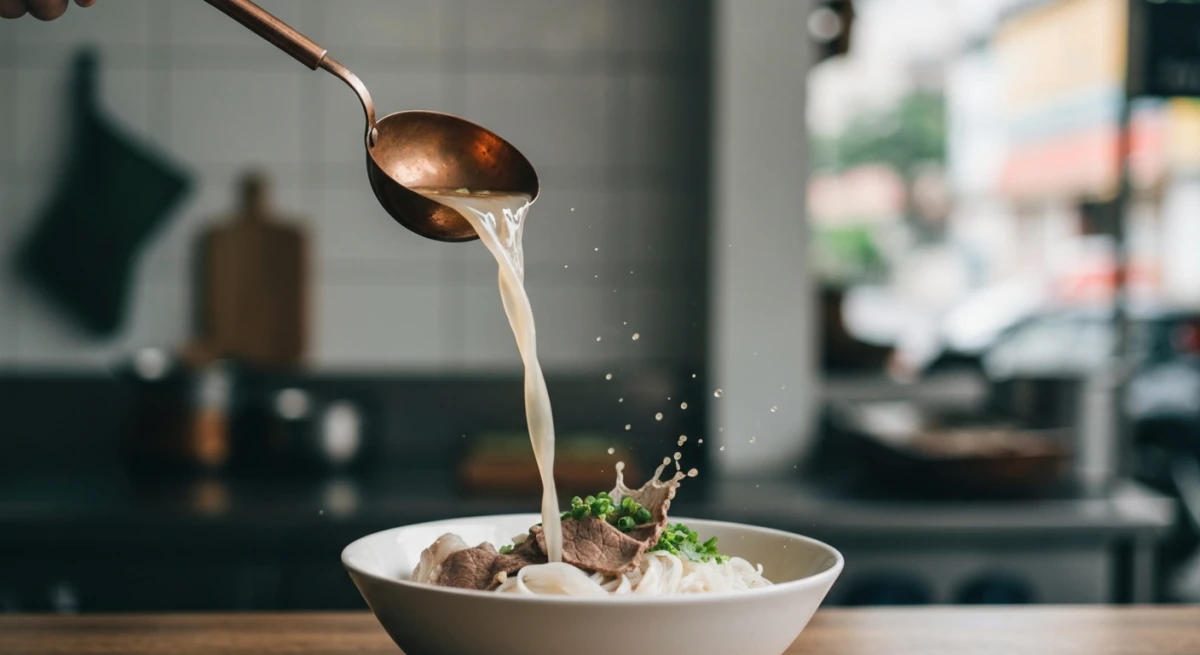
Phở is the undisputed king of Vietnamese noodle soups, traditionally made with beef or chicken broth that has simmered for hours. In Phở Chay, the rich, aromatic broth is achieved using an ingenious combination of charred onions, roasted ginger, star anise, cinnamon, cloves, coriander seeds, and black cardamom, sweetened naturally with white radish ("củ cải trắng"), carrots, pears, and sugarcane. Served with flat rice noodles, an assortment of mushrooms (like oyster, enoki, and straw mushrooms), silken tofu, and fresh herbs (such as Thai basil, saw-leaf herb, and cilantro), a bowl of Phở Chay is a comforting, deeply fragrant masterpiece.
2. Bánh Mì Chay (Vegetarian Baguette)
The humble Bánh Mì is a symbol of Vietnamese street food genius. The vegetarian version is just as complex and satisfying as the original. A crisp, airy baguette is sliced open and spread with a savory plant-based pâté (often made from kidney beans, lentils, or mushrooms) and egg-free mayonnaise. It is then stuffed with sliced seasoned tofu, braised oyster mushrooms, strips of mock ham ("chả lụa chay"), pickled daikon and carrots, cucumber strips, and fresh cilantro, topped with a splash of savory soy-based sauce and fresh chili. The contrast of textures—warm, crunchy, soft, pickled, and spicy—is nothing short of legendary.
3. Bún Chả Giò Chay (Rice Vermicelli with Vegetarian Spring Rolls)
For a refreshing yet indulgent lunch, nothing beats Bún Chả Giò Chay. A bowl is filled with soft rice vermicelli noodles, shredded lettuce, fresh herbs, and crunchy bean sprouts. It is topped with crispy, golden-fried vegetarian spring rolls filled with taro, wood ear mushrooms, glass noodles, and mung beans. The entire bowl is showered with crushed roasted peanuts, fried shallots, and served with a side of "nước mắm chay"—a sweet, tangy, and spicy dressing made from fermented pineapple juice, soy sauce, lime juice, chili, and garlic (or left out for strict Buddhists) that mimics traditional fish sauce perfectly.
4. Cơm Tấm Chay (Vegetarian Broken Rice)
Cơm Tấm (broken rice) is a Saigon staple traditionally served with a grilled pork chop. The vegetarian counterpart is a masterclass in mock-meat preparation. The plate features fragrant broken rice accompanied by a slice of "chả chưng chay" (a vegetarian steamed cake made from tofu, glass noodles, wood ear mushrooms, and wood-ear-fungus-infused egg substitute or tofu skin), and "bì chay" (a mixture of shredded dry tofu skin and glass noodles toasted in roasted rice powder to mimic shredded pork skin). It is served with pickled vegetables, cucumber slices, and a sweet, savory soy dressing.
5. Lẩu Nấm Chay (Vegetarian Mushroom Hotpot)
Hotpot is a social affair in Vietnam, and Lẩu Nấm Chay is the ultimate communal vegetarian feast. A simmering pot of clear, mushroom-and-herb broth is placed in the center of the table. Diners cook a mountain of fresh ingredients in the broth, including various types of mushrooms (shiitake, shimeji, oyster, and button), fresh tofu, lotus root, leafy greens (like water spinach and mustard greens), and taro. The cooked ingredients are dipped in a variety of sauces, such as fermented tofu paste ("chao") or chili-infused soy sauce, and eaten alongside soft rice noodles.
District-by-District Culinary Guide to Vegetarian Food in Ho Chi Minh City
Saigon is divided into numbered and named districts, each with its own distinct subculture and culinary personality. To help you plan your foodie journey, we have curated the absolute best spots for vegetarian food in Ho Chi Minh City, categorized by neighborhood.
District 1: The Historical Heart of Saigon
As the bustling downtown hub of Saigon, District 1 is home to French colonial landmarks, high-rise skyscrapers, and some of the most historic and innovative vegetarian dining spots in the country.
Tin Nghia (9 Tran Hung Dao)
Step back in time at Tin Nghia, a true Saigon institution and arguably the oldest vegetarian restaurant in Ho Chi Minh City. Established in the mid-1920s (around 1925), this unassuming, family-run spot is located on the ground floor of a historic French colonial building near Ben Thanh Market. With its plastic floral tablecloths, antique wooden lintels, dimly lit ancestral shrine, and retro brown ceramic chopstick holders, Tin Nghia feels like a living museum.
The current owner, whose grandmother opened the restaurant, still cooks without formal recipes, relying entirely on sensory memory and traditional techniques passed down through generations. True to strict Buddhist traditions, the kitchen uses no onions, garlic, or MSG. Popular dishes include the deeply caramelized braised tofu in clay pots ("đậu hũ kho tộ"), savory vegan curries, and bitter melon soup. It is a humble, no-frills, yet deeply moving dining experience that shouldn't be missed.
Be An Vegetarian Bistro (99 Nguyen Hue & 11B Tran Cao Van)
If Tin Nghia represents Saigon's historic past, Be An Vegetarian Bistro represents its vibrant, modern present. Situated in the trendy Saigon Garden complex on Nguyen Hue walking street (with a second branch on Tran Cao Van), Be An is a gorgeous, contemporary space filled with natural wood, soft lighting, and lush indoor plants.
The philosophy at Be An is simple: "Wholesome eats, purely plant-powered pleasure." Unlike many traditional Vietnamese vegetarian spots, Be An refuses to use mass-produced mock meats or artificial food preservatives. Instead, they elevate local dishes like vegetarian Phở, Bún Huế, and Cơm Tấm using seasonal, organic vegetables, fresh mushrooms, and artisanal soy products. Their vegan pâté is exceptionally smooth and savory, and their desserts—particularly their house-made coconut and pandan creations—are a dream come true.
Shamballa Pure Vegetarian Restaurant & Teahouse (31 Tran Cao Van)
Located in a beautifully restored French colonial villa in District 1, Shamballa offers an elegant, tranquil sanctuary away from the city's chaotic streets. Inspired by Tibetan and Zen aesthetics, the space is decorated with stone Buddha statues, exposed brick, and trickling water features.
The menu at Shamballa is a creative celebration of local ingredients. Must-try dishes include their signature Lotus Rice (fragrant brown rice cooked with lotus seeds, carrots, and mushrooms, wrapped and steamed in a fresh lotus leaf) and their crispy fried tofu skin stuffed with lemongrass and chili. It is the perfect spot for an intimate dinner or a relaxing afternoon tea.
District 3: Peaceful Leafy Alleys and Culinary Masterpieces
Directly bordering District 1, District 3 is known for its wide, tree-lined avenues, colonial-era villas, and a deeply relaxed residential vibe. It is also home to some of Saigon's finest vegetarian dining.
Hum Signature (32 Vo Van Tan)
No guide to vegetarian food in Ho Chi Minh City would be complete without mentioning Hum. Globally recognized and repeatedly voted among the top vegetarian-friendly restaurants in the world by TripAdvisor users, Hum is also a proud recipient of the Michelin Guide's Bib Gourmand.
Nestled within a gorgeous French-style villa on Vo Van Tan street, Hum Signature is a masterclass in elegant, plant-based fine dining. The restaurant's design harmoniously blends traditional Vietnamese art with lush, botanical aesthetics, creating a deeply serene environment. Hum’s culinary team focuses on honoring local, seasonal harvests, preparing dishes that are both visually stunning and nutritionally balanced without relying on heavy gluten-based mock meats.
Standout dishes include their famous Winged Bean Salad (crunchy winged beans tossed with sliced hard-boiled eggs—which can be omitted for vegans—fresh coconut, roasted peanuts, and a sweet-and-sour dressing), their incredibly rich Saffron Flower Soup, and their signature pink Mushroom Hotpot seasoned with fresh "lá é" (a fragrant lemon-basil herb sourced from central Vietnam). Pair your meal with one of their house-crafted herbal teas or cold-pressed juices for the ultimate nourishing experience.
Thảo Điền: The Modern Expat Haven
Located across the Saigon River in Thủ Đức City, Thảo Điền is a leafy, bohemian neighborhood favored by expats, digital nomads, and young creatives. Here, the plant-based scene leans heavily toward health-conscious, artisanal, and international flavors.
Kashew Cheese Deli (14 Tran Ngoc Dien)
For a taste of Saigon's cutting-edge culinary innovation, head to Kashew Cheese Deli. Founded in 2015 by Lê Na, a passionate local entrepreneur, Kashew was born out of a fascinating realization: although Vietnam is the world's leading exporter of cashew nuts, there was no domestic market for plant-based artisan cheeses. Lê Na decided to change that, launching a food revolution by fermenting, flavoring, and aging locally grown organic cashews on-site.
Located inside a quiet, shaded courtyard complex on Tran Ngoc Dien street, the deli offers a peaceful escape where the sounds of Saigon fade away. Nearly everything served here is crafted in-house, including the creamy cashew mozzarella, aged cashew blue cheese, fresh pesto, kombucha, and rustic wholemeal sourdough.
The menu highlights include their legendary Pesto Panini (warm, house-baked sourdough layered with rich cashew mozzarella and vibrant, house-pressed basil pesto), the caramelized onion, sun-dried tomato, and house cheese sandwich, and their rotating artisanal Cheese Board served with fresh fruits, nuts, and crackers. Pair your lunch with a glass of natural wine or a cold glass of home-brewed kombucha for an exceptional afternoon.
Hum Garden (32 D10 Street)
If you love the culinary philosophy of Hum but want a more relaxed, open-air environment, Hum Garden in Thảo Điền is spectacular. Housed in a sprawling villa with a massive, lush garden and a peaceful outdoor pond, this location features a children's play area in the center, making it a favorite for family weekend brunches. It serves the same Michelin-celebrated menu as its District 3 counterpart but with a breezy, tropical-resort feel.
Navigating Street Food: Your Vegetarian Survival Toolkit
While eating at dedicated vegetarian restaurants is incredibly easy, part of the magic of Saigon is pulling up a tiny plastic stool on a bustling sidewalk and eating street food. If you want to explore local street food markets like Ben Thanh or the alleys of District 4, navigating dietary preferences requires a bit of local know-how. Here is your essential toolkit:
1. Memorize These Key Vietnamese Phrases
- "Tôi ăn chay" (pronounced toy an chigh): "I eat vegetarian/vegan." Saying this to a vendor is the quickest way to let them know you do not eat meat.
- "Không thịt, không cá" (pronounced khome thit, khome kah): "No meat, no fish."
- "Không nước mắm" (pronounced khome nuoc mam): "No fish sauce." Since fish sauce is the foundational seasoning of Vietnamese cuisine, this phrase is crucial. Traditional soy sauce ("nước tương") is a safe and readily available alternative.
- "Không trứng" (pronounced khome trung): "No eggs." Important for vegans, as eggs are frequently added to noodle dishes and street snacks.
- "Có nước mắm chay không?" (pronounced caw nuoc mam chigh khome): "Do you have vegetarian fish sauce?" Many street vendors who offer a vegetarian option on lunar calendar days will have a bottle of vegetarian fish sauce (made from fermented pineapple) ready.
2. Watch Out for Hidden Ingredients
- Fish Sauce (Nước Mắm): Even if a dish has no visible meat, vegetable broths or noodle dressings might contain standard fish sauce. Always clarify with "chay" or "không nước mắm".
- Lard (Mỡ Heo): Some street vendors use pork fat to fry tofu or sauté vegetables. Dedicated "Quán Chay" spots will always use vegetable oil ("dầu thực vật").
- Dried Shrimp / Pork Floss: Popular street snacks like Bánh Tráng Trộn (shredded rice paper salad) or Bắp Xào (stir-fried corn) are loaded with tiny dried shrimp and pork floss. Always order these from dedicated vegetarian vendors who use mock alternatives.
3. Leverage Ride-Hailing and Food Delivery Apps
If you are tired after a long day of sightseeing, you can easily order a feast straight to your hotel or Airbnb. Apps like Grab and ShopeeFood are massive in Vietnam. Simply open the app, type "Chay" into the search bar, and you will be greeted with hundreds of local vegetarian options, from local noodle stalls to upscale bistros, complete with English translations and pictures.
Frequently Asked Questions
Is vegetarian food in Ho Chi Minh City completely vegan?
Generally, traditional Vietnamese vegetarian food ("chay") is extremely close to being vegan. It is naturally dairy-free because dairy is not historically a major part of traditional Vietnamese cooking (they use coconut milk instead of cream). However, eggs ("trứng") are occasionally used, and honey is sometimes found in drinks. To be 100% sure, always ask for "không trứng" (no eggs) and check if the restaurant is fully vegan ("thuần chay").
Is MSG commonly used in vegetarian dishes?
Monosodium glutamate (MSG) is a common flavor enhancer in Vietnamese cooking. While many high-end and health-conscious spots like Hum and Be An are strictly MSG-free, humble street-side "Quán Chay" spots may still use it. If you have a sensitivity to MSG, you can say "không bột ngọt" (pronounced khome bot ngot) or "không mì chính" (pronounced khome mee chinh).
Do vegetarian restaurants close on certain days?
Most dedicated vegetarian restaurants are open seven days a week. However, some traditional local family-owned "Quán Chay" spots might close for a day or two after the 1st or 15th of the lunar month to rest, as those are their busiest days. Upscale and modern restaurants are always open daily.
Is tap water safe to drink in Saigon?
No, you should avoid drinking tap water in Vietnam. However, ice served in reputable restaurants and street stalls is generally made from purified factory-made ice blocks and is safe to consume. To be safe, stick to bottled water, fresh coconuts, or hot teas.
Conclusion
From the sensory bliss of a steaming bowl of Phở Chay in a bustling street alley to the refined artistry of a Michelin-starred plant-based lunch, vegetarian food in Ho Chi Minh City is a profound reflection of the city's spirit: deeply rooted in historical Buddhist tradition, yet continuously evolving to embrace modern culinary art. Eating plant-based in Saigon is not a compromise; it is an invitation to explore a world of incredibly complex textures, fresh regional herbs, and soul-satisfying flavors that are as kind to the body as they are memorable to the palate. On your next trip to Vietnam, let your appetite guide you through the city's green alleys—you might just find your new favorite meal on a tiny plastic stool.