Introduction: Navigating the "Land of Pork" as a Muslim Traveler
For Muslim travelers, landing in Ho Chi Minh City (still affectionately called Saigon by locals) is a sensory explosion. The air is thick with the aroma of charcoal-grilled meats, the sound of thousands of motorbikes weaving through traffic, and the vibrant hum of a metropolis on the move. However, for those who adhere to strict Islamic dietary laws, that initial excitement can quickly turn to anxiety. Vietnam is famously known as a "land of pork," where pig fat is used to fry vegetables, pork-based seasoning powders are standard kitchen staples, and cross-contamination is a daily reality in street stalls.
But do not let this deter you. Beneath the surface of this bustling city lies a thriving, historic, and incredibly welcoming halal saigon culinary ecosystem. Whether you are craving a steaming bowl of authentic beef phở with a clean, halal-certified broth, a crispy bánh mì stuffed with halal-slaughtered chicken, or highly authentic Malaysian nasi lemak served by Malay-speaking staff, Saigon has it all. This ultimate guide will walk you through the rich history of Saigon’s Muslim community, the legendary "Malaysia Street," the best halal restaurants, and essential survival tips for navigating the local street food scene with confidence.
The Cultural Roots of Halal Saigon: A Century of Shared History
To truly appreciate the halal saigon food scene, one must understand its roots. Islam is not a recent import to Vietnam; it has been woven into the country's history for centuries. The presence of halal dining in Ho Chi Minh City is primarily driven by two distinct communities: the indigenous Cham Muslims and the historic South Indian Muslim diaspora.
The Cham Muslim Diaspora
The Cham people are an Austronesian ethnic group who once ruled the ancient Kingdom of Champa in central and southern Vietnam. Over centuries of migration and cultural exchange, a significant portion of the Cham population embraced Islam, particularly those residing in the Mekong Delta region (such as An Giang and Châu Đốc). Today, thousands of Cham Muslims live, work, and worship in Ho Chi Minh City. They form the backbone of the local halal street food scene, running neighborhood eateries near local mosques and preserving traditional recipes while infusing them with strict halal principles.
The South Indian Merchants
During the French colonial period in the late 19th and early 20th centuries, a large wave of South Indian Muslim merchants migrated to Saigon. They established thriving trading networks, textile shops, and import businesses. It was this affluent community that funded and built Saigon’s most iconic mosques, including the majestic Saigon Central Mosque on Đông Du Street. Today, while many Indian families have since relocated, their legacy lives on in the city's outstanding halal Indian restaurants and the historic architectural landmarks that dot District 1.
Combined with the influx of Malaysian, Indonesian, and Middle Eastern expats, diplomats, and tourists, these communities have turned Saigon into an surprisingly accessible destination for Muslim travelers.
The Heart of Halal Saigon: Nguyen An Ninh Street ("Malaysia Street")
No visit to halal saigon is complete without a pilgrimage to Nguyen An Ninh Street, widely referred to as "Malaysia Street" or "Saigon's Halal Quarter." Located just a few steps from the west gate of the iconic Bến Thành Market in District 1, this single, bustling street is a vibrant haven dedicated to the needs of Muslim travelers.
The Legacy of Haji Basiroh
The transformation of Nguyen An Ninh Street into a halal hub is largely credited to Haji Basiroh, a Cham Muslim woman born in Châu Đốc. Having moved to Saigon in 1974, she eventually opened the very first halal restaurant and Islamic fashion boutique on this street. Her warm hospitality and ability to speak multiple languages drew in Malaysian and Indonesian business travelers who were looking for clean halal food and familiar cultural sights. Over the decades, other merchants followed her lead, and a miniature Islamic enclave was born.
What to Expect on Malaysia Street
Walking down Nguyen An Ninh Street feels like crossing a border. You will see Malaysian female tourists in beautiful, traditional hijabs browsing stalls, shop signs written in Malay and Arabic, and local staff who will greet you with a warm "Apa khabar?" (How are you?). The shops here sell everything from traditional Baju Kurung and tudung (hijabs) to local Vietnamese souvenirs and halal snacks. Highly convenient for regional travelers, many businesses and restaurants along this strip accept Malaysian Ringgit (RM) alongside Vietnamese Dong (VND).
Top Dining Spots on Nguyen An Ninh Street
- Restaurant Halal Osman: A legendary name among regional visitors. Halal Osman is famous for its extensive menu that blends Vietnamese favorites with Malaysian and Singaporean comfort food. This is the perfect spot to try Bún Chả Giò (Vietnamese rice noodles with crispy fried spring rolls) or a comforting bowl of beef phở in a certified halal environment.
- Kampung Melayu: If you are feeling homesick for authentic Malaysian flavors, Kampung Melayu delivers perfectly. Their nasi lemak rendang, teh tarik, and roti canai are prepared with spices and ingredients imported directly from Malaysia, offering an uncompromising taste of home.
- Kampung Pandan (53 Thu Khoa Huan Street): Located just a short stroll from Malaysia Street, this massive, well-ventilated restaurant offers a gorgeous, diverse menu. Kampung Pandan seamlessly serves up Indian, Malaysian, Singaporean, and Vietnamese cuisines under one roof. It is a fantastic option for families, where one person can enjoy claypot chicken rice while another dines on fresh Vietnamese spring rolls and ginger-infused beef dishes.
Savoring the Classics: Authentic Halal Vietnamese Food
While international cuisines are readily available, the true joy of traveling is eating like a local. Fortunately, a handful of exceptional, Muslim-owned establishments have successfully adapted Vietnam's national dishes to meet strict halal standards without losing their soul.
1. Pho Muslim (The Holy Grail of Halal Phở)
- Address: TK25/18 Tran Hung Dao Street, Cau Kho Ward, District 1
- Best Time to Visit: 6:30 AM – 11:30 AM (for breakfast) & 3:30 PM – 10:00 PM (for dinner)
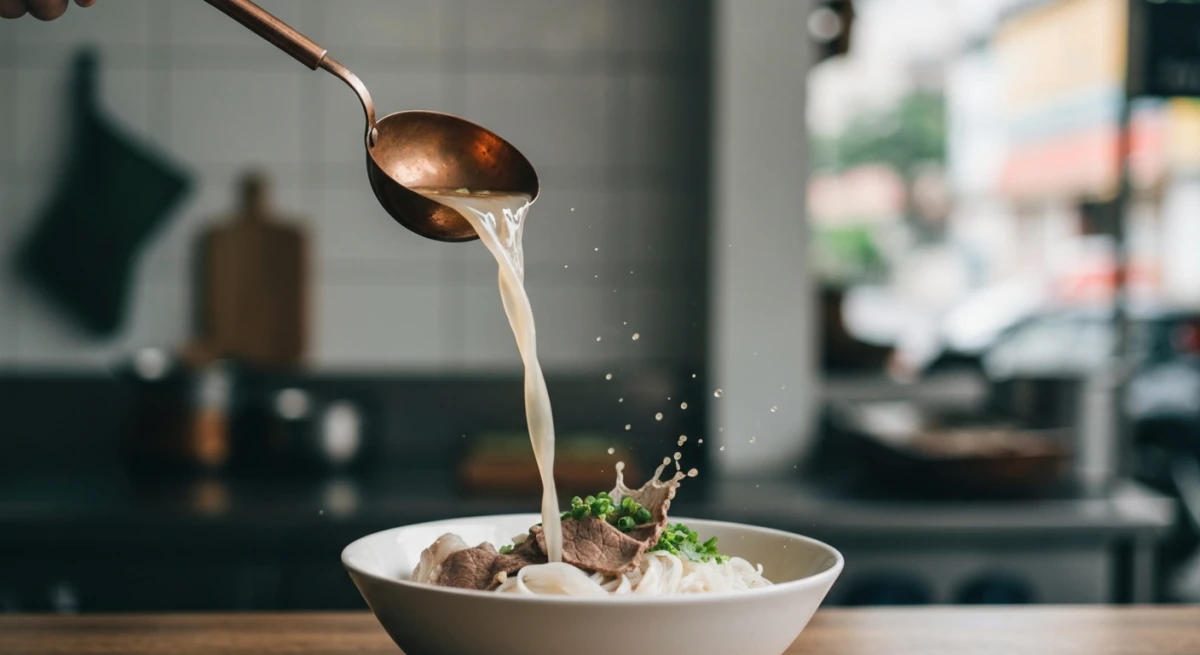
Tucked away in a quiet alleyway near the Jamiul Islamiyah Mosque (Nancy Mosque), Pho Muslim is a local legend. The owners are local Muslims who understand the intricate requirements of halal food. Traditional Vietnamese phở broth is boiled for up to twelve hours using beef bones, star anise, cinnamon, cloves, and charred ginger. At Pho Muslim, this delicate process is maintained perfectly, using only halal-certified beef. The result is a deeply aromatic, clear broth poured over silky flat rice noodles, topped with tender, thinly sliced beef and a mountain of fresh herbs (basil, saw-tooth coriander, and lime). It is widely regarded as the best and most authentic halal phở in Saigon.
2. Halal Banh Mi (The Ultimate Vietnamese Sandwich)
- Address: Alley 553, Tran Hung Dao Street, Cau Kho Ward, District 1
- Best Time to Visit: 5:00 PM – 9:00 PM (evening street food)
A standard Vietnamese bánh mì is heavily reliant on pork, featuring pork liver paté, sliced ham, headcheese, and pork floss. To experience this world-famous sandwich safely, head to the small but famous Halal Banh Mi cart located in District 1. Here, the traditional pork elements are replaced with deliciously seasoned halal-certified beef, shredded chicken, and a rich, creamy, house-made halal chicken liver paté. Served inside a warm, incredibly crispy baguette with pickled daikon and carrots, fresh cucumber, cilantro, and a dash of chili sauce, this sandwich is a masterclass in texture and flavor.
3. Halal@Saigon (Borderless Vietnamese & Malay Fusion)
- Address: 31 Dong Du Street, Ben Nghe Ward, District 1
- Best Time to Visit: 10:00 AM – 10:00 PM
Situated directly across the street from the Saigon Central Mosque, Halal@Saigon is one of the oldest and most trusted halal-certified establishments in the city. Helmed by a Malaysian owner who has lived in Vietnam for decades, the restaurant celebrates the fusion of local Vietnamese ingredients with rich Malaysian flavors. Must-try dishes include their Young Coconut Shoot Salad with Shrimp, Claypot Baby Clams served with crispy rice crackers, and their signature fried shrimp spring rolls. They also offer an extensive vegetarian menu, making it highly versatile for all diners.
International Halal Cuisine: Indian, Middle Eastern, and Fusion
If you want to vary your palate, Saigon’s international culinary scene offers world-class halal dining options, ranging from fiery Indian curries to authentic Levantine mezze.
1. Baba's Kitchen (Iconic Halal Indian Dining)
- Address: 232 Bui Vien Street, Pham Ngu Lao Ward, District 1
Located on the edge of the vibrant backpacker district, Baba's Kitchen is consistently rated as one of the best Indian restaurants in southern Vietnam. The entire menu is prepared using halal-certified meats and ingredients. From buttery tandoori chicken and rich mutton rogan josh to an extensive array of South Indian vegetarian dishes like masala dosa, the flavors here are bold, authentic, and satisfying. The service is incredibly warm, often ending with a complimentary sweet dessert.
2. Al Sham Restaurant (Authentic Middle Eastern)
- Address: 314 Pham Ngu Lao Street, District 1
For those craving the comforting spices of the Middle East, Al Sham offers a wonderful, vintage-inspired dining experience. This Syrian-owned restaurant serves exceptionally authentic Arabic cuisine. Their hummus is velvety smooth, their freshly baked flatbreads arrive at your table steaming hot, and their mixed grill platters (featuring perfectly spiced lamb and chicken kebabs) are spectacular. It is a fantastic place to unwind after a long day of sightseeing.
3. Saigon Seri Penang Halal Restaurant
- Address: 29 Luu Van Lang Street, District 1
Just a one-minute walk from Bến Thành Market, this casual eatery is perfect for a quick, fuss-free lunch. The Malaysian owner has curated a menu that pays homage to Penang street food and classic Singaporean fare. The Penang Char Kway Teow is packed with smoky wok hei (breath of the wok), while their Hainanese Chicken Rice features incredibly tender poached chicken over fragrant, seasoned rice.
A Muslim Traveler's Survival Guide: Crucial Practical Tips
To have a seamless experience in Saigon, you need to understand how the local food culture operates and how to spot hidden hazards.
1. Halal Certified vs. Muslim-Owned vs. "No Pork"
In Vietnam, halal certification is managed by private organizations like Halal Vietnam (HVN). However, many small, authentic Cham-owned stalls do not have the financial resources to maintain formal certification. Instead, they operate as "Muslim-owned" or display a simple Arabic "Halal" sign. These are generally very safe and highly authentic. Conversely, many local vegetarian restaurants display the sign "Chay" (Vegetarian). While Chay food is free of meat and alcohol, these kitchens are not halal-certified and may use shared utensils or seasonings that do not meet strict guidelines. Use your discretion based on your personal comfort level.
2. Beware of Hidden Culinary Hazards
When attempting to dine at non-halal local establishments, be aware of these hidden ingredients:
- Mỡ Hành (Scallion Oil): This aromatic green onion oil is drizzled over almost every grilled dish, noodle bowl, and clam plate in Vietnam. Traditionally, it is made by frying scallions in melted pork fat (lard). Always ask for it to be omitted or verify if vegetable oil was used.
- Hạt Nêm (Seasoning Powder): Many local cooks season their broths and stir-fries with a popular seasoning powder that contains dehydrated pork bones and marrow (hạt nêm từ thịt).
- Nước Mắm (Fish Sauce): While fish sauce itself is halal (made from fermented anchovies and salt), some street food vendors mix it with non-halal spirits or use it in marinades alongside pork.
3. Key Vietnamese Phrases to Save on Your Phone
If you venture outside the main tourist zones, communication can be challenging. Save these phrases to show to restaurant owners:
- Tôi là người Hồi giáo. — I am a Muslim.
- Tôi không ăn thịt heo (lợn) và mỡ heo (lợn). — I do not eat pork and pork lard.
- Món này có mỡ heo không? — Does this dish contain pork lard?
- Tôi chỉ ăn thực phẩm Halal. — I only eat Halal food.
Active Mosques in Ho Chi Minh City for Prayer and Community
Finding a peaceful place to perform your daily prayers is easy in central Saigon, with several historically significant mosques welcoming visitors.
- Saigon Central Mosque (Masjid Musulman): 66 Dong Du Street, District 1. Built in 1935; stunning green and white architecture; has a shaded courtyard and a great halal food stall inside.
- Jamiul Islamiyah Mosque (Nancy Mosque): 459B Tran Hung Dao Street, District 1. Rebuilt in 2003; serves a large local Cham community; located right next to Pho Muslim.
- Al Rahim Mosque: 45 Nam Ky Khoi Nghia Street, District 1. Built in 1885; the oldest mosque in Vietnam; highly popular with Malaysian and Indonesian expats.
- Jamia Al Anwar Mosque: 157/9B Duong Ba Trac Street, District 8. Located in a lively Cham neighborhood; offers a deep look into local Muslim community life.
Frequently Asked Questions (FAQs)
Is it easy to find halal food in Saigon?
Yes, but you need to know where to look. While pork is a dominant ingredient in mainstream Vietnamese cuisine, central District 1 has a dense concentration of halal-certified and Muslim-owned restaurants, especially around the Bến Thành Market area and the Saigon Central Mosque on Đông Du Street.
Can I pay with Malaysian Ringgit (RM) on Malaysia Street?
Yes. Many clothing shops, souvenir stalls, and select restaurants on Nguyen An Ninh Street ("Malaysia Street") accept Malaysian Ringgit (RM) alongside Vietnamese Dong (VND). However, it is always recommended to keep some local currency (VND) on hand for street food carts and transport.
Are vegetarian (Chay) restaurants in Saigon considered Halal?
Strictly speaking, no. While local Chay (Buddhist vegetarian) restaurants do not serve meat or alcohol, they are not halal-certified. There is a risk of cross-contamination, and some mock meats may contain ingredients of unverified origin. However, many Muslim travelers who do not strictly require a halal certificate find them to be a highly convenient option.
Where can I pray near Bến Thành Market?
The closest place to pray is the Al Rahim Mosque on Nam Ky Khoi Nghia Street or the Saigon Central Mosque on Đông Du Street, both of which are within a 10-15 minute walk from Bến Thành Market.
Can I find halal food at Ho Chi Minh City's airport (Tan Son Nhat)?
Options inside the airport terminal are limited and rarely certified halal. It is highly recommended to eat before heading to the airport or bring your own snacks. However, some cafes offer vegetarian options, and seafood/fish dishes are widely available.
Conclusion: Embodying the Spirit of Halal Saigon
Navigating a new city with specific dietary needs does not mean you have to miss out on its cultural and culinary essence. Halal Saigon represents a beautiful, resilient bridge where Vietnamese culinary traditions meet the global Islamic faith. From the steaming, aromatic broths of Pho Muslim to the warm, community-driven hospitality of Malaysia Street, Saigon offers a rich tapestry of flavors that are both permissible and unforgettable. Pack your bags, keep this guide handy, and prepare to embark on a spectacular culinary adventure in the heart of Vietnam’s southern metropolis.