1. Introduction: Navigating the Culinary Capital of Southern Vietnam
Saigon, officially known as Ho Chi Minh City, is a mesmerizing sensory overload of the best kind. Motorbikes weave like schools of fish through neon-lit streets, French colonial architecture stands grandly alongside modern skyscrapers, and the seductive aroma of roasting coffee and simmering broth hangs thick in the tropical air. For any passionate foodie, Saigon is a paradise. But for Muslim travelers, navigating a city where pork is the ultimate culinary staple and lard is the default cooking medium can be deeply intimidating. You might find yourself wondering if you can truly experience the depth of authentic Vietnamese cuisine while strictly adhering to your Halal lifestyle.
The good news is that finding an exceptional halal restaurant in saigon is not only possible, but it is also one of the most rewarding culinary adventures you will have in Southeast Asia. Driven by the local Cham Muslim community, generations of trade with neighboring Malaysia, Indonesia, and Brunei, and a booming international tourism sector, Saigon has developed a highly robust and diverse Halal food ecosystem. From unassuming street-side Pho stalls tucked away in quiet alleyways to elegant dining rooms serving aromatic Indian curries and rich Middle Eastern mezze, Saigon has a seat waiting for you.
This ultimate guide will take you on a comprehensive culinary journey through Saigon's Halal food landscape. We will explore the historical origins of the city's Muslim quarters, review the top eight Halal restaurants you absolutely cannot miss, explain how traditional Vietnamese dishes are adapted to meet strict Halal standards, and equip you with a practical survival guide—including key Vietnamese phrases and mosque locations—to make your trip entirely seamless.
2. The Heart of Saigon's Halal Scene: Nguyen An Ninh (Malaysia Street)
To understand the pulse of Halal dining in Saigon, you must start your journey at Nguyen An Ninh Street in District 1. Located directly across from the west gate of the legendary Ben Thanh Market, this bustling 100-meter-long corridor is affectionately known by locals and travelers alike as "Malaysia Street" or "Saigon's Halal Street."
The transformation of Nguyen An Ninh into a vibrant Islamic enclave is a testament to the warmth and entrepreneurial spirit of Saigon's Cham Muslim community. The story began with a Cham woman named Haji Basiroh. After spending years working for international market research firms, she recognized a massive gap in the local tourism market: a steady influx of Muslim travelers from Malaysia and Indonesia who loved shopping at Ben Thanh Market but struggled to find modest clothing and Halal food. Haji Basiroh opened the street's very first Islamic clothing boutique and a small Halal food outlet.
Her success inspired neighboring shop owners, and within a few years, the entire street adapted to cater to Muslim tourists. Today, walking down Nguyen An Ninh is like stepping into a miniature Kuala Lumpur dropped into the center of Vietnam. The street is lined with dozens of shops offering custom-tailored baju kurung, high-quality hijabs, and traditional hand-woven textiles. The air is alive with the chatter of shopkeepers who speak fluent Malay, Indonesian, English, and the Cham language.
As the sun sets, Nguyen An Ninh truly comes alive. Brightly lit signs written in Malay and Arabic illuminate the street, and the aroma of sizzling beef kebabs, sweet banana pancakes, and freshly brewed local coffee fills the air. Here, street vendors proudly display "Halal" signs, and many establishments accept Malaysian Ringgit and US Dollars alongside Vietnamese Dong. It is the perfect, welcoming starting point for any Muslim traveler arriving in Saigon.
3. The 8 Best Halal Restaurants in Saigon You Must Try
Saigon's Halal dining scene spans a wide spectrum of cuisines, from local Vietnamese delicacies to comforting Malaysian homestyle cooking, rich Indian curries, and authentic Middle Eastern fare. To help you plan your dining itinerary, we have curated the top eight Halal restaurants in Saigon that offer exceptional food, strict Halal standards, and unmatched hospitality.
Pho Muslim (TK25/18 Tran Hung Dao, District 1)
For the ultimate 'eat like a local' experience, Pho Muslim is an absolute must-visit. Tucked away in a quiet alleyway right behind the Thanh Duong Jamiul Islamiyah Mosque (frequently referred to as the Nancy Mosque), this humble, open-air diner is run by a warm and welcoming Cham Muslim family.
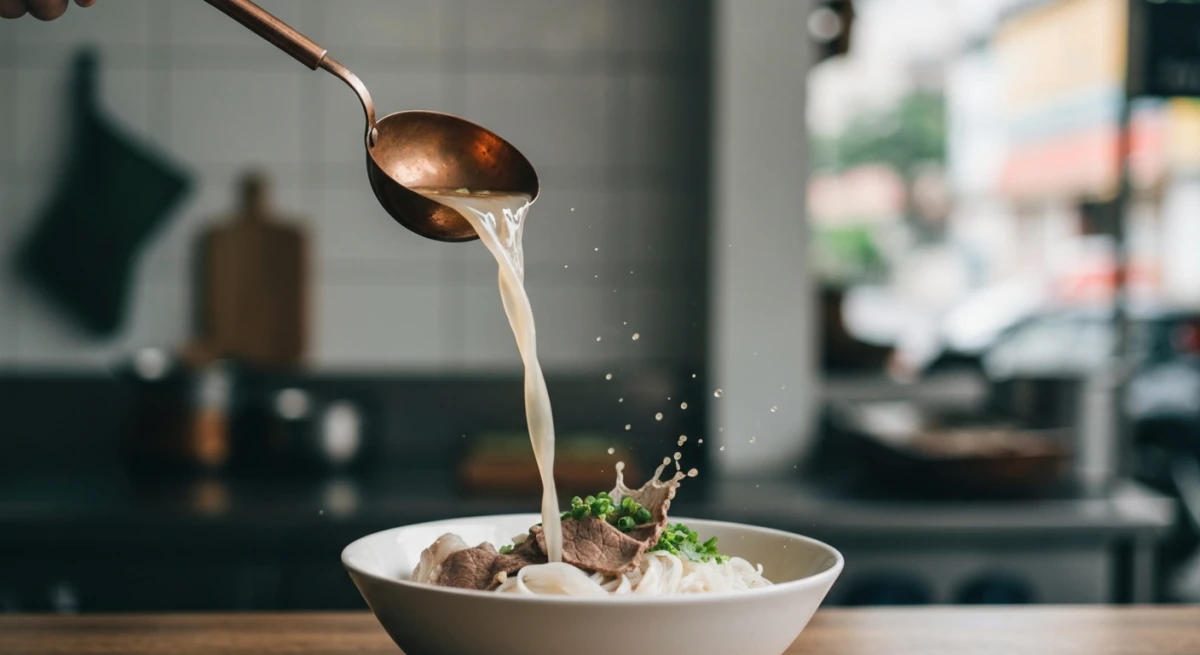
The undisputed star of the menu is their Beef Pho (Phở Bò). While traditional Vietnamese vendors often simmer pork bones to sweeten their broth, the chefs at Pho Muslim boil purely certified Halal beef marrow bones and aromatic brisket for over twelve hours. The result is a clean, deeply flavorful, and crystal-clear broth infused with charred ginger, onions, star anise, cardamom, and cinnamon. Served over silky rice noodles and topped with tender, paper-thin slices of beef and a mountain of fresh local herbs, this bowl of Pho captures the absolute soul of Vietnam.
Insider Tip: Pho Muslim operates in two shifts. The morning shift (6:30 AM to 12:00 PM) is dedicated strictly to Pho. If you return for the evening shift (3:30 PM to 10:00 PM), they serve a highly addictive, spicy Bun Bo Hue (Hue-style lemongrass beef noodle soup) and crispy fried spring rolls. Average Cost: 80,000 to 120,000 VND per person.
The Daun Restaurant (48 Le Lai Street, District 1)
If you prefer a comfortable, air-conditioned dining room with a massive menu that caters to diverse tastes, The Daun Restaurant is a premier choice. Operating since 2012, this fully Halal-certified restaurant is located near the lush green lawns of September 23rd Park and is a favorite for families and large tour groups.
The Daun offers an impressive selection of over 150 dishes, seamlessly bridging Vietnamese, Malaysian, Singaporean, and Western cuisines. Their Halal Beef Pho and fresh Goi Cuon (summer rolls wrapped in translucent rice paper) are executed with high precision, maintaining authentic Vietnamese flavors without compromising Halal integrity. If anyone in your travel party is craving comfort food from home, their Malaysian specialties like Nasi Goreng Kampung, Char Kway Teow, and rich Chicken Curry are spectacular. They also serve excellent Western dishes, including juicy grilled lamb chops and sizzling ribeye steaks. Average Cost: 120,000 to 250,000 VND per person.
Halal@Saigon (31 Dong Du Street, District 1)
Located directly opposite the historic Jamia Al-Musulman (Saigon Central Mosque), Halal@Saigon is one of the oldest and most trusted Halal establishments in the city. Because of its prime location, it serves as a central social hub for local Muslims and international travelers, particularly on Fridays after congregational prayers.
The menu at Halal@Saigon is a sophisticated exploration of Southern Vietnamese and Malaysian flavors. If you want to dive deep into local culinary traditions, try their Young Coconut Shoot Salad with Shrimp (Gỏi Cổ Hũ Dừa), which features crunchy coconut palm hearts, fresh herbs, and perfectly cooked shrimp tossed in a sweet-and-sour dressing. Another standout is their Claypot Baby Clams (Hến Xúc Bánh Đa), served with crispy sesame rice crackers. For those who enjoy spicy food, their Tom Yam soup and Nasi Lemak Rendang are widely considered some of the best in District 1, prepared using premium spices directly imported from Malaysia. Average Cost: 150,000 to 350,000 VND per person.
Baba's Kitchen (274 Bui Vien Street, District 1)
While Vietnamese food is a joy, there are nights when only the rich, warming spices of South Asia will do. Situated on the lively Bui Vien walking street, Baba's Kitchen is universally acclaimed as the best Indian halal restaurant in saigon.
Fully Halal-certified, Baba's Kitchen takes pride in preparing authentic North and South Indian dishes using high-quality ingredients. Their Butter Chicken is velvety and rich, and their Mutton Vindaloo offers a fiery, tang-infused kick that pairs beautifully with freshly baked garlic naan. Vegetarians will also find a paradise of options here, from creamy Paneer Butter Masala to spiced Aloo Gobi. The customer service at Baba's Kitchen is legendary; the staff are incredibly attentive, frequently offering complimentary desserts or checking on your spice preferences. Average Cost: 100,000 to 220,000 VND per person.
Jamilah Halal Food & Coffee (16 Nguyen An Ninh Street, District 1)
Tucked right in the bustling heart of Malaysia Street, Jamilah Halal Food & Coffee is a vibrant, family-run eatery that offers a delightful fusion of Malaysian, Indonesian, and Vietnamese street foods.
One of the primary reasons to visit Jamilah is their coffee menu. Vietnam is famous for its vibrant coffee culture, but traditional local coffee beans are often roasted with lard or butter to enhance their richness, making them problematic for strict Halal diets. Jamilah solves this by sourcing 100% Halal-certified coffee beans, allowing you to safely enjoy iconic local drinks like Cà Phê Sữa Đá (Vietnamese iced milk coffee) and Cà Phê Muối (Vietnamese salted cream coffee). Pair your coffee with their crispy fried spring rolls, which are stuffed with seasoned chicken and vegetables and fried in pure, dedicated vegetable oil. Average Cost: 70,000 to 130,000 VND per person.
Musa Karim Halal Restaurant (12-14 Nguyen An Ninh Street, District 1)
Also located on Nguyen An Ninh Street, Musa Karim is a highly popular, open-air restaurant that is constantly buzzing with energy. It is an excellent spot to soak in the lively street atmosphere while enjoying a massive variety of Southeast Asian dishes.
Musa Karim is particularly famous for its Halal Steamboat (Hot Pot). This interactive dining experience features a simmering pot of flavorful broth placed at the center of your table, accompanied by fresh seafood, thinly sliced beef, local vegetables, and noodles for you to cook yourself. It is a highly social and comforting meal, perfect for groups. If you prefer individual plates, their Beef Rendang and sweet-and-sour fish are cooked to perfection, showcasing deep, complex spice profiles. Average Cost: 90,000 to 180,000 VND per person.
Kedai Muslim Al-Amin (25 Nguyen An Ninh Street, District 1)
For budget-conscious backpackers and solo travelers, Kedai Muslim Al-Amin is a treasured find. This simple, no-frills diner on Malaysia Street focus on delivering massive portions of comforting food at highly competitive prices.
Their absolute must-try dish is the Cơm Gà (Halal Chicken Rice). The rice is cooked to a beautiful golden hue using rich chicken broth, garlic, and ginger, and is served alongside a generous portion of tender, steamed chicken, a savory dipping sauce, and a bowl of clear broth. It is simple, incredibly satisfying, and represents some of the best value in District 1. They also serve exceptional stir-fried noodles (Mee Goreng) and a refreshing Halal version of local Bun Ga (cold rice noodle salad with grilled chicken and fresh herbs). Average Cost: 65,000 to 110,000 VND per person.
Restaurant Halal Osman (35 Nguyen An Ninh Street, District 1)
Completing the fantastic trio of restaurants on Malaysia Street is Restaurant Halal Osman. Boasting a clean, spacious dining area with incredibly fast service, this spot is highly favored by Malaysian tour groups and families seeking a reliable, high-quality meal.
Halal Osman excels at Malaysian home-style cooking. Their Nasi Lemak is spectacular, featuring perfectly fluffy coconut-infused rice, a hard-boiled egg, crispy roasted peanuts, anchovies, and a sweet-and-spicy sambal that is made fresh daily. For a local twist, order their Halal Banh Xeo. This giant, crispy Vietnamese crepe is made from rice flour and turmeric, filled with juicy shrimp and fresh bean sprouts. You wrap pieces of the crepe in fresh mustard leaves and herbs, then dip it into a sweet-and-tangy Halal dipping sauce for an explosion of textures and flavors. Average Cost: 80,000 to 150,000 VND per person.
4. Adapting the Classics: Authentic Vietnamese Halal Food
One of the most exciting aspects of traveling is tasting local, national dishes. However, traditional Vietnamese cuisine presents a minefield of non-Halal ingredients for Muslim travelers. To appreciate the culinary craftsmanship of Saigon's Halal chefs, it helps to understand how they adapt these classic dishes without losing their authentic identity.
The Pho Transformation
Standard Vietnamese Pho relies on a complex, sweet broth. Unfortunately, many street vendors mix pork bones with beef bones to cut costs, and often season the broth with MSG brands that may contain uncertified animal-derived additives. In a certified halal restaurant in saigon, this process is completely purified. Chefs use exclusively Halal-certified beef or chicken bones. The signature sweetness is achieved through hours of slow boiling, combined with the natural sugars of charred onions, daikon radishes, and local sugarcane, alongside whole spices like star anise, cloves, and cinnamon. The meat toppings are sourced from trusted Halal butchers within the local Cham Muslim community.
Navigating Banh Mi
Banh Mi is a global street food icon, but a traditional baguette is heavily loaded with pork products: pork liver paté, sliced pork belly, cha lua (pork ham), and pork floss, all slathered in lard-based mayonnaise. To make a Halal Banh Mi, creative vendors in Saigon replace the pork paté with rich, seasoned chicken liver paté or skip it entirely. The pork cold cuts are swapped for sliced Halal lemongrass chicken, tender barbecued beef, or savory beef meatballs (Xíu Mại). The mayonnaise is made fresh daily using pure vegetable oil and egg yolks, ensuring you get that signature rich, creamy crunch in every bite, completely worry-free.
The Complexity of Bun Bo Hue
Hailing from the historic imperial city of Hue, Bun Bo Hue is a spicy, deeply aromatic beef and noodle soup. In its traditional form, it is one of the least Halal-friendly dishes in Vietnam, as the broth is heavily based on pork trotters and pig's blood cubes, and the bowl is topped with pork-based ham. Halal adaptions of Bun Bo Hue bypass these ingredients entirely. Chefs utilize a combination of beef shanks and beef ribs, simmering them with an abundance of fresh lemongrass and local chili oil to create that signature fiery, citrusy kick. It is served with thick, round rice noodles, fresh banana flower shavings, and mint, delivering the complex flavors of central Vietnam safely.
5. Essential Halal Survival Guide for Saigon
To make your trip to Ho Chi Minh City completely seamless and stress-free, we have gathered essential practical tips, cultural nuances, and navigation advice.
Understanding Halal Labels in Vietnam
When walking through Saigon, you will encounter various signs claiming to be Muslim-friendly. It is important to distinguish between them:
- Fully Halal-Certified: These restaurants display an official certificate near their entrance, issued by recognized organizations such as Halal Vietnam (HVN), the Vietnam Halal Centre (VHC), or international bodies like JAKIM (Malaysia) or MUI (Indonesia). These venues undergo strict audits of their supply chain and preparation methods.
- Muslim-Owned: Many smaller stalls, particularly those run by the local Cham ethnic minority, do not have the financial resources to pay for official certifications. However, they are owned and operated by practicing Muslims who strictly follow Islamic dietary laws. These are highly trusted within the local community.
- "No Pork, No Lard": Often found in vegetarian, seafood, or international establishments. While they avoid pork, they may still serve alcohol, use non-Halal meat, or use sauces that have cross-contamination. Use caution and ask detailed questions before dining.
Crucial Mosque Locations & Food Hubs
Halal restaurants in Saigon naturally cluster around the city's active mosques. If you are planning your daily itinerary, mapping your meals around these locations is highly efficient:
- Jamia Al-Musulman Mosque (Saigon Central Mosque): Located at 31 Dong Du Street, District 1. Built in 1935 by South Indian Muslims, this stunning French-colonial styled mosque is the largest in the city. The surrounding streets (Dong Du, Mac Thi Buoi) are home to several high-end Halal restaurants serving Vietnamese, Indian, and Middle Eastern cuisines.
- Thanh Duong Jamiul Islamiyah Mosque (Nancy Mosque): Located at 495 Tran Hung Dao, District 1. This area serves as a focal point for the local Cham Muslim community. The small, quiet alleyways surrounding this mosque are fantastic for finding ultra-authentic, budget-friendly street food stalls like Pho Muslim and Halal Banh Mi.
- Al Rahim Mosque: Located at 45 Nam Ky Khoi Nghia, District 1. Another historical mosque situated near the financial district, surrounded by several small, family-run Halal rice and noodle stalls.
Useful Vietnamese Phrases for Dining
While most staff at major Halal restaurants speak excellent English or Malay, learning a few basic Vietnamese phrases will help you navigate local markets and non-Halal areas with ease:
- "Tôi ăn theo đạo Hồi" (Pronounced: Toy an tay-o dao Hoy) – I eat according to Islam / I am Muslim.
- "Không thịt heo" (Pronounced: Khong thit hay-o) – No pork.
- "Không mỡ heo" (Pronounced: Khong mo hay-o) – No lard.
- "Không nước mắm" (Pronounced: Khong nuoc mam) – No fish sauce (useful for vegetarian dining).
- "Có chứng nhận Halal không?" (Pronounced: Co chung nhan Halal khong?) – Do you have a Halal certificate?
6. Frequently Asked Questions (FAQ)
Is Halal food expensive in Saigon?
Generally, dining at a halal restaurant in saigon is slightly more expensive than eating at a standard, non-Halal local stall. This is because Halal-certified meats, imported Malaysian or Indian spices, and official certification fees increase operational costs. However, street-side options like Pho Muslim or Halal Banh Mi remain highly budget-friendly, with meals costing between $3.00 and $5.00 USD.
Can I find Halal street food in Saigon?
Yes, the best concentration of Halal street food is along Nguyen An Ninh Street (Malaysia Street) in the evenings. Here, you can safely enjoy street-style kebabs, fresh fruit smoothies, sweet banana pancakes, and local Vietnamese coffee prepared with Halal-certified ingredients.
Do Halal restaurants in Saigon serve alcohol?
Strictly Halal-certified or Muslim-owned establishments, such as Pho Muslim, Al-Amin, and Jamilah Halal Food, maintain a strict no-alcohol policy. However, some larger, multi-cuisine restaurants catering to general tourists may offer beer on their beverage menus. Always check the establishment's policy or ask the staff if you want a 100% alcohol-free environment.
Are Buddhist vegetarian restaurants in Saigon automatically Halal?
While Buddhist vegetarian (Quán Chay) restaurants are strictly pork-free and lard-free, they are not automatically Halal. Some vegetarian dishes may use cooking wines, alcohol-based flavorings, or rely on shared manufacturing facilities that handle non-Halal items. While they are a great alternative in a pinch, sticking to certified Halal or Muslim-owned venues is always the safest option.
7. Conclusion: Embark on Your Saigon Food Adventure
Saigon is a city of endless discovery, and its rich culinary heritage should be experienced by everyone. Thanks to the dedication of the local Cham Muslim community and a growing, welcoming network of Halal chefs, you do not have to compromise your dietary values to savor the flavors of Vietnam. Whether you find yourself slurping hot, fragrant Pho broth down a quiet alleyway or enjoying a lively Nasi Lemak dinner on Malaysia Street, eating at an authentic halal restaurant in saigon is a beautiful way to connect with the city's diverse culture. Pack your bags, step out with confidence, and let Saigon's Halal food scene surprise and delight your taste buds!