Introduction
Ho Chi Minh City, formerly and still affectionately known as Saigon, is a sensory whirlwind. From the chaotic ballet of millions of motorbikes to the towering skyscrapers and French colonial architecture, Vietnam's largest metropolis is a city that never sleeps. However, for Muslim travelers, navigating a country where pork is a culinary cornerstone and lard is a default cooking medium can initially feel daunting.
Fortunately, finding halal ho chi minh city experiences is not only possible but incredibly rewarding. Thanks to a vibrant native Cham Muslim population and a steady influx of tourists from Malaysia, Indonesia, and the Middle East, Saigon has developed a thriving, highly accessible Halal ecosystem. From the bustling alleys of "Malaysia Street" to authentic local bowls of Pho prepared in accordance with Islamic dietary laws, this comprehensive guide will show you how to experience the very best of Ho Chi Minh City without compromising your faith.
The Epicenter: Nguyen An Ninh Street ("Malaysia Street")
If you ask any seasoned Muslim traveler where to head first upon landing in Saigon, they will point you directly to Nguyen An Ninh Street, fondly dubbed "Malaysia Street" or "Saigon Halal Street." Located just a stone's throw from the West Gate of the iconic Ben Thanh Market in District 1, this vibrant enclave is the beating heart of the city's Muslim tourist scene.
The Heartwarming History of Malaysia Street
To appreciate Nguyen An Ninh Street, one must understand its roots. The transformation of this street into a Halal haven is largely credited to Haji Basiroh, a Cham Muslim woman originally from the Chau Doc region of An Giang province. Moving to Saigon in 1974, Haji Basiroh initially worked for foreign diplomatic agencies and multinational firms due to her exceptional English, computer skills, and bilingual fluency in Vietnamese and Cham.
Driven by her father's dying wish to educate local children, she turned down high-paying corporate roles to teach literacy for free. Eventually, as Malaysian and Indonesian businessmen and tourists began visiting Saigon in the late 1990s and early 2000s, they struggled to find food and modest clothing. Recognizing this gap, Haji Basiroh opened the very first Halal restaurant and Islamic fashion boutique on Nguyen An Ninh Street. Her warmth, homemade meals, and welcoming spirit laid the foundation for what is now a bustling commercial street dedicated to serving the global Muslim community.
What to Expect on Nguyen An Ninh Street Today
Walking down Nguyen An Ninh Street feels like stepping into a cross-cultural oasis. The air is thick with the aromas of lemongrass, ginger, and roasting spices. You will see shop signs written in Malay, Arabic, and Vietnamese. Shop assistants and restaurant staff greeting you with a warm "Assalamualaikum," many speaking fluent Malay. Hijab-wearing travelers browse racks of colorful tudungs, baju kurungs, and local Vietnamese silk souvenirs, while families gather around outdoor tables.
Some of the key dining institutions to visit on this street include:
- Kedai Muslim Al-Amin (31 Nguyen An Ninh): A beloved favorite among Malaysian visitors, Al-Amin is famous for its comforting Nasi Lemak, Mee Goreng, and sweet, frothy Teh Tarik. It also serves localized Vietnamese dishes like beef pho made with Halal-certified ingredients.
- Restaurant Halal Osman (35 Nguyen An Ninh): Run by friendly local staff, this spot offers a massive menu featuring Vietnamese classics alongside Malaysian staple dishes. Their sizzling claypot chicken rice and Halal spring rolls are absolute crowd-pleasers.
- Kampung Pandan (53 Thu Khoa Huan Street - just around the corner): Though technically a block away, this spacious, beautifully decorated restaurant serves an incredible fusion of Vietnamese, Malaysian, Singaporean, and Indian dishes. It is a fantastic spot for a sit-down family dinner, offering everything from savory beef rendang to freshly fried Banh Xeo (Vietnamese savory pancakes).
Beyond dining, the street is packed with boutiques selling high-quality Islamic apparel, custom-tailored traditional dresses, and specialty foodstuffs, making it the perfect home base for your Saigon adventure.
Authentic Vietnamese Halal Foods and Where to Eat Them
While finding Malaysian, Indian, or Middle Eastern food is easy in any major global city, traveling to Vietnam means you want to experience Vietnamese food. For a long time, enjoying authentic local dishes was a challenge due to the widespread use of pork broth and lard. Today, however, local Muslim chefs have perfected Halal versions of Vietnam's national treasures.
1. Halal Pho: The Soul of Vietnam
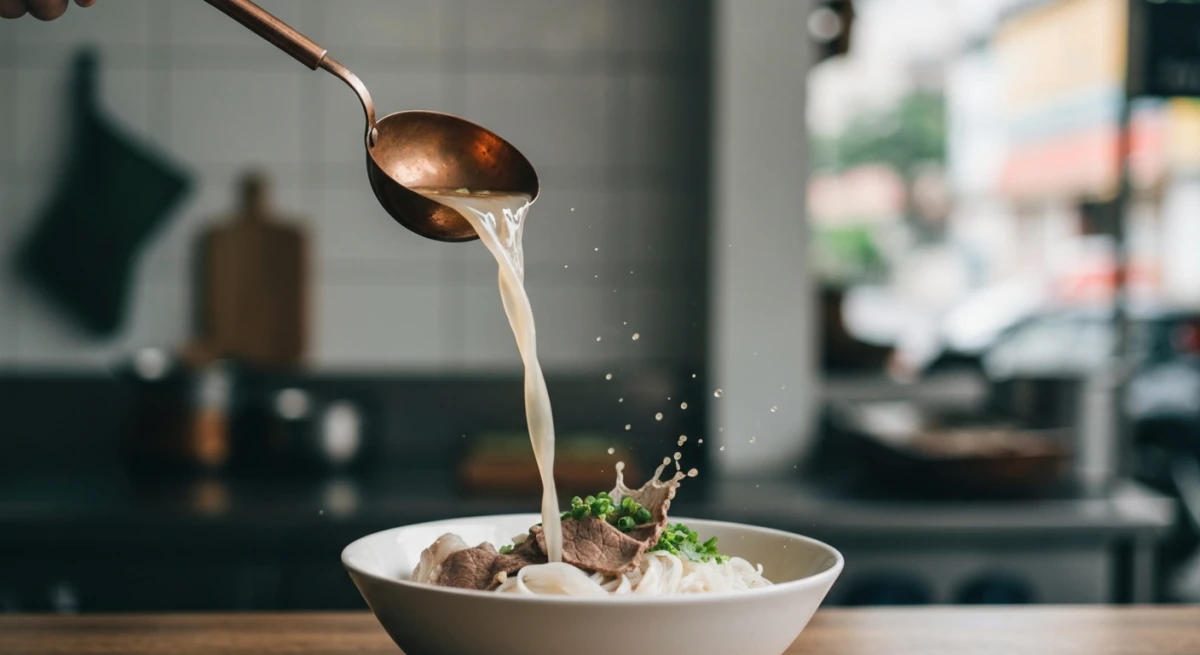
Pho is more than just noodle soup; it is a cultural symbol. Traditional pho broth is simmered for hours using beef or chicken bones, but in non-Halal establishments, pork bones are often added to sweeten the soup, and the meat is not slaughtered according to dhabihah standards.
- Where to eat it: Head straight to Pho Muslim (located at TK25/18 Tran Hung Dao, Cau Kho, District 1). Tucked away in a quiet alley near the Jamiul Islamiyah Mosque, this modest, open-air eatery is widely considered the holy grail of Halal Pho in Ho Chi Minh City. Run by local Muslims, they serve an extraordinarily aromatic beef pho with a clear, deeply flavorful broth infused with star anise, cinnamon, and charred ginger.
- Pro Tip: Pho Muslim has a unique schedule. They serve their legendary Pho Bo (Beef Pho) in the morning from 6:30 AM to 11:30 AM. In the evening, from 4:00 PM to 10:00 PM, they switch their menu to serve Bun Bo Hue (spicy, lemongrass-infused beef noodle soup). Both are absolutely worth planning your day around.
2. Halal Banh Mi: The Ultimate Street Sandwich
Banh Mi is a crispy French baguette sliced open and stuffed with various meats, pickled vegetables, fresh cilantro, chili, and savory sauces. The standard street version relies heavily on pork liver pate, pork ham, and lard-based mayonnaise, making it highly unsafe for Halal diners.
- Where to eat it: You can find incredible Halal Banh Mi at small stalls clustered near the local mosques. A highly rated spot is the Halal Banh Mi cart located in Alley 553, Tran Hung Dao, or directly outside the Jamiul Islamiyah Mosque. These Muslim-owned stalls substitute the traditional pork fillings with savory grilled Halal beef, shredded lemongrass chicken, or freshly fried eggs. They use a custom-made, lard-free egg-yolk mayonnaise and house-made sauces that replicate the exact savory-sweet flavor profile of the original street food icon.
3. Banh Xeo and Fresh Spring Rolls (Goi Cuon)
Banh Xeo is a crispy, savory crepe made from rice flour, water, and turmeric, filled with slivers of beef, shrimp, and bean sprouts. It is served with a mountain of fresh mustard leaves, lettuce, and herbs, which you use to wrap pieces of the crepe before dipping it in a sweet and sour sauce.
- Where to eat it: Halal@Saigon (located at 66 Dong Du Street, District 1, directly opposite the Saigon Central Mosque) is a premier dining spot for these delicacies. Their crispy Banh Xeo is light, grease-free, and prepared with certified Halal proteins. It is also an excellent place to sample authentic Goi Cuon (fresh, translucent summer rolls packed with fresh herbs, vermicelli noodles, and Halal prawns, served with a rich, velvety peanut dipping sauce).
Beyond District 1: Saigon’s Hidden Halal Pockets
While District 1 is the most convenient area for tourists, exploring other districts reveals a richer, more authentic side of Saigon. It is in these outer districts that you will find the local Muslim communities living, working, and cooking.
District 8: The Cultural Heart of the Cham Community
For travelers seeking an off-the-beaten-path cultural experience, District 8 is home to a dense population of Cham Muslims. This neighborhood is centered around the Masjid Jamiul Anwar (located at 157/9B Duong Ba Trac Street).
Crossing the bridge into District 8 instantly shifts the vibe of the city. Here, you will find quiet residential alleys where local women wear colorful hijabs and men walk to the mosque in sarongs. The street food scene here is entirely community-focused and highly affordable. You can find tiny, family-run street stalls selling:
- Com Tam (Broken Rice): A Saigon classic featuring broken rice grains served with sweet, smoky grilled Halal beef or chicken, pickled vegetables, and a splash of sweet, garlic-infused fish sauce.
- Cham-style Curries: Unlike Vietnamese curries, which tend to be sweeter and thinner, Cham curries are heavily influenced by Malaysian and Cambodian spice profiles—richer in coconut milk, heavy on star anise, and packing a deeper chili punch.
Phu Nhuan District: Quiet Lanes and Traditional Flavors
Another historic pocket of the local Muslim community is located in the Phu Nhuan District, surrounding the Jamiyah Islamic Mosque at 52 Nguyen Van Troi Street. This area is perfect for travelers who want to escape the tourist crowds of Ben Thanh. The lanes branching off Nguyen Van Troi Street contain small, unassuming Muslim-owned coffee shops and warungs serving local rice dishes, freshly pressed sugarcane juice, and traditional steamed cassava cakes at local prices.
A Guide to Mosques and Prayer Spaces in Ho Chi Minh City
Maintaining your daily prayers while exploring Ho Chi Minh City is remarkably easy. The city is home to several historic, architecturally stunning mosques that double as serene sanctuaries from the chaotic streets outside.
| Mosque Name | Address / Location | Key Features & Community Vibe |
|---|---|---|
| Saigon Central Mosque (Jamia Al-Musulman) | 66 Dong Du Street, Ben Nghe, District 1 | Built in 1935 by South Indian Muslims. Features striking green-and-white architecture, a tranquil central pool, and cool stone floors. Located in the heart of the luxury shopping district, making it highly convenient. Offers Friday prayers in English, Arabic, and Vietnamese. |
| Jamiul Islamiyah Mosque (Nancy Mosque) | 459B Tran Hung Dao Street, Cau Kho, District 1 | Built in 1950. Located in a lively, authentic local neighborhood. Serves as the gateway to the famous Pho Muslim alley. This mosque is a vital community hub for the local Cham population. |
| Masjid Al-Rahim | 45 Nam Ky Khoi Nghia Street, District 1 | Built in 1885, making it one of the oldest mosques in Vietnam. Originally constructed by Malaysian and Indonesian merchants, it features beautiful wood carvings and a cozy, intimate atmosphere. |
| Jamiyah Islamic Mosque | 52 Nguyen Van Troi Street, Phu Nhuan District | The representative office of the Muslim community in HCMC. A striking white-and-green structure. The ground floor is dedicated to teaching Islamic studies to local children, while the upper floor features a spacious prayer hall. |
Mosque Visitation Etiquette for Travelers
When visiting these sacred spaces, remember to adhere to traditional Islamic etiquette:
- Dress Modestly: Ensure your shoulders and knees are covered. Women should wear a long skirt or trousers and cover their heads with a scarf. Many of the larger mosques have modest cloaks available at the entrance for tourists.
- Remove Footwear: Always leave your shoes on the designated racks outside the prayer halls.
- Respect Quiet Zones: Be mindful of those praying or reading the Quran. Keep your voice low and avoid taking photos of individuals performing salah without their permission.
Navigation and Survival Tips for Muslim Travelers
To make your trip to Saigon as smooth and enjoyable as possible, keep these practical travel hacks in mind.
1. Deciphering Halal Labels in Vietnam
In Vietnam, you will encounter three main categories of dining establishments:
- Officially Halal-Certified: These restaurants display a valid certificate from recognized international bodies or the local Halal Vietnam (HVN) agency. They do not serve pork or alcohol, and all ingredients are strictly vetted. Examples include Baba's Kitchen and Kampung Pandan.
- Muslim-Owned (No Certificate): Many small, family-run stalls (like Pho Muslim or the street food carts in District 8) do not have the financial resources to pay for formal international certification, but they are owned and operated by pious local Muslims. These spots are highly reliable and offer some of the most authentic dining experiences.
- Pork-Free / Vegetarian (Chay): Standard Vietnamese restaurants that claim to be "pork-free" should be approached with extreme caution. Cross-contamination is highly common in non-Halal kitchens, and ingredients like lard (mỡ heo) or chicken-powder seasoning containing pork extracts are often used without the staff's realization.
2. Essential Vietnamese Phrases for Dining
If you find yourself outside of District 1 or in an area without designated Halal restaurants, look for Buddhist Vegetarian ("Chay") restaurants. They are strictly pork-free and do not use animal fats, making them an excellent backup option.
Here are a few handy phrases to write down or keep on your phone:
- "Tôi không ăn thịt heo" – I do not eat pork.
- "Không dùng mỡ heo" – Do not use lard.
- "Tôi là người Hồi giáo" – I am Muslim.
- "Món này có chay không?" – Is this dish vegetarian?
- "Nhà hàng Halal ở đâu?" – Where is the Halal restaurant?
3. Smart Transport and Accommodation Options
- Where to Stay: If convenience is your top priority, book your accommodation around Nguyen An Ninh Street or the Dong Du Street area. Hotels like the Grand Silverland Hotel, Jovia Hotel, and Alagon Saigon are highly popular among Muslim travelers due to their proximity to the mosques and Halal dining strips. Some of these hotels even offer Halal-certified breakfast options upon request.
- Using Ride-Hailing Apps: Download Grab or Gojek immediately upon arrival. Not only are these apps incredibly cheap and safe for navigating the city, but you can also use their food delivery services (GrabFood) to order Halal meals directly to your hotel room. Simply search "Halal" in the food app, and it will pull up verified options near your location.
Frequently Asked Questions (FAQ)
Is Halal food easy to find in Ho Chi Minh City?
Yes, extremely easy, particularly in District 1. The areas around Ben Thanh Market (specifically Nguyen An Ninh Street) and the Saigon Central Mosque on Dong Du Street are packed with Halal-certified and Muslim-owned restaurants. There are also vibrant local Muslim neighborhoods in District 8 and Phu Nhuan District with affordable local food options.
Are major global fast-food chains in Vietnam Halal?
Unlike in Malaysia, Singapore, or the Middle East, major international fast-food chains in Vietnam (such as McDonald's, KFC, Lotteria, and Texas Chicken) are not Halal-certified. They source their meats from local non-Halal suppliers and share cooking equipment, so Muslim travelers should avoid them.
Can I eat at vegetarian (Chay) restaurants in Saigon?
Yes. Vietnam has a deep-rooted Buddhist culture, resulting in an abundance of high-quality "Chay" (vegetarian) restaurants. These spots are completely pork-free and do not use animal-derived oils, making them a safe and highly delicious alternative. However, if you are strict about alcohol, it is wise to double-check that no cooking wines were used in the sauces.
How do I verify if a restaurant is truly Halal in Ho Chi Minh City?
Look for a visible Halal certification logo displayed near the entrance or cash register. For smaller, local street food spots, look for the Arabic "Halal" symbol or a sign that says "Kedai Muslim." If you are unsure, do not hesitate to ask the staff; most Muslim-run businesses in Saigon are incredibly proud of their heritage and will happily reassure you.
Is the street food safe for Muslims?
Generally, random street food stalls are not safe due to the high risk of cross-contamination with pork products, lard, and non-dhabihah meats. Stick to street food stalls located directly outside the major mosques, or those clearly marked as "Muslim-owned" on Nguyen An Ninh Street and Duong Ba Trac Street.
Conclusion
Ho Chi Minh City is a captivating, energetic destination that warmly welcomes visitors of all backgrounds. By centering your journey around the city's historic mosques, leveraging the incredibly convenient "Malaysia Street" near Ben Thanh Market, and venturing out to taste local culinary masterpieces like Halal Pho and Banh Mi, you can experience the absolute best of Saigon with complete peace of mind. Pack your modest wear, bring your appetite, and prepare to fall in love with the sights, sounds, and vibrant Halal flavors of this unforgettable Vietnamese metropolis.