Introduction
If you are planning a trip to Vietnam, exploring the rich tapestry of Hanoi specialty food should be at the very top of your itinerary. Unlike the fast-paced, modern food scenes of Saigon or the fiery, spice-laden dishes of Central Vietnam, Hanoi's culinary heritage is an exercise in subtle elegance, historical depth, and absolute culinary precision. The city's food culture is deeply intertwined with its thousand-year history, reflecting Chinese dynasties, French colonial influences, and the agricultural abundance of the Red River Delta.
To eat in Hanoi is to participate in a daily ritual. It is the sensory experience of sitting on blue plastic stools on busy sidewalks, dodging weaving motorbikes, while inhaling the steam from a cauldron of beef bones that has been simmering for twelve hours. In this comprehensive guide, we will take you beyond the typical tourist traps to explore the authentic Hanoi specialty food that locals treasure, sharing the history of these dishes, how to eat them properly, and where to find the absolute best versions in the capital.
The Philosophy of Northern Cuisine: Why Hanoi Food Stands Alone
To appreciate Hanoi specialty food, one must understand the distinct culinary philosophy of Northern Vietnam. While Southern Vietnamese cuisine is characterized by bold, sweet flavors, coconut milk, and a volcanic amount of fresh herbs, Northern cuisine leans toward subtle, savory, and balanced flavor profiles.
There are several reasons for this distinct culinary identity:
- The Climate: Unlike the tropical south, Northern Vietnam experiences four distinct seasons, including a chilly winter. This climate affects agriculture, leading to a reliance on locally grown, seasonal herbs rather than year-round tropical greens.
- Flavor Profiles: Hanoians value clean, delicate tastes. Sweetness is rarely introduced via refined sugar; instead, it comes from the slow simmering of marrow bones, marine life, or caramelized ingredients. Black pepper is favored over fresh chili for its warm, aromatic heat.
- Historical Influences: As a former imperial capital and a close neighbor to China, Hanoi's food bears the subtle marks of French baking and Chinese cooking techniques, all adapted uniquely to Vietnamese tastes.
- The Umami of River and Field: Lacking the vast oceanic coastlines of the central region, Hanoi historically relied on freshwater ecosystems. Field crabs, pond snails, and river fish are foundational elements of many iconic Hanoian noodle broths.
Understanding these nuances helps explain why a bowl of Pho in Hanoi tastes completely different from a bowl of Pho in Ho Chi Minh City. In Hanoi, simplicity is not a lack of effort; it is the ultimate form of refinement.
The Core Hanoi Specialty Food Masterclass: What to Eat & Where to Find It
Let's dive into the defining dishes of the capital. Here is the definitive list of Hanoi specialty food that every traveler must experience.
1. Phở Hà Nội: The Purist's Bowl
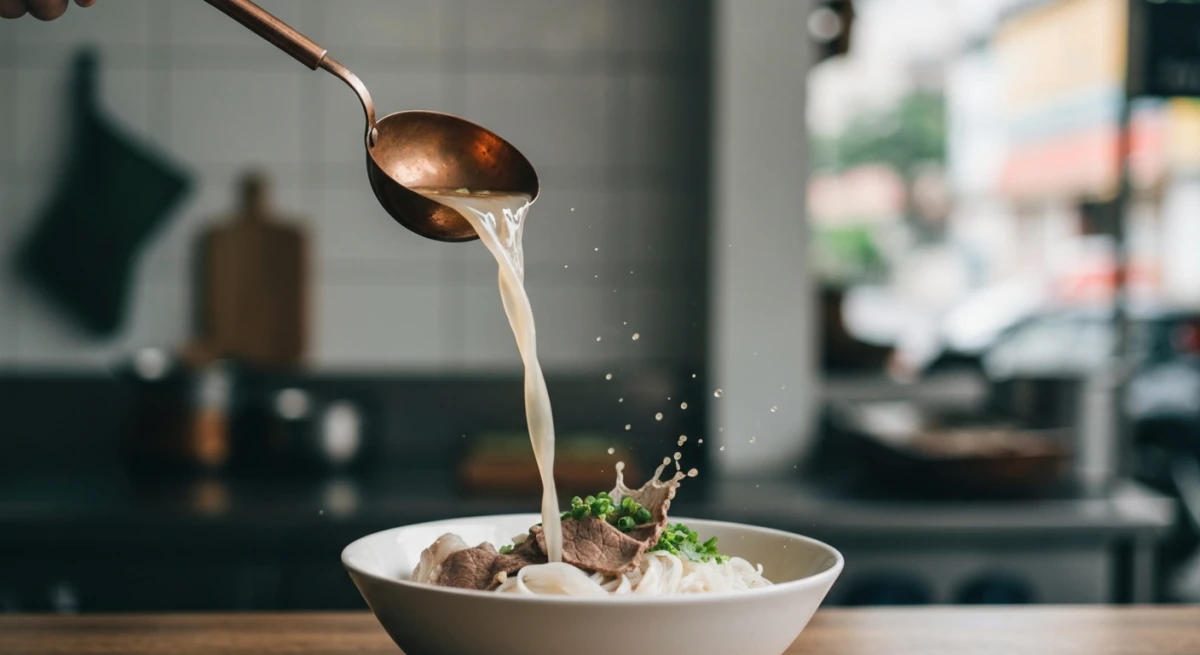
No discussion of Hanoi specialty food can begin without Pho. While this noodle soup has become a global phenomenon, the Hanoian version (Phở Bắc) is the original and, according to purists, the most authentic.
In Hanoi, Pho is defined by its minimalist elegance. The broth is crystal clear, coaxed from beef bones (for Phở Bò) or chicken bones (for Phở Gà), charred ginger, onions, and a delicate blend of warm spices like cinnamon, star anise, and black cardamom. Crucially, Hanoians do not load their bowl with bean sprouts, basil, hoisin sauce, or sriracha. Doing so is considered an insult to the chef who spent all night balancing the broth. Instead, it is served simply with tender rice noodles, your choice of beef cuts, fresh scallions, cilantro, a squeeze of fresh lime, and perhaps a few slices of fresh bird's eye chili.
How to eat it like a local: Order a side of quẩy (savory fried dough sticks). Dip these crispy, golden batons into your hot broth until they become slightly soft and spongy, absorbing the rich beef flavors.
Where to go:
- Phở Gia Truyền Bát Đàn (49 Bát Đàn, Hoàn Kiếm): Famous for its rich, traditional broth and long morning queues of locals.
- Phở Thìn Lò Đúc (13 Lò Đúc, Hai Bà Trưng): Known for a modern twist—the beef is flash-fried with garlic before being added to the bowl, creating a wonderfully smoky, robust broth.
2. Bún Chả: The Charcoal-Grilled Classic
If Pho is the soul of Hanoi, Bún Chả is its undisputed lunchtime heartbeat. This dish exploded into global consciousness when President Barack Obama and Chef Anthony Bourdain dined on it together at a humble Hanoi eatery in 2016, but locals have been obsessed with it for generations.
Bún Chả consists of two types of grilled pork: chả viên (savory minced pork patties) and chả miếng (succulent strips of pork belly). Both are marinated in fish sauce, sugar, garlic, and shallots, then slow-grilled over red-hot charcoal until caramelized and deeply smoky.
The magic happens when these hot, sizzling meats are dropped into a warm, diluted dipping sauce made of fish sauce, vinegar, sugar, and lime, adorned with crunchy slices of green papaya and carrot. This is served alongside a plate of cold bún (rice vermicelli noodles) and a literal mountain of fresh herbs, including perilla, Vietnamese balm, lettuce, and coriander.
How to eat it like a local: Do not dump your entire plate of noodles into the broth at once. Instead, take a small nest of noodles with your chopsticks, dip them briefly into the warm pork broth, grab a piece of pork and some herbs, and eat them together in one glorious mouthful.
Where to go:
- Bún Chả 74 Hàng Quạt (74 Hàng Quạt, Hoàn Kiếm): Tucked deep inside a narrow alley, this spot serves arguably the most caramelized, melt-in-your-mouth pork patties in the city.
- Bún Chả Hương Liên (24 Lê Văn Hưu, Hai Bà Trưng): The official "Obama Bún Chả" spot. While touristy, it still serves an excellent, clean version of the dish.
3. Chả Cá Lã Vọng: Sizzling Turmeric Fish with Dill
Chả Cá is so iconic to Hanoi that a street in the Old Quarter was officially renamed after it (Phố Chả Cá). This is not just a meal; it is an interactive theatrical experience.
When you order Chả Cá, a portable gas stove is set up at your table, topped with a sizzling cast-iron pan. Inside are golden, tender chunks of catfish (traditionally Hemibagrus, or cá lăng), which have been marinated in turmeric, galangal, and garlic. The server will pile massive heaps of fresh dill and scallions directly into the pan, which wilt quickly into the hot oil.
You then assemble your bowl: start with a base of cold rice vermicelli, add a piece of the sizzling, herb-coated turmeric fish, sprinkle roasted peanuts, and drizzle the entire creation with mắm tôm (a highly pungent, fermented shrimp paste whisked with lime juice and sugar until frothy).
Pro-tip: If mắm tôm is too intimidating for your palate, you can ask for nước mắm (regular fish sauce), but the shrimp paste is what provides the authentic, savory counterpunch that makes this dish legendary.
Where to go:
- Chả Cá Thăng Long (19-21-31 Đường Thành, Hoàn Kiếm): A beautiful, multi-level restaurant that offers a pristine, delicious, and highly accessible version of the dish.
- Chả Cá Lã Vọng (14 Chả Cá, Hoàn Kiếm): The historic birthplace of the dish, though some locals find it overpriced today compared to modern competitors.
4. Bún Riêu Cua & Bún Ốc: The Seafood Soups of the Sidewalk
While beef and pork get much of the spotlight, Hanoi's watery agricultural surroundings mean that river-dwelling creatures are central to the local diet.
- Bún Riêu Cua is a freshwater crab noodle soup that features a rich, reddish broth colored with tomato and annatto seeds. The broth has a delightful, light sourness achieved through the addition of dấm bỗng (fermented rice wine dregs). The highlight of the bowl is the riêu cua—soft, pillowy mounds of freshwater crab paste mixed with egg. It is often topped with fried tofu, beef slices, and Vietnamese pork sausage.
- Bún Ốc is snail noodle soup. Large, plump pond snails (ốc nhồi) or smaller, crunchy snails (ốc vặn) are boiled and served over rice vermicelli in a piping hot, sour-savory tomato broth. The snails provide a delightful, clean crunch that contrasts beautifully with the tender noodles.
Where to go:
- Bún Riêu Trang (23 Nguyễn Siêu, Hoàn Kiếm): A legendary street-side stall serving an intensely flavorful, tangy crab soup.
- Bún Ốc Cô Huê (43 Nguyễn Siêu, Hoàn Kiếm): A long-standing favorite where you can taste the traditional, unadulterated flavor of Hanoian snail soup.
5. Bánh Cuốn: Silky Breakfast Rolls
If you want to start your morning like a Hanoian, find a steam-shrouded cart on the sidewalk and order Bánh Cuốn.
These delicate, paper-thin sheets of steamed rice batter are made by pouring fermented rice batter onto a tightly stretched fabric screen over a pot of boiling water. Within seconds, the chef lifts the translucent sheet off the steamer with a bamboo stick, fills it with a mixture of minced wood ear mushrooms and seasoned pork, and rolls it up. It is brushed with shallot oil, sprinkled with crispy fried shallots, and served with slices of chả lụa (Vietnamese pork sausage) and a warm, sweet-and-sour fish dipping sauce.
Where to go:
- Bánh Cuốn Bà Hoành (66 Tô Hiến Thành, Hai Bà Trưng): Famous for its incredibly thin, elastic rice sheets and delicious grilled pork served on the side.
- Bánh Cuốn Gia Truyền Thanh Vân (14 Hàng Gà, Hoàn Kiếm): A great Old Quarter spot where you can watch the chef expertly steam each roll on the street corner.
6. Cốm: The Quintessential Taste of Autumn
No guide to Hanoi specialty food is complete without mentioning Cốm—young, green sticky rice harvested in the autumn. For Hanoians, Cốm is not just food; it is a poetic symbol of the season.
Originating from Vòng Village on the outskirts of the city, the immature rice grains are carefully harvested, roasted over low fires, and painstakingly pounded in mortars to flatten them. The resulting bright green, chewy grains are incredibly fragrant, smelling of fresh grass and lotus leaves.
While Cốm can be eaten raw by the handful, it is also used to make various specialties:
- Bánh Cốm: Sweet green rice cakes filled with mung bean paste, traditionally gifted at Vietnamese weddings.
- Chả Cốm: Savory pork sausage mixed with chewy green rice grains, then fried until crispy on the outside.
Where to go:
- Cốm Vòng Huy Linh (Trần Thái Tông, Cầu Giấy): To source fresh Cốm directly from the master producers.
- Hàng Than Street (Hoàn Kiếm): The go-to destination for buying beautifully packaged Bánh Cốm to take home as gifts.
Beyond Savory: Iconic Hanoi Drinks and Sweet Treats
After indulging in savory feasts, Hanoi's beverage and dessert scene offers unique creations that have gained international fame.
Cà Phê Trứng (Egg Coffee)
Created in 1946 by Nguyen Van Giang, a bartender at the historic Metropole Hotel, egg coffee was born out of necessity. Due to a severe milk shortage during the French War, Giang whisked chicken egg yolks with sugar, butter, and condensed milk to create a rich, creamy froth that he poured over robust Vietnamese robusta coffee.
The result is a luscious, dessert-like beverage often described as liquid tiramisu. The sweet, velvety egg cream beautifully cuts the intense bitterness of the dark roast coffee.
How to drink it: Use a small spoon to taste the sweet egg foam first, then gently stir the bottom layer of hot coffee into the cream to enjoy the balanced flavors.
Where to go:
- Cafe Giảng (39 Nguyễn Hữu Huân, Hoàn Kiếm): The original birthplace, tucked down a narrow, blink-and-you-miss-it corridor.
- Cafe Đinh (13 Đinh Tiên Hoàng, Hoàn Kiếm): Run by Giang's daughter, this rustic, second-floor cafe overlooks Hoàn Kiếm Lake and offers an intensely rich, old-school atmosphere.
Tào Phớ (Silken Tofu in Jasmine Syrup)
During hot summer days, Hanoians turn to Tào Phớ to cool down. This refreshing dessert consists of warm, incredibly smooth, silken tofu ladled into a clear, ice-cold syrup infused with fresh jasmine blossoms. Modern variations are topped with grass jelly, boba pearls, and shredded coconut, but the simple, traditional version is still the most beloved.
The Ultimate 24-Hour Self-Guided Hanoi Specialty Food Tour
If you only have one day to explore the culinary capital, follow this carefully crafted walking itinerary to maximize your tasting journey through the historic Old Quarter.
- 8:00 AM — Breakfast at Phở Bát Đàn: Beat the mid-morning heat and join the locals lining up for a steaming bowl of beef Pho. Order quẩy and enjoy the rich, marrow-infused broth.
- 10:30 AM — Mid-Morning Energizer at Cafe Đinh: Climb the creaky stairs of this hidden lakeside cafe. Grab an egg coffee and watch the morning traffic circle Hoàn Kiếm Lake from the tiny balcony.
- 12:30 PM — Lunch at Bún Chả 74 Hàng Quạt: Walk through the bustling streets to Hàng Quạt alley. Follow your nose to the smoky grill and order a plate of Bún Chả with a side of crispy fried spring rolls (nem cua bể).
- 3:00 PM — Sweet Afternoon Stroll: Find a street vendor carrying shoulder poles lined with lotus leaves. Purchase a small packet of fresh Cốm (green rice) and enjoy it while walking around the cool, shaded pathways of Hoàn Kiếm Lake.
- 6:30 PM — Dinner at Chả Cá Thăng Long: Wind down your day with a theatrical dinner. Watch your turmeric fish sizzle at your table, wash it down with a cold Bia Hà Nội, and savor the pungent, umami-rich mắm tôm dipping sauce.
- 8:30 PM — Sweet Nightcap: Finish your culinary tour with a refreshing bowl of Tào Phớ or a cold coconut ice cream at a street corner near the St. Joseph's Cathedral.
Sidewalk Etiquette & Survival Tips for Foodies in Hanoi
Dining on the streets of Hanoi is an art form. To make the most of your adventure, keep these insider tips in mind:
- Embrace the Plastic Stool: Don't be intimidated by the low-slung plastic tables and chairs. This is where the best food in the city is served. If a place is packed with locals sitting on tiny stools, it is guaranteed to be delicious.
- Watch the Monosyllabic Signs: Most traditional restaurants in Hanoi specialize in only one dish. Look at the signboards on the street: if it says "Phở Bò," that is the only thing they serve. Don't ask for fried rice or pad thai.
- Keep Wet Wipes Handy: Street food stalls do not usually provide napkins or running water. Bring your own travel pack of wet wipes to clean your hands and chopsticks before eating.
- Observe Local Customs: Watch how locals assemble their condiments. Usually, garlic vinegar is paired with beef Pho, while fresh lime is used for chicken Pho. When eating noodle soup, use your spoon in your left hand to hold the broth, and your chopsticks in your right hand to guide the noodles.
- Drink Bottled Water: While ice (đá) in reputable Hanoi food stalls is generally safe because it is made from purified water, stick to bottled beverages if you have a sensitive stomach.
Frequently Asked Questions About Hanoi Specialty Food
Is Hanoi specialty food safe for tourists to eat on the street?
Yes, street food in Hanoi is generally very safe. Because of the high volume of daily customers, ingredients are bought fresh from the wet markets every morning and fully consumed by the end of the day. To minimize any risk, look for stalls that are packed with local families and where the food is prepared hot in front of you.
How do I find vegetarian Hanoi specialty food?
While traditional Hanoi food relies heavily on fish sauce and pork broth, vegetarian (chay) culture is growing rapidly. Look for signs that say "Quán Chay" or "Cơm Chay." You can find excellent vegetarian versions of Pho and Bun Cha at dedicated Buddhist vegetarian restaurants in the Old Quarter, such as Ưu Đàm Chay or Sadhu.
What makes Hanoi Pho different from Southern Pho?
Hanoi Pho (Phở Bắc) focuses on a clear, clean, delicate broth with thick noodles and minimal garnishes. Southern Pho (Phở Nam) has a sweeter, spicier broth, thinner noodles, and is served with a massive plate of raw bean sprouts, fresh basil, and sweet hoisin sauce.
When is the best time of year to visit Hanoi for food?
Autumn (September to November) is widely considered the best season. The weather is cool and breezy, making it pleasant to sit outside on sidewalk stools. It is also the only time of year when fresh Cốm (young green rice) is harvested and available.
Conclusion
Hanoi specialty food is far more than a collection of tasty ingredients; it is a masterclass in culinary balance and a direct reflection of the city's resilient soul. From the smoky depths of a sidewalk Bún Chả grill to the historic, comforting warmth of a purist's bowl of Pho, every bite tells a story of tradition, geography, and meticulous craft. As you navigate the winding alleys of the Old Quarter, leave your culinary comfort zone behind, embrace the hum of the motorbikes, and let your palate guide you through one of the world's most extraordinary food capitals.