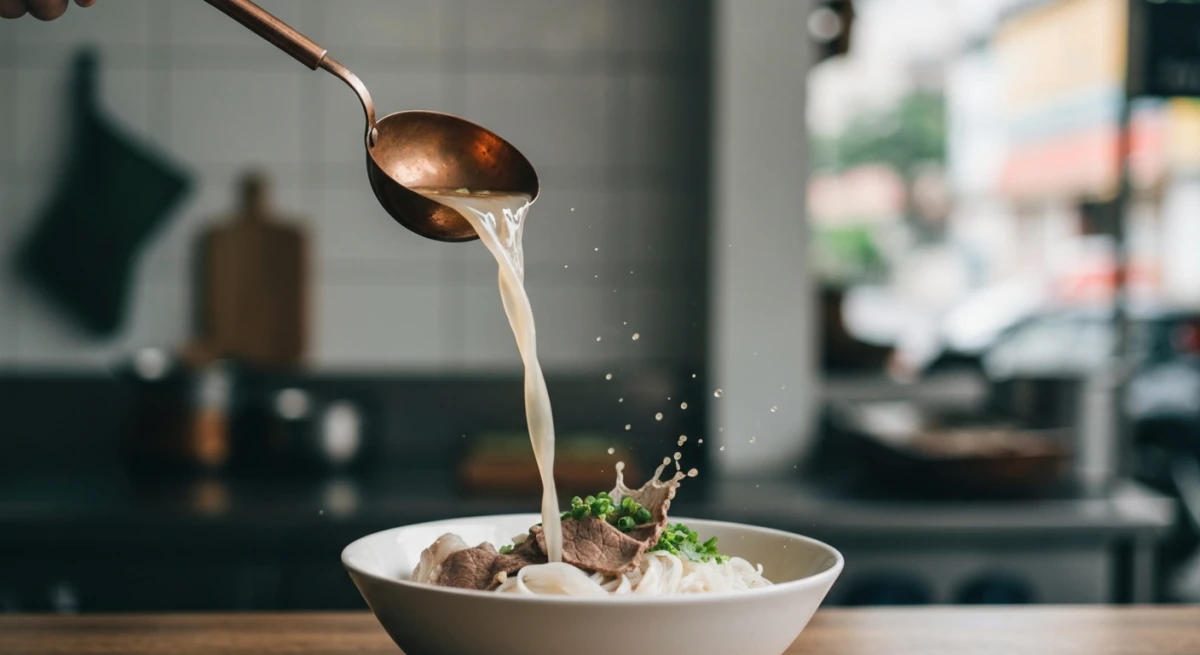
If you are planning a food trip to Vietnam, your tastebuds are likely already dreaming of a steaming, deeply aromatic bowl of beef noodle soup. But finding the best pho ho chi minh city has to offer is not as simple as walking to the nearest street corner.
While this sprawling southern metropolis is packed with thousands of noodle shops, each bowl tells a completely different story. Some trace their roots back to the 1950s migration from the north, offering a delicate, pure, and minimally seasoned broth. Others fully embrace the sweet, herb-heavy abundance of the Mekong Delta, creating the bold, complex bowls characteristic of Southern-style pho (Phở Nam). From secret wartime headquarters to modern Michelin-selected spots serving soup in bubbling stone bowls, Saigon's noodle scene is a thrilling, delicious maze.
This comprehensive guide is designed to help you navigate that maze. We will dive deep into the cultural clash of Northern versus Southern styles, teach you the unspoken local dining rituals, and take you on a curated tour of the absolute best pho spots in Saigon.
The Soul of Saigon in a Bowl: Northern vs. Southern Pho
To truly appreciate the best pho ho chi minh city can serve, you must first understand the great culinary divide of Vietnam: Northern-style pho (Phở Bắc) versus Southern-style pho (Phở Nam). Ho Chi Minh City acts as the ultimate culinary melting pot, where both styles live side by side, sometimes blending into fascinating hybrid bowls.
Northern-Style Pho (Phở Bắc)
Originating in Nam Dinh and Hanoi in the early 20th century, Northern pho is a masterclass in minimalist refinement.
- The Broth: Clear, light, and delicate. It is seasoned simply with salt, fish sauce, and charred ginger, relying almost entirely on the clean, pure flavor of slow-simmered beef bones.
- The Noodles: Slightly wider, flat rice noodles.
- The Garnishes: Kept to an absolute minimum. You will find only a scattering of finely chopped green scallions and cilantro.
- The Extras: No bean sprouts, and absolutely no hoisin sauce. Northern purists believe these additions mask the purity of the broth. Instead, they pair their bowls with fresh lime wedges, garlic-infused vinegar, fresh bird's eye chilies, and quẩy (deep-fried, crispy dough sticks used to mop up the broth).
Southern-Style Pho (Phở Nam)
As pho migrated south in the mid-1950s, it underwent a dramatic evolution. Southern chefs, influenced by the sweetness of the Southern Vietnamese palate and the agricultural abundance of the Mekong Delta, created a louder, bolder version.
- The Broth: Darker, richer, and sweeter. The sweetness comes from the addition of rock sugar, charred onions, and sometimes daikon radish. It is heavily spiced with star anise, cinnamon, cloves, and black cardamom.
- The Noodles: Thinner, with a slightly firmer chew.
- The Garnishes: A literal jungle on a plate. Southern pho is served with an abundant side platter of fresh herbs, including Thai basil (húng quế), sawtooth herb (ngò gai), rice paddy herb (ngò ôm), and fresh, blanched, or raw bean sprouts (giá).
- The Extras: Diners are expected to customize their bowls using a duo of dipping sauces: sweet, fermented black hoisin sauce (tương đen) and spicy red chili sauce (tương ớt).
When searching for the best pho ho chi minh city has to offer, keeping this regional division in mind will help you choose the exact flavor profile you are craving.
How to Eat Pho Like a True Saigonese: The Local Rituals
Walking into a bustling local noodle joint in Ho Chi Minh City can be intimidating. The chaotic energy, the shouting of orders, and the array of unknown condiments on the table might leave you feeling lost. To eat like a seasoned local and get the most out of your bowl, follow these essential steps:
Step 1: Respect the Broth (The First Sip)
When your steaming bowl arrives, resist the urge to immediately squirt sauces or squeeze lime into it. The chef has spent up to 12 hours simmering those bones. Take a spoon and sip the broth completely pure. Appreciate its aroma, its clarity, and its base spices.
Step 2: Assemble Your Herbs
Once you have tasted the pure broth, pluck the leaves off the stems of the Thai basil and tear the sawtooth herb into bite-sized pieces. Drop them into the hot broth along with a handful of bean sprouts. Push them down beneath the noodles so the heat of the soup can wilt them slightly and release their essential oils into the broth.
Step 3: Master the Dipping Sauce Tactic
Do not squirt hoisin sauce or chili sauce directly into a premium bowl of Southern pho, as it completely muddles the broth. Instead, grab a small plastic saucer from the table. Squirt a 50/50 mix of hoisin sauce and chili sauce into the saucer. Use your chopsticks to pick up a slice of beef from your bowl, dip it into the sauce mixture, and eat it. This preserves the beautiful clarity of the broth while giving you that sweet, spicy kick with every bite of meat.
Step 4: Customize Your Order (The Pho Dictionary)
Local menus can be overwhelming. Knowing these terms will help you order the exact cuts of meat you want:
- Tái: Thinly sliced raw beef, blanched instantly by the boiling broth.
- Nạm: Tender beef flank.
- Gầu: Fatty beef brisket (highly recommended for maximum flavor).
- Gân: Gelatinous beef tendon.
- Bò Viên: Chewy, seasoned beef meatballs.
- Đặc Biệt: The "special" bowl containing a mix of all the above cuts.
- Nước Béo: A separate cup of rich, fatty broth skimmed from the top of the pot. Locals pour this over their noodles for extra richness.
- Trứng Chần: A poached egg served in a cup of warm broth, eaten as a side dish.
The Historic Legends: Pho with a Story
Food in Ho Chi Minh City is deeply intertwined with the country's complex history. Visiting these two legendary institutions is not just about eating; it is an educational journey through time.
Phở Bình (The Secret Viet Cong Headquarters)
- Address: 7 Lý Chính Thắng, Võ Thị Sáu Ward, District 3
- The Vibe: Humble, vintage, and highly atmospheric.
No bowl of noodles in the world carries quite as much historical weight as the one served at Phở Bình (which translates to "Peace Noodles"). In the 1960s, Ngo Van Toai purchased this three-story townhouse and opened a noodle shop. Toai was secretly a communist sympathizer, and his busy restaurant soon became the undercover command post for the elite F100 Viet Cong cell.
Downstairs, unsuspecting American troops, diplomats, and South Vietnamese police slurped steaming bowls of Pho. Meanwhile, upstairs in the attic, military commanders plotted the devastating 1968 Tet Offensive, including the daring raid on the nearby US Embassy. The shop was eventually raided, and the family was arrested and tortured, but the noodle shop survived the war.
Today, the restaurant is run by Toai's descendants. The downstairs remains a simple, fully functioning eatery serving a delicious, lightly Northern-influenced beef pho with a clean, savory broth. After you finish your meal, ask the family if you can visit the upstairs museum. They will guide you up a narrow staircase into a preserved, wood-paneled room filled with black-and-white photos of the operatives, original maps, communist medals, and the rustic wooden table where the historic offensive was planned. It is a haunting, unforgettable dining experience that makes Phở Bình a contender for the most unique best pho ho chi minh city spot.
Phở Hòa Pasteur (The Grand Patriarch of Saigon Pho)
- Address: 260C Pasteur, Võ Thị Sáu Ward, District 3
- The Vibe: Bustling, tourist-friendly, and famously chaotic.
If Phở Bình is the most historically significant spot, Phở Hòa Pasteur is undoubtedly the most famous. Operating for more than 50 years on Pasteur Street (historically famous for its concentrated cluster of pho stalls), this restaurant is a true Saigon institution.
Phở Hòa serves a definitive, unapologetic version of Southern-style pho. The broth is deeply aromatic, sweet, and heavily perfumed with star anise and cinnamon. The portions here are massive. When you sit down, your table will already be pre-loaded with plates of fresh herbs, lime, chilies, banana-leaf-wrapped pork sausages (chả lụa), and massive baskets of quẩy (fried dough sticks). Note that you only pay for the quẩy and sausages that you actually eat.
While some food purists argue that Phở Hòa has become a victim of its own tourist fame, the consistency of their broth is undeniable. It remains the quintessential entry point for anyone wanting to experience the sweet, herbal complexity of Southern Vietnamese noodle soup.
The Southern Heavyweights: Rich, Sweet, and Bold
For those who want to skip the history lessons and focus purely on getting the richest, most flavorful Southern-style bowl possible, these two legendary spots are absolute must-visits.
Phở Lệ (The Unrivaled King of District 5)
- Address: 413-415 Nguyễn Trãi, Ward 7, District 5 (with a secondary branch at 303-305 Võ Văn Tần, District 3)
- The Vibe: Brightly lit, incredibly crowded, and fast-paced.
Established in 1970, Phở Lệ has earned a legendary status among locals, particularly within the historic Chinese-heritage district of Chợ Lớn (District 5). For decades, it has consistently landed on lists of the best pho ho chi minh city has to offer, and it is a proud fixture on the Michelin Guide's "Selected" list.
What sets Phở Lệ apart is the sheer intensity of its broth. Simmered for over eight hours using massive quantities of beef bones over traditional charcoal, the soup is deeply savory, robustly sweet, and layered with aromatic fat. It is the antithesis of a delicate Northern broth.
The star of the show at Phở Lệ is their bò viên (beef meatballs). Unlike the mass-produced, rubbery meatballs found at lesser stalls, Phở Lệ's bò viên are hand-crafted, incredibly juicy, and packed with garlic and black pepper. Order the Phở Thập Cẩm (combination bowl) to experience their tender rare beef, melt-in-your-mouth flank, and gelatinous tendon swimming in their signature liquid gold.
Phở Phú Vương (The Modern Beef-Loaded Monster)
- Address: 339 Lê Văn Sỹ, Ward 1, Tân Bình District (with a central branch at 120 Nguyễn Thái Bình, District 1)
- The Vibe: Clean, spacious, and highly efficient.
If you are looking for top-tier meat quality in a slightly cleaner, more modern environment, Phở Phú Vương is your destination. This spot has spent over 30 years building a reputation for serving some of the most meticulously sourced beef cuts in Saigon.
Phở Phú Vương manages to strike a beautiful, delicate balance between Northern and Southern styles. The broth is incredibly clean and fragrant, possessing the deep beefy umami of a Northern bone soup but enhanced with a subtle Southern sweetness and a rich spice profile.
The real draw here is the variety of customizable meat cuts. You can order unique options like đuôi bò (tender, gelatinous oxtail) or vè giòn (crunchy flank). The beef slices are cut generously thick, ensuring they remain incredibly juicy when blanched. Their homemade chili satay sauce is also famous; adding a tiny dab of it to your dipping saucer elevates the meal to a whole new level.
Northern Purists and Modern Innovators
While Saigon loves its sweet, herb-laden bowls, there is a thriving subculture of diners who demand the clean, sharp elegance of Northern-style pho. Simultaneously, modern chefs are pushing the boundaries of how this humble soup is served.
Phở Bò Phú Gia (The Wok-Seared Garlic Sensation)
- Address: 146E Lý Chính Thắng, Võ Thị Sáu Ward, District 3
- The Vibe: No-nonsense, traditional, and intensely aromatic.
Phở Bò Phú Gia is a legendary Northern stronghold in the heart of District 3. This Michelin Bib Gourmand-recognized eatery is famous for its uncompromising stance: they do not serve bean sprouts, and they do not serve sweet sauces. If you ask for them, you might receive a polite but firm refusal from the owner, who is dedicated to preserving the classic flavors of old Hanoi.
The signature dish here is Phở Tái Lăn. Instead of placing raw beef directly into the bowl and pouring hot broth over it, the chef flash-fries tender slices of beef in a screaming-hot wok with beef tallow and a mountain of fresh garlic. This smoky, garlicky, wok-seared beef is then piled onto the rice noodles and drenched in a rich, deeply savory bone broth. The bowl is finished with an almost excessive heap of chopped green scallions and cilantro. The result is an incredibly aromatic, deeply comforting, and savory masterpiece that tastes completely different from any other pho in the city.
Phở Minh (The Hidden Time Capsule)
- Address: 63/6 Pasteur, Bến Nghé Ward, District 1
- The Vibe: Quiet, nostalgic, and peaceful.
Tucked away at the end of a narrow, leafy alleyway in the middle of bustling District 1, Phở Minh has been serving hungry Saigonese since 1945. Stepping into this humble restaurant feels like stepping back into a bygone era. The wood-paneling, vintage tiled floors, and slow-moving ceiling fans offer a peaceful escape from the modern, roaring traffic of Saigon.
Phở Minh serves an incredibly traditional, delicate Northern-style pho. The broth is crystal clear, light, and completely free of heavy fat or excessive spices. It relies entirely on the subtle, clean sweetness of slow-cooked beef marrow bones. It is served with minimal green onions and thin, delicate rice noodles. If you want to experience the absolute roots of Vietnamese pho in a setting that oozes old-world charm, this hidden gem is an absolute necessity.
Phở Việt Nam (The Boiling Stone Bowl Trend)
- Address: 14 Phạm Hồng Thái, Bến Thành Ward, District 1
- The Vibe: Modern, clean, and highly interactive.
For a completely different take on the traditional noodle soup, head to Phở Việt Nam near Ben Thanh Market. This innovative, Michelin-recommended spot is famous for popularizing Phở Thố Đá (Stone Bowl Pho).
Instead of receiving a pre-assembled bowl, you are served a boiling-hot, heavy stone bowl filled with bubbling, intensely fragrant broth. Beside it sits a platter of fresh, raw rice noodles, vibrant green herbs, and a stunning array of thinly sliced raw beef, brisket, and oxtail.
You become the chef, using your chopsticks to dip the ingredients into the boiling broth, cooking each piece of beef to your exact preference and adding noodles as you eat. Because the stone bowl retains heat incredibly well, your soup remains piping hot down to the very last drop. It is a fun, interactive, and undeniably delicious dining experience that represents the modern evolution of the best pho ho chi minh city culinary scene.
Frequently Asked Questions (FAQs)
What is the average price of a bowl of pho in Ho Chi Minh City?
A standard bowl of pho at a local street-side stall typically costs between 40,000 VND to 60,000 VND ($1.60 to $2.40 USD). At legendary, highly rated institutions or Michelin-recommended spots like Phở Lệ or Phở Phú Vương, prices generally range from 80,000 VND to 110,000 VND ($3.20 to $4.40 USD) per bowl.
Why is Southern pho sweeter than Northern pho?
Southern Vietnamese cuisine historically incorporates more sugar, coconut milk, and fresh fruits due to the abundance of agriculture and historical trade in the Mekong Delta. When Northern migrations brought pho to the south in 1954, southern chefs adapted the recipe to local tastes by adding rock sugar, charred onions, and sweet daikon radish to the boiling broth.
Is Michelin-rated pho in Ho Chi Minh City worth the hype?
Yes, but with a caveat. The Michelin Guide in Vietnam generally recognizes spots that have maintained incredible consistency and quality for decades (such as Phở Lệ, Phở Bò Phú Gia, and Phở Minh). However, some of the absolute best, most authentic bowls in Saigon are served at unnamed, local street carts that have never seen a Michelin inspector. Do not hesitate to eat at a crowded local spot just because it lacks a Michelin sticker!
Can I find vegetarian pho (Phở Chay) in Ho Chi Minh City?
Absolutely. Ho Chi Minh City has a vibrant Buddhist culture, meaning vegetarian food (Ăn Chay) is highly popular. Look for signs that say Phở Chay. These bowls utilize a fragrant broth simmered from carrots, radishes, mushrooms, and pears, spiced with traditional cinnamon and star anise, and topped with tofu, mushrooms, and mock meats.
When is the best time of day to eat pho in Saigon?
While Westerners often view soup as a lunch or dinner food, pho is traditionally a breakfast dish in Vietnam. Many of the oldest, most traditional stalls open as early as 5:30 AM and sell out of their best cuts of meat by 9:00 AM. However, due to Saigon’s bustling nightlife, you can easily find fantastic pho joints open 24 hours a day.
Conclusion: Finding Your Perfect Bowl
In Ho Chi Minh City, pho is far more than just a quick meal—it is a liquid history of Vietnam, a daily ritual, and a reflection of the city's vibrant, adaptive soul. Whether you find yourself sitting in the historic attic of Phở Bình contemplating the past, watching garlic beef sizzle in a wok at Phở Bò Phú Gia, or customizing a mountain of fresh herbs at Phở Hòa Pasteur, you are participating in a culinary tradition that has captivated the world.
Do not be afraid to step out of your comfort zone, wander down narrow alleys, and sit on tiny plastic stools. The search for the best pho ho chi minh city has to offer is not just about finding a single "perfect" restaurant—it is about embracing the messy, delicious, and deeply rewarding journey of exploring Saigon one steaming bowl at a time.