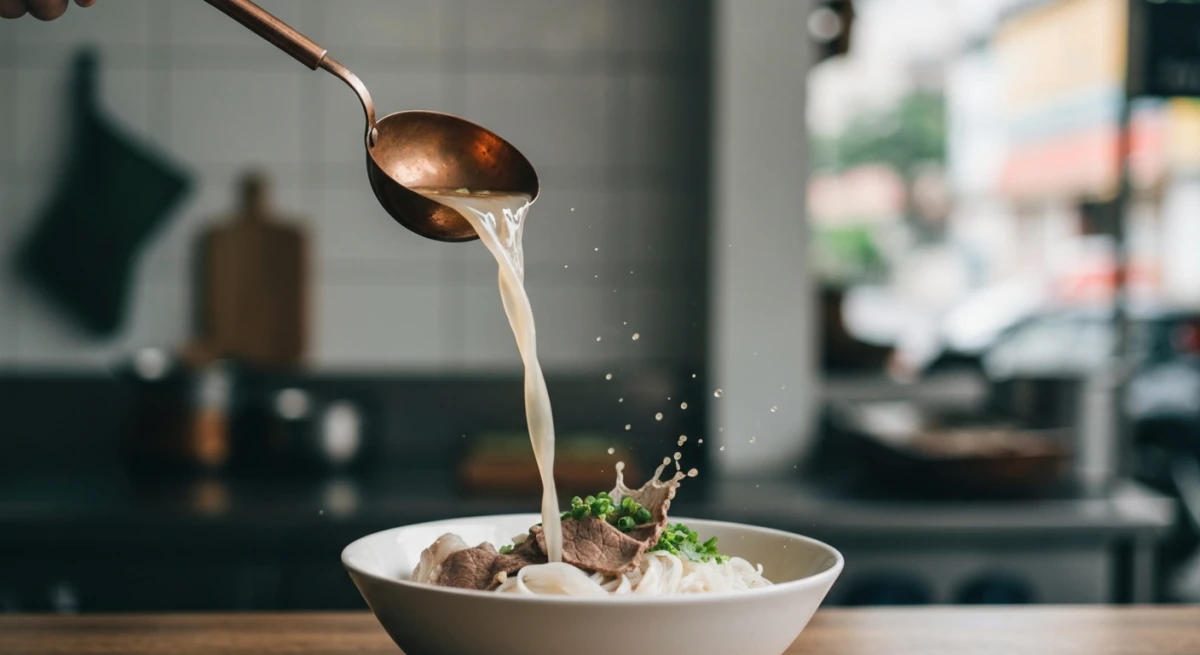
The dawn in Hanoi does not arrive with a quiet sunrise; it begins with the gentle clatter of aluminum ladles scraping against deep broth pots, the sharp aroma of charred ginger, and the rising steam that blankets the city’s narrow, centuries-old alleyways. To find the ultimate bowl of pho in Hanoi is to embark on a culinary pilgrimage. Pho is not just a dish here—it is the liquid heartbeat of the capital. In this definitive guide, we will dive deep into what makes a bowl of Northern-style pho so distinct, explore the top-rated local spots, and give you the local knowledge needed to navigate the city’s legendary noodle stalls like a seasoned Hanoian.
The Soul of the Bowl: The History and Chemistry of Hanoi Broth
To truly appreciate pho in Hanoi, one must understand its origin. The dish was born in the late 19th and early 20th centuries in the northern province of Nam Dinh, just south of Hanoi. It emerged as a beautiful confluence of culinary cultures: the French introduced a higher demand for beef (prior to their arrival, cows were strictly draft animals used for farming), while Chinese merchants brought rice noodles and spices, and Vietnamese cooks masterfully adapted these elements into a light, nourishing soup.
When pho migrated to the capital, it became elevated into an art form. Unlike the sweeter, herb-laden bowls found in the south, traditional Northern pho—often called phở bắc—is characterized by its minimalist elegance. The absolute soul of the dish lies in the broth (nước dùng).
The chemistry of a perfect Hanoi broth is a closely guarded family secret, handed down through generations. A master chef begins with high-quality beef marrow bones (xương ống), which are washed meticulously and parboiled to remove any impurities. These bones are then simmered for a minimum of 10 to 12 hours. During this slow process, the heat coaxes out the collagen, rendering it into a rich gelatin that gives the soup its velvety mouthfeel without making it cloudy.
To achieve that signature Hanoi aroma, charred shallots (hành khô) and ginger (gừng) are added to the pot. However, there is a science to this: the black, burnt skin of the ginger and shallots must be carefully scraped off before they enter the broth to prevent the soup from darkening or tasting bitter. The aromatic depth is completed by a subtle blend of toasted spices: star anise (hoa hồi), cinnamon (quế), black cardamom (thảo quả), cloves (đinh hương), and coriander seeds (hạt mùi).
Crucially, an authentic Hanoi broth relies on premium fish sauce (nước mắm) for its savory base. It is added only in the final stages of cooking; adding it too early would cause the broth to turn sour under prolonged heat. The result is a crystal-clear, golden liquid that is clean, oniony, and intensely savory—a masterclass in culinary balance.
Northern Vietnamese Pho vs Southern Pho: A Tale of Two Broths
For many travelers arriving in the capital, their first bowl of pho in Hanoi comes as a surprise. If you have previously eaten pho in Ho Chi Minh City, or at a typical Vietnamese restaurant in Western countries (which largely serve Southern-style pho), you will immediately notice that northern vietnamese pho vs southern pho represent two entirely different culinary philosophies.
Here is a breakdown of the key differences:
The Broth Profile: Northern pho is defined by its clarity and purity. It is savory and focused entirely on the clean flavor of the beef or chicken bone marrow, accented gently by charred aromatics. Southern pho, by contrast, is much sweeter, bolder, and richer. It incorporates rock sugar and a heavier profile of sweet spices, resulting in a darker, more complex, and oilier broth.
The Noodles (Bánh Phở): In Hanoi, the rice noodles are wider, flatter, and incredibly tender, designed to slip easily off the chopsticks. In the south, the noodles are narrower, firmer, and have a more distinct chew.
The Herbs and Toppings: If you order a bowl of pho bo hanoi (beef pho) or pho ga hanoi (chicken pho) in the capital, do not expect a mountain of fresh herbs. You will not find bean sprouts, Thai basil, sawtooth herb, or mint on your table. Hanoians believe that these strong herbs mask the delicate flavor of the broth. Instead, a Hanoi bowl is garnished simply and heavily with finely sliced scallions, Chinese chives, and cilantro.
The Condiments: This is where many travelers make a faux pas. In Southern Vietnam, it is customary to squeeze hoisin sauce (tương đen) and Sriracha directly into the bowl. In Hanoi, doing this is considered a minor tragedy. There is no hoisin sauce to be found at a traditional Hanoi stall. Instead, the condiments are limited to pickled garlic vinegar (giấm tỏi), fresh red bird's eye chilies, lime wedges (or small green calamansi fruits, known as quất), and a fiery, locally made chili sauce (tương ớt).
The Side Dishes: A key fixture of the Hanoi pho experience is quẩy—deep-fried, golden dough sticks. These crispy, airy batons are ordered by the plateful and dipped directly into the hot broth, soaking up the savory soup like a sponge. This is a practice rarely seen in the south.
Deciphering the Hanoi Pho Menu: A Traveler’s Glossary
Walking into a bustling local noodle stall can be intimidating. The menus are often short, pasted on the wall in Vietnamese, and the staff move at lightning speed. To help you order with confidence, use this handy glossary of terms for your next bowl of pho bo hanoi or pho ga hanoi:
Beef Pho (Phở Bò) Varieties
- Tái: Rare beef. Thinly sliced raw beef is placed directly onto the cold noodles and cooked instantly when the boiling-hot broth is ladled over it. It is tender, sweet, and incredibly popular.
- Chín: Well-done, slow-cooked beef brisket. It is sliced thin and offers a rich, meaty flavor with a firm texture.
- Nạm: Flank steak. A cut that features layers of meat and fat, providing a beautiful melt-in-the-mouth texture.
- Gầu: Fatty brisket. This cut contains a thick layer of crispy, savory fat. It is highly prized by local connoisseurs for its rich mouthfeel.
- Gân: Tendon. Slow-cooked until gelatinous and chewy.
- Bắp: Beef shank. Lean, flavorful meat with thin veins of tendon running through it.
- Tái Nạm / Tái Gầu: Combinations of different cuts (e.g., rare beef and flank, or rare beef and fatty brisket). This is a great way to experience multiple textures.
- Trứng chần: A poached egg served in a small bowl of hot broth on the side. Many locals slide this into their pho bowl to add an extra layer of richness.
Chicken Pho (Phở Gà) Varieties
- Phở Gà: Classic chicken noodle soup, made with a light, fragrant chicken bone broth infused with ginger and dry shallots.
- Gà Đùi: Dark meat (chicken thigh/drumstick), which is incredibly juicy and flavorful.
- Gà Lườn: White meat (chicken breast), lean and shredded.
- Phở Gà Trộn: Dry chicken pho. The noodles and chicken are served without broth, tossed in a savory soy-based sauce and topped with fresh herbs, peanuts, and crispy fried shallots. It is accompanied by a small bowl of broth on the side.
The Ultimate Hanoi Pho Guide: 6 Legendary Bowls You Must Try
With thousands of stalls scattered across the capital, finding the truly exceptional spots requires digging beneath the tourist surface. Whether you are seeking a traditional, clear-broth masterpiece or a rich, modern variation, this curated hanoi pho guide highlights the six absolute best places to experience authentic pho in Hanoi.
1. Phở 10 Lý Quốc Sư (Hoàn Kiếm District)
For many, Phở 10 Lý Quốc Sư is the gold standard of beef pho in the city. Located in the heart of the Old Quarter, this Michelin Guide-recommended spot is easily recognizable by the long queue of hungry patrons spilling onto the sidewalk. The restaurant features a clean, air-conditioned interior and an open kitchen where chefs slice beef with surgical precision. The broth here is legendary—crystal clear, beautifully balanced, and deeply savory with a clean beef finish. Ordering the Phở Tái Nạm (rare beef and flank) gives you the perfect introduction to their premium cuts of meat. Be sure to order a plate of quẩy to dip into the steaming bowl.
- Address: 10 Lý Quốc Sư, Hàng Trống, Hoàn Kiếm, Hà Nội
- What to Order: Phở Tái Nạm (Rare beef & flank)
2. Phở Thìn Lò Đúc (13 Lò Đúc, Hai Bà Trưng District)
If Phở 10 Lý Quốc Sư represents tradition, Phở Thìn Lò Đúc represents culinary rebellion. Established in 1979 by Nguyen Trong Thin, this iconic institution does not serve the typical clear, delicate Hanoi broth. Instead, they are famous for one dish: Phở bò tái lăn (stir-fried rare beef pho). Before being placed into the bowl, the beef is quickly stir-fried in a roaring-hot wok with massive amounts of garlic and fresh ginger, trapping the juices and imparting a distinct smoky flavor. The broth is thick, fatty, and creamy, covered in a dense green blanket of chopped scallions. It is a bold, heavy, and intensely flavorful bowl that has divided local purists for decades—but remains an absolute must-visit for any adventurous food lover.
- Address: 13 Lò Đúc, Ngô Thì Nhậm, Hai Bà Trưng, Hà Nội
- What to Order: Phở Bò Tái Lăn (Stir-fried beef pho)
3. Phở Gia Truyền Bát Đàn (49 Bát Đàn, Hoàn Kiếm District)
To experience the old-world charm and traditional dining rituals of Hanoi, head to Phở Gia Truyền Bát Đàn. Operating for over seventy years, this family-run stall is famous for its strict, self-service queue system. There are no waitstaff here; you must line up, order directly from the chef at the counter, pay, and carry your own steaming bowl back to a tiny wooden table. The broth at Bát Đàn is exceptionally pure, made entirely from beef bones and seasoned with a light touch of fish sauce, leaving a sweet, natural aftertaste. The beef is sliced fresh to order, and the noodles are soft and silky. It is the epitome of the classic phở bắc that defined the city’s early culinary landscape.
- Address: 49 Bát Đàn, Cửa Đông, Hoàn Kiếm, Hà Nội
- What to Order: Phở Tái Chín (Rare and well-done beef)
4. Phở Gà Nguyệt (5 Phủ Doãn, Hoàn Kiếm District)
While beef pho receives most of the international spotlight, chicken pho (phở gà) is a beloved staple among Hanoi locals. For the ultimate chicken pho experience, Phở Gà Nguyệt is undisputed. This Michelin Bib Gourmand-recognized spot transitions from a quiet indoor eatery during the day to a sprawling sidewalk feast at night. Their traditional chicken noodle soup is phenomenal, featuring a light, golden broth that smells of fresh ginger and kaffir lime leaves. However, the real star of the show is their Phở Gà Trộn (dry mixed chicken pho). The chewy rice noodles are tossed in a sweet-savory soy glaze, piled high with juicy shredded chicken, crispy fried shallots, crushed peanuts, and fresh herbs. It is a refreshing, texture-rich masterpiece that is perfect for Hanoi's humid summer nights.
- Address: 5 Phủ Doãn, Hàng Trống, Hoàn Kiếm, Hà Nội
- What to Order: Phở Gà Trộn Đùi Lườn (Dry mixed chicken pho with thigh and breast)
5. Phở Sướng (Trung Yên Alley, Hoàn Kiếm District)
Tucked deep inside a narrow, labyrinthine alleyway in the Old Quarter, Phở Sướng (which translates literally to "Pho Ecstasy") lives up to its name. This hidden gem has been serving discerning locals for decades, offering a broth that is slightly sweeter and deeper than other traditional Hanoi spots, achieved through a long, slow simmer of bone marrow and choice cuts of beef. The beef here is incredibly tender, and the portions are generous. Because of its tucked-away location, it feels less like a tourist hotspot and more like a cozy community living room. It is the perfect place to escape the chaotic street noise of Hanoi and enjoy a comforting, deeply authentic meal.
- Address: 24 Ngõ Trung Yên, Đinh Liệt, Hoàn Kiếm, Hà Nội
- What to Order: Phở Tái Gầu (Rare beef & crispy fatty brisket)
6. Phở Gánh Hàng Chiếu (19 Hàng Chiếu, Hoàn Kiếm District)
For decades, Phở Gánh was a legendary mobile street stall that operated only in the dead of night, setting up on the sidewalk of Hàng Chiếu street around 3:00 AM. It served night owls, market workers, and late-night partygoers. Today, they have transitioned into a permanent indoor location, but they still maintain their late-night spirit, opening from midnight until the early hours of the morning. Eating here is a moody, atmospheric experience. The broth is warm, spiced heavily with black pepper and ginger to ward off the midnight chill. It is simple, comforting street food at its finest, offering a glimpse into the nocturnal culture of Hanoi’s historic Old Quarter.
- Address: 19 Hàng Chiếu, Đồng Xuân, Hoàn Kiếm, Hà Nội
- What to Order: Phở Bò Sốt Vang (Beef stewed in red wine pho - a unique French-influenced variation)
Street Etiquette: How to Eat Pho in Hanoi Like a Local
In Hanoi, eating pho is not just about consuming food; it is a cultural ritual with its own unspoken set of manners. To truly appreciate the culinary craftsmanship and respect local customs, follow this step-by-step guide to eating pho like a true Hanoian:
Step 1: The First Sip (Crucial!)
When your steaming bowl of pho is set down on your table, resist the urge to immediately grab the condiments. Do not squeeze lime, add garlic, or spoon in chili sauce yet. Instead, pick up your soup spoon and take a sip of the plain broth. This shows respect to the chef, acknowledging the hours of labor that went into achieving the broth's natural balance. It also allows you to gauge the depth of the flavor profile.
Step 2: Mindful Customization
Now that you have tasted the pure broth, you can make minor adjustments. Remember that Hanoi style is restrained.
- For beef pho (phở bò): Add 1 to 2 spoonfuls of pickled garlic vinegar (giấm tỏi) to cut through the richness of the beef fat, and a few slices of fresh red chili.
- For chicken pho (phở gà): Use a squeeze of fresh lime or calamansi instead of vinegar, as the bright citrus notes pair beautifully with poultry.
- Add a small dollop of the local red chili sauce if you prefer some heat, but avoid using too much as it will muddy the broth.
- Leave the hoisin sauce out of the equation entirely.
Step 3: The Art of the Chopstick and Spoon
Hold your chopsticks in your dominant hand and your flat soup spoon in the other. Use your chopsticks to gently lift a bite-sized portion of noodles and meat out of the broth, placing them onto the spoon. Dip the spoon back into the broth to catch some soup, and then eat the combined bite. This classic technique prevents hot soup from splashing onto your clothes and ensures that every mouthful has the perfect ratio of noodle, meat, and savory broth.
Step 4: The Dough Stick Dip
If you ordered a plate of quẩy (fried dough sticks), do not eat them dry. Submerge a piece of the crispy dough into the hot broth for three to five seconds. You want it to become soft and saturated with the soup while still retaining a slight crunch on the edges. Pop it in your mouth for an explosion of savory flavor.
Step 5: Finishing the Bowl
In Vietnam, finishing your bowl—including drinking the broth—is considered the ultimate compliment to the chef. It is perfectly polite to lift the bowl with both hands and drink the remaining broth directly from the rim. Do not worry about making slight slurping noises; it shows you are thoroughly enjoying your meal!
Frequently Asked Questions (FAQ)
Q: Is pho in Hanoi traditionally eaten for breakfast? A: Yes, historically, pho is a breakfast dish in Hanoi. Many of the most famous local stalls open as early as 5:00 AM and close by 10:00 AM once their fresh morning batch of broth is sold out. However, due to modern demands and tourism, you can now easily find high-quality pho stalls operating during lunch, dinner, and late into the night.
Q: How much does a bowl of pho cost in Hanoi? A: On average, a bowl of authentic street-side pho in Hanoi costs between 40,000 VND and 65,000 VND (approximately $1.60 to $2.60 USD). Premium cuts of beef or specialty chicken thigh bowls at high-end spots may cost up to 80,000 VND to 100,000 VND ($3.20 to $4.00 USD).
Q: Is it safe to eat pho from street stalls in Hanoi? A: Absolutely. In fact, street stalls often serve the freshest food because of their high turnover rate. Look for stalls that are packed with local customers—this is the best indicator of clean, high-quality, and delicious food.
Q: Can I find vegetarian pho (Phở Chay) in Hanoi? A: Yes, while traditional Hanoi pho is strictly beef or chicken-based, the growing vegetarian movement in Vietnam has made Phở Chay (vegetarian pho) widely available. These bowls use a broth brewed from daikon radish, carrots, pears, and mushrooms, served with tofu and gluten-based meats. Look for dedicated Buddhist vegetarian restaurants (called Quán Chay).
Q: Do I need to tip at pho stalls in Hanoi? A: Tipping is not customary in Vietnam, especially at casual street food stalls and local restaurants. You simply pay the exact amount listed on the bill or menu. If you had exceptional service, leaving a small amount of change is appreciated but never expected.
Conclusion
In Hanoi, a bowl of pho is far more than the sum of its humble ingredients. It is a sensory archive of the city’s history, a showcase of meticulous culinary science, and a comforting daily ritual that binds the community together. From the smoky, stir-fried bowls at Phở Thìn to the pure, quiet perfection of Phở Bát Đàn, exploring the diverse landscape of pho in Hanoi is an unforgettable journey into the heart of Vietnamese street food culture. Pull up a tiny plastic stool, grab your chopsticks, and lose yourself in the steam of the capital’s greatest culinary treasure.