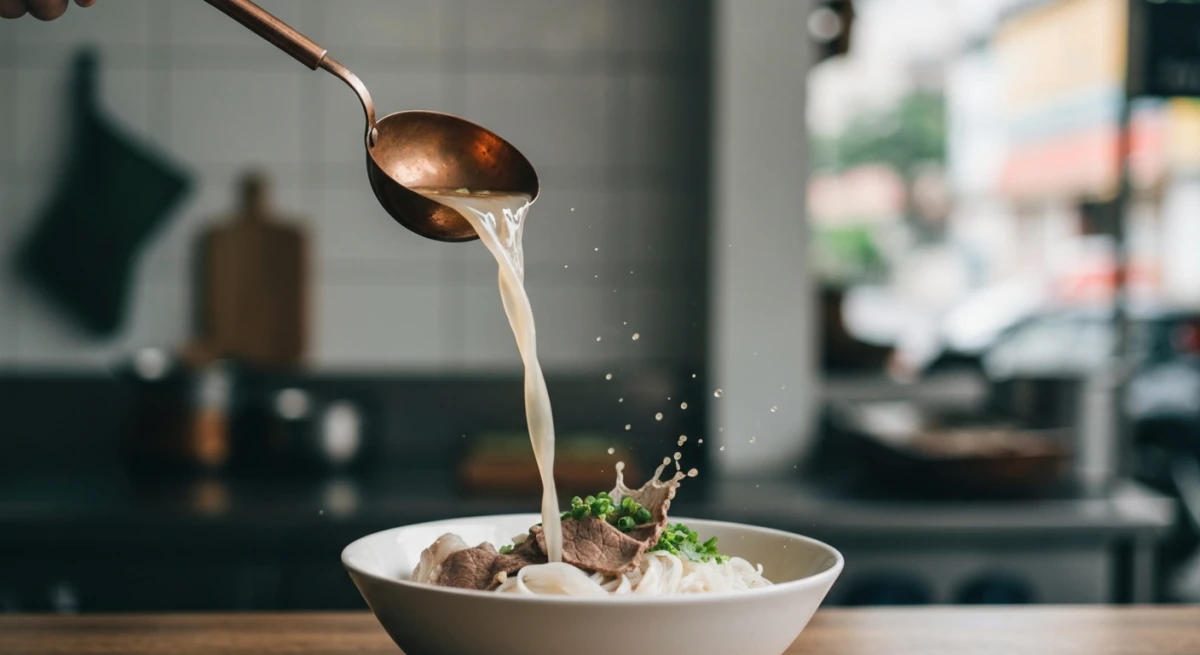
If there is one culinary ritual that captures the heart of Vietnam's capital, it is the sight of steam rising from a giant cauldron onto the cool morning air of the Old Quarter. The dish that defines this city is pho, and to experience pho hanoi vietnam is to taste over a century of culture, history, and culinary refinement. As you sit on a tiny blue plastic stool on the sidewalk, listening to the symphony of motorbike honks and clinking spoons, you are participating in a daily tradition that has fed generations. This guide is your ultimate passport to understanding, finding, and savoring the perfect bowl.
In Hanoi, pho is not merely a dish; it is a way of life, a morning clock, and a symbol of national identity. While you can find this iconic noodle soup in almost every corner of the globe, nothing compares to tasting it in its spiritual cradle. The Hanoi style is defined by an elegant simplicity—a culinary philosophy of restraint where every element must be executed with flawless precision. Whether you are a first-time traveler or a seasoned foodie, embarking on a quest to find the best bowl of pho in Hanoi is a journey through the city's historic alleys, bustling markets, and multigenerational family kitchens.
The Roots of a Legend: The History of Pho Hanoi
To truly appreciate a steaming bowl of pho hanoi vietnam, one must understand how this humble soup became a national treasure. The widely accepted origin story begins at the turn of the 20th century in the Red River Delta region, particularly in the province of Nam Dinh, located about 60 miles southeast of Hanoi.
At the time, Vietnam was under French colonial rule. Before the arrival of the French, cows and water buffaloes were highly revered as vital draft animals used for labor in the rice paddies; eating beef was exceptionally rare. However, the French brought a voracious appetite for steak and roast beef, creating a massive beef trade. Prudent Vietnamese cooks salvaged the leftover bones, marrow, and tough scraps that the French discarded.
In the villages of Nam Dinh, particularly Van Cu, local cooks began boiling beef bones to create a rich, deep soup, merging them with flat rice noodles. This early iteration was heavily influenced by 'xao trau,' a traditional soup made with water buffalo meat. When laborers from Nam Dinh migrated to Hanoi to work on major colonial construction projects—including the Long Bien Bridge—they brought their recipes with them.
In Hanoi, the dish encountered further cultural cross-pollination. Chinese merchants, who sold beef-noodle soups known as 'nguu nhuc phan,' adapted their spices to appeal to the local palate. By the 1930s, street vendors carrying mobile kitchens balanced on bamboo shoulder poles ('ganh pho') walked the foggy streets of the Old Quarter in the early morning and late night. The dish evolved rapidly, taking deep root in the capital, where Hanoians refined it into the sophisticated, clear-brothed masterpiece we recognize today.
Hanoi vs. Saigon: The Great Culinary Divide
If you want to spark a passionate debate among Vietnamese food lovers, ask whether Northern-style pho (Pho Bac) or Southern-style pho (Pho Nam) is superior. This regional rivalry represents two fundamentally distinct cultural and culinary philosophies.
The division began in 1954, following the partition of Vietnam. Over a million Northerners migrated to the South, bringing their beloved noodle soup with them. However, the South—historically a land of agricultural abundance, warm tropical weather, and the fertile soils of the Mekong Delta—did not maintain the strict, minimalist standards of the North. Instead, Southern cooks 'Southernized' the dish, introducing a riot of fresh herbs, sweeter elements, and new meat cuts.
To understand the difference, you must look at the key elements of the two styles:
- The Broth: Northern pho broth is a testament to restraint. It is pale, clear, and translucent, focusing purely on the deep, savory essence of slow-simmered beef bones, charred ginger, and shallots. It is seasoned delicately with salt and premium fish sauce. Southern pho broth, by contrast, is sweeter, darker, and often cloudier. Southern cooks frequently add rock sugar, charred onions, and sometimes dried squid or cuttlefish to build a sweeter, heavier flavor profile.
- The Herbs and Garnishes: In Hanoi, your bowl of pho is served with a sparse, pre-assembled garnish of finely chopped green scallions and coriander (cilantro). Asking for bean sprouts or fresh herbs in a traditional Hanoi establishment is a culinary faux pas. In the North, the broth is the star, and raw vegetables are believed to dilute its heat and muddy its delicate flavors. In Saigon, however, pho is served with a side plate of fresh herbs—including Thai basil, sawtooth herb, rice paddy herb, and a mountain of blanched or raw bean sprouts.
- The Sauces: In the South, diners customize their broth with heavy squirts of hoisin sauce and Sriracha, mixing them directly into the bowl. In Hanoi, adding sweet hoisin sauce is considered a slight to the chef who spent 18 hours balancing the savory broth. Instead, Northern tables feature only fresh lime wedges, fresh red chili slices, and 'dam toi'—a sour vinegar infused with sliced garlic.
- The Noodles: Northern rice noodles (banh pho) are cut wider, flatter, and are softer in texture, allowing them to absorb the clear broth effortlessly. Southern noodles are thinner and firmer.
While the Southern style is the version most commonly exported to the Western world by refugees after 1975, the Northern style remains the holy grail for purists who value subtlety, clarity, and historical authenticity.
Anatomy of an Authentic Bowl of Pho Hanoi
An authentic bowl of pho hanoi vietnam looks deceptively simple, but its preparation is a labor-intensive, multi-step art form. A master pho cook must balance texture, temperature, and spice to achieve the perfect harmony. Let's dissect the essential components that make a great Hanoi bowl:
The Bone Broth (The Soul)
The broth is the ultimate test of a chef's skill. To create a pristine, golden-hued, translucent beef broth, cooks typically simmer high-quality beef leg, knuckle, and marrow bones for 12 to 24 hours. The process begins with 'parboiling'—the bones are boiled vigorously for a short time, then discarded of their initial water and scrubbed clean under running water to remove any blood clots and impurities. This step is non-negotiable for achieving a clear broth.
During the long simmer, spices and aromatics are introduced. Ginger and large shallots are charred directly over open flames until their skins are blackened and their interiors are sweet and smoky. They are peeled, smashed, and added to the pot. A toasted spice bouquet—composed of star anise, cinnamon bark, black cardamom, cloves, coriander seeds, and fennel seeds—is placed in a mesh bag and steeped in the broth. The spices must be balanced carefully; too much cardamom or anise will overpower the clean flavor of the beef.
The Rice Noodles (Bánh Phở)
The quality of the noodles is just as important as the broth. In Hanoi, vendors prefer fresh, artisanal rice noodles made from fermented rice flour batter that has been steamed into thin, delicate sheets and sliced into wide ribbons. Unlike dried noodles, fresh bánh phở has a velvety, silky texture that melts in your mouth while holding enough structural integrity to be lifted with chopsticks. Before serving, the noodles are quickly blanched in boiling water to ensure they are piping hot when they hit the bowl.
The Cuts of Meat
When ordering pho bo (beef pho) in Hanoi, you will see a variety of cuts on the menu, each offering a different texture and flavor profile. Understanding these terms is crucial to ordering like a local:
- Tái (Rare Beef): Paper-thin slices of raw beef (usually tenderloin or round) are arranged on top of the hot noodles. The boiling broth is poured directly over the meat, cooking it instantly to a tender, pink perfection.
- Chín (Well-Done Beef): Slices of beef brisket or flank that have been slow-cooked in the broth until they are completely tender, clean, and savory.
- Nạm (Flank): Cuts of beef flank that feature a beautiful balance of lean meat and tender, gelatinous fat, providing a rich mouthfeel.
- Gầu (Fatty Brisket): A prized cut featuring a thick strip of crunchy, buttery fat. It is incredibly rich and flavorful.
- Lõi (Beef Heel Muscle): A rare and highly sought-after cut that contains veins of tender cartilage, giving each bite a delightful, slightly crunchy texture.
If beef is not your preference, Phở Gà (Chicken Pho) offers a stellar alternative. A great Phở Gà uses free-range, organic chicken (gà ta), prized for its sweet, lean meat and chewy, vibrant yellow skin. The chicken broth is lighter, cleaner, and often infused with thinly sliced lime leaves, creating a bright and refreshing soup.
The Crucial Accompaniments
No Hanoi pho experience is complete without its traditional sidekicks. On every table, you will find a plate of Quẩy—deep-fried, golden, airy dough sticks. Hanoians drop these crispy batons directly into their bowls, allowing them to soak up the savory broth like edible sponges. Additionally, a bowl of Dấm Tỏi (garlic-infused rice vinegar) and a small dish of fresh, fiery bird's eye chilies are essential for cutting through the rich fats of the beef.
Modern Variations: Beyond the Soup Bowl
While a traditional, hot bowl of beef noodle soup remains the undisputed king, Hanoi's culinary scene is dynamic and innovative. Over the decades, local cooks have developed several unique, modern variations of pho that showcase the noodle's incredible versatility. If you want to explore the full spectrum of pho hanoi vietnam, make sure to seek out these exciting variations:
- Phở Bò Tái Lăn (Stir-Fried Rare Beef Pho): Unlike traditional pho where the beef is poached in the broth, this style flashes-fries the beef in a flaming wok with beef fat and heaps of garlic before adding it to the bowl. The result is a richer, smokier, and incredibly fragrant broth with a thin layer of savory oil on top.
- Phở Sốt Vang (Red Wine Beef Stew Pho): A direct descendant of the French 'beef bourguignon.' Beef chuck is slow-cooked in a thick, warming broth flavored with red wine, star anise, cinnamon, and tomatoes. The beef is extraordinarily tender, and the broth carries a deep, comforting warmth that is perfect for Hanoi's chilly winter mornings.
- Phở Gà Trộn (Dry Chicken Pho): A popular choice during Hanoi's humid summer months. Instead of soup, fresh rice noodles are tossed in a savory, slightly sweet soy-based sauce. The bowl is topped with shredded chicken, a mountain of fresh herbs, roasted peanuts, and crispy fried shallots, and served with a small bowl of hot chicken broth on the side.
- Phở Cuốn (Pho Rolls): Originating in the Ngu Xa neighborhood near Truc Bach Lake, this dish uses uncut, square sheets of steamed rice noodles. The sheets are rolled around stir-fried beef, crisp lettuce, and fresh coriander, then dipped in a sweet, sour, and spicy fish sauce.
- Phở Chiên Phồng (Puffy Fried Pho): Square cuts of uncut pho sheets are deep-fried until they puff up into golden, crispy pillows. They are served hot, smothered in a savory gravy packed with stir-fried beef, bok choy, carrots, and mushrooms.
The Vetted Foodie Map: 6 Legendary Pho Joints in Hanoi
Navigating the thousands of pho stalls in Hanoi's maze of streets can be overwhelming. To help you find the absolute best, most authentic flavors, we have curated a list of six legendary, local-approved institutions in the capital. Each of these spots offers a unique expression of pho hanoi vietnam:
1. Phở Gia Truyền Bát Đàn
- Address: 49 Bát Đàn, Hoàn Kiếm District
- Opening Hours: 6:00 AM – 10:00 AM | 6:00 PM – 8:30 PM
- The Experience: This is perhaps the most famous traditional beef pho shop in the city, known for maintaining its strict, old-school standards. Be prepared to wait in a long, fast-moving queue. This is a self-service establishment: you line up, state your order, pay the cashier, carry your own hot bowl to a wooden table, and find a stool.
- The Verdict: The broth here is incredibly deep, natural, and clear, with a beautiful aroma of charred ginger and sweet beef bone marrow. Order the Phở Bò Tái Nạm (rare beef and tender flank) and don't forget to pair it with a plate of crispy quẩy.
2. Phở Thìn 13 Lò Đúc
- Address: 13 Lò Đúc, Hai Bà Trưng District
- Opening Hours: 6:00 AM – 8:30 PM
- The Experience: Established in 1979 by Nguyen Tri Thin, this shop is a rebel against traditional Hanoian restraint. It specializes in only one dish: Phở Bò Tái Lăn (stir-fried rare beef pho).
- The Verdict: The broth here is heavy, rich, and cloudy, carrying a powerful, smoky garlic aroma from the stir-fried beef. The bowl is completely carpeted in a forest of chopped green scallions. It is a hearty, robust, and highly satisfying bowl that is legendary among both locals and international travelers.
3. Phở Gà Nguyệt
- Address: 5B Phủ Doãn, Hoàn Kiếm District
- Opening Hours: 6:00 AM – 1:00 PM | 5:00 PM – 12:30 AM
- The Experience: For those who prefer chicken over beef, this Michelin Bib Gourmand-recognized spot is an absolute must-visit. It is always busy, with a continuous stream of diners sitting on sidewalk stools.
- The Verdict: The chicken here is exceptionally high quality, with succulent meat and crispy, gelatinous yellow skin. You can customize your bowl with cuts of breast, thigh, wing, or a mix of everything. While their traditional noodle soup is stellar, their Phở Gà Trộn (dry mixed chicken pho) is arguably the best in the city.
4. Phở Sướng
- Address: 24B Trung Yên Alley, Đinh Liệt Street, Hoàn Kiếm District
- Opening Hours: 5:30 AM – 11:30 AM | 5:00 PM – 9:30 PM
- The Experience: Nestled deep within a bustling, narrow alleyway in the Old Quarter, Phở Sướng (which translates to 'Happy Pho') is a hidden gem that has been serving Hanoians for over three decades.
- The Verdict: True to its name, eating here is pure bliss. The broth is exceptionally light, clean, and refreshing, carrying a delicate, natural sweetness from hours of simmering beef bones without excessive spices. The beef cuts—especially the brisket (chín) and fatty flank (nạm)—are incredibly tender and flavorful.
5. Phở Bò Lâm
- Address: 48 Hàng Vải, Hoàn Kiếm District
- Opening Hours: 7:00 AM – 10:00 PM
- The Experience: Located on the historic Hàng Vải street, this small, unassuming shop is highly recommended by local food connoisseurs and has recently earned a spot in the Michelin Guide's recommended list.
- The Verdict: Phở Bò Lâm is legendary for its use of lõi bò (beef heel muscle/core brisket). The meat is incredibly tender yet retains a satisfying, subtle crunch. The broth is clean, hot, and packed with traditional savory depth, making it the perfect comfort food.
6. Phở Gánh Hàng Chiếu
- Address: 7 Chợ Gạo, Hoàn Kiếm District
- Opening Hours: 3:30 AM – 10:00 AM
- The Experience: Historically, this was a legendary mobile street vendor ('gánh') that operated at the intersection of Hàng Đường and Hàng Chiếu in the dead of night. Today, they have moved to a permanent storefront at 7 Chợ Gạo, but they still maintain their famous early morning hours.
- The Verdict: For night owls, early risers, or travelers suffering from jet lag, visiting Phở Gánh at 4:00 AM is a magical, nostalgic experience. Their Phở Bò Sốt Vang (wine-stewed beef pho) is highly sought after, featuring rich, slow-cooked beef in a robust, deeply warming broth.
How to Eat Pho Like a Local: Street Etiquette
Eating pho hanoi vietnam is not just about consuming food; it is a cultural ritual with its own set of unspoken rules and etiquette. To truly appreciate the culinary craftsmanship and blend in with the locals, follow these simple guidelines:
- Taste the Broth First: Before you squeeze any lime, throw in chilies, or add vinegar, take a spoonful of the pure broth. The chef has spent up to 24 hours balancing the delicate flavors of bones, spices, and aromatics. Tasting it pure is a sign of respect and allows you to appreciate the unique signature of the shop.
- Season with Restraint: Once you have tasted the pure broth, enhance it gently. Squeeze a small wedge of fresh lime to add a bright acidity. Add a few slices of fresh red bird's eye chili for heat. If you enjoy a sour, garlic-forward kick, add one or two spoonfuls of 'dấm tỏi' (garlic vinegar). Avoid commercial hoisin sauce or sweet chili sauce at all costs.
- Master the Chopsticks and Spoon: Hold your chopsticks in your dominant hand to lift the noodles and meat, and a deep soup spoon in your other hand. A classic local technique is to create a 'perfect bite' on your spoon: lift a small nest of rice noodles, place a slice of beef and a pinch of scallions on top, ladle a small amount of hot broth into the spoon, and eat it all in one harmonious mouthful.
- Embrace the Quẩy (Dough Sticks): Do not let your quẩy sit on the plate. Drop one or two pieces directly into your hot bowl. Let them sit for a few seconds to absorb the rich broth, then eat them while they are still warm and partially crispy.
- Eat Quickly and Leave Space: Hanoi's top pho spots are high-turnover street operations. Diners do not linger over their bowls to read the news or chat. Eat your pho while it is steaming hot, finish your broth, pay the vendor, and vacate your stool for the next waiting customer.
Frequently Asked Questions
Is pho in Hanoi safe for tourists to eat?
Yes, eating pho at street stalls in Hanoi is safe, provided you choose busy spots with high turnover. High-turnover establishments ensure that the ingredients—especially the raw beef and fresh rice noodles—are delivered fresh daily. Look for stalls packed with local families and workers.
How much does a bowl of pho cost in Hanoi?
A standard bowl of pho in Hanoi typically costs between 35,000 VND and 60,000 VND (approximately $1.50 to $2.50 USD). Premium cuts of meat, such as beef heel muscle, or adding extra portions of fried dough sticks may increase the price slightly, but it remains an incredibly affordable and highly nutritious meal.
Can I find vegetarian pho in Hanoi?
While traditional, historic pho stalls use beef or chicken bone broths exclusively, Hanoi has a flourishing Buddhist vegetarian culture. To find vegetarian pho, look for dedicated Buddhist vegetarian restaurants known as Quán Chay. These establishments use broths simmered from daikon radish, carrots, pears, and mushrooms, served with tofu, mushrooms, and mock meats.
When is the best time of day to eat pho in Hanoi?
Traditionally, pho is a breakfast dish in Vietnam. The absolute best time to eat it is in the early morning, between 6:00 AM and 8:30 AM. This is when the broth is at its freshest, hottest, and most fragrant, and the street atmosphere is filled with the calm, cool energy of a waking city.
Savoring the Soul of Hanoi
Savoring a bowl of pho hanoi vietnam is a sensory journey that transcends the boundaries of simple nourishment. It is an invitation to slow down, pull up a plastic stool, and connect with the rich cultural tapestry of Vietnam's capital. In every spoonful of clear, aromatic broth, you are tasting the history of Nam Dinh's inventive cooks, the influence of French and Chinese trade, and the unwavering dedication of local families who have spent decades perfecting their craft.
As you wander through the labyrinth of the Old Quarter, let the sweet, warming scent of toasted star anise, cinnamon, and simmering bones be your guide. Whether you choose the traditional, queue-worthy broth of Bát Đàn, the garlic-infused boldness of Lò Đúc, or a late-night bowl of chicken pho on Phủ Doãn, you will discover that the true magic of Hanoi lies in a simple, steaming bowl of noodle soup. It is a flavor that will linger on your palate long after you have left the city, forever calling you back to the sidewalks of Hanoi.