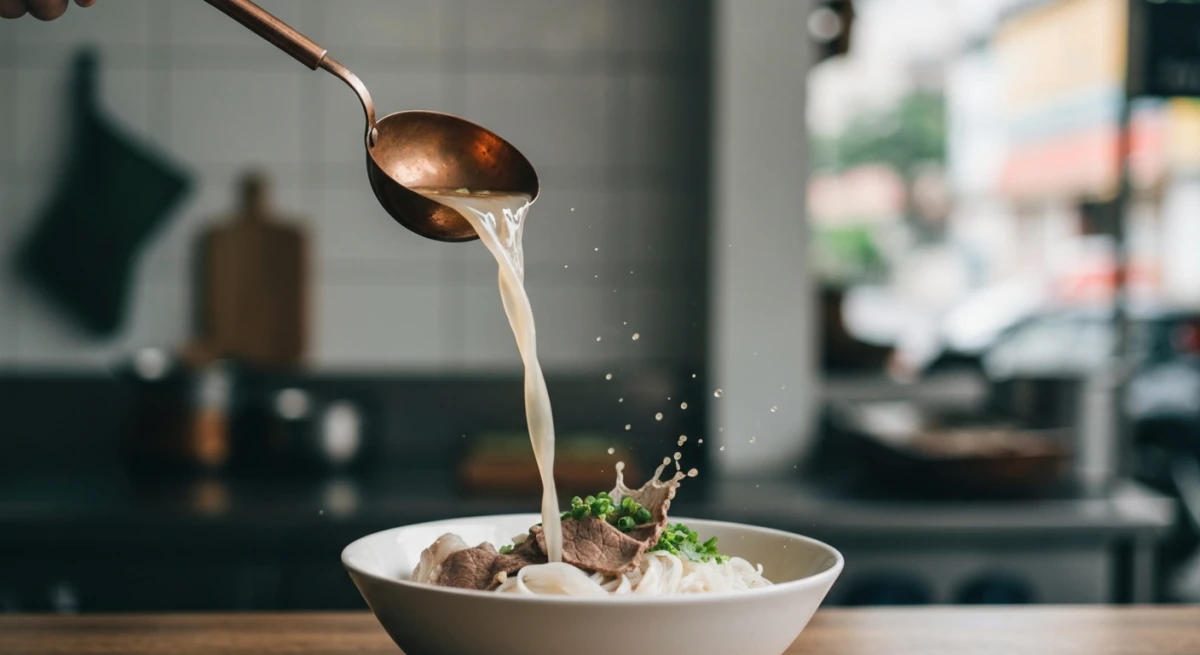
As the warm evening breeze sweeps through the neon-lit avenues of Saigon, a symphony of sounds fills the air: the low, synchronized hum of thousands of motorbikes, the laughter of diners perched on low plastic stools, and the clinking of chopsticks. But beneath this energetic soundscape lies a sensory experience that defines the city: the rich, aromatic scent of simmering beef bones, charred ginger, and star anise drifting from street-side kitchens. For travelers and food enthusiasts alike, there is one culinary landmark that stands as an absolute temple to this aroma: pho le ho chi minh.
For over fifty years, Phở Lệ has been widely celebrated as one of the ultimate standard-bearers of Southern-style Vietnamese beef noodle soup (phở bò). Situated in the historic heart of District 5, Saigon's vibrant Chinatown, this iconic eatery has evolved from a humble street cart into a legendary multi-generational institution. It has earned international acclaim, securing consecutive placements in the prestigious Michelin Guide as a Bib Gourmand selection.
Whether you are a first-time visitor to Vietnam or a seasoned expat hunting for the deepest, most satisfying bowl of broth in the city, this comprehensive guide covers everything you need to know about pho le ho chi minh. We will dive into the fascinating multicultural history that shaped its signature sweet flavor profile, break down the culinary anatomy of their legendary bowl, guide you through the local ritual of customizing your herbs and sauces, and provide crucial, up-to-date logistics on their two Saigon locations—including the highly anticipated reopening of their District 3 branch.
The Fascinating History and Heritage of Phở Lệ
To truly appreciate the complex flavors of Phở Lệ, one must first understand the rich tapestry of its history. Established in 1970, Phở Lệ was founded by Mr. Luu Toan Tai and his wife, Mrs. Le. The couple’s background represents the beautiful multicultural blending that has long characterized Ho Chi Minh City’s culinary landscape. Mr. Luu is of Cantonese-Vietnamese descent, while Mrs. Le is a Vietnamese-Cambodian woman with heritage tracing back to Cambodian royalty.
When they set up their first modest pho stall in District 5, they chose an area heavily populated by the Chinese-Vietnamese community. In this culinary melting pot, distinct traditions naturally merged. The Cantonese approach to cooking heavily emphasizes the art of the slow-simmered broth—a technique known for producing intensely deeply-flavored soups using precise bone-to-water ratios and a clean extraction of gelatin. Mrs. Le brought the bold, sweet, and highly aromatic flavor preferences of Southern Vietnam and Cambodia, where rustic, sweet elements, and a liberal use of fresh herbs are foundational to daily meals.
This unique partnership resulted in a bowl of pho that was profoundly different from the minimalist, delicate bowls of Hanoi in the north. While Northern pho (Phở Bắc) is defined by its clean, savory clarity and strict restraint, Southern pho (Phở Nam) is celebrated for its robust, sweeter broth and generous portions. Phở Lệ became the quintessential representative of this Southern style. Over more than five decades, the family has meticulously guarded their secret recipe, passing it down through generations. Even as Saigon modernized around them, transforming from a classic city into a dazzling global metropolis, the recipe at Phở Lệ remained delightfully unchanged, preserving a delicious piece of Saigon's history in every single bowl.
Deciphering the Bowl: What Makes Phở Lệ’s Broth and Toppings Legendary?
What elevates Phở Lệ from a standard neighborhood noodle joint to a world-famous dining destination? The answer lies in their uncompromising commitment to quality and culinary precision. Every element of the bowl, from the liquid gold broth to the springy meatballs, is crafted with meticulous attention to detail.
The Broth: A Masterclass in Bone-Simmering
In Vietnamese culture, it is often said that the broth is the soul of the pho. At Phở Lệ, the broth is nothing short of a masterpiece. Unlike modern, fast-casual eateries that rely on artificial MSG or instant bouillon cubes to simulate depth, Phở Lệ’s kitchen simmers fresh beef marrow and knuckle bones for a minimum of eight to twelve hours daily. Before the bones even touch the boiling water, they are thoroughly cleaned and blanched to remove any impurities, ensuring the final soup is clean and flavorful. As the bones simmer, they release natural gelatins, marrow oils, and deep savory elements. This rich liquid is then infused with a precisely balanced, roasted spice blend: star anise, cassia bark (cinnamon), black cardamom pods, whole cloves, fennel seeds, and coriander seeds, alongside heavily charred ginger and shallots.
The resulting broth possesses a signature characteristic: a thin, shimmering layer of clean beef fat (nước béo) on the surface. This fat layer is intentional; it acts as an insulating blanket, keeping the soup piping hot until the very last spoonful while capturing and carrying the fat-soluble aromas of the roasted spices. The taste profile is uniquely rich, slightly sweet, and deeply savory—a complex, layered umami bomb that coats the palate beautifully.
The Toppings: Premium Cuts and the Famous Bò Viên
When ordering at Phở Lệ, you are presented with an array of premium beef toppings, each prepared to highlight its specific texture and flavor:
- Tái (Rare Beef): Thinly sliced, high-quality raw beef tenderloin or eye of round is placed directly on top of the dry noodles. When the boiling broth is ladled over, the beef gently poaches in seconds, arriving at your table tender, juicy, and pink.
- Nạm (Flank/Brisket): Slow-cooked for hours alongside the bones, the brisket features alternating layers of lean, tender meat and flavorful fat that melt in your mouth.
- Gân (Tendon): Braised to absolute perfection, the tendon is neither tough nor mushy. Instead, it offers a delightful, gelatinous chew that absorbs the rich spices of the broth.
- Bò Viên (Beef Meatballs): If there is one item that Phở Lệ is universally famous for, it is their house-made beef balls. Unlike the generic, flour-heavy, rubbery meatballs found in lesser stalls, Phở Lệ’s bò viên are incredibly dense, remarkably springy, and intensely beefy. Seasoned generously with crushed black pepper and garlic, they provide a satisfying bite and are a mandatory addition to any bowl.
The Noodles
Even the noodles (bánh phở) receive special treatment. Rather than purchasing standard, mass-produced noodles from local wet markets, Phở Lệ works with a custom supplier to source fresh rice ribbon noodles. These noodles are cut slightly thinner than average, ensuring they cook quickly and absorb the flavorful broth, yet maintain a delicate, elastic bite that prevents them from turning soggy mid-meal.
The Southern-Style Pho Experience: How to Eat Like a Saigonese
To the uninitiated, eating a bowl of Northern-style pho is a quiet, contemplative affair. You sit down, receive a steaming bowl of noodles garnished simply with green onions, and eat it as presented, perhaps with a squeeze of lime. Southern-style pho, however, is a vibrant, interactive, do-it-yourself ritual. When you dine at Phở Lệ, your table will be covered in a colorful array of sauces, condiments, and fresh greenery. Here is how to navigate this feast like a true local:
1. The Herb Basket: A Medicinal Forest
Before your steaming bowl of noodles even arrives, the server will drop a massive, overflowing basket of fresh, aromatic herbs onto your table. This is not a mere garnish; it is an essential component of the meal. The basket typically contains:
- Húng Quế (Thai Basil): Delivers a sweet, licorice-like anise flavor that pairs beautifully with the spiced beef broth.
- Ngò Gai (Sawtooth Herb/Culantro): Offers an intense, citrusy cilantro aroma with a sturdy texture that holds up well in hot liquid.
- Ngò Ôm (Rice Paddy Herb): Provides a unique, refreshing citrus and cumin note.
- Giá (Bean Sprouts): You can request these raw for a cool, refreshing crunch, or blanched (giá trụng) if you prefer them soft and warm so they do not lower the temperature of your soup.
2. The Condiments and Sauces
Scan the table, and you will find an assortment of jars and bottles. The core of the Southern pho dipping ritual involves Tương Đen (a sweet, savory, fermented hoisin sauce) and Tương Ớt (a tangy, spicy chili sauce, similar to Sriracha). You will also find Ớt Sa Tế (a fiery, house-made chili oil infused with lemongrass and garlic), pickled garlic slices in white vinegar, and fresh red bird's eye chilies.
3. Step-by-Step Eating Guide
- Step 1: Taste the Broth First. Before you add a single leaf or drop of sauce, take a spoon and sip the pure broth. Appreciate the hours of bone-simmering, the delicate balance of spices, and the natural sweetness. This shows respect to the kitchen and lets you establish a flavor baseline.
- Step 2: Pluck and Tear your Herbs. Do not dump the entire sprigs into the bowl. Pluck the leaves of the Thai basil and tear the sawtooth herb into two or three pieces to release their fragrant essential oils. Submerge them immediately into the hot broth so they wilt slightly and infuse the liquid. Add your bean sprouts.
- Step 3: Prepare the Dipping Sauces. Take the small plastic sauce dish provided on your table. Squeeze equal parts hoisin sauce and chili sauce into the dish, and add a small spoonful of the fiery satay chili oil if you like heat. Mix them together with your chopstick.
- Step 4: Dip, Do Not Squirt (Usually). While some locals love to squirt hoisin and chili sauce directly into their broth, purists advise against this, as it completely masks the delicate flavor of the broth you just tasted. Instead, use your chopsticks to pick up a slice of beef or a beef ball, dip it into your custom sauce mixture, and enjoy.
- Step 5: Add Acid and Heat. If you prefer a brighter, tangier profile, squeeze a small wedge of fresh lime into the broth. If you crave intense heat, drop a few slices of fresh bird's eye chili into the soup. Let them steep for a minute, but be careful not to eat them directly unless you have a high spice tolerance!
Phở Lệ Location Guide: District 5 vs. District 3 (With Updated Hours & Pricing)
One of the most common points of confusion for travelers looking up pho le ho chi minh is determining where to go, as there are two primary branches within the city. Both are family-owned and operated, ensuring that the quality remains incredibly high across both locations.
1. The Historic Main Branch: District 5 (Chinatown)
- Address: 413-415 Nguyen Trai, Ward 7, District 5, Ho Chi Minh City.
- Opening Hours: 6:00 AM – 12:00 AM (Midnight) daily.
- The Vibe: This is the legendary flagship location where the Phở Lệ story truly comes alive. Located in Chinatown, the surrounding streets are historic, bustling, and steeped in Chinese-Vietnamese culture. The restaurant itself is expansive, noisy, and fast-paced. The ground floor is a classic open-air storefront where you can watch the kitchen staff slice meat and ladle steaming broth from giant stainless-steel vats. If you prefer a quieter, cooler dining experience, head upstairs to the second floor, which features comfortable seating and powerful air conditioning—a lifesaver during Saigon’s humid afternoons.
2. The Centrally Located Branch: District 3 (Vo Van Tan)
- Address: 303-305 Vo Van Tan, District 3, Ho Chi Minh City.
- Opening Hours: 6:00 AM – 10:00 PM daily.
- The Vibe & Reopening Update: For several years following the COVID-19 pandemic, this branch was temporarily closed, leaving many online travel blogs and map listings outdated. However, to the delight of local foodies and tourists staying near the city center, the Vo Van Tan branch officially reopened in June 2025. This location is highly convenient if you are staying in District 1 or District 3, as it is just a short taxi ride from major landmarks like the War Remnants Museum or Independence Palace. The space has been beautifully refreshed, offering a slightly more modern, clean, and comfortable layout while serving the exact same legendary recipe and toppings as the District 5 flagship.
Current Pricing and Logistics
While street food in Vietnam is famously cheap, Phở Lệ is considered a premium, mid-range establishment. The prices reflect the massive portions, high-quality ingredients, and Michelin-recognized status:
- Small Bowl (Tô Nhỏ): 80,000 VND (~$3.20 USD). Perfectly sized for light eaters.
- Regular Bowl (Tô Thường): 90,000 VND (~$3.60 USD). Generous and highly filling.
- Special Mixed Bowl (Phở Đặc Biệt / Thập Cẩm): 100,000 VND (~$4.00 USD). This is the ultimate bowl, loaded with a combination of raw beef, brisket, flank, tendon, and their famous beef balls. Highly recommended for hungry foodies!
- Crucial Tip: Both locations operate on a strictly Cash Only basis. Credit and debit cards are not accepted, so ensure you have enough Vietnamese Dong on hand before sitting down.
The Michelin Recognition: Is the Hype Around Phở Lệ Real?
When the Michelin Guide released its inaugural selection for Vietnam, food lovers waited with bated breath to see which local establishments would make the cut. Phở Lệ was swiftly awarded a spot in the prestigious Michelin Selected / Bib Gourmand category. This recognition has been proudly maintained for multiple consecutive years, solidifying its place among the elite dining spots in Southeast Asia.
Predictably, the Michelin designation sparked a healthy debate among local food critics and street food purists. Some argue that because Phở Lệ's broth leans on the sweeter side, it is not "authentic" pho. However, this criticism overlooks the regional evolution of Vietnamese cuisine. Pho originated in Northern Vietnam, but when it traveled south with migrating families in the mid-20th century, it adapted to the local agricultural abundance and sweet flavor preferences of the South.
The sweetness in Phở Lệ's broth is not a gimmick; it is a deeply traditional expression of Southern Vietnamese culinary history. The rich, slightly oily broth and the robust herbal additions represent the very essence of Saigon's food culture. Is the hype real? Absolutely. While there are thousands of pho stalls across Ho Chi Minh City, very few manage to balance such massive volume with absolute consistency. Day in and day out, the meat is perfectly sliced, the beef balls are beautifully springy, and the broth remains consistently rich and aromatic. For anyone seeking to experience the pinnacle of Southern-style pho, a visit to Phở Lệ is an essential, unmissable pilgrimage.
Frequently Asked Questions (FAQ) about Phở Lệ Hồ Chí Minh
What is the best time of day to visit Phở Lệ?
To avoid the chaotic rush of local office workers and hungry tour groups, the best times to visit are mid-morning (between 9:30 AM and 11:00 AM) or mid-afternoon (between 2:30 PM and 5:00 PM). During these off-peak hours, you can secure a table easily, receive ultra-fast service, and enjoy a more relaxed dining experience.
Does Phở Lệ serve chicken pho (Phở Gà)?
No, Phở Lệ specializes exclusively in beef pho (phở bò). Their entire kitchen, including the slow-simmered bone broth, is dedicated to beef. If you are looking for high-quality chicken noodle soup, you should visit other specialized local spots, such as Phở Miến Gà Kỳ Đồng in District 3.
Are there vegetarian or vegan options at Phở Lệ?
Unfortunately, no. Because their famous broth is simmered intensely with beef marrow bones for over eight hours, there are no vegetarian or vegan-friendly options available. Vegetarians looking to experience Vietnamese noodle soup should search for dedicated "Phở Chay" (vegetarian pho) restaurants in the city.
Is the District 3 location of Phở Lệ open?
Yes! After being closed for nearly five years since the pandemic, the centrally located branch at 303-305 Vo Van Tan in District 3 officially reopened in June 2025. It serves the exact same menu as the District 5 flagship and is highly convenient for tourists.
What should I order if I want to try everything?
You should order the Phở Đặc Biệt (also listed as Phở Thập Cẩm or the Special Bowl). Priced at approximately 100,000 VND, this bowl includes a generous sampling of all their legendary toppings: tender raw beef, rich brisket, melt-in-your-mouth flank, chewy tendon, and their signature springy beef meatballs.
Conclusion
In a city that moves as fast as Ho Chi Minh City, finding institutions that preserve traditional flavors is a joy. pho le ho chi minh is more than just a place to grab a quick lunch; it is a living monument to Saigon's rich history, its multicultural identity, and its unapologetic love for bold, sweet, and comforting flavors. Whether you choose to dine amidst the lively chaos of District 5 or the refreshed, convenient space in District 3, you are guaranteed an unforgettable culinary experience. Bring your appetite, a handful of cash, and prepare to enjoy one of the most celebrated bowls of pho in the world.