To step into Hanoi is to step into a sensory theater where the air is scented with charred pork, simmering star anise, and roasting coffee beans. The Vietnamese capital is not merely a place to eat; it is a living, breathing culinary museum where every sidewalk is a dining room and every recipe tells a story of adaptation, preservation, and pure culinary artistry. If you want to truly understand the country, you must start with vietnamese cuisine hanoi. Hanoi is the birthplace of many of Vietnam's most celebrated dishes, serving as the cultural anchor for Northern Vietnamese flavors. Unlike the sweet, tropical profiles of the South, Hanoian food is a masterclass in subtlety, balance, and clean, layered flavors that build slowly with every bite.
In this ultimate guide, we will take you on a deep dive into the heart of Hanoi’s food scene, exploring the ancient philosophies that govern the Hanoian kitchen, detailing the iconic staples and hidden gems you cannot miss, and providing you with the practical etiquette to dine like a seasoned local.
The Soul of the North: The Philosophy Behind Hanoian Flavors
To understand why vietnamese cuisine hanoi stands out globally, one must first understand the geographical and cultural forces that shaped it. Vietnam is a long, S-shaped country spanning diverse climatic zones, resulting in three distinct culinary regions: the North, the Central Highlands, and the South.
While Southern Vietnamese cuisine embraces bold, sunny flavors—characterized by a generous hand with sugar, a profusion of sweet coconut milk, and piles of raw, pungent herbs—Northern Vietnamese cuisine is deliberate, elegant, and restrained. In Hanoi, flavor is built slowly and with immense patience. Broths are crystal-clear rather than cloudy; seasonings are used to highlight the natural flavors of the primary ingredients rather than mask them; and sweetness is kept to an absolute minimum, replaced instead by deep, savory umami derived from slow-simmered bones and premium fish sauce.
This commitment to subtlety is deeply rooted in the ancient Chinese-influenced philosophy of Yin and Yang (Âm Dương) and the Five Elements (Ngũ Hành). In the traditional Hanoian kitchen, food is viewed as both sustenance and medicine. Every ingredient possesses either warming (Yang) or cooling (Yin) properties, and a successful dish must strike a perfect equilibrium to ensure the health of the diner.
For instance, seafood is classified as highly "cool" (Yin). To prevent stomach upset, Hanoian cooks always prepare fish and shellfish with "warm" (Yang) aromatics like ginger, lemongrass, and chili. Duck meat, which is also considered "cool" and is favored during the humid summer months, is invariably paired with a dipping sauce infused with spicy ginger. Conversely, chicken and beef, which are inherently warm and hearty, are balanced with cool, refreshing herbs like coriander, Vietnamese mint, and raw green onions.
Furthermore, Hanoi is one of the few places in Vietnam that experiences four distinct seasons, each profoundly impacting the local diet. During the chilly, damp winter months, the streets of the Old Quarter buzz with locals huddled around bubbling hot pots (Lẩu) or smoky charcoal grills. In the scorching heat of July, Hanoian dining shifts toward light, hydrating salads (Nộm), cold vermicelli dishes, and refreshing glasses of iced green tea (Trà đá). When you eat in Hanoi, you are not just consuming food; you are participating in a seasonal dialogue with nature.
Iconic Staples of Vietnamese Cuisine in Hanoi
If you have only a few days to explore the capital, your culinary itinerary should be built around the legendary dishes that have defined Hanoi's food identity for generations. These are the absolute cornerstones of vietnamese cuisine hanoi.
Phở Bắc: The Minimalist Masterpiece
While Pho has become a global household name, the bowl you get in Hanoi is radically different from the southern-style versions found in most Western countries. Known as Phở Bắc (Northern Pho), this dish is a lesson in minimalism.
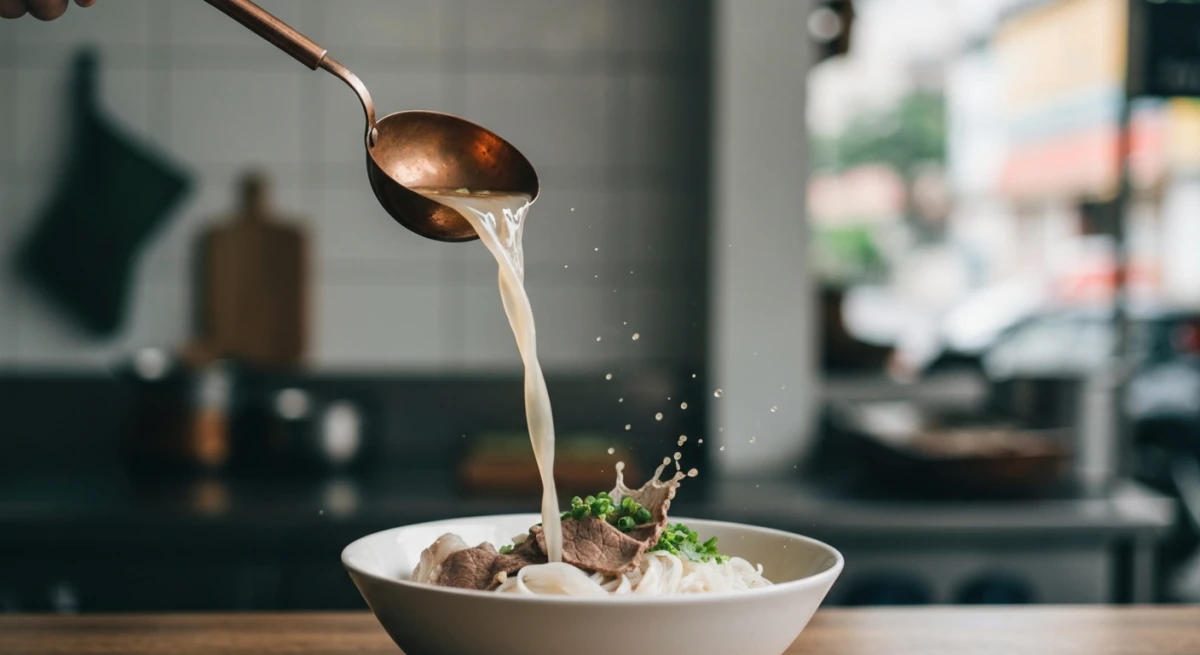
The soul of Northern Pho lies entirely in its broth. Coaxed from beef marrow bones simmered for 12 to 18 hours alongside charred ginger, onions, and a delicate blend of warming spices (star anise, cinnamon, black cardamom, and cloves), the broth is remarkably clear, light, and deeply savory. You will find no sweet hoisin sauce, no thick sriracha, and no mountains of raw bean sprouts or basil leaves on a Hanoian table. Such additions are considered a culinary sacrilege here, as they overpower the delicate clarity of the broth.
Instead, a proper bowl of Phở Bò (beef Pho) features flat, wide, hand-cut rice noodles, tender slices of rare or cooked beef, and a generous scattering of fresh scallions and cilantro. To eat it like a local, you must first taste the broth in its pure state. Then, customize it gently: a squeeze of fresh lime (or a spoonful of dấm tỏi—house-made garlic vinegar), a few slices of fresh bird's eye chili, and a side of Quẩy (golden, crispy deep-fried dough fritters). Dip the Quẩy into the hot broth until it softens slightly, allowing it to soak up the savory liquid like a sponge.
Bún Chả: The Midday Smoked Ritual
If Pho is Hanoi's morning love letter, Bún Chả is its midday obsession. Walk through the winding streets of the Old Quarter around 11:30 AM, and you will inevitably find yourself guided by a thick, irresistible cloud of white smoke smelling of caramelized pork.
Bún Chả consists of charcoal-grilled pork belly strips and seasoned minced pork patties served in a warm, sweet-savory dipping bowl filled with diluted fish sauce, sugar, vinegar, and crispy slices of green papaya and carrot. Accompanying this bowl is a plate of cold, tender rice vermicelli noodles (bún) and an overflowing basket of fresh, aromatic herbs, including perilla, Vietnamese basil, coriander, and lettuce.
To eat Bún Chả, you gather a small bunch of noodles, dip them into the warm pork broth, add a piece of grilled meat and a few herbs, and enjoy the perfect harmony of smoky, savory, sweet, sour, and herbal flavors in a single bite. While many tourists flock to Bún Chả Hương Liên—famed for hosting President Barack Obama and Anthony Bourdain—some of the most transcendental meals are found at unassuming street stalls where a grandmotherly figure carefully fans the charcoal embers on the sidewalk.
Chả Cá Lã Vọng: A Theatrical Culinary Legend
Dating back over a century, Chả Cá Lã Vọng is so legendary that an entire street in Hanoi's Old Quarter was renamed in its honor. This dish is as much an interactive theatrical performance as it is a meal.
Diners gather around a table equipped with a small portable burner. A seasoned iron skillet is placed on the flame, sizzling with golden oil, turmeric, galangal, and fermented rice-marinated chunks of firm, local fish (traditionally hemibagrus, though catfish is often used today). The server will bring out a massive platter of fresh dill and green scallions, which are tossed directly into the hot pan, wilting into the fragrant oil.
To assemble your bowl, place a handful of rice vermicelli at the bottom, top it with a piece of the sizzling, turmeric-stained fish and a generous portion of the wilted dill and scallions, and scatter toasted peanuts on top. The crowning touch is a spoonful of mắm tôm—a pungent, fermented purple shrimp paste activated with a squeeze of lime juice, a pinch of sugar, and fresh chili until it whips into a frothy glaze. If the intense aroma of mắm tôm is too intimidating, you can opt for standard fish sauce, but purists will tell you that the shrimp paste is the key that unlocks the dish's earthy, complex soul.
Bánh Cuốn: The Translucent Elegance of Breakfast
For a lighter morning alternative, Hanoians turn to Bánh Cuốn (steamed rice rolls). The preparation of Bánh Cuốn is an art form requiring decades of muscle memory.
The cook sits before a large, steaming vat of water covered with a tightly stretched, porous cloth. With a ladle, they smear a thin layer of fermented rice batter onto the cloth, covering it with a lid for a mere thirty seconds. The result is an impossibly thin, translucent rice sheet. Using a long bamboo stick, the cook lifts the delicate sheet, places it on a greased surface, fills it with a savory mixture of minced pork and wood ear mushrooms, and rolls it up.
Sprinkled with a generous handful of crispy, golden-fried shallots, the rolls are served warm alongside a dipping bowl of diluted fish sauce (traditionally infused with a drop of cà cuống, the rare essence of a giant water bug), fresh coriander, and slices of chả lụa (steamed pork sausage). The texture is wonderfully slippery, delicate, and comforting.
Bún Thang: The Aristocratic Mandala
While street food is often simple, Bún Thang represents the peak of Hanoian culinary refinement and domestic ingenuity. Historically, this dish was prepared during the final days of the Lunar New Year (Tết) as a sophisticated way to utilize leftover ingredients.
The presentation of Bún Thang resembles a colorful, intricate mandala. Over a bed of delicate rice noodles, the cook arranges micro-thin, matchstick-sized threads of shredded chicken breast, golden egg omelet, giò lụa (pork roll), fragrant shiitake mushrooms, and thin strips of pickled radish.
The broth, made from boiling chicken bones and dried shrimp, is cooked to a state of absolute clarity and poured piping hot over the colorful arrangement. It is a light, exceptionally elegant soup that showcases the Hanoian penchant for order, visual beauty, and subtle flavor layers.
Hidden Culinary Gems and Street Secrets
While the famous staples are essential, the true magic of vietnamese cuisine hanoi is found in its lesser-known street food variants and hyper-seasonal delicacies. To eat like an insider, seek out these hidden treasures.
Bánh Mì Chảo: The Sizzling Pan Twist
While the traditional grab-and-go Banh Mi sandwich is globally adored, Hanoi offers a sit-down, comfort-food variation known as Bánh Mì Chảo (pan Banh Mi).
Instead of being pre-stuffed, a sizzling iron skillet is brought directly to your low table, bubbling with melted butter, a sunny-side-up egg, a thick block of rich, spreadable pork pâté, sweet-savory Chinese sausage (lạp xưởng), and sometimes caramelized beef or meatballs. You are given a warm, ultra-crispy, hollow baguette on the side. The ritual involves tearing off chunks of the bread and using them to scoop up the runny egg yolk, the savory pâté, and the rich, buttery sauce straight from the pan. It is a messy, indulgent, and incredibly satisfying street-side feast.
Nộm Bò Khô: The Ultimate Textural Contrast
If you need a break from hot soups and heavy meats, search for a local vendor selling Nộm Bò Khô (green papaya salad with dried beef). This dish is a masterclass in contrasting textures and flavors.
A base of crisp, finely shredded green papaya and carrot is piled high with chewy, deeply spiced strips of beef jerky, aromatic sweet beef spleen, and soft herbs like mint and coriander. The salad is drizzled with a sweet, sour, and savory vinaigrette made from fish sauce, vinegar, and sugar, and topped with a generous handful of crunchy roasted peanuts. Every bite is an explosion of crunch, chew, herb freshness, and tangy-sweet brightness.
Chả Rươi: The Ultra-Seasonal Autumn Delicacy
For the truly adventurous epicurean, Chả Rươi (sandworm omelet) is a legendary Northern specialty that cannot be missed. Sandworms (rươi) are small, polychaete worms harvested exclusively during a brief window in late autumn from the brackish waters of Northern Vietnam's delta region.
To prepare the dish, the live worms are gently washed, blanched, and mixed with minced pork, fresh eggs, dill, spring onions, and—most importantly—finely shredded tangerine peel. The mixture is then pan-fried until it forms a thick, golden, crispy patty. The tangerine peel is a stroke of culinary genius; its citrusy warmth cuts through the rich, oceanic flavor of the sandworms, resulting in a savory, highly aromatic cake that tastes like a rich, herbal seafood soufflé.
The Drinks of Hanoi: Beyond the Coffee Hype
No exploration of vietnamese cuisine hanoi is complete without diving into the city’s vibrant beverage culture. In Hanoi, drinks are not merely accompaniments to a meal; they are social institutions.
Egg Coffee (Cà Phê Trứng): Liquid Tiramisu
The history of Hanoi's legendary egg coffee is a beautiful story of wartime resourcefulness. In 1946, during the First Indochina War, fresh milk was an extreme luxury in the besieged capital. Nguyen Van Giang, a bartender at the historic Metropole Hotel, decided to improvise. He whipped egg yolks with sugar and condensed milk until they formed a thick, creamy, airy froth, pouring it over a shot of intense, hot Vietnamese Robusta coffee.
Thus, Cà Phê Trứng was born, and Giang left the hotel to open Café Giảng, which still stands today. Served in a small bowl of hot water to maintain its temperature, egg coffee is a sensory marvel. The top layer is sweet, velvety, and custard-like, reminiscent of a warm tiramisu, which slowly gives way to the bold, bitter, and dark chocolatey notes of the Robusta coffee underneath.
Coconut Coffee (Cà Phê Cốt Dừa): The Modern Cult Favorite
While egg coffee represents history, coconut coffee represents modern Hanoi. Popularized by nostalgic local cafes like Cộng Cà Phê, this drink consists of strong, bitter black Robusta coffee poured over a thick, snowy, blended slushy of sweet coconut cream and condensed milk. It is icy, rich, tropical, and the perfect antidote to a humid, sweltering Hanoian afternoon.
Bia Hơi: The Daily Sidewalk Social Glue
As the sun begins to set, the culinary focus of Hanoi shifts from coffee houses to the corner Bia Hơi establishments. Bia Hơi (fresh beer) is a light, unpasteurized draft beer brewed daily without preservatives. Delivered in aluminum kegs to local vendors every morning, it has a low alcohol content (typically around 3%) and is meant to be consumed fresh on the same day.
Bia Hơi culture is the ultimate equalizer in Hanoi. At 5:30 PM, you will find construction workers, white-collar executives, and foreign travelers sitting side-by-side on low plastic stools on the sidewalk, clinking heavy, hand-blown green glass mugs. Paired with cheap, delicious drinking snacks like Đậu Lướt Ván (fried tofu with lemongrass), salted peanuts, or Nem Chua (tangy fermented pork rolls wrapped in banana leaves), it is a joyous, communal ritual that captures the carefree, street-level soul of the capital.
Street Food Etiquette: How to Eat Like a Local
To truly appreciate the treasures of vietnamese cuisine hanoi, you must understand how to navigate the physical space of street-side dining. Sidewalk dining is not a compromise for budget travelers; it is the venue of choice for Hanoians of all social classes. Here is how to dive in with confidence.
- Embrace the Low Stool: Traditional street stalls utilize low plastic stools that spill onto the sidewalks. Do not let the lack of formal tables deter you. Keep your belongings secure, watch the flow of passing motorbikes, and lean into the lively, chaotic symphony of the street.
- The Chopstick Sanitizing Ritual: When you sit down at a local street food stall, look for the metal container of chopsticks and spoons on the table. It is standard local etiquette to grab a paper napkin, squeeze a slice of fresh lime juice onto it, and thoroughly wipe down your utensils before eating. This cleans off any residual dust from the busy streets.
- Master the Table Condiments: Hanoian tables are always loaded with condiments, but they should be used with intention. Always taste the broth in its original state first. If eating beef Pho, add dấm tỏi (garlic vinegar) for a sharp, tangy contrast. If eating chicken Pho, opt for fresh lime juice instead. Add the fresh sliced bird's eye chilies sparingly—they are deceptively small but pack a fierce, fiery punch.
- The Art of Requesting the Bill: When you are finished eating, do not expect the server to bring a leather folder to your table. Instead, catch the eye of the vendor or head server and say "Em ơi, tính tiền!" (pronounced "em oy, tinh tien"), which translates to "Excuse me, please calculate the bill." Paying in cash is highly preferred, especially at small street stalls, so always carry small denominations of Vietnamese Dong (VND).
Frequently Asked Questions (FAQ)
What is the difference between Hanoi Pho and Saigon Pho?
Hanoi Pho (Phở Bắc) is older, simpler, and focuses on a clear, savory broth with wide rice noodles, minimal herbs, and no sweet sauces. Saigon Pho (Phở Nam) is sweeter, features thinner noodles, a cloudier and sweeter broth, and is served with a massive plate of raw herbs (basil, saw-tooth herb, bean sprouts) alongside hoisin and sriracha sauces for customization.
Is street food in Hanoi safe for foreigners?
Yes, street food in Hanoi is generally very safe, but practicing basic food hygiene is recommended. To avoid getting sick, choose vendors that are packed with locals (indicating high turnover and fresh ingredients), ensure your hot dishes are served steaming hot, avoid raw shellfish, and use the local custom of wiping your chopsticks and spoons with lime juice before dining.
How do vegetarians navigate Vietnamese cuisine in Hanoi?
While Vietnamese cuisine is famous for meat-based broths, navigating Hanoi as a vegetarian is very manageable. Look for the phrase "Ăn chay" (vegetarian eating). Hanoi has a rich tradition of Buddhist vegetarian restaurants (Quán Chay), which serve stunning plant-based versions of classic dishes, such as Bún đậu chay (vermicelli with fried tofu) and vegetarian Pho made with rich mushroom broths.
What is the best time of day to eat street food in Hanoi?
Street food in Hanoi is highly time-sensitive. Vendors often specialize in only one dish and open only during specific hours. Morning (6:00 AM to 9:00 AM) is best for Pho and Banh Cuon. Midday (11:00 AM to 1:30 PM) is the prime time for smoking-hot Bun Cha. Afternoon (3:00 PM to 6:00 PM) is perfect for lighter snacks like Nom Bo Kho and Banh Ran, while evenings are reserved for Lau (hot pot), Cha Ca, and Bia Hoi.
Conclusion
Hanoi is a city that reveals its truest self on its sidewalks. To experience vietnamese cuisine hanoi is to experience a living cultural tradition that values balance, respects freshness, and transforms simple, local ingredients into elegant masterpieces of flavor. From your very first morning bowl of minimalist Phở Bắc to late-night street-side draft beers, every meal in the capital is an invitation to connect with the history, warmth, and resilient spirit of Northern Vietnam. Travel hungry, pull up a plastic stool, and let Hanoi’s culinary magic unfold before you.