When you think of the culinary landscape of Ho Chi Minh City (still affectionately known as Saigon), your mind likely drifts to images of sizzling pork chops, steaming bowls of beef pho, and the pungent aroma of fish sauce. But beneath this meat-heavy surface lies a parallel culinary universe that is entirely plant-based, vibrant, and incredibly delicious. Finding vegetarian street food ho chi minh is not just a niche dietary quest; it is an entry ticket to one of the most culturally rich, affordable, and satisfying dining scenes in Southeast Asia. Whether you are a lifelong vegan or a curious foodie looking to lighten your footprint, the streets of Saigon offer an endless parade of mouthwatering dishes served on tiny plastic stools under the warm glow of streetlamps.
The Deep Cultural Roots of "Ăn Chay" in Saigon
To truly appreciate the richness of the vegetarian street food scene in Ho Chi Minh City, you must understand the concept of "ăn chay" (eating vegetarian). Unlike in the West, where vegetarianism is often driven by modern wellness trends or environmental movements, Vietnam's plant-based history is deeply spiritual and centuries-old.
It is rooted in Mahayana Buddhism, which is practiced by a large portion of the Vietnamese population. For millions of Saigonese, eating vegetarian is not a daily lifestyle choice but a periodic spiritual observance. On the first and fifteenth days of every lunar month (known as "mùng một" and "ngày rằm"), as well as during major Buddhist festivals like Vesak (Buddha's Birthday) and Vu Lan (Parents' Day), locals temporarily adopt a strict vegetarian diet to purify their minds and accumulate good karma.
During these lunar cycles, the city undergoes a fascinating transformation. Standard street food carts drape yellow banners featuring the word "CHAY" over their signs, and temporary food stalls pop up in almost every neighborhood alleyway.
It is also important to note the difference between Western "veganism" and Buddhist "chay." Strict Buddhist vegetarianism is actually closer to veganism—it completely excludes meat, poultry, seafood, dairy, eggs, and animal byproducts like gelatin and fish sauce. However, traditional Buddhist chay cooking also historically avoids the "five pungent spices" (alliums like garlic, onions, leeks, chives, and shallots), believing they disturb spiritual tranquility.
If you dine at a local "quán chay" (vegetarian eatery), you might find the flavors are milder and rely heavily on fresh herbs, lemongrass, ginger, and fermented soy sauces to build depth. For travelers, this means that almost everything labeled "chay" on the streets is naturally vegan, though you should always double-check if you have allergies or strict dietary rules.
Must-Try Vegetarian Street Food Dishes in Saigon
Navigating the chaotic streets of Ho Chi Minh City can be overwhelming, but knowing exactly what to look for will transform your culinary adventure. These iconic street foods have been flawlessly adapted into plant-based masterpieces without sacrificing an ounce of their original soul.
Bánh Mì Chay (Vegetarian Vietnamese Baguette)
No trip to Vietnam is complete without devouring a crunchy, flaky bánh mì. The vegetarian version, bánh mì chay, is a masterpiece of textures and flavors. Instead of the traditional pork cold cuts and liver pâté, street vendors use a colorful array of plant-based fillings.
A standard bánh mì chay starts with a warm, crispy baguette that shatters at the first bite. The vendor spreads a rich, savory spread made from ground mushrooms and lentils (mimicking the classic pâté), followed by layers of marinated tofu, mock meats (often made from wheat gluten or soy protein), crispy fried oyster mushrooms, and a generous handful of fresh cilantro, cucumber strips, and pickled daikon and carrots. It is finished with a drizzle of maggi soy sauce and fresh chili.
For an unforgettable bite, seek out the tiny street stalls rather than tourist cafes. Stalls like Banh Mi Chay Tuy Duyen in District 4 or Banh Mi Chay Khoi in District 5 serve up these packed sandwiches for less than a dollar, proving that street-side simplicity beats high-end dining every time.
Phở Chay (Vegetarian Noodle Soup)
Standard beef pho relies on bones simmered for twelve hours to create a rich, marrow-filled broth. You might wonder: can a vegetarian version ever compare? The answer is a resounding yes.
To craft phở chay, talented street cooks boil daikon radishes, carrots, pears, apples, sugarcane, and jicama for hours to extract a deep, naturally sweet vegetable base. This broth is then infused with the classic charred aromatics: star anise, cinnamon bark, cloves, cardamom, and roasted ginger.
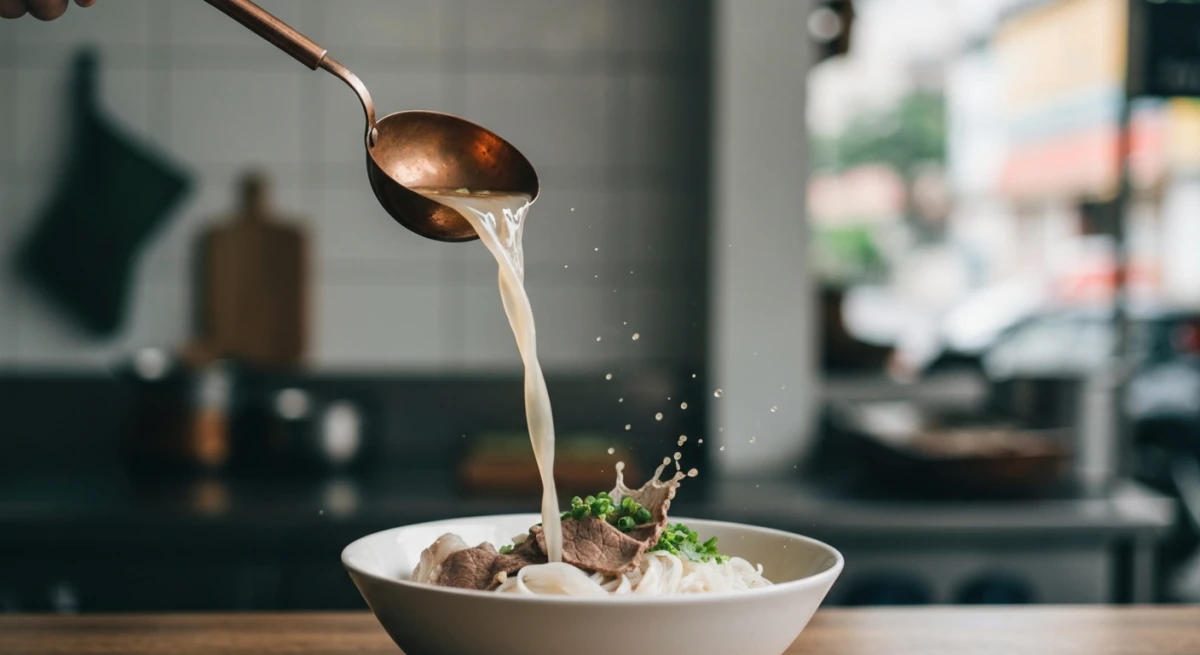
When you order a bowl, the flat rice noodles are blanched and placed in a bowl topped with stewed mushrooms (like king oyster and shiitake), fried tofu puffs, and slices of mock beef. The piping hot broth is ladled over the top, melting the fresh scallions and herbs. You customize your bowl at the table with lime wedges, fresh Thai basil, saw-tooth coriander, bean sprouts, and a squeeze of hoisin and chili sauce. Head to Phở Chay Như in District 3 to experience a legendary bowl that has been satisfying locals for decades.
Bún Thịt Nướng Chay (Cold Noodle Salad with Grilled "Pork")
If you find the Saigon heat too intense for hot soup, bún thịt nướng chay is the ultimate refreshing alternative. This dish is a vibrant, multi-layered cold noodle salad that balances sweet, sour, salty, and savory flavors.
The base of the bowl is filled with fresh, shredded lettuce, cucumber, and a mountain of fragrant herbs like mint and perilla. Next comes a layer of soft, room-temperature rice vermicelli noodles. The star of the show is the topping: grilled vegetarian "pork" (usually soy-protein strips marinated in lemongrass, garlic, and five-spice powder, then charred over hot coals), crispy vegetarian spring rolls (chả giò chay), roasted peanuts, and a spoonful of scallion oil (mỡ hành).
Instead of the ubiquitous sweet-and-sour fish sauce (nước chấm), the dish is served with a vegan dipping sauce (nước chấm chay) made from pineapple juice, sugar, chili, and light soy sauce. Pour it over the bowl, mix everything together, and enjoy a perfect harmony of crunchy, chewy, herb-filled bites.
Bun Mi Xao Chay (Stir-Fried Morning Noodles)
If you wander through the residential alleys of Saigon between 6:00 AM and 10:00 AM, you will undoubtedly spot metal carts with small glass displays filled with yellow egg-free noodles and white rice vermicelli. These are the bun mi xao chay carts, a beloved breakfast staple for busy locals on their way to work or school.
The vendor quickly tosses the noodles on a flat-top grill with cabbage, carrots, and fried tofu slices. When you order, they assemble a box of these stir-fried noodles, top it with crispy fried wonton skins (hoành thánh chiên), and hand you a bag of sweet garlic-soy dressing to pour over the top. At around 15,000 to 20,000 VND (less than $1 USD), it is one of the cheapest, most satisfying street breakfasts in the city.
Bột Chiên (Fried Rice Flour Cakes)
Originating from the city's large Teochew Chinese community, bột chiên is the ultimate late-night comfort food. Cubes of steamed rice flour (sometimes mixed with taro) are fried on a massive, flat cast-iron skillet until the exteriors are incredibly crispy and golden brown, while the insides remain soft and chewy.
In the traditional version, an egg is cracked over the cakes to bind them together. If you eat eggs, you can enjoy it as-is. If you are strictly vegan, simply ask the vendor to make it "không trứng" (no egg). The dish is topped with a mountain of shredded green papaya and fresh green onions, and served with a tangy, slightly sweet soy dipping sauce spiked with vinegar and chili. The contrast between the hot, crunchy-chewy dough and the cool, crunchy papaya is addictive.
Bánh Xèo Chay (Sizzling Savory Crepe)
Named after the loud sizzling sound (xèo) the batter makes when poured into a roaring hot pan, bánh xèo is a crispy, turmeric-spiced rice flour crepe. The batter is made with coconut milk and turmeric powder, giving it a vibrant yellow color and a subtle richness.
While the non-vegetarian version is stuffed with pork and shrimp, bánh xèo chay is packed with earthy wild mushrooms, sliced tofu, mung beans, and fresh bean sprouts. To eat it like a local, tear off a piece of the crispy crepe, place it inside a large mustard green or lettuce leaf, pack it with fresh herbs (mint, Thai basil, perilla), roll it up tightly, and dip it into sweet, chili-flecked vegan dipping sauce. It is messy, interactive, and spectacularly delicious.
Gỏi Cuốn Chay (Fresh Vegetarian Summer Rolls)
If you want something light, healthy, and raw, gỏi cuốn chay is the perfect choice. These translucent rice paper rolls are packed with fresh, crisp ingredients: lettuce, mint, coriander, chives, shredded tofu, and thin strips of vegetarian "ham" or cooked mushrooms. Sometimes, they include soft rice vermicelli noodles for extra substance.
The key to a great gỏi cuốn is the dipping sauce. Street vendors will serve them with either a thick, sweet peanut dipping sauce (tương đậu phộng) topped with crushed peanuts and chili, or a light ginger-soy dip. They are sold individually or in plates of three or four, making them an excellent healthy snack to eat on the go.
Cơm Tấm Chay (Vegetarian Broken Rice)
No list of Saigon street food is complete without broken rice. Cơm tấm chay replaces the famous grilled pork chop with a variety of plant-based toppings. You get a plate of warm, fractured rice grains topped with sườn nướng chay (grilled soy protein marinated in a sweet lemongrass glaze), chả hấp chay (a steamed meatloaf made from tofu, wood ear mushrooms, and glass noodles, topped with a yellow turmeric egg-free layer), and bì chay (shredded tofu skins tossed with roasted rice powder to mimic pork skin). It is drizzled with scallion oil and served with a side of pickled vegetables and sweet soy sauce. It is a hearty, deeply savory plate that will satisfy even the most committed carnivore.
Sweet Street Food Treats That Are Accidentally Vegetarian
Saigon's sweet street food scene is vast, and because traditional Vietnamese desserts rarely rely on dairy or butter, they are almost entirely vegetarian—and often completely vegan by default. These sweet treats are the perfect way to end your street food crawl.
Chuối Nếp Nướng (Grilled Sticky Rice Banana)
This is a legendary Southern Vietnamese street snack that you must try. A sweet, ripe finger banana (chuối sứ) is coated in a thick layer of sweet, pandan-infused glutinous rice. The entire package is wrapped in banana leaves and slowly grilled over hot charcoal.
As it grills, the banana caramelizes inside, becoming sweet and soft, while the sticky rice outer layer develops a smoky, crispy, golden crust. The vendor slices the grilled roll into bite-sized pieces, places them in a bowl, and drowns them in warm, rich coconut cream cooked with tapioca pearls, topped with a sprinkle of toasted sesame seeds. The famous cart at 115 Võ Văn Tần in District 3 is widely regarded as one of the best spots to experience this heavenly dessert.
Tàu Hủ Nước Đường (Silken Tofu in Ginger Syrup)
For a soothing afternoon pick-me-up, keep an ear out for street vendors carrying two heavy metal pots balanced on a bamboo pole across their shoulders, or pushing a small cart while calling out "Tàu hủ đây!" (Tofu is here!).
This dish consists of warm, unbelievably smooth, silken tofu ladled into a small bowl. It is drizzled with a sweet, fiery syrup made from caramelized sugar and freshly bruised ginger. The entire bowl is then finished with a generous ladle of thick, warm coconut cream. It is velvety, sweet, comforting, and melts in your mouth instantly.
Bánh Tiêu (Hollow Sesame Donuts)
If you smell something sweet and fried while walking down a Saigon sidewalk, look for a small glass cart with a wok of bubbling oil. You have likely found a bánh tiêu vendor.
These are hollow, airy donuts made from sweet yeast dough coated in white sesame seeds. When fried, they puff up like small golden pillows. They are crispy on the outside, slightly sweet, and soft on the inside. Many vendors will slice them open and stuff them with sweet sticky rice or a dollop of pandan mung bean paste.
The Best Neighborhoods and Streets to Find Vegetarian Street Food
While you can find individual chay carts scattered throughout the city, certain neighborhoods in Ho Chi Minh City boast incredibly high concentrations of vegetarian street food stalls. If you want to go on a self-guided food crawl, head directly to these areas.
District 1 (Downtown)
While District 1 is the glitzy center of Saigon, you don't have to miss out on street-level vegetarian dining.
- Tôn Thất Đạm Alley: Near the old market, this alley has hidden gems serving hủ tiếu chay (tapioca noodle soup) and cơm tấm chay (broken rice).
- Nguyễn Khắc Nhu Street: Tucked away from the main backpacker area of Bùi Viện, this street hosts several humble local quán chay that cater to students and budget travelers.
- Bến Thành Market Street Food: While highly commercial, the surrounding night market stalls and the food court inside feature vendors who can whip up a spectacular bánh xèo chay or fresh spring rolls (gỏi cuốn chay) on demand.
District 3: The Spiritual Heartland of Chay Food
District 3 is home to several historic Buddhist pagodas (such as Xá Lợi Pagoda and Vĩnh Nghiêm Pagoda), making it the absolute best starting point for vegetarian explorers.
- Nguyễn Thượng Hiền Street: This narrow, buzzing street is a legendary street food corridor. Amid the snail stalls and fruit juices, you will find several dedicated vegetarian street carts and hole-in-the-wall eateries.
- Võ Văn Tần Alleys: The labyrinthine alleys branching off Võ Văn Tần street house dozens of tiny family-run vegetarian kitchens. These spots cater to office workers during the day and locals seeking comforting noodle soups at night.
District 4: Raw, Authentic, and Packed with Flavor
Once known as a gritty port district, District 4 is now celebrated as Saigon's ultimate street food playground. It has a high density of local markets where vegetarian carts thrive.
- Nguyễn Hữu Hào Market: This is a bustling wet market where you can find Banh Mi Chay Tuy Duyen. Walking through here in the morning gives you a raw, authentic look at Saigon life, paired with some of the cheapest plant-based snacks you can find.
- Vĩnh Khánh Street: While famous for seafood, the intersecting alleys are goldmines for local quán chay serving up plates of cơm tấm chay (vegetarian broken rice) and bowls of spicy bún Huế chay.
District 5 (Chợ Lớn / Chinatown): A Fusion of Chinese and Vietnamese Vegetarianism
Chợ Lớn is the cultural center of the city's ethnic Chinese population, which has its own rich, distinct vegetarian traditions. The food here often incorporates unique mock meats, herbal broths, and dim sum-style steamed buns.
- Trần Bình Trọng & Cao Đạt Streets: These streets host some of the most famous local vegetarian food carts in the city, including Banh Mi Chay Khoi, which draws massive lines of locals every afternoon.
- Chợ Thiếc Market: In the mornings, this market is packed with vendors selling vegetarian sticky rice (xôi chay) and steamed rice rolls (bánh cuốn chay).
Essential Language Guide and Ordering Tips
Navigating street food stalls can be intimidating if you don't speak Vietnamese, especially when trying to communicate dietary restrictions. While many younger Saigonese speak excellent English, street vendors in local markets often do not. Armed with these key phrases and tips, you can order with absolute confidence.
Key Vietnamese Vegetarian Phrases
- Tôi ăn chay (Toy un chay) — I eat vegetarian / I am vegetarian.
- Không thịt (Khom thit) — No meat.
- Không nước mắm (Khom nuoc mum) — No fish sauce.
- Không trứng (Khom trung) — No egg.
- Không sữa (Khom sua) — No milk / condensed milk.
- Không bột ngọt (Khom bot ngot) — No MSG.
- Cái này có trứng không? (Kai nay ko trung khom?) — Is there egg in this?
- Ngon quá! (Ngon wa!) — Delicious!
Pro Tips for a Successful Street Food Crawl
- Look for the Yellow Sign: Authentic vegetarian street carts and local restaurants almost always display a bright yellow or red sign with the word "CHAY" in bold letters. If you see this, you can be 99% sure that the stall is completely meat-free.
- Be Mindful of the Lunar Calendar: If you want to experience the absolute peak of Saigon's vegetarian street food culture, plan your food crawls on the 1st and 15th days of the Lunar Month (you can easily check a lunar calendar app online). On these days, the variety of dishes doubles, and the streets are alive with temporary stalls.
- Bring Cash: Street food vendors do not accept credit cards. Keep a pocketful of small-denomination Vietnamese Dong (10,000, 20,000, and 50,000 VND bills). Most street food dishes cost between 15,000 and 40,000 VND, so large bills (like 500,000 VND) can be difficult for small vendors to change.
- Embrace the Plastic Stool: Don't be afraid of the tiny plastic stools on the sidewalk. This is where the magic happens. The food is freshest, cheapest, and most authentic when eaten right on the street.
Frequently Asked Questions (FAQ)
Is fish sauce used in vegetarian street food in Vietnam?
No, traditional Buddhist chay cooking strictly forbids the use of animal-derived products, including fish sauce (nước mắm). Instead, vegetarian street vendors use a plant-based alternative called nước mắm chay, which is typically made from fermented soybeans, salt, sugar, and sometimes pineapple juice to replicate the sweet-tangy-umami profile of the original.
Can vegans eat at standard, non-vegetarian street stalls?
It can be quite challenging. Even if a dish like hủ tiếu or bột chiên seems vegetable-based, standard street vendors almost always use pork-based broths, lard for frying, or standard fish sauce. To ensure your meal is completely vegan, it is highly recommended to eat exclusively at dedicated quán chay (vegetarian eateries) or street carts displaying the "CHAY" sign.
Is MSG common in Vietnamese vegetarian street food?
Yes, MSG (bột ngọt) is a staple ingredient in Vietnamese cuisine, used to enhance umami flavors. While it is completely safe to consume, if you have a sensitivity to it, you can politely say "Không bột ngọt" (No MSG) when ordering.
Is milk or dairy common in Vietnamese street food?
Generally, no. Traditional Vietnamese street food rarely uses dairy milk or butter. However, sweet treats and coffees often use sweetened condensed milk (sữa đặc). If you are vegan, be sure to specify "Không sữa" (no milk) when ordering sweet snacks or local coffee. Coconut milk (nước cốt dừa) is plant-based and completely safe.
Is street food in Ho Chi Minh City safe to eat?
Yes, Saigon's street food is generally very safe, especially because vegetarian food does not carry the same risks of raw or spoiled meat. To be safe, choose busy stalls with high customer turnover (indicating the food hasn't been sitting out), look for vendors who keep their ingredients covered, and drink bottled water or the complimentary iced tea (trà đá) provided at the stalls.
Conclusion
Ho Chi Minh City is a playground for travelers who live to eat, and its vegetarian street food scene is nothing short of a revelation. Far from being a compromise, eating chay in Saigon allows you to experience the true, heritage-rich soul of Vietnamese cuisine. From the explosive crunch of a fresh bánh mì chay in District 4 to the smoky, sweet comfort of grilled banana sticky rice in District 3, the city's streets prove that plant-based dining can be incredibly bold, endlessly diverse, and beautifully integrated into local life. Grab a plastic stool, keep an open mind, and let Saigon's street food vendors redefine what vegetarian food can be.