The moment you step onto the chaotic streets of Saigon, your senses are instantly, wonderfully overwhelmed. The relentless hum of thousands of motorbikes merges with the sweet, caramelized aroma of pork sizzling over roadside charcoal grills. If you are searching for the world's most dynamic culinary capital, exploring the world of vietnamese food ho chi minh is an absolute rite of passage. Formerly and still affectionately called Saigon, this metropolis is a living, breathing 24-hour kitchen. Here, eating is not merely a daily necessity; it is a shared social ritual, a language of hospitality, and a source of fierce civic pride.
From historic, decade-old alleyway stalls to modern culinary hotspots pushing the boundaries of fusion, the city offers an unparalleled spectrum of flavors. This comprehensive guide will take you beyond the typical tourist menus, deep into the neighborhoods where locals eat, showing you exactly what to order, where to find the absolute best versions, and how to navigate the street food scene like a seasoned expert.
1. The Culinary Identity of Saigon: A Gastronomic Melting Pot
To appreciate the spectacular array of vietnamese food ho chi minh has to offer, you first need to understand the city's unique geography and history. Saigon is Southern Vietnam's beating heart, but its food culture is a brilliant mosaic shaped by domestic migration and international history.
Historically, Saigon has been a magnet for people from all over Vietnam. Migrants from the cooler, historically austere North and the rugged, spice-loving Central provinces have brought their culinary traditions with them. Over generations, these recipes have adapted to the abundance of the Mekong Delta, Southern Vietnam's agricultural breadbasket. As a result, Southern Vietnamese cuisine is characterized by its generous use of fresh herbs, vibrant raw vegetables, coconut milk, and a distinct touch of sweetness.
But the story does not stop there. French colonial rule left an indelible mark on the local palate, introducing baguettes, pâté, clarified butter, and coffee—elements that the Vietnamese ingeniously transformed into local staples like bánh mì and cà phê sữa đá. Similarly, the Chinese community in Cholon (District 5) infused the local food scene with rich braises, roasted meats, and hand-pulled noodles. Today, eating your way through Ho Chi Minh City is like taking a delicious, historical journey through a city that has mastered the art of culinary synthesis.
2. The Holy Trinity of Southern Comfort Food: Phở, Cơm Tấm, and Bánh Mì
If you only have forty-eight hours in the city, your culinary mission should focus on mastering three iconic dishes. These are the foundations of the local daily diet, and each has its own unique, regional personality in the South.
The Theatrical Southern Style: Phở
While phở is universally celebrated as Vietnam's national dish, there is a fierce, ongoing rivalry between the Northern (Hanoi) and Southern (Saigon) styles. The original Northern phở is an exercise in elegance and restraint: a crystal-clear, subtly savory beef broth, wide rice noodles, and a scattering of green onions, served with nothing but a few slices of fresh chili and lime.
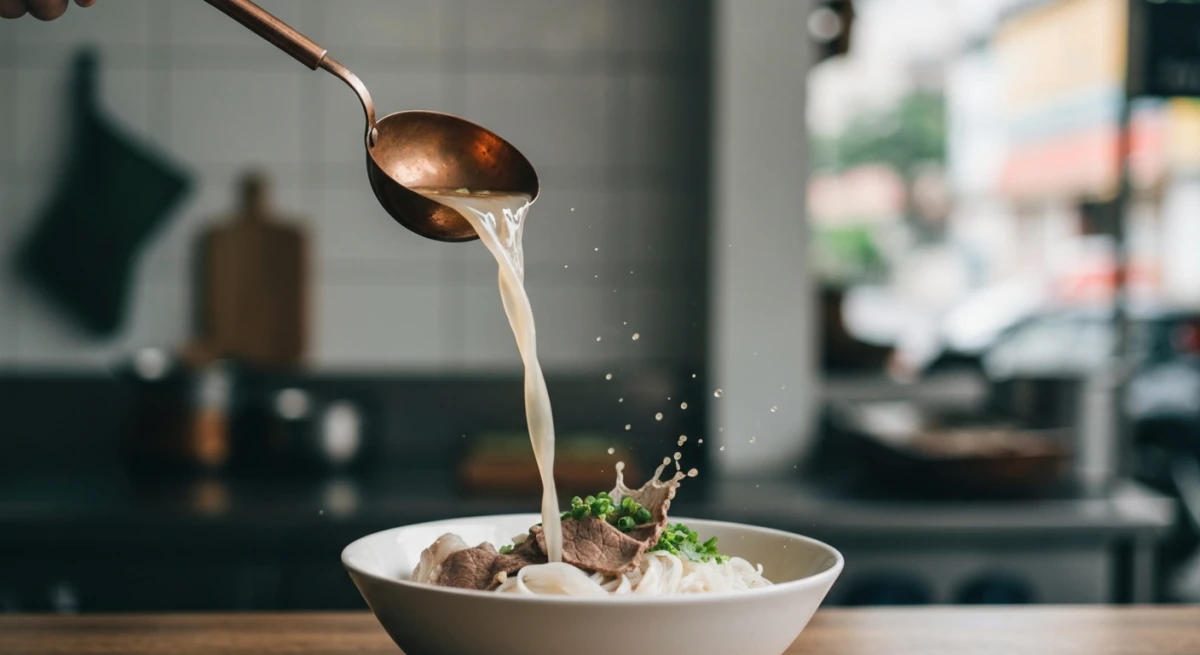
In contrast, the Southern phở you will encounter in Ho Chi Minh City is a full-blown theatrical production. The broth is noticeably sweeter, richer, and darker, heavily spiced with charred ginger, onions, star anise, cloves, and cinnamon. But the real difference lies in the presentation. When you order phở in Saigon, it arrives with a veritable forest of fresh herbs on a side platter. This basket typically includes rau húng quế (sweet Thai basil), ngò gai (sawtooth herb), rau ôm (rice paddy herb), and a mound of raw bean sprouts.
Furthermore, you are expected to customize your broth. On every table, you will find bottles of tương đen (sweet, fermented hoisin sauce) and tương ớt (spicy chili sauce). Locals will squirt these sauces directly into the bowl to sweeten and spice the soup, or create a small dipping pool on a side saucer to dip the tender slices of tái (rare beef), nạm (flank), or bò viên (beef meatballs).
- Where to Try It: For an indulgent, rich bowl, head to Phở Lệ (302-304 Nguyễn Trãi, District 5). If you prefer a historic, subtler, and deeply traditional bowl that has remained unchanged since the 1940s, seek out Phở Minh (63/6 Pasteur, District 1), tucked quietly down a classic Saigon alleyway.
The Worker's Feast: Cơm Tấm (Broken Rice)
If there is one dish that belongs entirely to Saigon, it is cơm tấm, or broken rice. Originally, this was a peasant farmer's dish made from the fractured rice grains that were damaged during the milling process. Because these broken grains could not be sold on the open market, poor families and laborers cooked them for themselves. They quickly discovered that the smaller, broken grains absorbed sauces and fats far better than intact rice.
Today, cơm tấm is a beloved urban staple eaten for breakfast, lunch, and dinner. A classic plate is a masterclass in contrasting textures and rich, savory flavors. It starts with a bed of fluffy, warm broken rice, which is topped with:
- Sườn Nướng: A thin pork chop marinated in lemongrass, garlic, shallots, honey, and fish sauce, then grilled over open charcoal until caramelized and smoky.
- Chả Trứng: A savory, steamed egg meatloaf made with minced pork, wood-ear mushrooms, glass noodles, and eggs, finished with a bright yellow egg-yolk glaze.
- Bì: Shredded pork skin tossed in toasted, ground rice powder (thính), which adds a pleasant, subtle chewiness and nutty aroma.
- Ốp La: A fried egg, ideally served with a runny yolk that breaks over the rice.
This magnificent plate is drizzled with mỡ hành (scallions lightly cooked in lard) and served with a side of nước mắm ngọt (a sweet, thick dipping fish sauce infused with garlic and chili) and a handful of pickled daikon and carrots to cut through the richness.
- Where to Try It: For the ultimate bucket-list experience, visit Cơm Tấm Ba Ghiền (84 Đặng Văn Ngữ, Phú Nhuận District). This legendary, open-air spot earned a Michelin Bib Gourmand for its massive, succulent, charcoal-grilled pork chops that literally spill over the edges of the plate. For a slightly more premium, deeply caramelized pork chop, try Cơm Tấm Nguyễn Văn Cừ (74 Nguyễn Văn Cừ, District 1).
The French-Vietnamese Masterpiece: Bánh Mì
No trip to Ho Chi Minh City is complete without eating your weight in bánh mì. This world-famous sandwich represents the pinnacle of French-Vietnamese culinary fusion. The Vietnamese took the classic French baguette, lightened the dough with rice flour to make it incredibly airy and crisp, and replaced the traditional butter and ham with a vibrant, complex layer of local ingredients.
Step up to any roadside bánh mì cart, and you will watch a culinary ballet in motion. The vendor slices open a warm, crusty baguette, slathers the inside with rich, savory pork liver pâté and home-style egg mayonnaise, and then layers in a variety of cured meats, including chả lụa (Vietnamese pork roll), jambon, and headcheese. Next comes the refreshing crunch: long strips of fresh cucumber, a handful of cilantro sprigs, and pickled daikon and carrots (đồ chua). Finally, the sandwich is seasoned with a splash of soy sauce or Maggi seasoning and spiked with fiery slices of fresh bird's eye chili.
- Where to Try It: For a decadent, meat-heavy bomb of a sandwich, line up at Bánh Mì Huỳnh Hoa (26 Lê Thị Riêng, District 1). It is arguably the most famous bánh mì shop in the city, serving sandwiches so heavy they easily feed two people. For a completely different, nostalgic experience, head to Bánh Mì Hòa Mã (53 Cao Thắng, District 3). Here, you can sit on tiny plastic stools in a narrow residential alleyway and order bánh mì chảo—a sizzling personal skillet filled with fried eggs, onions, sausage, and pâté, served alongside a hot, plain baguette designed for tearing and dipping.
3. Tactile and Textured: Bánh Xèo and Bún Thịt Nướng
While phở and bánh mì grab the international headlines, the true joy of vietnamese food ho chi minh lies in its tactile, interactive dishes. These are meals that require you to get your hands dirty, wrapping crispy textures in fresh green leaves.
The Sizzling Giant: Bánh Xèo
The name bánh xèo translates literally to "sizzling cake," named after the dramatic sound the wet rice batter makes when poured onto a roaring-hot, oiled skillet. While Central Vietnam serves small, thick, crispy versions of this dish, the Southern style found in Saigon is an absolute colossus.
Southern bánh xèo is a giant, paper-thin, golden crêpe. The batter is made of rice flour, water, and coconut milk, colored a vibrant yellow with turmeric powder (contrary to popular belief, there is no egg in the batter). The cook swirls the batter around a massive wok, then fills it with thin strips of pork belly, small shrimp, mung beans, and a generous handful of fresh bean sprouts before folding it in half.
Eating bánh xèo is an art form. You do not use a fork, knife, or chopsticks to eat it directly. Instead, you tear off a manageable piece of the hot, crispy crêpe (making sure to get some of the pork and shrimp filling). Next, take a large, peppery mustard green leaf (lá cải xanh) or a lettuce leaf as your base. Place the piece of bánh xèo inside, layer in fresh herbs like mint, Thai basil, and perilla, and roll it up tightly. Dip the roll deep into a bowl of nước chấm—the sweet, sour, salty, and slightly spicy dipping sauce—and take a massive bite. The contrast between the hot, crunchy, fatty crêpe and the cold, crisp, herbaceous wrapping is pure magic.
- Where to Try It: The most legendary spot in the city is Bánh Xèo 46A (46A Đinh Công Tráng, District 1). Fired over traditional charcoal stoves, their crêpes are wonderfully smoky and crispy. It was famously visited by Anthony Bourdain and remains a gold standard for first-timers.
The Perfect Salad Bowl: Bún Thịt Nướng
If you find the tropical humidity of Saigon wearing you down, bún thịt nướng is the perfect antidote. It is a dry, cold noodle dish that strikes a flawless balance between light, refreshing herbs and rich, savory grilled meats.
At the bottom of a large ceramic bowl lies a bed of fresh, soft rice vermicelli noodles (bún) and a generous layer of shredded lettuce, cucumber, and fresh herbs. This is topped with warm, deeply caramelized pork (thịt nướng) that has been marinated in lemongrass, honey, and garlic before being grilled over charcoal. Most shops will also add a crispy, deep-fried spring roll (chả giò) sliced into bite-sized pieces, a spoonful of mỡ hành (scallion oil), and a handful of crushed, roasted peanuts.
To eat it, you pour a generous cup of light, sweet-and-sour fish sauce (nước mắm chua ngọt) over the entire bowl. Using your chopsticks, toss all the ingredients together like a salad, ensuring every strand of noodle is coated in the sweet, savory dressing. Every bite is an explosion of smoky pork, crispy spring roll, nutty peanuts, and cool, aromatic herbs.
- Where to Try It: Make your way to Bún Thịt Nướng Chị Tuyền (175 Cô Giang, District 1). Their pork is exceptionally tender and sweet, and you can also opt to add grilled beef (bò nướng) to your bowl for an extra layer of decadence.
4. Saigon After Dark: The Cult of "Ốc" (Snails) and Bò Lá Lốt
When the sun sets over the Saigon River, the city's culinary energy shifts from quick daytime meals to leisurely, late-night dining. To experience the heart and soul of local social life, you must participate in the cult of ốc.
In Vietnamese, ốc translates literally to "snails," but in the culinary world of Saigon, it is a broad umbrella term that encompasses all manner of freshwater snails, sea snails, clams, oysters, scallops, and crabs. Going out for snails (đi ăn ốc) is the ultimate expression of nhậu—the local culture of drinking cold beers, sharing small, flavorful plates of seafood, and chatting with friends late into the night. It is a lively, sensory-rich experience characterized by the clinking of beer glasses, the shouting of local toasts ("Một, Hai, Ba, Dzô!"), and the smoke rising from outdoor grills.
The variety of preparations is staggering. Snails are cooked in a wide array of bold, aromatic sauces. Some of the must-try variations include:
Ốc Móng Tay Xào Tỏi: Razor clams stir-fried with massive amounts of garlic and fresh morning glory (rau muống).
Ốc Len Xào Dừa: Mud creeper snails simmered in a rich, sweet, and fragrant sauce of coconut cream, lemongrass, and chili. To eat them, you cover the opening of the shell with your lips and suck hard, drawing the sweet snail meat and rich coconut sauce directly into your mouth.
Sò Điệp Nướng Mỡ Hành: Plump sea scallops grilled on the half-shell over charcoal, topped with sizzling scallion oil, crushed peanuts, and crispy fried shallots, dipped in a sweet-and-sour chili-lime sauce.
Ốc Hương Rang Muối Ớt: Sweet snail sautéed in a dry, fiery coating of chili, garlic, and sea salt.
Where to Try It: For an unforgettable culinary adventure, cross the bridge into District 4 and head to Vĩnh Khánh Food Street. This vibrant, chaotic street is lined with dozens of open-air snail restaurants where tables spill onto the sidewalk and motorbikes squeeze past. Quán Ốc Oanh (579 Vĩnh Khánh, District 4) is a local institution famed for its bold seasoning and incredibly fresh seafood. For a slightly tamer but equally delicious experience, seek out Ốc Đào (212B/C12 Nguyễn Trãi, District 1), tucked away in a quiet alleyway in the city center.
The Aromatic Charcoal Wrap: Bò Lá Lốt
Another evening street food marvel is bò lá lốt. Minced beef is seasoned with garlic, shallots, lemongrass, and five-spice powder, rolled tightly into wild betel leaves (lá lốt), and grilled over smoking hot charcoal. As the betel leaves char, they release a spectacular, herbal, tea-like aroma that infuses the beef, keeping it incredibly juicy and tender.
To eat bò lá lốt, you take a sheet of dry rice paper, lightly brush it with water to soften it, and place a leaf of lettuce, herbs, sliced green bananas, star fruit, and rice vermicelli inside. Add a few pieces of the hot grilled beef, roll it tightly, and dip it into mắm nêm—a pungent, fermented anchovy and pineapple sauce that is sweet, salty, and intensely umami.
- Where to Try It: Head to Bò Lá Lốt Thanh Vy (267 Minh Phụng, District 11) or browse the local stalls clustered around Cô Giang Street in District 1 for an ultra-authentic local setup.
5. The Neighborhood Food Map: Navigating HCMC's Gastronomic Geography
One of the biggest mistakes travelers make when exploring the vietnamese food ho chi minh scene is staying entirely within the tourist-heavy confines of District 1. While the city center has excellent food, Saigon is a massive urban sprawl of twenty-four districts, each with its own distinct culinary personality. To eat like a true local, you need to understand the geography of flavors.
District 1: The Historical Center and Fusion Hub
District 1 is the glittering face of Ho Chi Minh City, where French colonial landmarks stand alongside towering skyscrapers. In terms of food, it is a fascinating blend of old-school heritage and cutting-edge gastronomy. Here, you will find hidden food alleys (hẻm) tucked behind luxury boutiques, offering quick, affordable street food like bún riêu (crab and tomato noodle soup) or canh bún alongside upscale, Michelin-starred contemporary Vietnamese restaurants like Ănăn Saigon, which famously serves a gourmet $100 street-food-inspired menu.
District 3: The Leafy, Cool Local Neighborhood
Just adjacent to District 1, District 3 offers a slightly more relaxed, leafy environment. It is highly regarded by locals for its dense networks of alleyways that house legendary, multi-generational food stalls. It is the perfect district for a self-guided walking food tour. Seek out quiet, residential alleys to find incredible bún chả (Northern-style grilled pork noodles), hidden vegetarian cafés (quán chay), and classic Southern breakfast spots.
District 4: The Street Food Kingdom
Once a gritty, working-class port area, District 4 has transformed into a legendary paradise for street food enthusiasts. It is the most densely populated district in the city, consisting of tight, winding alleys where cars cannot fit. This geography has allowed street food culture to flourish completely undisturbed. Beyond the famous Vinh Khanh Snail Street, District 4 is a haven for bánh tráng kẹp (grilled rice paper), súp cua (crab soup), and traditional Southern sweet soups (chè).
District 5 (Chợ Lớn): Chinatown
Chợ Lớn is Vietnam's largest Chinatown, and its culinary landscape is heavily influenced by the Hokkien, Cantonese, and Teochew immigrants who settled here centuries ago. The food in District 5 is distinct from the rest of the city. Here, you should seek out Mì Vịt Tiềm—a rich, comforting egg noodle soup featuring a massive, fall-off-the-bone duck leg that has been stewed with Chinese medicinal herbs and deeply fried. You will also find incredible roasted meats, dim sum, and traditional herbal desserts.
District 10: The High-Energy Student Paradise
Because District 10 is home to several major universities, its food scene is incredibly vibrant, highly affordable, and geared toward young crowds. Sư Vạn Hạnh Street is the main artery of this district, famous for its cheap hot pots, experimental snacks, and excellent Bột Chiên (pan-fried rice flour cakes cooked on a flat griddle with eggs, green onions, and sweet soy sauce). It is loud, chaotic, and wonderfully budget-friendly.
6. Street Food Safety, Etiquette, and Sidewalk Etiquette
Sitting on a low plastic stool on a busy sidewalk while motorbikes whiz past can be intimidating for first-time visitors. However, with a few basic guidelines, you can navigate the street food scene safely and confidently.
How to Spot a Safe Food Stall
When evaluating a street vendor, follow the golden rule of local dining: look for high customer turnover. A food stall crowded with local families and office workers is the best guarantee of safety. High turnover means that ingredients are constantly being used and replenished, rather than sitting out in the tropical heat. Furthermore, observe the cook's workstation. Stalls that specialize in only one or two dishes are generally safer and higher quality than those offering an extensive, unrealistic menu.
Sidewalk Hygiene Best Practices
Do not be alarmed by the rustic appearance of street stalls. You can easily protect your stomach by practicing a simple local ritual. When you sit down, you will almost always find fresh lime wedges on the table. Take a slice of lime, squeeze the juice onto a paper napkin, and use it to thoroughly wipe down your metal chopsticks and spoons before you eat. The high acidity of the lime juice acts as a natural sanitizer. Additionally, carry a small pack of wet wipes and hand sanitizer with you, as street stalls rarely have running water for customers to wash their hands.
The Ice and Water Question
Many travelers are terrified of drinking ice in Vietnam, fearing it will lead to food poisoning. In Ho Chi Minh City, however, this is largely a myth. Almost all food vendors—even the smallest roadside carts—purchase their ice from commercial ice factories that use purified water. This commercial ice is easily recognizable: it consists of clean, hollow cylinders of ice. Drinking a refreshing glass of trà đá (iced green tea) or cà phê sữa đá is generally perfectly safe. The only ice you should avoid is large, dirty blocks of ice that are shaved or crushed by hand, which can occasionally pick up contamination during transport.
Table Etiquette and Payment
Space on the sidewalk is highly valued. If a food stall is crowded, do not be surprised if the owner gestures for you to sit at a table with strangers. It is polite to nod, take your seat, and focus on your food. When you are finished eating and are ready to pay, catch the attention of any staff member, make a writing gesture in the air, and say "Tính tiền" (pronounced ting tee-en), which means "check, please."
Always carry cash. The vast majority of street food vendors do not accept credit cards or mobile payments from foreign bank accounts. Keep a collection of small bills (VND 10,000, 20,000, and 50,000) in an accessible pocket, as pulling out a large 500,000 VND note to pay for a 30,000 VND bowl of noodles is highly discouraged and vendors may not have the change.
7. Frequently Asked Questions (FAQ)
Is street food in Ho Chi Minh City safe for foreigners?
Yes, street food in Ho Chi Minh City is remarkably safe and clean, provided you choose busy stalls with high customer turnover. Stick to cooked-to-order, piping-hot dishes, and always wash or sanitize your hands before eating.
How much does a typical meal cost in Saigon?
Street food in Ho Chi Minh City is incredibly affordable. A bowl of phở, a plate of cơm tấm, or a bánh mì sandwich will typically cost between 30,000 VND and 70,000 VND ($1.20 to $3.00 USD). A casual dinner at a snail restaurant with a few beers might run 150,000 VND to 250,000 VND ($6.00 to $10.00 USD) per person.
What is the main difference between Northern and Southern Vietnamese food?
Northern Vietnamese food (from Hanoi) is generally more subtle, balanced, and savory, relying heavily on black pepper rather than chilies. Southern Vietnamese food (from Saigon) is much bolder, sweeter, and spicier, utilizing abundant fresh herbs, raw vegetables, chilies, and coconut milk.
Can I find vegetarian or vegan food in Ho Chi Minh City?
Absolutely! Look for stalls and restaurants displaying the word "Chay" (which means vegetarian/vegan). Due to Buddhist traditions, Vietnam has a rich vegetarian heritage. You will find incredible plant-based versions of classic dishes like phở chay and bún thịt nướng chay, often utilizing creative mock-meats, tofu, and fresh mushrooms.
What are the best hours for street food in Saigon?
While some stalls operate during the day, the street food scene truly comes alive after 5:00 PM. This is when the heat of the day breaks, locals finish work, and late-night spots like snail stalls and charcoal grills open their doors.
8. Conclusion
Exploring the rich tapestry of vietnamese food ho chi minh is far more than a simple culinary checklist; it is an immersive journey into the heartbeat of a magnificent city. Every smoking grill, steaming cauldron of broth, and freshly sliced baguette tells a story of cultural resilience, historical adaptation, and absolute passion for flavor. By stepping out of your comfort zone, embracing the chaos of the sidewalks, and sitting shoulder-to-shoulder with locals on tiny plastic stools, you will discover why Saigon is widely celebrated as one of the greatest food cities on earth. Pack your appetite, leave your culinary hesitations behind, and let the streets of Saigon guide you to your next unforgettable meal.