Stepping onto the bustling pavements of Ho Chi Minh City, formerly known as Saigon, is an immediate sensory overload. The roar of a million motorbikes, the aromatic clouds of roasted lemongrass and charcoal smoke, and the vibrant clatter of chopsticks form the heartbeat of Vietnam's culinary capital. To truly understand this city, you have to eat on its streets. Finding the best saigon street food isn't just about feeding yourself; it is an immersive cultural pilgrimage. From savory noodle soups simmering in deep cauldrons for fifteen hours to crispy, golden crepes stuffed with fresh river shrimp, Saigon's food scene is a masterclass in balancing sweet, sour, salty, spicy, and umami flavors.
Whether you are a first-time traveler navigating the maze of District 1 or a seasoned foodie looking to venture into the deep alleyways of District 4 and District 10, this definitive guide will lead you directly to the legendary stalls, hidden alleys, and culinary masterpieces that define the best saigon street food. Grab a low plastic stool, prepare your palate, and let's dive into the ultimate street food journey through Ho Chi Minh City.
Essential Saigon Street Food: The Icons You Can’t Miss
Cơm Tấm (Broken Rice)
No dish encapsulates the resilient, working-class spirit of Saigon quite like Cơm Tấm (Broken Rice). Historically, this was a dish born of necessity. During the rice milling process, fractured, imperfect grains were set aside because they couldn't be sold to wealthy merchants. Resourceful working-class families in the Mekong Delta and Saigon began cooking these broken grains for themselves, discovering that the smaller texture actually absorbed savory marinades and scallion oil far better than whole grains. Today, Cơm Tấm has evolved from a humble peasant meal into a beloved national treasure eaten by street sweepers and billionaires alike.
A classic plate of Cơm Tấm is a masterpiece of culinary balance. It features a bed of fragrant, dry-textured broken rice topped with sườn nướng—a pork chop marinated in lemongrass, garlic, shallots, thick soy sauce, honey, and fish sauce, then grilled over hot charcoal until caramelized and deeply smoky. To accompany the pork, vendors add chả trứng (a savory steamed egg custard loaf packed with minced pork, wood-ear mushrooms, and glass noodles) and bì (shredded pork skin tossed in toasted rice powder for a chewy, nutty contrast). The entire dish is drizzled with mỡ hành (scallion oil) and served with crunchy pickled daikon and carrots, fresh cucumber slices, and a bowl of sweet-and-sour garlic-chili fish sauce (nước chấm).
- Where to try it: For the ultimate, larger-than-life broken rice experience, head to Cơm Tấm Ba Ghiền (84 Đặng Văn Ngữ, Phú Nhuận District). This legendary institution serves massive, thick-cut pork chops that are marinated to perfection and grilled constantly on a sidewalk charcoal setup. If you prefer a more central, late-night option, visit Cơm Tấm Bãi Rác (77 Lê Quốc Hưng, District 4), nicknamed the 'rubbish dump broken rice' due to its proximity to a local market, though the food itself is incredibly clean, premium, and unbelievably delicious.
Bánh Mì
The humble Bánh Mì is arguably Vietnam's most famous culinary export, but eating one on a chaotic street corner in Ho Chi Minh City is a completely different experience. Born from the fusion of French colonial ingredients (baguettes, pâté, mayonnaise) and local Vietnamese elements (cilantro, chili, pickled vegetables, and pork cold cuts), the Saigon-style Bánh Mì is light, airy, and intensely flavorful. Unlike French baguettes, Vietnamese bakers add rice flour to the dough, resulting in a thin, shatteringly crisp crust and an incredibly fluffy interior that serves as the perfect vehicle for heavy toppings.
When you order a classic Bánh Mì Thịt (mixed pork sandwich) from a street vendor, watch the rapid-fire assembly line. The bread is sliced open and smeared with a thick layer of rich, savory pork liver pâté, followed by house-made egg yolk mayonnaise (bơ). Next comes a layer of cold cuts, including chả lụa (Vietnamese pork sausage), cured ham, and headcheese. The rich meats are perfectly balanced by fresh cucumber spears, cilantro sprigs, a handful of pickled daikon and carrots, and several slices of fiery bird's eye chilies. A splash of savory soy-based sauce finishes the masterpiece.
- Where to try it: The undisputed heavyweight champion of the city is Bánh Mì Huynh Hoa (26 Lê Thị Riêng, District 1). This shop is famous for its heavily stuffed sandwiches packed with up to nine layers of cold cuts and an intensely rich pâté. It is easily large enough for two people to share. For a lighter, more traditional, and highly crispy bite, seek out Bánh Mì Hồng Hoa (54 Nguyễn Văn Tráng, District 1). Here, the baguettes are baked fresh throughout the day, ensuring a warm, golden, shatteringly crisp crust with every single order.
Phở Nam (Southern-Style Phở)
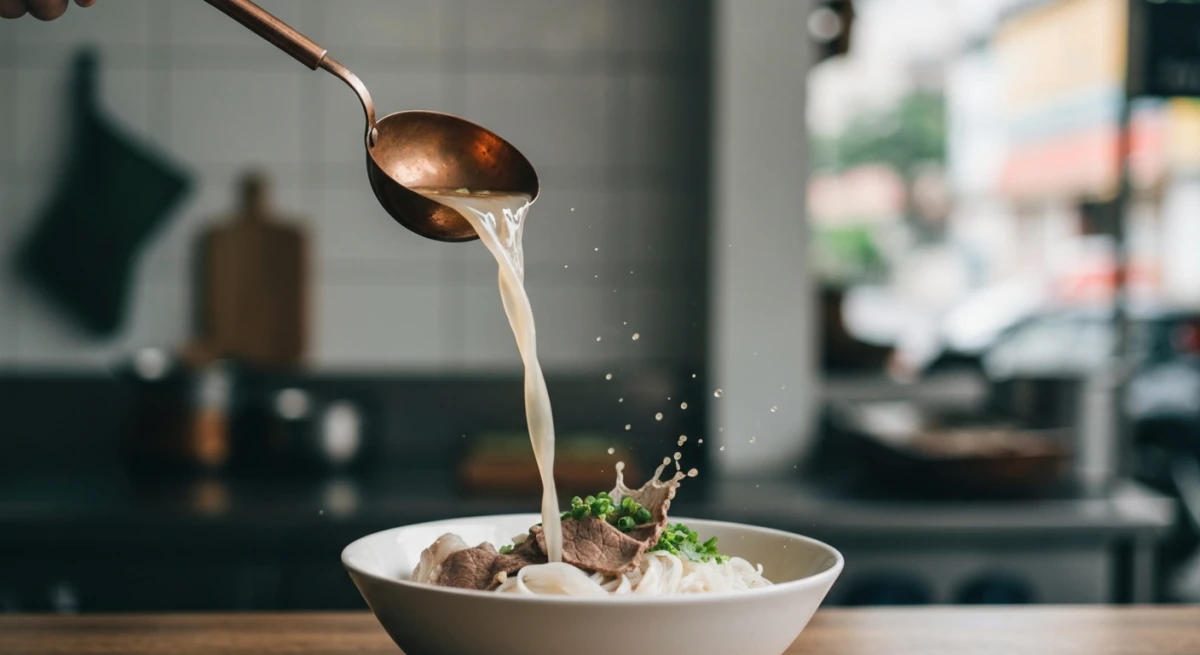
While Phở originated in the North of Vietnam, the Southern variation—Phở Nam—is a distinct beast entirely, and it dominates the streets of Saigon. Northern Phở is characterized by its minimalist elegance: a clear, delicate broth, simple beef cuts, and a sparse garnish of green onions. Southern Phở, by contrast, is a loud, bold, and theatrical affair. The broth is boiled for up to fifteen hours with beef bones, charred ginger, onions, star anise, cinnamon, cloves, coriander seeds, and black cardamom, resulting in a sweeter, more robustly spiced flavor profile.
When your bowl of Southern Phở arrives, it is only half-finished. The true magic lies in customization. A massive plate of fresh herbs is placed on your table, including Thai basil (húng quế), culantro (ngò gai), rice paddy herb, and a pile of blanched bean sprouts. You are expected to rip these herbs by hand and submerge them into the boiling-hot broth. Furthermore, Southern Phở is served with small dipping saucers of sweet hoisin sauce and spicy sriracha, which locals use to dip their beef slices (such as rare beef tái, brisket nạm, or chewy tendon gân) or squeeze directly into the broth to create a deeply personalized bowl.
- Where to try it: For an incredibly rich, sweet, and deeply aromatic beef broth, make your way to Phở Lệ (413-415 Nguyễn Trãi, District 5). Situated in the heart of Chinatown (Cholon), Phở Lệ has been serving bowls of perfection for decades and is beloved for its generous meat portions. For a historical experience, visit Phở Hòa Pasteur (260C Pasteur, District 3), one of the oldest and most famous Phở restaurants in the city, where the tables are piled high with plates of quẩy (fried dough sticks) ready to be dipped into your broth.
Bột Chiên (Crispy Fried Rice Cake)
As night falls over Saigon, the city's late-night food stalls come alive, and there is no better midnight snack than Bột Chiên. With roots in the Teochew Chinese community that settled in Saigon's District 5, this dish has become a quintessential street food staple. Thick, square-cut cakes made from rice flour and taro are pan-fried on a massive, flat cast-iron skillet. The cook uses a heavy metal spatula to continuously press and flip the cakes until they develop a deeply caramelized, golden, shatteringly crisp exterior, while the inside remains delightfully soft, dense, and chewy.
Once the rice cakes are perfectly fried, the cook cracks two eggs directly over them, scattering a handful of chopped green onions across the top. The eggs cook rapidly, binding the crispy cakes into a cohesive, golden omelet. The dish is slid onto a plate and served with a generous mound of finely shredded raw green papaya and a side of sweet, tangy, diluted soy-based dipping sauce infused with mild chilies. The contrast between the hot, rich, crispy rice cakes and the cold, crunchy, refreshing papaya is pure culinary genius.
- Where to try it: To see a master at work, visit Bột Chiên Đạt Thành (277 Võ Văn Tần, District 3). This busy street-side joint is constantly packed with locals perched on plastic stools, waiting for their plates of sizzling, golden rice cakes. Another highly recommended spot is Bột Chiên Chú Bình (located in a small alleyway off Cách Mạng Tháng Tám in District 3), where the owner has been perfecting his recipe on the same hot iron plate for decades.
Secret Alleyways and Street Food Havens: Where the Locals Go
To find the true soul of Saigon's food culture, you must escape the tourist-heavy zones of District 1 and venture into the hẻm (alleys) and neighborhoods where generations of families have lived and cooked. These areas operate on their own culinary frequencies, turning into massive open-air dining rooms as soon as the sun begins to set.
District 4: The Seafood and Snail (Ốc) Epicenter
Separated from District 1 by a narrow canal, District 4 was once a rough-and-tumble port area. Today, it is widely considered the street food capital of the city, particularly for its Ốc (snail and shellfish) culture. In Saigon, eating snails (ăn ốc) is a highly social ritual, typically enjoyed in the evening alongside a group of friends and ice-cold beers. Street vendors here offer dozens of varieties of sea snails, sweet clams, mud creepers, scallops, and crabs.
The magic of Ốc lies in the cooking methods and sauces. You can order your shellfish stir-fried in a rich, sweet tamarind sauce (sốt me), roasted with fiery chili salt (rang muối), grilled with scallion oil and crushed peanuts (mỡ hành), or simmered in a luscious, savory coconut milk broth. The ultimate destination for this experience is Vĩnh Khánh Street in District 4. As evening approaches, the street is blocked off and transformed into a sprawling, smoky, neon-lit strip of seafood stalls. Head to Ốc Oanh (534 Vĩnh Khánh) to experience the chaotic energy and incredible flavors of stir-fried garlic butter crab claws and spicy lemongrass sweet-and-sour snails.
District 10: Chợ Hồ Thị Kỷ (The Flower Market Street Food Alley)
By day, Chợ Hồ Thị Kỷ is Ho Chi Minh City's largest wholesale flower market, filled with the sweet scents of lilies, roses, and orchids imported from Da Lat. By late afternoon, however, the narrow pedestrian alleyways winding through the market transform into a bustling night market packed with over a hundred street food vendors. Because this neighborhood has historically been home to a large Cambodian-Vietnamese community, the food scene here is wonderfully unique, blending traditional Vietnamese tastes with Cambodian and regional flavors.
As you navigate the dense crowds of Chợ Hồ Thị Kỷ, keep an eye out for Bánh Tráng Nướng (often dubbed 'Vietnamese pizza'). This snack consists of a thin sheet of rice paper grilled over open charcoal, topped with quail eggs, green onions, dried shrimp, minced pork, and a drizzle of sweet chili sauce and mayonnaise, cooked until crispy and folded in half. You should also seek out Cambodian-style grilled beef skewers marinated in lemongrass and turmeric, served with tangy pickled papaya, and complete your meal with a bowl of Chè Campuchia—a sweet dessert soup featuring pumpkin custard, durian, and coconut cream.
Bình Thạnh & Phú Nhuận: Vạn Kiếp Street
If you want to experience a street food hub that remains almost entirely untouched by Western tourism, take a taxi north to Vạn Kiếp Street, which runs along the border of the Bình Thạnh and Phú Nhuận districts. This narrow, winding road is a culinary wonderland, with every single building seemingly operating as a restaurant or food stall. It is the perfect place for a self-guided food crawl. You can start with a plate of fresh Bánh Cuốn (steamed rice rolls filled with wood-ear mushrooms and minced pork), move on to a bowl of Bún Mắm (a pungent, deeply flavorful Southern noodle soup made with fermented fish broth, seafood, and crispy pork belly), and finish with a refreshing glass of freshly squeezed sugarcane juice (nước mía).
Beyond Phở and Bánh Mì: Regional Specialties and Hidden Culinary Gems
While Phở and Bánh Mì get all the international glory, the vast majority of Saigon’s street food menu consists of regional specialties brought to the southern metropolis by migrants from all corners of Vietnam. These dishes offer complex textures and flavor combinations that will redefine your understanding of Vietnamese cuisine.
Bún Thịt Nướng (Grilled Pork with Vermicelli)
For many locals, Bún Thịt Nướng is the ultimate lunchtime meal. It is a dry noodle dish that perfectly balances temperature, texture, and flavor. At the base of the bowl is a layer of fresh, shredded lettuce, Vietnamese herbs, and bean sprouts. This is topped with cold rice vermicelli noodles (bún), charcoal-grilled pork shoulder (thịt nướng) that has been marinated in lemongrass and garlic, and crispy golden spring rolls (chả giò) packed with pork and taro.
The dish is garnished with a generous spoonful of scallion oil, crushed roasted peanuts, and pickled vegetables. To eat it, you pour a generous cup of warm nước chấm (sweet-and-sour fish sauce) over the entire bowl, toss everything together like a salad, and dig in. Every bite offers a contrast of hot and cold, crunchy and soft, savory and sweet.
- Where to try it: The iconic street-side cart Bún Thịt Nướng Chả Giò Số 1 - Nguyễn Trung Trực (1 Nguyễn Trung Trực, District 1) has been drawing massive lunchtime crowds for years, serving exceptionally juicy grilled pork and perfectly crispy spring rolls.
Bò Lá Lốt (Beef Wrapped in Wild Betel Leaves)
Bò Lá Lốt is one of the most fragrant and visually striking dishes you can eat in Vietnam. Ground beef is seasoned with garlic, shallots, lemongrass, and five-spice powder, then wrapped tightly into small, cylinder-shaped parcels using wild betel leaves (lá lốt). These emerald-green parcels are threaded onto metal skewers and grilled over red-hot charcoal. As the beef cooks, the heat releases the unique, peppery, slightly medicinal essential oils of the betel leaf, which infuse the beef with an unforgettable aroma and flavor.
The grilled beef rolls are served with thin sheets of woven rice vermicelli (bánh hỏi), rice paper for wrapping, and a large platter of fresh herbs, cucumber, tart green banana, and sour starfruit. To eat, you place a sheet of rice paper in your palm, layer on the herbs, noodles, and a few rolls of Bò Lá Lốt, roll it up tightly, and dip it into Mắm Nêm—a powerful, fermented anchovy-and-pineapple dipping sauce that provides a sweet, salty, and pungent punch.
- Where to try it: Bò Lá Lốt Thanh Vy (267 Minh Phụng, District 11) is a legendary local favorite that serves outstanding, juicy rolls with a perfectly balanced mắm nêm sauce.
Bánh Xèo and Bánh Khọt (Sizzling Savory Crepes and Mini Pancakes)
The name Bánh Xèo literally translates to 'sizzling cake,' referring to the loud, dramatic hiss that occurs when the rice flour batter hits a scorching-hot, oil-slicked skillet. The batter is colored a vibrant yellow with turmeric powder (many foreigners mistakenly think the color comes from egg, but it is entirely vegan and coconut-milk-based) and is spread incredibly thin across the pan. It is filled with pork slices, whole river shrimp, mung beans, and a mountain of fresh bean sprouts, then folded in half to create a giant, crispy half-moon.
Its smaller cousin, Bánh Khọt, is cooked in a heavy cast-iron tray with small, dimpled molds. The batter is poured into the molds, resulting in bite-sized, thick, crispy domes that are soft and creamy on the inside, topped with a single fresh shrimp and a dusting of dried shrimp powder. Both dishes are eaten by ripping off a piece of the crispy crepe, wrapping it inside a large leaf of mustard greens or lettuce along with fresh herbs, and dipping it into sweet-and-sour fish sauce.
- Where to try it: For an incredible local version, head to Bánh Xèo Ba Hai (119 Lê Văn Linh, District 4), where the crepes are miraculously non-greasy, extraordinarily crispy, and packed with fresh ingredients.
Hủ Tiếu Nam Vang (Mekong-style Noodle Soup)
While Phở is the king of the North, Hủ Tiếu is the undisputed queen of the South. Originating in Phnom Penh, Cambodia (referred to as Nam Vang in Vietnamese) and heavily influenced by Teochew Chinese traders, this multi-cultural noodle soup is highly complex. The broth is incredibly clean and sweet, made by boiling pork bones, dried squid, and dried shrimp for hours.
Hủ Tiếu Nam Vang is traditionally served with chewy, translucent tapioca noodles and packed with a diverse array of toppings: sliced pork, minced pork, whole shrimp, quail eggs, and offal (such as pork liver and heart). You can order it 'wet' (nước) with the noodles in the hot broth, or 'dry' (khô), where the noodles are served in a separate bowl tossed in a rich, sweet, and savory soy-and-oyster sauce glaze, with the steaming hot broth served on the side.
- Where to try it: Visit Hủ Tiếu Nhân Quán (122D Cách Mạng Tháng 8, District 3) for an exceptional, rich bowl of both the wet and dry variations.
How to Eat Safely and Navigate Saigon's Food Scene Like a Pro
For newcomers, the sheer scale and chaotic energy of Saigon’s street food scene can feel incredibly intimidating. Motorbikes park inches away from dining tables, vendors yell out orders in rapid-fire Vietnamese, and the sight of raw ingredients sitting on roadside carts can trigger anxiety about food safety. However, by adopting a few local habits and understanding how the system works, you can eat safely and confidently.
The Golden Rules of Street Food Hygiene
- Follow the crowds: This is the absolute golden rule of street food globally. A stall surrounded by a sea of parked motorbikes and packed with local families indicates two things: the food is delicious, and the ingredient turnover is incredibly high. High turnover means the meat, seafood, and vegetables are fresh and haven't had time to sit in the heat.
- Observe the setup: Take a quick look at the vendor's workspace. Are the ingredients protected behind glass screens? Are they cooking the food to order right in front of you? Avoid stalls where meats are pre-cooked and left sitting uncovered on plates.
- The Ice Rule: A common fear among travelers is getting sick from contaminated ice. Fortunately, Saigon’s ice infrastructure is highly modernized. Almost all street vendors buy commercially produced 'tube ice' (đá bi), which has a cylindrical shape with a hole through the center. This ice is manufactured using purified water and is completely safe to consume. Avoid crushed, irregular block ice, which is sometimes used to keep food cold during transport.
- Wipe your utensils: When you sit down at a metal table, you will notice a container of chopsticks and spoons, along with a container of paper napkins and fresh lime wedges. It is a standard local habit to take a napkin, squeeze a bit of fresh lime juice onto it, and thoroughly wipe down your chopsticks and metal spoon before eating. The citric acid acts as a natural disinfectant.
Understanding Street Food Etiquette
When you arrive at a street food stall, do not wait to be seated. Find an empty plastic stool, sit down, and make eye contact with the vendor. Menus are rarely printed in English, but most stalls specialize in only one or two dishes, which are often painted on the front of the cart (e.g., 'Cơm Tấm' or 'Bột Chiên'). You can simply point to what you want or hold up fingers to indicate the quantity.
Keep a pocketful of cash (tiền mặt). Street food vendors do not accept credit cards. It is highly recommended to carry smaller denominations of Vietnamese Dong (such as 10,000, 20,000, and 50,000 VND bills). Paying for a 30,000 VND bowl of noodles with a 500,000 VND bill is considered bad etiquette as it can quickly drain the vendor's change drawer. When you are finished eating, simply catch the server's eye and say 'Tính tiền' (pronounced 'tin teen'), which means 'calculate the bill.' They will quickly calculate the total and collect your cash.
Frequently Asked Questions (FAQ)
What is the most famous street food in Saigon? While Phở and Bánh Mì are internationally renowned, locals widely consider Cơm Tấm (Broken Rice) to be the quintessential Saigon street food. It is eaten for breakfast, lunch, dinner, and late-night snacks, perfectly reflecting the city's Southern flavor preferences and history.
Is street food in Ho Chi Minh City safe for tourists? Yes, it is generally very safe. Because street food stalls typically specialize in only one dish and serve hundreds of customers daily, ingredients are bought fresh from the market every morning and cooked rapidly over high heat. Stick to busy stalls with high local turnover, use hand sanitizer, and drink beverages served with factory-made tube ice.
Where is the best street food street in Saigon? For an incredible, highly atmospheric street food experience, head to Vĩnh Khánh Street in District 4 for fresh seafood and snails, or Vạn Kiếp Street (on the border of Phú Nhuận and Bình Thạnh districts) for an authentic, diverse array of local noodle dishes and snacks away from the tourist crowd.
How much does street food cost in Saigon? Street food in Saigon is incredibly affordable. A typical street food dish, such as a bowl of Phở, a plate of Cơm Tấm, or a fresh Bánh Mì, costs between 30,000 to 70,000 VND (approximately $1.20 to $3.00 USD). This makes HCMC one of the most budget-friendly culinary destinations in the world.
Conclusion: Embarking on Your Culinary Adventure in HCMC
Saigon is a city that doesn't hide its best qualities behind the closed doors of air-conditioned restaurants. Its heart, its history, and its culture are laid bare on the sidewalk, simmered in massive cauldrons of aromatic broth, and grilled over smoky charcoal fires. To truly experience the best saigon street food, you must step outside your comfort zone, pull up a tiny blue plastic stool, and embrace the beautiful, chaotic symphony of the streets. From the sweet and savory depth of a bowl of Phở Nam to the shatteringly crisp shell of a fresh Bánh Mì, every bite you take in this vibrant metropolis is a story of resilience, fusion, and culinary passion. Pack your hand sanitizer, keep your cash ready, and prepare yourself for the ultimate food adventure of a lifetime.