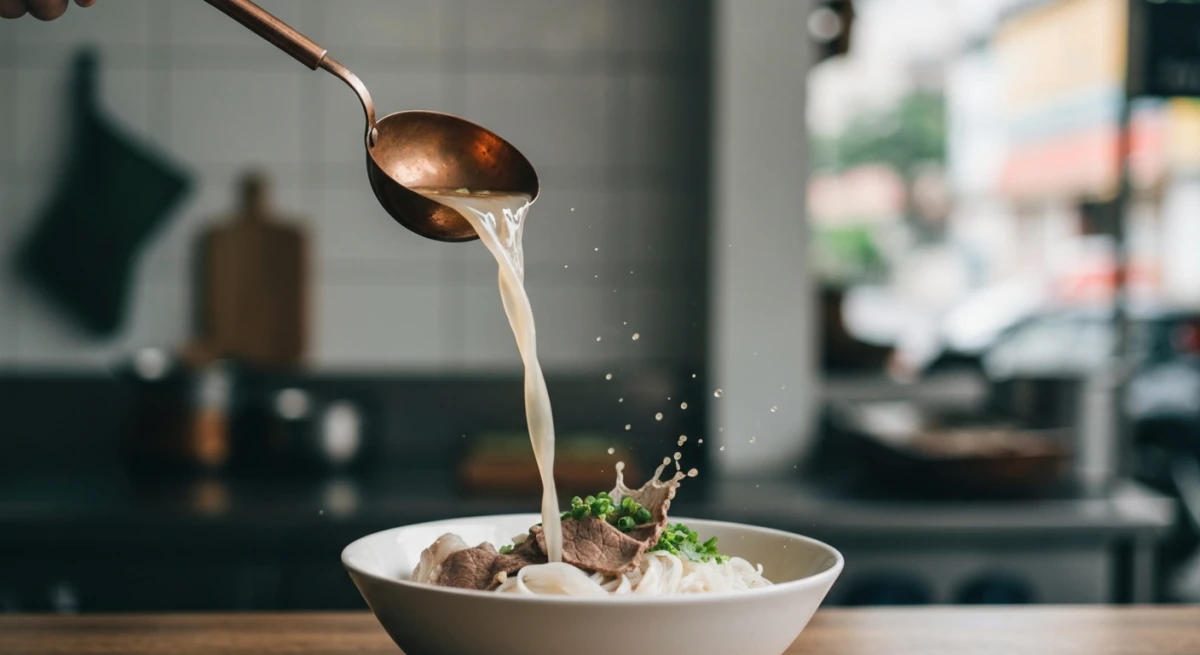
In Hanoi, where misty mornings meet the gentle hum of motorbikes and the sweet aroma of roasted star anise fills the air, few culinary experiences can rival a steaming bowl of phở. Far more than just Vietnam's national dish, phở is the beating heart of Hanoi's cultural and communal life. To locals, eating phở is a daily morning ritual, a comforting midday fuel, and a late-night solace after a long day.
If you are hunting for the best pho in Hanoi, you will quickly realize that the search is not merely about finding a highly rated restaurant on TripAdvisor or following a crowded tourist trail. It is about understanding the delicate art of the broth, the textures of hand-cut flat rice noodles, and the subtle variations that separate a run-of-the-mill street cart from an ancestral institution. In this comprehensive guide, updated for 2026, we deep-dive into the legendary bowls, hidden alleyway gems, and Michelin-recognized spots that define Hanoi's phở culture today. Grab your chopsticks and a spoon—let's find your perfect bowl.
Hanoi Pho vs. Saigon Pho: The Ultimate Culinary Divide
Before embarking on your culinary tour, it is crucial to understand that phở is deeply regional. While Vietnam's southern metropolis, Ho Chi Minh City (formerly Saigon), serves a version of phở that is globally famous—laden with sweet hoisin sauce, spicy sriracha, a mountain of raw bean sprouts, and a forest of fresh herbs—Hanoi-style phở (phở Bắc) is an exercise in minimalist elegance.
The soul of Hanoi phở lies in its crystal-clear broth. Instead of relying on heavy sugar and intensive spices, Northern chefs simmer beef bones (or whole free-range chickens) for up to 12 to 18 hours with charred ginger, shallots, star anise, cinnamon, black cardamom, and cloves. The flavor profile is delicate, savory, and clean, meant to highlight the natural sweetness of the bone marrow and the pure taste of high-quality beef or chicken.
Furthermore, you will rarely see bean sprouts or heavy sauces on a Hanoi dining table. Instead, local condiments are sparse but powerful: fresh bird's eye chilis, limes, and most importantly, garlic soaked in rice vinegar (tỏi giấm). The noodles (bánh phở) in Hanoi are also distinct—typically wider, thinner, and softer than their southern counterparts, offering a silkier mouthfeel that absorbs the delicate broth perfectly. To complete the experience, Hanoians almost always order a side of quẩy—golden, crispy, deep-fried dough sticks that are dipped into the piping-hot broth until they become beautifully soft and saturated with flavor.
The Best Traditional Beef Pho (Phở Bò) in Hanoi
For the ultimate beef phở experience, you must visit the standard-bearers of Hanoi's culinary heritage. These spots focus on the purist style of beef phở, serving clear broths with perfectly tenderized cuts of meat.
1. Phở Gia Truyền Bát Đàn (49 Bát Đàn, Hoàn Kiếm)
For decades, Phở Gia Truyền Bát Đàn has been an absolute rite of passage for food lovers visiting Hanoi. Long before the Michelin Guide arrived in Vietnam, locals were already queuing down the block in the early morning fog for a taste of this ancestral recipe.
What makes Bát Đàn special is its strict commitment to traditional methods. The broth is simmered over hot woodfire and charcoal for hours, resulting in a deeply fragrant, rich, yet clean stock with a naturally sweet finish. The kitchen operates on a self-service system: you queue up, pay the cashier, state your order, and carry your own steaming bowl back to a tiny wooden table.
- The Standout Bowl: Try the Phở Tái Nạm (rare beef and tender flank). The chef uses a heavy wooden cleaver to smash the fresh beef fillet right on the wooden counter before flash-poaching it directly in your bowl.
- Local Tip: Arrive before 7:30 AM or between 5:30 PM and 6:30 PM to avoid the massive crowds. Be sure to order a plate of quẩy to soak up the rich broth.
2. Phở 10 Lý Quốc Sư (10 Lý Quốc Sư, Hoàn Kiếm)
Consistently awarded a Michelin Bib Gourmand, Phở 10 Lý Quốc Sư is arguably the most famous name on the tourist map—and for good reason. Unlike many street-side stalls, this clean, air-conditioned corner restaurant offers a highly professional and hygienic dining experience without sacrificing the authenticity of its flavor.
The broth here is remarkably consistent: clear, light, and delicately spiced. The menu is highly customizable, offering up to ten different combinations of beef cuts, ranging from lean brisket to fatty flank and tender loin.
- The Standout Bowl: The Phở Bắp Trần (beef calf/heel muscle) or the classic Phở Chín (fully cooked, tender brisket). The brisket is sliced so thinly that it melts in your mouth, while the fat ribbon adds a rich, buttery depth.
- Warning: Because of the brand's immense popularity, dozens of copycat restaurants with nearly identical orange signage have popped up across Hanoi. To experience the real deal, ensure you visit the flagship location at 10 Lý Quốc Sư or its official sister branch on Phùng Hưng Street.
3. Phở Khôi Hói (50 Hàng Vải, Hoàn Kiếm)
Tucked away on Hàng Vải Street—traditionally known for bamboo products—Phở Khôi Hói is a beloved neighborhood gem that has earned its spot in the Michelin Guide. This is the place to go if you want to experience the absolute pinnacle of beef textures.
The specialty here is phở lõi rùa (beef heel muscle) and gầu (fatty brisket). The beef heel muscle is highly sought after by local epicures for its incredible texture—it is incredibly tender but boasts a thin, gelatinous vein of tendon that provides a satisfyingly crispy chew.
- The Standout Bowl: Ask for Phở Lõi Gầu—a combination of the crunchy beef heel muscle and the rich, fatty brisket. Pair it with a poached egg (trứng chần) served in a small side bowl of boiling broth.
- Atmosphere: Classic Hanoi street food. You will sit on tiny blue plastic stools on the sidewalk, watching the master chef slice beef with lightning speed while steam rises from giant steel cauldrons.
4. Phở Bò Lâm (48 Hàng Vải, Hoàn Kiếm)
Just a few doors down from Khôi Hói sits Phở Bò Lâm, an ultra-local spot that operates on a very strict, traditional schedule. Opening at 5:30 AM, Phở Bò Lâm usually sells out and closes by mid-morning, sometimes as early as 9:00 AM.
Because of the limited daily production, the freshness of the ingredients is unmatched. The family-run business produces their beef stock fresh every single day, giving it an incredibly lively, clear, and comforting flavor. Their signature is their beef heel muscle, which features a gorgeous balance of lean meat and gelatinous tendon. If you want to experience a true Hanoian morning ritual away from the heavy tourist crowds of Lý Quốc Sư, wake up at 6:00 AM and join the locals huddled around Phở Bò Lâm.
5. Phở Bò Hồ Lợi (1 Hồ Xuân Hương, Hai Bà Trưng)
For a bowl of beef phở that leans toward a richer, more robust flavor profile, Phở Bò Hồ Lợi is a legendary destination. It has captured the attention of international culinary experts and locals alike for its signature offering: a giant, slow-simmered beef rib (sườn bò) that sits majestically inside a bowl of steaming noodles.
The broth here is slightly more golden and concentrated than the ultra-delicate Old Quarter styles, with an intense bone-marrow flavor that coats the mouth. The beef rib is cooked to absolute perfection, with the tender meat effortlessly falling off the bone at the touch of a chopstick. It is the ultimate indulgence for meat lovers seeking a hearty, deeply satisfying meal.
The Delicate Art of Chicken Pho (Phở Gà)
While beef phở often gets the spotlight, chicken phở (phở gà) is a culinary masterpiece in its own right. Historically, chicken phở gained popularity in Hanoi during the mid-20th century, a time of food rationing when beef was scarce. Hanoi chefs adapted, realizing that free-range, local chicken (gà ta) yielded a remarkably clean, golden broth that paired beautifully with the fresh sweetness of ginger and kaffir lime leaves.
Today, chicken phở is a beloved staple of the Hanoi culinary landscape.
1. Phở Gà Nguyệt (5b Phủ Doãn, Hoàn Kiếm)
Phở Gà Nguyệt is an institution that completely redefines what chicken noodle soup can be. Awarded a Michelin Bib Gourmand, this bustling eatery is famous for both its traditional soup and its legendary phở gà trộn (dry mixed chicken phở).
In the dry version, the silky rice noodles are tossed in a proprietary blend of sweet, savory soy sauce, topped with tender shredded chicken, crispy deep-fried shallots, fresh herbs, crushed peanuts, and a squeeze of fresh lime. It is served with a small bowl of hot chicken broth on the side.
- The Standout Bowl: Go for the Phở Gà Trộn Đùi Cánh (dry mixed phở with chicken thigh and wing). The dark meat of the free-range chicken is exceptionally juicy and has a firm, springy skin that is highly prized in Vietnamese cuisine.
- Local Tip: Phở Gà Nguyệt is open late into the night, making it the perfect post-beer stop in the Old Quarter.
2. Phở Tiến (103 Nguyễn Trường Tô, Ba Đình)
Located in the Ba Đình district, Phở Tiến is a local favorite that remains largely undiscovered by mass tourism, despite its recent Michelin recognition. Packed to the brim with neighborhood regulars every morning, this shop is celebrated for its pristine chicken broth and the quality of its chicken offal.
The Đặc Biệt (special) bowl at Phở Tiến is a work of art. It is generously loaded with tender hand-shredded chicken breast, juicy thigh pieces, and an array of perfectly cleaned chicken offal, including gizzards, liver, and unlaid young eggs (trứng non). The broth is simmered daily from whole chickens, resulting in a naturally sweet, aromatic liquid that is elevated by a sprinkle of finely sliced lime leaves.
3. Phở Gà Châm (64 Yên Ninh, Ba Đình)
If you are willing to pay a premium for the absolute finest ingredients, Phở Gà Châm on Yên Ninh Street is a legendary stop. Located in a historic lakeside neighborhood famous for its concentration of chicken phở spots, Châm is famous for serving some of the most expensive—and highest quality—chicken phở in the city.
The secret lies in their selection of free-range chickens. The meat is incredibly thick, succulent, and bursting with natural flavor, far superior to the mass-produced chicken found in standard eateries. The golden broth is rich and clean, highlighting the natural oils of the poultry without feeling greasy.
The Great Pho Thin Lò Đúc Debate: Stir-Fried Beef vs. Delicate Broth
No guide to Hanoi's phở scene is complete without addressing the elephant in the room: Phở Thìn Lò Đúc (13 Lò Đúc, Hai Bà Trưng). Founded in 1979 by Nguyen Tri Thin, this single-location eatery created a massive culinary divide by rejecting the traditional clear, poached-beef style in favor of something radical: Phở Tái Lăn.
Instead of gently poaching the raw beef in hot broth, Phở Thìn flash-fries thin slices of beef in hot oil and beef fat with massive amounts of garlic and ginger before placing it over the noodles. The bowl is then smothered in an absolute mountain of fresh chopped spring onions (scallions) and coriander, before being drenched in a rich, milky, and intensely savory bone broth.
The result is a sensory overload. The broth is heavy, smoky, and deeply comforting, with the sweet crunch of the spring onions cutting through the richness of the stir-fried beef.
- The Controversy: Traditional phở purists argue that Phở Thìn's broth is too oily, masking the delicate natural flavor of the beef bones. However, modern foodies and late-night diners swear by its addictive, garlic-forward umami profile.
- The Price: At around 85,000 to 90,000 VND per bowl, it is one of the more expensive street-side bowls in Hanoi, but it remains a must-try experience to understand the diversity of the city's food culture.
Beyond the Bowl: Dry, Rolled, and Fried Pho Variations
If you think phở only comes in a steaming bowl of broth, Hanoi will happily prove you wrong. Over the years, creative local cooks have transformed the humble phở noodle into entirely new culinary creations, particularly in the Ngũ Xã neighborhood near Trúc Bạch Lake.
1. Phở Cuốn (Pho Rolls)
Originating at Phở Cuốn Hương Mai near Trúc Bạch Lake, this dish is a refreshing, light alternative to noodle soup. Large, uncut sheets of steamed phở noodles are used as wrappers. They are rolled around stir-fried garlic beef, fresh lettuce, coriander, and Vietnamese mint. The rolls are dipped into a sweet-and-sour fish sauce (nước chấm) spiked with garlic, chili, and slices of green papaya. It is the ultimate summer food.
2. Phở Chiên Phồng (Fried Pho Pillows)
Another Ngũ Xã classic, Phở Chiên Phồng consists of square sheets of phở noodles stacked together and deep-fried until they puff up into golden, crispy, hollow pillows. These crispy pillows are then smothered in a savory gravy containing stir-fried beef, mustard greens, carrots, and onions. The contrast between the crunchy, airy fried noodle and the rich, savory gravy is absolutely spectacular.
3. Phở Xào (Stir-Fried Pho)
For a comforting, hearty dish, phở xào features flat rice noodles wok-fried over high heat until they develop a beautiful charred flavor (known as 'wok hei'). The noodles are tossed with tender beef slices and seasonal greens, resulting in a rich, comforting meal that is perfect for cool Hanoi evenings.
How to Order Pho in Hanoi Like a Local (Glossary & Etiquette)
To get the most out of your Hanoi phở journey, you need to know how to navigate the menu. Most traditional shops do not have English menus, so memorizing these key terms will ensure you get exactly what you want.
The Beef Cut Glossary:
- Tái: Thinly sliced raw beef fillet, flash-poached in boiling broth right before serving. It remains pink, tender, and juicy.
- Chín: Fully cooked, tender beef brisket.
- Nạm: Beef flank, which offers a slightly chewier texture with a rich, beefy flavor.
- Gầu: Fatty brisket. This is a local favorite because the thin layer of fat adds incredible flavor and richness to the bowl.
- Lõi Rùa: Beef heel muscle. Prized for its crunchy, gelatinous texture. Sells out very early!
- Tái Lăn: Beef flash-fried in a hot wok with garlic before being added to the soup (think Phở Thìn style).
- Trứng Chần: A soft-poached egg served in a side bowl of broth. Sip it or break it into your main bowl for extra creaminess.
- Quẩy: Deep-fried dough sticks. Order these to dip into your broth!
Pho Etiquette:
- Sip the Broth First: Before you add any condiments, take a spoonful of the pure broth. Respect the chef's hard work—taste the baseline flavor first.
- Go Easy on the Condiments: Do not blindly dump sriracha or hoisin sauce into a Hanoi bowl. Instead, add a squeeze of fresh lime or a spoonful of garlic-infused rice vinegar (tỏi giấm), along with a few slices of fresh bird's eye chili.
- Use Both Hands: Hold your chopsticks in your dominant hand and your soup spoon in the other. Guide the noodles into your mouth with the chopsticks while taking sips of broth from the spoon simultaneously.
- Drink the Broth: It is entirely polite (and highly encouraged) to lift the bowl to your lips at the end of the meal to drink the remaining drops of the liquid gold.
Frequently Asked Questions About Hanoi Pho
How much does a bowl of phở cost in Hanoi?
In 2026, a standard bowl of phở at a local street-side stall costs between 45,000 and 65,000 VND (approximately $1.80 to $2.60 USD). Premium cuts (like beef heel muscle) or specialty spots (like Phở Gà Châm) can range from 80,000 to 120,000 VND ($3.20 to $4.80 USD).
Is Hanoi phở safe for tourists to eat?
Absolutely. Because phở broth is kept at a rolling boil all day long, it is one of the safest street foods you can eat. Choose busy stalls with high turnover to ensure the meat and fresh herbs are constantly being replenished.
Does Hanoi phở contain MSG?
Traditional high-end and heritage shops rely solely on beef bones and natural spices for sweetness. However, many standard street-side stalls do use a pinch of MSG (mì chính) to enhance the savory flavor. If you are sensitive to MSG, you can say 'không mì chính' (no MSG) when ordering.
What is the best time of day to eat phở in Hanoi?
While you can find phở at any hour, the absolute best time is early morning (between 6:00 AM and 8:00 AM). This is when the broth is fresh, the beef cuts are at their prime, and you can experience the magical, misty morning atmosphere of Hanoi.
Conclusion: The Soul of Hanoi in a Single Bowl
Finding the best pho in Hanoi is more than just a culinary checklist—it is an immersion into the history, soul, and daily life of Vietnam’s capital. Whether you prefer the purist, crystal-clear bone broth of Phở Gia Truyền Bát Đàn, the rich, garlic-heavy indulgence of Phở Thìn Lò Đúc, or a dry, refreshing bowl of Phở Gà Nguyệt under the stars, each bowl offers a unique window into Hanoi's timeless culinary heritage. On your next trip, step out of your comfort zone, grab a plastic stool on a busy sidewalk, and savor every single drop of this Vietnamese liquid gold.