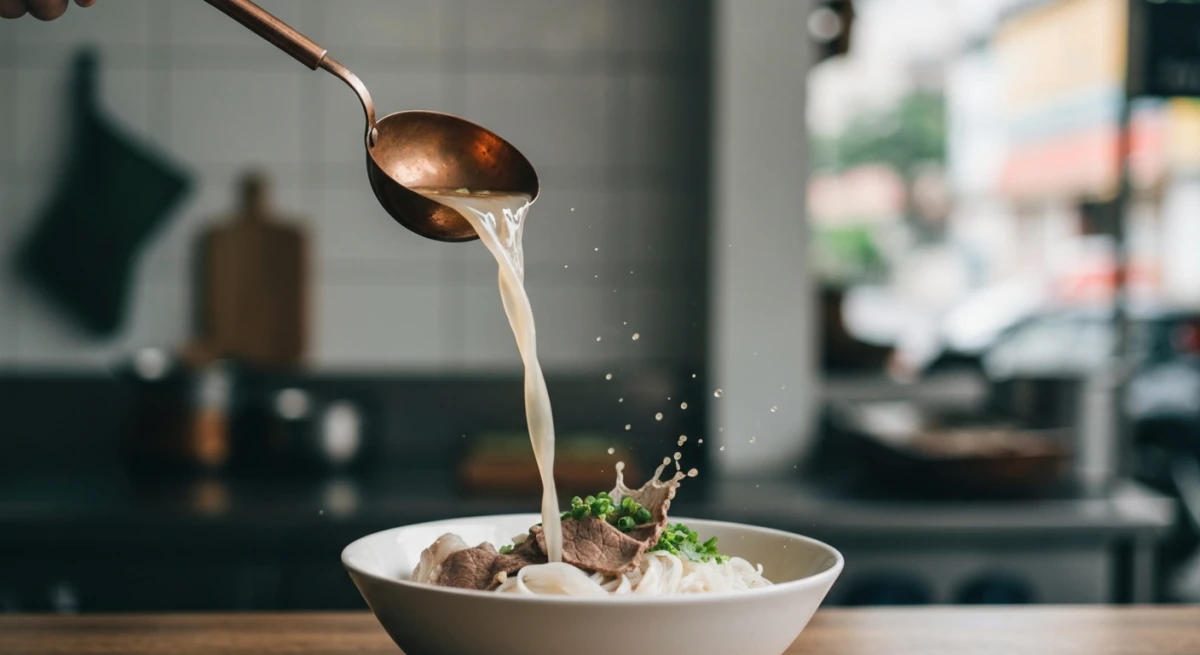
The Sensory Symphony of Saigon's Streets
To truly understand Ho Chi Minh City, you must learn to navigate its culinary landscape on its own terms. Mastering the art of eating in saigon requires shedding your Western expectations of air-conditioned dining rooms, printed paper menus, and quiet conversations. Instead, it invites you to pull up a tiny, bright-blue plastic stool on a buzzing sidewalk, tuck your knees to your chest, and dive headfirst into a chaotic, sensory-rich theater of flavors.
In Saigon, food is not just sustenance; it is the absolute focal point of daily life. From the crack of dawn—when the first steam rises from cauldrons of simmered pork bones—to the neon-drenched early hours of the morning when late-night revelers crowd around sizzling hotplates, the city never stops feeding. The local cuisine reflects the city’s history: a brilliant, high-octane collision of indigenous Mekong Delta abundance, historical Chinese-Teochew migration, French colonial baking traditions, and contemporary creative energy.
This comprehensive guide is designed to take you far beyond the standard tourist traps of the central district. Whether you are searching for the perfect bowl of southern-style noodles, trying to decipher the complex etiquette of a street-side snail stall, or seeking out the city's best plant-based gems, this is your blueprint to eating like a local in Vietnam's culinary capital.
The Core Pillars of Saigonese Cuisine: What to Order
While Hanoi is celebrated for its minimalist, subtle, and centuries-old culinary traditions, Saigon's food scene is unapologetically bold, sweet, herbaceous, and incredibly diverse. The tropical climate of Southern Vietnam yields a year-round bounty of fresh herbs, sugar cane, coconut palms, and fresh seafood, resulting in dishes that deliver a complex harmony of sweet, sour, salty, and spicy notes in every single bite.
If you want to experience the authentic flavor profile of the south, these six iconic dishes must top your culinary bucket list.
1. Cơm Tấm (Broken Rice): The Soul of Saigon
If there is one dish that defines the daily rhythm of Saigon, it is cơm tấm. Historically a working-class meal made from broken, unsellable rice grains left over from the milling process, it has evolved into a beloved national treasure eaten for breakfast, lunch, and dinner.
The base of fractured rice has a uniquely fluffy, slightly dry texture that acts as a perfect sponge for the juices of its accompaniments. The star of the show is sườn nướng—a thin, bone-in pork chop marinated in lemongrass, garlic, shallots, honey, and fish sauce, caramelized to smoky perfection over glowing charcoal grills on the sidewalk.
A complete plate of cơm tấm sườn bì chả comes topped with chả chưng (a dense, savory steamed egg meatloaf packed with wood-ear mushrooms and glass noodles) and bì (thinly shredded pork skin tossed in toasted rice powder). The entire dish is crowned with a sunny-side-up egg, drizzled with fragrant scallion oil (mỡ hành), and served with a side of sweet-and-sour fish sauce (nước mắm chua ngọt) and pickled daikon and carrot. It is a masterclass in contrasting textures and flavors.
2. Hủ Tiếu Nam Vang: The Diaspora's Masterpiece
While phở gets the global spotlight, hủ tiếu is arguably the preferred noodle soup of Saigon. Originating from the Cambodian capital of Phnom Penh (known as Nam Vang in Vietnamese) and heavily influenced by Teochew Chinese traders, this dish is a beautiful testament to the city’s multi-ethnic culinary heritage.
Hủ tiếu features thin, chewy rice noodles bathed in a rich, deeply savory, crystal-clear pork bone broth sweetened with dried squid and rock sugar. What makes this bowl incredibly fun is its lavish variety of toppings: minced pork, sliced pork loin, quail eggs, plump prawns, and occasionally pork liver or heart.
When ordering, you must choose between two variations:
- Hủ tiếu nước (Wet): The traditional noodle soup version, where all the ingredients swim together in the piping hot, aromatic broth.
- Hủ tiếu khô (Dry): The noodles are served in a separate bowl, tossed in a savory, slightly sweet soy-and-oyster-based sauce, with the hot broth served on the side. This version allows you to appreciate the chewiness of the noodles and customize your flavor experience by sipping the broth between bites.
Always accompany your bowl with a generous plate of fresh greens, including Chinese celery, chives, and lettuce, which add a refreshing, bitter crunch to the rich soup.
3. Bánh Mì: The Rich, Southern-Style Baguette
You can find bánh mì all over Vietnam, but the Saigon style is famously indulgent, heavy, and packed to the brim. While northern versions tend to be simpler—focusing on a light smear of pâté and a single meat—the Saigonese take their baguettes very seriously.
A classic Saigon bánh mì starts with a warm, incredibly airy, crispy-skinned baguette. The vendor slices it open and spreads a thick layer of rich pork liver pâté and homemade egg-yolk mayonnaise (bơ). It is then layered with a colorful array of cold cuts, including chả lụa (steamed pork roll), headcheese, and cured pork. To balance this heavy, savory base, the baguette is stuffed with crisp cucumber batons, fresh cilantro, long sprigs of scallion, pickled daikon and carrots (đồ chua), and a fiery splash of bird's eye chilies. It is a portable, textures-galore masterpiece that costs less than a couple of dollars.
4. Ốc: The Art of the Evening Snail Feast
In Saigon, eating snails (ăn ốc) is not just about consuming food—it is an active social ritual. It represents the quintessential southern tradition of nhậu, which translates roughly to drinking, eating, and socializing late into the evening with friends and family.
When you visit an ốc stall, you are greeted by large displays of raw shellfish, sea snails, clams, and crabs resting on beds of ice. You choose your shellfish and specify the cooking style. The preparation methods are incredibly diverse and packed with flavor:
- Xào bơ tỏi: Sautéed in a rich, decadent sauce of melted butter and sweet, crispy fried garlic (always order a baguette to mop up this sauce).
- Hấp sả: Steamed in a light, fiery broth of lemongrass, ginger, and fresh chilies.
- Nướng mỡ hành: Grilled over charcoal and topped with fragrant scallion oil and crushed roasted peanuts.
- Rang muối ớt: Dry-roasted in a spicy, salty chili crust that coats the shells.
Pair these delicacies with a frosty glass of local lager, a plate of green mango salad, and hours of lively conversation.
5. Bò Lá Lốt: A Masterclass in Aromatics
Walk down almost any side street in Saigon in the late afternoon, and your nose will inevitably lead you to a smoke-filled stall grilling bò lá lốt. This dish consists of minced beef seasoned with garlic, shallots, and five-spice powder, wrapped into small cigar-shaped rolls using wild betel leaves (lá lốt).
As the rolls grill over hot charcoal, the essential oils of the betel leaves release an incredibly intoxicating, herbaceous, and smoky aroma that is utterly irresistible. To eat bò lá lốt, you take a sheet of dry rice paper, lay down a bed of fresh herbs (including mint, Thai basil, and perilla), add a piece of lettuce, a slice of green banana or starfruit for tartness, and a noodle nest of rice vermicelli (bánh hỏi). You place the grilled beef roll in the center, roll it up like a spring roll, and dip it into mắm nêm—a pungent, sweet-and-sour fermented anchovy dipping sauce balanced with pineapple, chili, and lime.
6. Bột Chiên: The Ultimate Late-Night Comfort
If you find yourself wandering the streets of Saigon late at night, bột chiên is the ultimate street comfort food. With clear roots in Chinese-Teochew cuisine, this dish consists of thick, cubed rice flour cakes that are fried on a massive, flat cast-iron griddle.
The vendor pan-frys the rice cakes until they develop a deeply crispy, golden-brown exterior while remaining soft and chewy on the inside. Right before serving, they crack a couple of eggs over the top to bind the cakes together, scattering a handful of chopped green onions into the sizzling mixture.
Served hot off the griddle, bột chiên is accompanied by a mountain of crunchy shredded green papaya and a sweet, tangy, watered-down dark soy sauce mixed with vinegar. It is greasy, salty, sweet, and incredibly satisfying.
A District-by-District Culinary Safari
To truly master eating in saigon, you have to understand the city's unique geography. Ho Chi Minh City is divided into numbered and named districts, each possessing its own distinct culinary personality, demographic makeup, and signature street food enclaves. Moving between these districts allows you to experience how diverse regional micro-cuisines live side-by-side.
| District | Food Personality | Must-Try Specialties | Famous Street/Area |
|---|---|---|---|
| District 1 | Cosmopolitan & Historical | High-end Vietnamese, French fusion, upscale street food | Nguyễn Thái Bình, Bến Nghé |
| District 3 | Local-meets-Trendy | Cafe culture, traditional southern lunch joints, rice paper snacks | Cao Thắng, Nguyễn Thượng Hiền |
| District 4 | Gritty Street Food Haven | Shellfish & snails (ốc), local seafood, noodle alleys | Vĩnh Khánh Street |
| District 5 (Chợ Lớn) | Chinese-Vietnamese | Wonton soup, roasted meats, herbal desserts, dumplings | Hà Tôn Quyền Street |
| Bình Thạnh | Vibrant & Local | Sizzling pancakes (bánh xèo), regional soups, hotpot | Vạn Kiếp Street |
District 1: The Modern Center & Hidden Hẻms
District 1 is the historical heart of Saigon, home to French colonial landmarks, skyscrapers, and high-end hotels. While it has plenty of Western restaurants and tourist-oriented spots, it also conceals some of the city's most legendary local food gems if you know where to look.
Avoid the tourist-trappy Ben Thanh Market for dining and instead head south to the Nguyễn Thái Bình neighborhood. Here, nestled among historic modernist apartments, you will find generations-old shops serving iconic southern dishes.
For a curated, accessible introduction to street food, the Bến Nghé Food Market offers a vibrant, clean space to try dishes like bò lá lốt and roasted duck. If you want a sit-down, refined experience of traditional home-style cooking, District 1 houses excellent establishments like Quán Bụi, which serves beautifully executed, regional comfort dishes in an elegant, vintage setting.
District 3: Bohemian Cafes & Street Food Arteries
Directly bordering District 1, District 3 offers a slightly more relaxed, local vibe with tree-lined avenues, quiet alleys, and beautiful French villas. This district is famous for its vibrant cafe scene and dynamic street food lanes.
Make a pilgrimage to Nguyễn Thượng Hiền Street, which is internationally famous for bánh tráng trộn (mixed rice paper salad). This chaotic, flavor-packed snack features shredded rice paper tossed with green mango, beef jerky, quail eggs, fresh herbs, fried shallots, chili oil, and sour calamansi juice.
For a heavy lunch, explore the bustling alleys off Cao Thắng Street, where you can find excellent southern-style phở (which is sweeter, spicier, and served with a forest of fresh herbs compared to the clean, minimalist northern version) and legendary dry noodle stalls.
District 4: The Former Underworld Turned Snail Paradise
Historically known as a gritty, working-class port district once ruled by local gangs, District 4 has transformed into Saigon's absolute capital for street food. Surrounded on three sides by water, this triangular island is dense, loud, and incredibly delicious.
As the sun goes down, head straight to Vĩnh Khánh Street. This legendary thoroughfare turns into a smoke-filled, neon-lit avenue of seafood. Dozens of open-air restaurants set up their displays of fresh snails, clams, and fish.
Here, you can dine on the street while listening to local buskers, watching fire-breathers perform on the asphalt, and cracking open fresh crabs. It is an intense, high-energy experience that represents the wild heart of Saigon's nightlife.
District 5 (Chợ Lớn): Chinese-Vietnamese Fusion
District 5, widely known as Chợ Lớn, is Vietnam's largest Chinatown. Established by Chinese immigrants (primarily Teochew, Cantonese, and Hokkien) centuries ago, it boasts a unique architectural and culinary heritage where Chinese cooking techniques have seamlessly blended with southern Vietnamese ingredients.
For a mind-blowing meal, head to Hà Tôn Quyền Street, famously known as "Sủi Cảo Street." Every evening, this road is packed with diners enjoying bowls of steaming sủi cảo (plump pork and shrimp dumplings) served in a delicate, sweet broth with egg noodles, Chinese broccoli, and slices of tender roast pork.
Chợ Lớn is also the best place to find mì vịt tiềm (braised duck leg noodle soup), where a whole, fall-off-the-bone duck leg is deeply marinated in five-spice and Chinese medicinal herbs, fried to crisp the skin, and submerged in a dark, rich broth served with chewy egg noodles.
Bình Thạnh & Phú Nhuận: Where Locals Escape the Tourists
If you want to experience Saigon's street food scene entirely free of tourist crowds, head north into the neighboring districts of Bình Thạnh and Phú Nhuận. These areas are incredibly dense residential hubs characterized by narrow, maze-like alleyways (hẻm) where life is lived entirely on the street.
Vạn Kiếp Street, bridging the two districts, is an absolute wonderland of local eats. The street is lined with hundreds of stalls selling everything from bánh xèo (crispy, turmeric-spiced savory crepes stuffed with pork, shrimp, and bean sprouts) to bún thịt nướng (cold rice noodles topped with warm grilled pork, fresh herbs, crispy imperial rolls, and a sweet fish sauce dressing). Prices here are highly local, and the atmosphere is wonderfully authentic.
Street Food Etiquette, Ordering Hacks, & Safety
For first-time visitors, diving into the street food scene can feel incredibly intimidating. The sheer speed of service, the lack of English, and the unfamiliar setups can easily lead to decision paralysis. However, once you understand a few basic rules of the road, you can navigate any street stall like a seasoned pro.
The "Plastic Stool" Philosophy
In Saigon, the quality of a meal is often inversely proportional to the height of the chair. The lowest plastic stools on the pavement are reserved for the most specialized, deeply traditional stalls.
When you sit at one of these stalls, do not expect a menu. Most legendary street food vendors serve exactly one dish, and they have been perfecting that single recipe for decades. Simply point to what the person next to you is eating, or hold up your fingers to indicate how many portions you want.
Ordering Hacks: Navigating the Language Barrier
To help you get exactly what you want, keep these key terms handy when ordering noodles or rice dishes:
- Nước: Soup/with broth (e.g., Hủ tiếu nước).
- Khô: Dry, with sauce and broth served on the side (e.g., Hủ tiếu khô).
- Nóng: Hot.
- Đá: Iced.
- Một tô / Một dĩa: One bowl / One plate.
- Không cay: Not spicy (crucial if you have a low tolerance for bird's eye chilies).
- Tính tiền: "Check, please!" (Call this out when you are ready to pay).
Hygiene & Food Safety: How to Eat Stress-Free
One of the biggest concerns travelers have about eating in saigon is food safety. While "Saigon belly" is a real possibility due to different local water and soil bacteria, following these practical rules will minimize your risk while maximizing your culinary adventures:
- Follow the Crowds: This is the golden rule of street food. A stall packed with local families and a fast-moving queue means the ingredients are exceptionally fresh and have a very high daily turnover. Avoid empty street stalls where cooked meat has been sitting out in the tropical heat.
- Inspect the Broth: High-heat boiling kills pathogens. If you are eating noodle soups, ensure the broth is boiling hot when served to you.
- Wipe Your Utensils: It is standard practice in Vietnam to grab a tissue from the table dispenser and wipe down your chopsticks and spoon before eating. You will see locals doing this at every street corner.
- Embrace the Ice (With Caution): Saigon is incredibly hot, and you will want to drink iced beverages. Most ice in Saigon is commercially manufactured in clean factories, transported in large blocks, and crushed. If the ice consists of uniform, hollow tubes (cylindrical ice with a hole in the middle), it is commercially made and perfectly safe to consume. Avoid shaved ice from unhygienic blocks.
The Liquid Culture: Saigon's Legendary Drink Scene
No exploration of the local food scene would be complete without diving into the city’s vibrant beverage culture. In a tropical metropolis where temperatures rarely dip below 80°F (27°C), refreshing, icy drinks are an absolute necessity of daily life.
Cà Phê Sữa Đá & The Art of Slowing Down
Vietnam is the world's second-largest producer of coffee, and Saigon is its undisputed spiritual home. The local specialty is cà phê sữa đá—an incredibly strong, dark-roasted Robusta coffee brewed slowly through a small metal drip filter (phin) directly into a glass containing a generous dollop of sweet condensed milk. The mixture is stirred and poured over a glass packed with crushed ice.
The result is a potent, bittersweet, velvety elixir that delivers a serious caffeine kick. To experience this like a true Saigonese, try cà phê bệt (sidewalk coffee). Find a spot on the grass or pavement near the Notre Dame Cathedral or in a leafy park, purchase a cheap plastic sheet to sit on, and sip your iced coffee while watching the city's chaotic traffic drift by.
Beyond Coffee: Refreshing Elixirs of the South
If you need a non-caffeinated break from the midday heat, seek out these incredibly refreshing local beverages:
- Nước Mía (Sugarcane Juice): Fresh sugarcane stalks are run through a metal rolling press on the street, extracting a sweet, pale-green juice. It is traditionally pressed along with a small calamansi citrus fruit, which cuts through the intense sweetness with a bright, tart acidity. Served over crushed ice, it is the ultimate thirst-quencher.
- Rau Má Mix (Pennywort Juice): Made from blending fresh pennywort leaves, this vibrant green drink has a grassy, herbal flavor. Locals love to mix it with sweet mung bean paste, coconut milk, or taro to create a creamy, deeply refreshing, and highly nutritious beverage.
- Nước Sâm (Herbal Tea): A sweet, soothing Chinese-style herbal tea brewed from sugarcane, nettle leaves, roasted corn silk, and grass jelly. It is believed to possess "cooling" properties that balance the body's internal heat during humid days.
Plant-Based Saigon: How to Eat Veg/Vegan (Chay)
Many travelers assume that Vietnam’s heavy reliance on fish sauce (nước mắm) makes it difficult for vegetarians and vegans to travel here. In reality, Saigon is an incredibly friendly city for plant-based eaters, thanks to a deeply rooted Buddhist heritage.
In Vietnamese, vegetarian and vegan food is called Chay. Traditional Buddhist-style chay cooking does not use any meat, seafood, dairy, eggs, or pungent aromatics like garlic and onions.
Navigating the Lunar Calendar
If you want to experience the absolute best of Saigon’s vegetarian scene, pay close attention to the lunar calendar. On the 1st and 15th days of every lunar month (the new moon and full moon), a large portion of the city's population practices temporary vegetarianism.
On these days, dozens of specialized quán chay (vegetarian diners) open up across every neighborhood, and regular restaurants often feature dedicated plant-based menus. You will find incredible, cheap vegan buffets packed with mock meats made from soy, wheat gluten, and tofu, alongside fresh vegetables, mushroom broths, and crispy spring rolls.
Key Plant-Based Phrases to Know:
- Ăn chay: "I eat vegetarian/vegan."
- Không nước mắm: "No fish sauce" (highly useful to ensure they use soy sauce or salt instead).
- Không thịt: "No meat."
- Hủ tiếu chay / Phở chay: Vegan versions of these iconic noodle soups, utilizing deep, sweet broths made from boiled radishes, carrots, pears, and mushrooms.
For a world-class, upscale plant-based dining experience that showcases how creative Vietnamese vegan cuisine can be, make a reservation at Hum Vegetarian in District 3. Surrounded by lush, peaceful gardens, they serve highly sophisticated, nutrient-dense dishes that will impress even the most dedicated carnivores.
Frequently Asked Questions About Eating in Saigon
What is the best time of day for eating in Saigon?
Saigon is a 24-hour food city, but the absolute best times to explore are early morning (6:00 AM to 9:00 AM) and late afternoon/evening (5:30 PM to 9:00 PM). In the morning, you will find incredibly fresh breakfast dishes like cơm tấm and steaming noodle soups. In the evening, the city cools down, and the dynamic street food scenes, snail stalls, and outdoor barbecue joints come alive with energy.
Is street food in Saigon safe for sensitive stomachs?
Yes, street food in Saigon is generally very safe, provided you follow basic hygiene principles. Look for stalls that are exceptionally busy with local diners (indicating fresh, high-turnover ingredients) and ensure your food is cooked hot to order. Stick to bottled water, and ensure any ice you consume consists of clean, hollow tubes, which are commercially manufactured.
How much does a meal cost on the street vs in a restaurant?
Street food in Saigon is incredibly affordable. A hearty bowl of noodle soup, a plate of broken rice, or a loaded bánh mì will typically cost between 30,000 to 60,000 VND ($1.20 to $2.50 USD). A sit-down dinner at a mid-range, air-conditioned local restaurant will cost between 150,000 to 300,000 VND ($6 to $12 USD) per person, while high-end dining or Michelin-starred experiences start around 1,000,000 VND ($40 USD) and up.
Do I need to tip at local food stalls in Saigon?
Tipping is not a traditional part of Vietnamese culture and is not expected at street food stalls, casual local restaurants, or cafes. At high-end, Western-style restaurants or hotel dining rooms, a 5% to 10% service charge may be included in the bill, or you can leave a small tip for exceptional service. However, on the street, simply pay the exact amount requested.
The Final Bite: Embrace the Adventure
At its core, eating in saigon is an exercise in letting go of control. It is about trusting the chaotic flow of the traffic, embracing the heat, and allowing your nose and eyes to guide you down unfamiliar, dimly lit alleyways.
The true magic of Saigon's food scene does not lie within the pages of slick food guides or behind the polished glass of high-end dining rooms. It is found in the fleeting, sensory moments: the hiss of cold beer poured over a giant block of ice on a muggy night; the aromatic smoke of charcoal-grilled pork drifting across a busy intersection; and the warm, smiling nod of an elderly vendor as she teaches you the correct way to roll fresh herbs in rice paper.
So, put on your most comfortable walking shoes, leave your culinary comfort zone behind, and pull up a plastic stool. Your table is waiting.