The Soul of Vietnam on a Tiny Plastic Stool
To understand the heartbeat of Vietnam’s chaotic, historic capital, you must step off the crowded sidewalks and onto the street. Specifically, you need to pull up a tiny, bright-blue plastic stool, sit mere inches from roaring motorbike traffic, and dive headfirst into a bowl of steaming noodles.
For travelers and food enthusiasts alike, embarking on a ha noi street food tour is far more than a simple culinary checklist. It is a sensory immersion and a masterclass in living in the present. Hanoi’s street food culture is a living tapestry woven from centuries of history—incorporating Chinese imperial influences, French colonial baking techniques, and the resilient, resource-driven creativity of the Hanoian people.
In this comprehensive guide, we will break down everything you need to know to experience the ultimate ha noi street food tour. Whether you choose to hire a local insider to show you the hidden alleyways or want to grab our curated DIY itinerary and explore at your own pace, this deep-dive will ensure you feast safely, authentically, and deliciously.
The Cultural Philosophy of Northern Vietnamese Cuisine
To appreciate the plates served on your tour, you must first understand how Hanoi's food philosophy differs from the rest of Vietnam.
The Balance of Five Elements (Ngũ Vị)
Vietnamese cuisine is anchored in the traditional philosophy of the Five Elements (Wu Xing). Every authentic dish seeks to strike a harmonious balance between five fundamental taste profiles:
- Sour (Mộc - Wood)
- Bitter (Hỏa - Fire)
- Sweet (Thổ - Earth)
- Spicy (Kim - Metal)
- Salty (Thủy - Water)
In Southern Vietnam, dishes often lean heavily toward sweetness, thanks to an abundance of coconut milk and sugar cane, and are accompanied by massive plates of raw herbs. In contrast, Northern Vietnamese cuisine is characterized by its restraint, subtlety, and deep, savory, clean notes. Sugar is used sparingly. Instead, depth of flavor is coaxed slowly out of roasted bones, marine elements, and black pepper. In Hanoi, spices are balanced so carefully that no single ingredient dominates the palate.
The Sidewalk Economy and "Ghế Nhựa"
The tiny plastic stools (ghế nhựa) that dominate Hanoi’s sidewalks are not merely cheap furniture—they are a cultural institution. Historically, during the subsidy period (thời bao cấp) in the mid-to-late 20th century, formal private restaurants were heavily restricted or outright banned. Resourceful home cooks bypassed these rules by setting up highly mobile street stalls. If inspectors or police arrived, the vendor could pack up their baskets, lift the lightweight stools, and vanish into the labyrinth of the Old Quarter’s 36 Streets (Ba Mươi Sáu Phố Phường) within seconds.
Today, eating on the sidewalk remains a leveling experience. At any given stall, you will see blue-collar laborers, high-earning tech professionals, and international travelers sitting shoulder-to-shoulder, completely united by the shared love of a perfect bowl of broth.
The Ultimate 6-Stop DIY Ha Noi Street Food Tour Itinerary
If you want to experience the very best of Hanoi’s culinary landscape without being rushed by a rigid schedule, this step-by-step DIY itinerary is your golden ticket. It covers the essential dishes that represent the pinnacle of Northern Vietnamese flavor, complete with historical contexts and exact locations.
Stop 1: Bún Chả at Bún Chả Hương Liên (The "Obama" Classic)
- Address: 24 Lê Văn Hưu, Phan Chu Trinh, Hai Bà Trưng
- The Dish: Sweet-savory, charcoal-grilled pork belly slices and minced pork patties swimming in a warm, diluted dipping sauce (nước chấm) made from premium fish sauce, vinegar, sugar, and lime. It is garnished with crisp slices of green papaya and carrot and served alongside a mountain of fresh rice vermicelli noodles (bún) and fresh herbs (perilla, cilantro, lettuce).
- The Story: While Bún Chả is eaten all over the city, this multi-story diner shot to global fame in 2016 when President Barack Obama and culinary icon Anthony Bourdain sat together on low plastic stools to enjoy a cold Bia Hà Nội and a bowl of Bún Chả. The table they used is now preserved under a glass display case inside the restaurant.
- How to Eat It Like a Local: Do not dump all your noodles into the broth at once, as they will clump and absorb too much liquid. Instead, use your chopsticks to pick up a bite-sized portion of noodles, dip them briefly into the warm pork-infused broth, grab a piece of grilled meat and a leaf of shiso herb, and eat them together. Be sure to order a side of nem cua bể (crisp, square-shaped crab spring rolls) to enjoy the perfect textural contrast between soft noodles and shattering, deep-fried rice paper.
Stop 2: Bánh Cuốn Nóng at Bánh Cuốn Gia Truyền Thanh Vân
- Address: 14 Hàng Gà, Hàng Bồ, Hoàn Kiếm
- The Dish: Delicate, paper-thin sheets of fermented rice batter steamed over a tightly stretched cotton cloth on a giant boiling cauldron. Once cooked, the chef uses a thin bamboo stick to lift the translucent sheet, rolls it with a savory filling of minced pork and wood ear mushrooms, and tops it with crispy, fragrant fried shallots.
- The Story: Thanh Vân has been a staple in the Old Quarter for decades. Watching the steam-cookers operate at the entrance of the shop is a mesmerizing performance of speed and precision.
- How to Eat It Like a Local: This dish is served hot (nóng) with a side of warm dipping sauce, which you can customize by adding a drop of cà cuống (giant water bug essence, which adds a unique, floral-pear aroma) if you are feeling adventurous. Order a side of chả quế (cinnamon pork cake) to dip alongside your rice rolls.
Stop 3: Phở Bò at Phở Sướng
- Address: 24B Ngõ Trung Yên, Đinh Liệt, Hoàn Kiếm
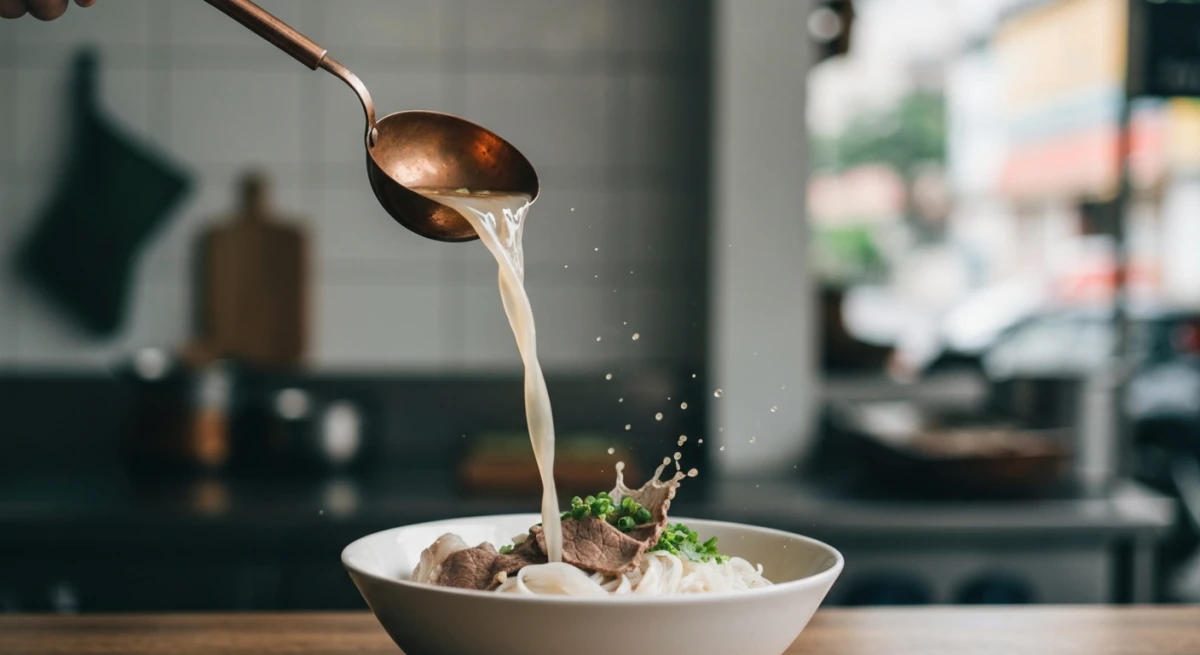
- The Dish: The undisputed crown jewel of Vietnamese cuisine. Hanoi is the birthplace of modern Phở, and here, it is treated with a purist’s devotion. Unlike the Southern variety, Northern Phở features a crystal-clear, intensely aromatic beef broth simmered for over 12 hours with charred ginger, onions, cinnamon, star anise, and cardamom. It contains no bean sprouts, basil, or sweet hoisin sauce. Instead, it relies on wide, hand-cut rice noodles (bánh phở), tender cuts of beef (such as raw beef cooked gently by the hot broth, known as phở tái), and a generous dusting of green spring onions.
- The Story: Hidden down the narrow alleyway of Ngõ Trung Yên, Phở Sướng literally translates to "Pho of Ecstasy" or "Joyous Pho". This legendary stall has been satisfying local palates for generations.
- How to Eat It Like a Local: Taste the broth first before adding any condiments to appreciate the complexity of the slow-simmered bone marrow. Next, add a squeeze of fresh lime and a couple of slices of fresh red bird’s-eye chili. For an ultra-authentic touch, order a plate of quẩy (golden, deep-fried dough sticks) and submerge them in the broth until they are pleasantly soggy and bursting with beefy flavor.
Stop 4: Bánh Mì at Bánh Mì Lãn Ông
- Address: 8 Chả Cá, Hàng Bồ, Hoàn Kiếm
- The Dish: A crusty, airy baguette heavily spread with a rich, smooth house-made chicken and pork liver pâté, layered with a whisper of salted mayonnaise, pork floss (ruốc), cucumber slices, fresh cilantro, and a drizzle of mildly spicy local chili sauce.
- The Story: While many tourists flock to Bánh Mì 25, Bánh Mì Lãn Ông represents the old-school Hanoian style of sandwich-making. Rather than overloading the baguette with modern meats like ham and cheese, this legendary shop focuses on the perfect ratio of shattering bread crust to velvety, deeply savory pâté.
- How to Eat It Like a Local: Order the classic Bánh Mì kẹp pa-tê and pair it with a cold glass of nước mía (freshly pressed sugarcane juice with a squeeze of calamansi citrus) from a nearby street cart to balance the rich, fatty notes of the pâté.
Stop 5: Bánh Tôm at West Lake (Hồ Tây)
- Address: Nhà hàng Thanh Tâm, 43 Phủ Tây Hồ, Quảng An, Tây Hồ
- The Dish: Crispy, golden-brown sweet potato fritters topped with whole, fresh, shell-on freshwater prawns caught directly from Hanoi's West Lake, deep-fried to crunchy perfection.
- The Story: Bánh Tôm became incredibly popular during the mid-20th century, particularly around the scenic West Lake and the historic Phủ Tây Hồ temple. It represents the perfect adaptation of local ingredients during times of food rationing, transforming simple sweet potatoes and local lake shrimp into a celebratory snack.
- How to Eat It Like a Local: Wrap a piece of the piping hot, crunchy fritter inside a large, fresh lettuce leaf along with sprigs of Vietnamese balm (kinh giới) and mint. Dunk the entire wrap into the accompanying sweet, sour, and spicy fish dipping sauce containing green papaya pickles.
Stop 6: Café Trứng (Egg Coffee) at Café Giảng
- Address: 39 Nguyễn Hữu Huân, Lý Thái Tổ, Hoàn Kiếm
- The Dish: An opulent, dessert-like coffee beverage consisting of a shot of robust, dark Vietnamese Robusta espresso topped with an incredibly thick, velvety, meringue-like foam made from fresh egg yolks whipped vigorously with sweetened condensed milk and sugar.
- The Story: In 1946, during the First Indochina War, fresh milk was exceedingly scarce in Hanoi. Mr. Nguyen Giang, a bartender at the prestigious Metropole Hotel, desperately needed a milk substitute for his customers' cappuccinos. He whisked egg yolks as an alternative, accidentally inventing the world's first Egg Coffee (Cà Phê Trứng). He subsequently opened Café Giảng, which remains a family-run pilgrimage site for coffee lovers today.
- How to Eat It Like a Local: Do not stir the entire cup immediately! Instead, use the small spoon provided to scoop up the warm, custardy egg foam from the top, enjoying its sweet, cake-batter-like flavor. Once you have enjoyed a few spoonfuls, gently stir the dark coffee from the bottom upward to create a rich, bittersweet balance that tastes remarkably like liquid tiramisu.
Food Safety, Etiquette, and Navigating Dietary Restrictions
Eating street food can sometimes feel intimidating for first-time visitors. However, with a few basic guidelines, you can indulge in Hanoi's street food scene with total confidence.
How to Stay Safe and Avoid "Hanoi Belly"
- Follow the Crowds (The Local Test): Never eat at a street stall that is completely empty. Look for vendors surrounded by a sea of locals and discarded paper napkins on the floor. High foot traffic ensures that ingredients are constantly rotating and never sitting out in the tropical heat.
- Observe the Cooking Station: Choose stalls where the food is prepared right in front of you. Piping hot, boiling broths (like Phở or Bún Riêu) are naturally sterilized and incredibly safe.
- The Ice Dilemma: Many travelers fear ice (đá) in Southeast Asia. In Hanoi, most street vendors purchase safe, purified tube ice from commercial factories. This ice is easily recognizable by its uniform, cylindrical shape with a hole through the middle. Avoid shaved ice or large blocks of ice that have been manually crushed on the sidewalk.
- Sanitize Your Utensils: It is a common local habit to grab a piece of fresh lime from the table condiment basket and rub it over your chopsticks and spoon before eating. The citric acid acts as a natural disinfectant.
Local Sidewalk Etiquette
- Tossing Napkins on the Floor: Do not be alarmed to see a layer of used tissues and lime wedges on the floor under the tables. In Hanoi street food culture, this is actually a sign of a highly popular, successful stall. The floor is swept clean periodically by the staff.
- Keep Cash Handy: Street food stalls are strictly cash-only operations. Always carry small bill denominations (10,000 to 100,000 VND). Trying to pay for a 30,000 VND bowl of noodles with a 500,000 VND bill is highly discouraged, as vendors often do not have enough change early in the day.
- Share Your Space: If a stall is incredibly busy, do not be surprised if a stranger sits down on the stool right next to you at your small table. Embrace the communal nature of the experience!
Navigating Dietary Restrictions (Vegetarian, Vegan, and Gluten-Free)
Hanoi's street food is incredibly meat-centric, and fish sauce (nước mắm) is the foundation of almost every dish. However, you can still experience the culinary magic of the city with the right vocabulary:
- For Vegetarians and Vegans: Look for the word Chay (pronounced "chai"), which translates to vegetarian/Buddhist vegan.
- Seek out a Bánh Mì Chay vendor, who will replace the pâté and cold cuts with seasoned tofu, fried eggs (if vegetarian), mushroom-based pâté, and fresh herbs.
- Visit local temple-style vegetarian restaurants, such as Ưu Đàm Chay or the street stalls around Chùa Quán Sứ (Quan Su Pagoda) on the 1st and 15th days of the lunar month.
- For Gluten-Free Travelers: Standard Vietnamese soy sauce (xì dầu) and baguettes (bánh mì) contain gluten. Fortunately, the vast majority of Hanoi's legendary noodle dishes (including Phở, Bún Chả, and Bánh Cuốn) are made entirely from 100% pure rice flour.
- Always verify by asking: "Có bột mì không?" (Does this contain wheat flour?).
- Opt for Phở or Bún over instant wheat noodles (mỳ tôm).
Guided vs. Self-Guided: Choosing the Best Tour for You
Should you explore Hanoi's food scene on your own, or should you book a professional guided tour? Both options offer unique advantages depending on your travel style.
How to Select a High-Quality Guided Tour
If you decide to opt for a guided experience, avoid generic mass-market operators. Look for tours that guarantee:
- Micro-Group Sizes: Ensure the group is capped at a maximum of 6 to 8 participants. Navigating Hanoi's narrow pavements and small shops with a group of 15 people is highly chaotic and dilutes the intimacy of the experience.
- Walking vs. Motorbike Tours: Walking tours are perfect if you want to explore the dense, historic lanes of the Old Quarter. If you want to venture further out to West Lake, the Long Biên bridge, and local suburban food hubs, look for a vintage Minsk motorbike or Vespa food tour.
- Student-Led Initiatives: Consider booking through non-profit or student-led groups like Hanoi Kids. These passionate local university students offer personalized walking tours in exchange for practicing their English and receiving tips, providing an incredibly genuine cultural exchange.
Beyond the Old Quarter: Hidden Culinary Pockets of Hanoi
If you have conquered the Old Quarter and want to explore where Hanoi’s young foodies and families go to eat, escape the tourist core and head to these three culinary neighborhoods.
1. Trúc Bạch Lake (The Birthplace of Phở Cuốn)
Located just north of the Old Quarter, the peaceful peninsula of Trúc Bạch is famous for creating Phở Cuốn (rolled Pho). Instead of slicing the steamed rice noodle sheets into strips for soup, chefs leave the sheets whole, wrap them around stir-fried garlic beef and fresh cilantro, and serve them dry with a sweet-and-sour dipping sauce.
- Where to Go: Phở Cuốn Hương Mai (25 Ngũ Xã, Trúc Bạch) is the undisputed pioneer of this dish. Be sure to also order Phở Chiên Phồng—deep-fried pillows of rice noodle dough that puff up into crispy, hollow squares, served under a mountain of savory beef and gravy.
2. Tống Duy Tân Street (Hanoi's Designated "Food Street")
This narrow, pedestrian-friendly alleyway in the Hoàn Kiếm district is open late into the night and is famous for its vibrant atmosphere and sizzling woks.
- Where to Go: Try Cơm Đảo Gà Rang (heavily seasoned, wok-tossed chicken served alongside perfectly crispy fried rice) or gather around a communal pot of Lẩu (Vietnamese hot pot) with a group of friends.
3. Ngõ Đồng Xuân (The Dong Xuan Market Food Alley)
Located right next to the massive wholesale Đồng Xuân Market, this daytime alleyway is packed with incredibly cheap, hyper-local stalls that cater to market traders.
- Where to Go: Sample a bowl of Bún Ốc (freshwater snail noodle soup with a tangy tomato-and-rice-vinegar broth) or cozy up with a warm bowl of Cháo Sườn (velvety, smooth rice porridge cooked with pork ribs and topped with crispy dough sticks and savory pork floss).
Frequently Asked Questions
How much does a street food tour cost in Hanoi?
A professionally guided small-group street food tour in Hanoi generally costs between $20 and $35 USD per person, which includes all food tastings, drinks, and English-speaking guide services. If you choose to go self-guided using our itinerary, you can easily enjoy 5 to 6 dishes for a total of $7 to $12 USD per person.
Is street food in Hanoi safe for pregnant women?
Yes, street food can be safe during pregnancy, but you must exercise extra caution. Stick exclusively to dishes that are cooked fresh and served piping hot (such as Pho or hot Banh Cuon). Avoid raw herbs, unpeeled fruits, fresh salads, and any uncooked or partially cooked seafood. Stick to bottled water and avoid ice entirely.
What is the best time of day to take a food tour?
The absolute best time for a street food tour is in the early evening (between 5:30 PM and 8:30 PM). During this window, the daytime heat begins to subside, local workers flood the street side stalls, and the atmosphere becomes incredibly energetic. Additionally, many legendary dinner-only vendors set up their coal grills during these hours.
Can I find vegetarian options on a standard street food tour?
Standard group tours are highly meat-focused, but almost all reputable tour companies can accommodate vegetarians and vegans if notified in advance. Your guide will work with vendors to substitute meat elements with tofu, eggs, and mushrooms. For a self-guided experience, always look for stalls displaying the sign "Chay".
Do street vendors in Hanoi accept US Dollars or credit cards?
No. Hanoi's street food vendors operate entirely on Vietnamese Dong (VND) in cash. Credit cards are not accepted at sidewalk stalls, and while some high-end shops might accept USD, they will offer an extremely poor exchange rate. Always keep a pocket full of 10,000, 20,000, and 50,000 VND notes.
Conclusion
A ha noi street food tour is far more than a way to fill your stomach; it is an unforgettable window into the soul of Vietnam. The complexity of a slow-simmered Pho broth, the crunch of a freshly baked Bánh Mì, and the sweet, velvety warmth of an egg coffee at a hidden café all tell stories of survival, adaptation, and culinary mastery.
As you sit on those tiny plastic stools, surrounded by the chaotic music of the Hanoian streets, you aren't just eating—you are participating in a rich, living heritage. So pack your appetite, leave your culinary comfort zone behind, and dive into one of the greatest food cities on earth.