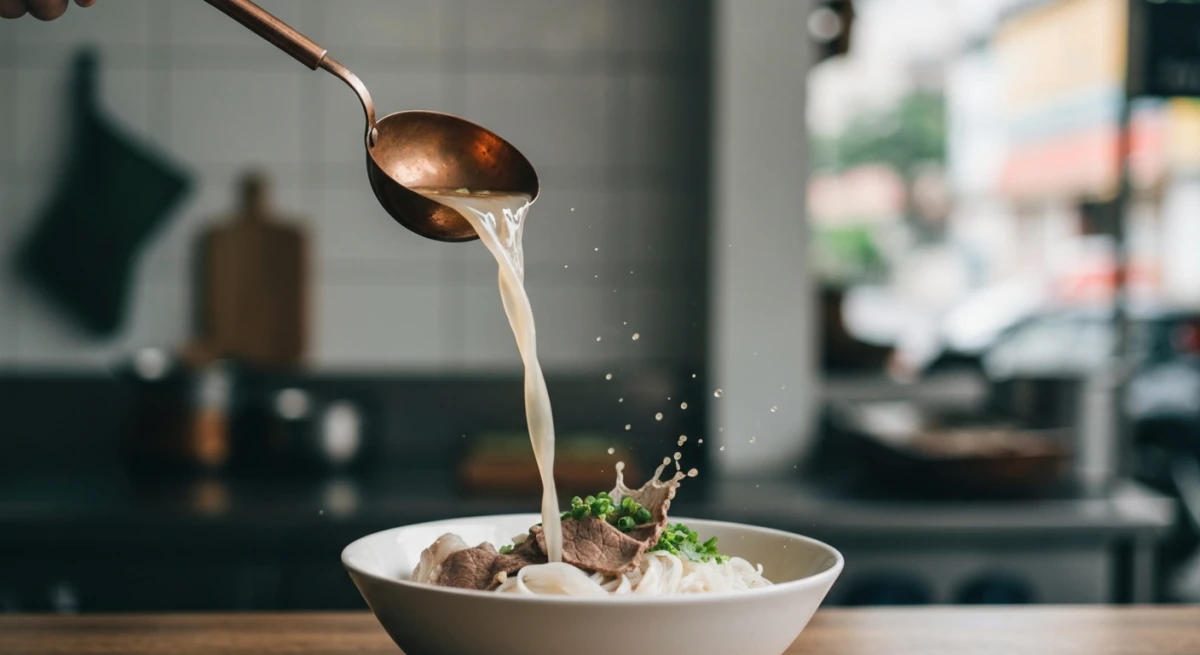
If you are searching for the absolute ho chi minh city best pho, you are not just looking for a quick meal; you are embarking on a sensory pilgrimage through the heart of Vietnam's culinary capital. Saigon is a bustling metropolis where old-world food carts and modern skyscrapers stand side-by-side. Among the millions of scooters and neon signs, the aroma of bubbling beef bones, star anise, and roasted ginger acts as a constant navigation system. Pho is more than a simple breakfast noodle soup here—it is a cultural anchor, an edible history book, and a fiercely debated passion.
While Hanoi is widely considered the historical birthplace of pho, Ho Chi Minh City is where the dish truly went to finish its education. Here, the traditional, minimalist Northern style clashed with the abundant, herb-heavy agricultural wealth of the South. The result is a vibrant, diverse noodle scene where you can eat a hyper-traditional, clear Hanoi-style bowl for breakfast, and a sweet, rich, herb-packed Saigon-style bowl for dinner.
In this ultimate guide, we bypass the generic tourist lists to bring you the definitive, local-approved breakdown of Ho Chi Minh City's best pho. From pre-war hidden alleyway stalls to Michelin-recognized institutions, we will explore the flavors, the history, and the secret spots that define the city's legendary soup.
The Great Divide: Phở Bắc (Northern Style) vs. Phở Nam (Southern Style)
To truly appreciate the nuance of Ho Chi Minh City's best pho, one must first understand the great culinary dividing line of Vietnam: the contrast between Northern style (Phở Bắc) and Southern style (Phở Nam). Because Saigon is a city built on migration, both styles thrive here, and locals take their preferences very seriously.
Phở Bắc: The Art of Minimalist Elegance
Originating in the northern provinces of Nam Dinh and Hanoi in the early 20th century, Phở Bắc is defined by simplicity, clarity, and purity.
- The Broth: The broth is clear, delicate, and deeply savory. It relies heavily on beef marrow bones simmered for up to 24 hours, seasoned strictly with salt, fish sauce, grilled ginger, and charred onions. There is no added sugar.
- The Noodles: The rice noodles (bánh phở) are typically wider and softer, cut fresh daily.
- The Toppings: Garnishes are kept to an absolute minimum—usually just a scattering of thinly sliced green scallions and cilantro.
- The Etiquette: You will not find bean sprouts, hoisin sauce, or a basket of fresh herbs on a Northern pho table. Instead, the soup is enjoyed in its purest state, occasionally accented with a splash of rice vinegar, fresh red chilies, and quẩy (crispy fried dough crullers) used to soak up the precious broth.
Phở Nam: The Bold, Herb-Laden Feast
As pho traveled south in the mid-1950s, it underwent a dramatic evolution. The fertile Mekong Delta provided an abundance of fresh herbs, sugarcane, and diverse ingredients, transforming pho into a flamboyant, highly customizable feast.
- The Broth: Southern broth is sweeter, oilier, and far more heavily spiced. Chefs use a complex blend of star anise, cinnamon, cloves, coriander seeds, and black cardamom to create a highly fragrant, amber-colored soup seasoned with rock sugar.
- The Noodles: The noodles are noticeably thinner, offering a slightly chewier bite.
- The Toppings: A bowl of Phở Nam is incomplete without its sidekick: a literal jungle of fresh herbs. You will be served a massive plate featuring Thai basil (húng quế), sawtooth herb (ngò gai), rice paddy herb (ngò ôm), and plump, raw bean sprouts.
- The Etiquette: Tables at Southern pho joints are cluttered with condiment bottles. Locals freely customize their bowls with sweet hoisin sauce (tương đen) and spicy chili sauce (tương ớt), squeezing fresh lime wedges and tossing in handfuls of torn herbs.
Knowing this distinction is crucial because when you search for Ho Chi Minh City's best pho, you are choosing between two entirely different sensory experiences. Fortunately, our curated list below features the absolute pinnacle of both styles.
The Legendary Institutions: The Icons Everyone Knows
These are the heavyweights of the Saigon pho scene. They have fed generations of locals, survived decades of economic shifts, and established themselves as historical landmarks. While they are highly popular with travelers, they remain local favorites for a reason: their quality is uncompromising.
1. Phở Lệ (District 5 & District 3)
The King of Southern-Style Pho
- Address: 413-415 Nguyen Trai Street, Ward 7, District 5 (Original) | 303-305 Vo Van Tan Street, District 3
- Vibe: Bustling, chaotic, and loudly authentic with stainless steel tables and rapid-fire service.
- The Lowdown: If you want to experience the absolute zenith of rich, unapologetic Southern-style pho, Phở Lệ is your holy grail. Established in 1970, this District 5 institution is legendary for its incredibly flavorful, slightly oily, and sweet beef broth cooked over charcoal. It has earned its place as a Michelin-selected landmark, beloved by both locals and international food critics.
- What to Order: The Phở Đặc Biệt (Special Combo Bowl) is a mountain of meat, loaded with rare beef (tái), tender brisket (nạm), gelatinous tendon (gân), and their famous house-made beef balls (bò viên) which are wonderfully springy and spiced with black pepper.
- Insider Tip: Don't skip the fresh herbs here. Tear the Thai basil and sawtooth coriander into the hot broth immediately to let the hot oil release their aromatic compounds.
2. Phở Hòa Pasteur (District 3)
The Historic 50-Year-Old Landmark
- Address: 260C Pasteur Street, Ward 8, District 3
- Vibe: Multi-level, highly touristed, yet deeply nostalgic with vintage tiles and massive copper cauldrons visible from the street.
- The Lowdown: No discussion of Ho Chi Minh City's best pho is complete without Phở Hòa. Located on Pasteur Street—the historic epicenter of Saigon's 1960s pho culture—this restaurant has been serving hungry patrons for over half a century. While some local purists argue that it has become too touristy and overpriced, the broth here remains incredibly consistent. It is highly aromatic, sweet, and comforting, with a beautiful golden hue.
- What to Order: Phở Chín Nạm (Well-done flank and brisket). The meat cuts here are exceptionally high-quality and sliced with precision.
- Insider Tip: Be aware that the plates of quẩy (fried dough) and small pork sausages left on your table are not free; you will be charged a small fee for whatever you consume. However, dipping a hot, crispy cruller into Phở Hòa's broth is worth every Vietnamese Dong.
3. Phở Phú Vương (District 1 & Tan Binh)
The Crowd-Pleasing Masterclass in Balance
- Address: 339 Le Van Sy Street, Ward 1, Tan Binh District | 120 Nguyen Thai Binh, District 1
- Vibe: Modernized street food eatery, brightly lit, exceptionally clean, and heavily packed with locals during dinner hours.
- The Lowdown: For many expatriates and local culinary experts, Phở Phú Vương is the ultimate everyday bowl. It masterfully bridges the gap between the heavy sweetness of Phở Lệ and the lighter profile of Northern styles. The broth is exceptionally clear for a Southern soup, yet it carries a deep, beefy umami that coats your palate without feeling overly greasy.
- What to Order: Phở Đuôi Bò (Oxtail Pho) or Phở Tái Gầu (Rare beef and fatty brisket). The brisket here has a perfect strip of melt-in-your-mouth fat that pairs beautifully with the savory broth.
- Insider Tip: Try their house-made chili sauce. Unlike mass-produced sriracha, their chili sauce is fermented in-house and packs a bright, acidic punch that cuts through the richness of the beef fat.
The Secret & Historical Gems: Where the Locals Hide
If you want to escape the tourist crowds and experience pho with deep historical roots, these lesser-known local favorites offer unmatched flavor, nostalgic atmospheres, and unique preparation methods.
4. Phở Minh (District 1)
The Pre-War Morning Secret
- Address: 63/6 Pasteur Street, Ben Nghe Ward, District 1
- Vibe: A peaceful, green courtyard hidden down a narrow alleyway, frozen in the 1940s.
- The Lowdown: Operating since 1945, Phở Minh is a living museum. Tucked away in a quiet alley off the busy Pasteur Street, this Michelin Bib Gourmand-recognized morning-only spot is where generations of Saigonese have come for their daily ritual. The broth here is incredibly light, clean, and Northern-leaning, showcasing the natural sweetness of beef bones without heavy spices or sugar. It is the perfect antidote to the chaotic sensory overload of downtown Saigon.
- What to Order: Phở Tái Nạm (Rare beef and brisket). Pair it with their unique offering: a freshly baked pâté chaud (a French-Vietnamese puff pastry filled with seasoned pork). Dipping savory pastry into a clean Northern beef broth is a historical crossover you won't find anywhere else.
- Insider Tip: They close strictly by 10:00 AM (often running out of broth by 9:30 AM), so set your alarm early.
5. Phở Bò Phú Gia (District 3)
The Garlicky, Stir-Fried Northern Rebel
- Address: 146E Ly Chinh Thang Street, Ward 7, District 3
- Vibe: Unpretentious, highly conservative, and notoriously strict about their authentic Hanoi roots.
- The Lowdown: If you are tired of sweet Southern broths, Phở Bò Phú Gia is a revelation. This legendary shop brings the uncompromising, rustic flavors of old Hanoi to Saigon. Their signature technique is Phở Tái Lăn—an ultra-traditional Northern style where high-quality beef is flash-fried in a roaring hot wok with beef fat and heaps of fresh garlic before being placed in the bowl.
- The Broth: The resulting broth is smoky, garlicky, cloudy, and intensely savory. There are absolutely no bean sprouts or hoisin sauces allowed here; to ask for them is considered an insult to the chef. The bowl is garnished simply with an ocean of thick green scallions.
- What to Order: Phở Tái Lăn (Stir-fried rare beef pho).
- Insider Tip: Grab a seat close to the open kitchen so you can watch the dramatic flames erupt from the wok as the chef flash-fries your beef.
6. Phở Phượng 25 (District 1)
The Canal-Side Oxtail Haven
- Address: 25 Hoang Sa Street, Da Kao Ward, District 1
- Vibe: A classic canal-side open-front eatery with metal tables extending onto the sidewalk, cooled by the breeze of the Thi Nghe channel.
- The Lowdown: Run by a warm Northern family who migrated south decades ago, Phở Phượng 25 has mastered the ultimate hybrid bowl. The broth has the aromatic depth and cinnamon-sweetness of a Southern soup, but the cleanliness and clarity of a Northern master stock. It is rich without being cloying, and the spice profile of star anise and cardamom is beautifully pronounced.
- What to Order: Without a doubt, order the Phở Đuôi Bò (Oxtail Pho). The oxtail is slow-simmered for hours until the meat is gelatinous, tender, and sliding off the bone. They also offer a rich bowl of tủy (bone marrow) that you can add to your soup for an ultra-decadent experience.
- Insider Tip: It is located right on the canal, making it the perfect spot for a relaxed lunch followed by a stroll under the shade of the Da Kao district’s massive old-growth trees.
The Local’s Playbook: How to Order and Eat Pho Like a Saigonese
Sitting down at a bustling Saigon pho stall can be intimidating for first-time visitors. The menus are often short, highly specialized, and written entirely in Vietnamese. To help you navigate your culinary adventure with confidence, here is your insider playbook.
1. Master the Meat Cuts (The Ordering Cheat Sheet)
When you order pho, you aren't just ordering "beef soup." You customize your bowl based on your preferred cuts of meat. You can mix and match any of these terms:
- Tái: Thinly sliced rare beef (it cooks gently in the boiling broth as it is served).
- Chín: Well-done, tender beef brisket.
- Nạm: Flank steak, which has a beautiful balance of meat and lean fat.
- Gầu: Fatty brisket (richer, melt-in-your-mouth texture).
- Gân: Beef tendon (stewed until soft and gelatinous).
- Sách: Beef tripe (thin, crunchy strips).
- Bò Viên: Springy beef meatballs.
- Đặc Biệt: The "Special Combo" containing a little bit of everything.
Example: If you want rare beef and fatty brisket, you simply say: "Cho em một tô phở tái gầu" (Please give me a bowl of rare beef and fatty brisket pho).
2. The Golden Rules of Table Etiquette
Do not immediately dump sauces and herbs into your bowl! To eat pho like a true connoisseur, follow this sequence:
- The First Sip: Always taste the broth in its pure state first. A master chef spent up to 24 hours perfecting this liquid gold. Appreciate the clarity, the saltiness, and the spice profile before altering it.
- The Herb Infusion: If eating Southern-style pho, pluck the fresh leaves of Thai basil and sawtooth coriander. Tear them in half to release their essential oils, and submerge them under the hot noodles. Do not put whole woody stems into your bowl.
- The Condiment Dance: Do not squirt hoisin sauce and chili sauce directly into your broth—this muddies the delicate flavors. Instead, squirt the sauces onto a small side saucer. Dip your slices of beef into this sauce mixture before eating them.
- The Acid Balance: Squeeze a small wedge of lime over your noodles (not directly into the soup spoon) if you feel the broth needs a bright, sour note to cut through the beef fat.
3. Ask for Secret Customizations
Locals know how to hack the menu. Here are three phrases that will instantly earn you the respect of the stall owner:
- "Nước béo" (Fatty broth): If you love an ultra-rich, velvety soup, ask for a small side bowl of nước béo—the intensely flavorful fat skimmed from the top of the simmering bone broth.
- "Giá chín" (Cooked bean sprouts): If you dislike the raw, earthy taste of cold bean sprouts, ask for giá chín. The kitchen will blanch them in boiling water before serving, making them tender and sweet.
- "Bánh phở thêm" (Extra noodles): Still hungry? Order a side bowl of extra rice noodles to soak up your remaining broth.
Quick Reference: Saigon's Best Pho at a Glance
Here is a quick look at how the top pho joints stack up against one another in terms of style, cost, and vibe:
| Restaurant | Style | Signature Bowl | Price Range (VND) | Best Time to Visit |
|---|---|---|---|---|
| Phở Lệ | Southern (Rich & Sweet) | Phở Đặc Biệt (Combo) | 80,000 - 100,000 | Dinner & Late Night |
| Phở Hòa Pasteur | Southern (Classic Landmark) | Phở Chín Nạm (Brisket) | 90,000 - 110,000 | Late Morning Lunch |
| Phở Phú Vương | Southern (Clean & Balanced) | Phở Đuôi Bò (Oxtail) | 65,000 - 85,000 | Breakfast or Dinner |
| Phở Minh | Northern (Light & Clean) | Phở Tái Nạm (Rare/Brisket) | 70,000 - 85,000 | Early Morning (7-9 AM) |
| Phở Bò Phú Gia | Northern (Smoky & Garlicky) | Phở Tái Lăn (Stir-Fried) | 75,000 - 95,000 | Dinner (Starts at 5 PM) |
| Phở Phượng 25 | Hybrid (Deep & Aromatic) | Phở Đuôi Bò with Bone Marrow | 70,000 - 110,000 | Mid-Day Lunch |
Frequently Asked Questions (FAQ)
What makes Southern pho different from Northern pho?
Northern pho (Phở Bắc) is minimalist, featuring a clear, delicate, savory broth seasoned primarily with salt, fish sauce, ginger, and green onions. It is eaten without herbs or bean sprouts, often paired with fried dough crullers (quẩy). Southern pho (Phở Nam) is sweeter, richer, and highly spiced (star anise, cardamom). It is served with a mountain of fresh herbs (Thai basil, sawtooth coriander), bean sprouts, hoisin sauce, and chili sauce.
How much should a bowl of pho cost in Ho Chi Minh City?
A standard bowl of pho at a local street food stall or neighborhood shop typically costs between 50,000 VND and 75,000 VND (approximately $2.00 to $3.00 USD). Well-known historical institutions or Michelin-selected spots like Phở Hòa Pasteur or Phở Lệ may charge between 80,000 VND and 110,000 VND ($3.20 to $4.50 USD) for larger portions with premium cuts of meat.
Is chicken pho (Phở Gà) popular in Saigon?
Yes, chicken pho is highly popular, though beef pho (Phở Bò) remains the undisputed king. Chicken pho features a lighter, golden-colored broth simmered from chicken bones, served with shredded free-range chicken (gà ta), lime leaves, and a ginger-dipping sauce. If you want outstanding chicken pho in Ho Chi Minh City, look for stalls specializing in Phở Gà, such as the famous Phở Miến Gà Kỳ Đồng in District 3.
What is the crispy fried bread served with pho?
Known as quẩy (derived from the Chinese youtiao), these are airy, deep-fried dough crullers. While traditionally a Northern accompaniment, they are widely popular across Saigon. To eat them, tear them into bite-sized pieces and submerge them in your hot pho broth. They act like delicious, savory sponges that soak up the complex flavors of the soup.
Is it safe to eat raw beef (Phở Tái) at street stalls in Saigon?
Yes, it is highly safe. The "raw" beef (tái) is sliced paper-thin and placed raw on top of the noodles just before serving. The boiling-hot broth is poured directly over the beef, flash-cooking it instantly to a tender, juicy medium-rare. If you prefer your beef fully cooked, simply ask for Phở Chín (well-done brisket) or ask the kitchen to boil the rare beef in the pot before serving (tái chín).
Finding Your Perfect Bowl
In a city that never stops moving, pho is the pause button. It is the morning steam rising against the cool dawn, the midday sanctuary from the tropical heat, and the late-night comfort after a long evening of exploring.
There is no single "best" bowl of pho in Ho Chi Minh City because the perfect bowl depends entirely on your mood and palate. If you crave intense, sweet spices and a mountain of fresh greenery, head straight to Phở Lệ. If you want a smoky, garlicky hit of Northern comfort, seek out Phở Bò Phú Gia. And if you want to sit in a quiet alleyway and taste history itself, pull up a plastic stool at Phở Minh. Whichever path you choose, you are participating in a rich, delicious legacy that defines the soul of Saigon.