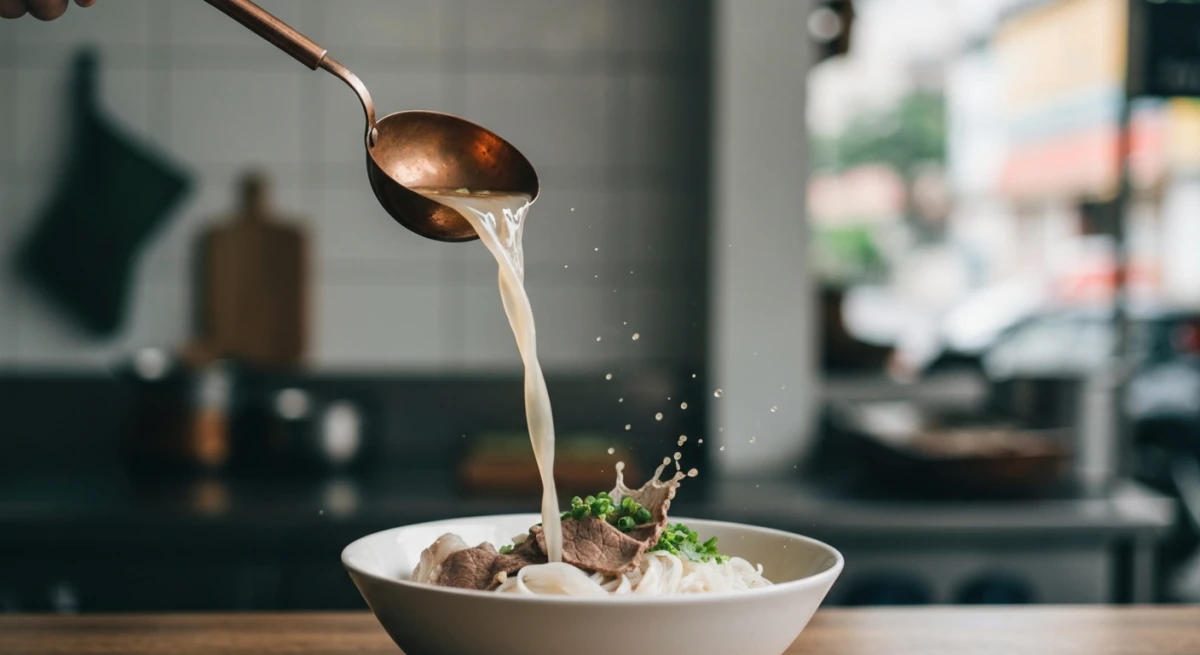
To eat pho in Hanoi is to participate in a sacred daily ritual. As the morning mist hangs low over the historic Hoan Kiem Lake and the first wave of motorbikes begins its chaotic symphony through the narrow, high-walled alleys of the Old Quarter, thousands of Hanoians are already being pulled by their noses toward steam-filled street corners. Here, giant aluminum cauldrons bubble with bone-rich broth on charcoal burners, sending rich notes of charred ginger, sweet star anise, and toasted black cardamom dancing through the humid air. While this simple rice noodle soup has achieved global fame, nothing compares to tasting it in its ancestral birthplace. If you are on a quest to find the best hanoi pho, you are not merely looking for a fast meal; you are searching for a masterclass in culinary balance, patience, and history.
However, navigating the city's dizzying array of noodle stalls can be overwhelming for both first-time visitors and seasoned travelers. From historic, multi-generational family heirlooms to modern wok-fired rebels and recently crowned Michelin-rated giants, every neighborhood claims its own local champion. In this comprehensive, expert-designed guide, we will look beyond the surface-level tourist recommendations to explore what truly defines a masterpiece bowl of Northern-style pho, uncover the legendary spots that actually live up to the hype, and reveal the hidden, signless street corners where locals have slurped in pure bliss for decades.
The Anatomy of Authentic Hanoi Pho: North vs. South
To appreciate why the best hanoi pho is so deeply revered, one must first understand the deep culinary divide between Northern pho (phở Bắc) and Southern pho (phở Nam). While Western diners are often accustomed to the sweeter, highly embellished Southern version—which was popularized globally after the diaspora in 1975—the original Northern style of Hanoi is a study in elegant minimalism.
In Hanoi, pho is not a blank canvas to be drowned in sweet sauces and loaded with a forest of raw greens. Instead, the northern bowl is austere, clean, and balanced, relying entirely on the purity of its broth. To truly understand this iconic dish, we must break down its essential components:
The Heartbeat of Pho: The Broth
A classic Hanoi broth is clear, delicate, yet deeply savory. It is made by simmering beef leg and marrow bones (and sometimes beef joints) for anywhere from 12 to 24 hours. The marrow provides a rich, sweet foundation, while charred ginger and charred shallots are added to round out the flavor profile. Spices are used with extreme restraint: a single black cardamom pod, a small stick of cinnamon, and a few star anise stars are toasted and steeped in the broth just long enough to impart a warm, aromatic whisper. Unlike Southern broths, which are sweetened with rock sugar and spiced heavily with cloves and coriander seeds, Hanoi broth relies on the natural sweetness of bone marrow and a touch of fish sauce for umami depth.
The Silky Rice Noodles: Bánh Phở
The noodles used in Hanoi are typically wider, flatter, and thinner than those found in the south. They are sliced fresh daily from steamed rice sheets. When blanched correctly, they should feel silky, soft, and slightly chewy, serving as a perfect vehicle to carry the hot broth without clumping or becoming mushy.
The Garnish: Minimalist Greenery
In Hanoi, you will never be handed a side plate of raw bean sprouts, Thai basil, culantro, or rice paddy herbs. To add these to a northern bowl is considered a culinary crime, as the raw vegetables cool down the broth and dilute its meticulously crafted flavors. Instead, a genuine Hanoi bowl is garnished simply with a mountain of finely sliced green scallions (hành lá), fresh coriander (rau mùi), and perhaps a few delicate rings of bird's eye chili.
The Essential Table Condiments
Instead of plastic squeeze bottles of hoisin sauce and Sriracha, a traditional Hanoi pho table features only four simple accompaniments:
- Fresh local limes (or calamansi) to add a bright, citric acidity.
- Dấm tỏi (garlic-infused rice vinegar) which provides a sharp, fermented tang that cuts through the richness of beef fat.
- Sliced fresh bird's eye chilies or a spoonful of house-made chili sauce (tương ớt), which is tangy and spicy rather than sweet.
- Quẩy (crispy fried dough sticks). These golden, airy batons are ordered by the plateful and submerged into the hot broth until they soften slightly, acting like a sponge for the delicious soup.
The Michelin Legends: Famous Bowls Worth the Hype
In recent years, the international culinary spotlight has shone brightly on Hanoi's street food culture, with several historic establishments receiving prestigious Michelin Bib Gourmand and Selected awards. If you want to experience the absolute peak of the city's noodle scene, these legendary spots are essential stops on your food journey.
Phở 10 Lý Quốc Sư: The Balanced Standard
Located in the heart of the Old Quarter just a short walk from the historic St. Joseph’s Cathedral, Phở 10 Lý Quốc Sư is arguably the most famous name in the Hanoi pho world. Recognized by the Michelin Guide as a Bib Gourmand recipient, its bright orange storefront always draws a bustling queue of hungry diners.
Inside, the atmosphere is a dance of controlled chaos. Through a large, clean glass window, you can watch the chefs quickly slice premium beef cuts, blanch fresh noodles, and ladle steaming broth from massive, simmering vats. What makes Phở 10 stand out is its consistency. The broth here is exceptionally balanced—clean, clear, and perfectly salted with a deep beef-marrow sweetness that isn't masked by MSG.
If you are a first-timer, order the Bát Đặc Biệt (special bowl), which features a gorgeous combination of sliced rare beef (tái), tender well-done brisket (chín), and meltingly soft flank (nạm). The beef is sliced incredibly thin, allowing the hot broth to cook the rare cuts instantly upon serving, ensuring every bite is beautifully tender.
Phở Gia Truyền Bát Đàn: The Self-Service Temple of Tradition
For over seven decades, Phở Gia Truyền Bát Đàn (located at 49 Bat Dan Street) has stood as a bastion of traditional Northern culinary heritage. This multi-generational family-run shop is famous not just for its food, but for preserving the historic Hanoian custom of queueing and self-service.
At Bat Dan, there are no waiters to take your order. You must join the line that routinely snakes down the pavement, step up to the rustic wooden counter, pay the lady slicing the beef, and carry your own piping hot bowl back to a tiny wooden table or a low plastic stool on the sidewalk.
Unlike the lighter style of Ly Quoc Su, the broth at Bat Dan is slightly darker, richer, and carries a robust, deep flavor profile dominated by roasted ginger and caramelized shallots. The beef here is exceptionally fresh; the rare beef (tái) is hand-minced on a thick wooden block right before it goes into your bowl, releasing its juices directly into the soup. Order the Tái Nạm (medium-rare flank) and pair it with a cold glass of bia hơi (local draft beer) from the shop next door for the ultimate Hanoi evening experience.
Phở Gà Nguyệt: The Undisputed King of Chicken Noodle Soup
While beef pho (phở bò) usually steals the spotlight, chicken pho (phở gà) is a lighter, highly fragrant alternative that Hanoians hold close to their hearts. For the absolute best representation of this dish, Phở Gà Nguyệt on Phu Doan Street is the undisputed champion.
Awarded a Michelin Bib Gourmand, this lively spot operates from early morning until late at night, drawing crowds that spill onto the street. While they serve a phenomenal classic chicken soup with a golden, clear, and highly aromatic broth simmered from chicken bones and ginger, the real star of the show is their Phở Trộn (dry mixed chicken pho).
In this brilliant variation, fresh rice noodles are tossed in a secret, savory soy-based sauce and topped with a generous portion of incredibly tender, firm-skinned chicken (you can choose from breast, thigh, or a mix). The bowl is elevated with a mountain of crispy fried shallots, crushed roasted peanuts, fresh coriander, and a squeeze of lime, served with a small side bowl of piping hot chicken broth. The play of textures—the crunch of the peanuts and shallots against the silky noodles and succulent chicken—makes this one of the most exciting and satisfying bowls in the capital.
Phở Khôi Hói: The Master of Specialized Beef Cuts
Tucked away on Hang Vai Street, a narrow lane famous for its traditional bamboo shops, Phở Khôi Hói is a beloved local favorite that recently earned its well-deserved Michelin Bib Gourmand. The name "Hói" refers to the owner's playful nickname (bald head), and the shop has maintained a loyal local following for over 25 years.
What sets Khoi Hoi apart is its dedication to specific, high-quality cuts of beef that are rarely highlighted in tourist-oriented shops. Regulars flock here for the Phở Lõi, which features the inner core of the beef shank (heel muscle). This rare cut contains a web of delicate, gelatinous tendons that provide a spectacular, crunchy-yet-tender texture with every bite. The broth at Khoi Hoi is simmered for over 20 hours with plenty of marrow bones, producing a deeply comforting, sweet, and highly aromatic soup that hits your palate with absolute authority.
The Rebels and the Classics: Unique and Historic Spots
While the Michelin-recognized shops offer exceptional quality, some of Hanoi’s most memorable bowls are found in historic spots that march to the beat of their own drum, or tucked away in signless alleys where only the most dedicated food lovers go.
Phở Thìn 13 Lò Đúc: The Sizzling Garlic Rebel
No discussion of Hanoi's noodle scene is complete without mentioning Phở Thìn Lò Đúc, located outside the Old Quarter on Lo Duc Street. Founded in 1979 by Nguyen Trong Thin, this legendary shop is a thrilling rebel in the world of traditional pho.
While classic Hanoi pho prides itself on a clear, delicate broth and gently blanched meat, Mr. Thin decided to turn tradition on its head. Here, the rare beef is tossed into a screaming-hot wok and quickly flash-fried with massive amounts of fresh garlic and beef fat before being placed over the noodles. The bowl is then filled with a rich, slightly oily broth and completely smothered under a literal mountain of freshly chopped green scallions.
The result is a culinary punch to the senses. The broth is cloudy, rich, and heavily perfumed with garlic and smoky "wok-hei" (the breath of the wok). The beef has a beautiful, caramelized, savory edge, and the sweet green onions add a refreshing crunch to cut through the intense fat. It is a loud, bold, and incredibly satisfying bowl of noodles that has earned a legendary status, with lines of locals waiting patiently on low metal stools every single morning.
Phở Bò Ấu Triệu (Phở Tư Lùn): The Cathedral’s Cloudiest Broth
Hidden in plain sight on Au Trieu Street, running parallel to the grand Gothic facade of St. Joseph’s Cathedral, is a small, family-run shop with no official signboard. Known to locals as Phở Bò Ấu Triệu (or Phở Tư Lùn), this shop is run by the daughter of a legendary Hanoi street food vendor who pioneered a unique style of cloudier, highly comforting beef pho.
Unlike the crystal-clear broths of the Old Quarter, the broth at Au Trieu is purposefully rich, deep, and slightly murky. It is simmered intensively with beef bones, marrow, and meat cuts, resulting in a full-bodied, heavily seasoned soup that feels like a warm hug on a drizzly morning. The beef is prepared "tái dập"—gently bashed with a heavy knife before being quickly blanched, which keeps the meat incredibly soft and allows its savory juices to enrich the broth. Snag a seat on the pavement, order a plate of crispy quẩy to dip, and watch the morning mist rise over the cathedral as you slurp this deeply comforting masterpiece.
Phở Bò Lâm: The Early Morning Hidden Gem
If you are an early riser looking to eat like a true Hanoi local, head to Phở Bò Lâm at 48 Hang Vai Street, located just a few doors down from Pho Khoi Hoi. Open from 5:30 AM and usually sold out before 10:00 AM, this cozy, unassuming shop is set inside the owner’s actual home, with just a few tables spilling out onto the sidewalk.
Lam is highly famous among local elders for its signature beef core pho ("phở lõi rùa"). The owner carefully sources the highest-grade beef shanks, selecting cuts with the most intricate tendon webbing. Sliced thinly and cooked to order, the meat melts in your mouth while offering a delightful, crunchy chew. The broth here is exceptionally light, clean, and refreshing, offering a pure, unadulterated bone-sweetness that makes it the perfect, comforting breakfast to start your exploration of the city.
The Variations: Beyond the Standard Soup
Hanoi’s culinary creativity does not stop at the soup bowl. Over the decades, innovative street food vendors have reimagined the components of pho into exciting dry, fried, and rolled variations that are absolutely worth exploring.
Phở Cuốn (Fresh Noodle Rolls)
Originating in the Truc Bach Lake neighborhood, Phở Cuốn is a refreshing, light summer dish that has become a staple of Hanoi’s street food culture. Instead of slicing the fresh rice noodle sheets into thin strips, the sheets are kept whole as wide, delicate squares. These are wrapped tightly around tender, wok-fried garlic beef, fresh coriander, mint leaves, and crisp lettuce.
The resulting rolls are served cold and dipped in a sweet, tangy, and slightly spicy nước chấm (fish sauce mixed with lime, sugar, garlic, and chili). For the ultimate experience, head to Phở Cuốn Chinh Thắng (7 Mac Dinh Chi, Ba Dinh District). It is the only pho roll restaurant to be included in the Michelin Selected list, famous for its silky, perfectly rolled wraps and incredibly flavorful dipping sauce.
Phở Chiên Phồng (Fried Pho Pillows)
At the same shops that serve pho rolls, you will find Phở Chiên Phồng. For this dish, square layers of fresh rice noodles are stacked together and deep-fried in bubbling oil. They puff up spectacularly into light, golden, hollow crispy pillows. These crunchy delights are arranged on a plate and smothered under a mountain of stir-fried beef, sweet bok choy, and a rich, thick, savory brown gravy. As you eat, some of the pillows remain wonderfully crispy, while others soak up the savory gravy, creating a magnificent play of textures.
How to Eat Pho Like a Local: Hanoi Etiquette & Rituals
To truly enjoy the best hanoi pho, you must embrace the local rituals and etiquette of the street side stalls. Slurping a bowl of noodles in Hanoi is an art form that follows a precise sequence:
Appreciate the Broth First: When your steaming bowl is placed before you, resist the urge to immediately grab the condiments. Take your spoon and sip the broth completely pure. Appreciate the clarity, the hours of bone-simmering patience, and the delicate balance of spices. A great broth should taste complete on its own.
Season with Care and Restraint: Once you have tasted the pure broth, customize it gently. In a beef pho (phở bò) shop, add a spoonful of dấm tỏi (garlic vinegar) for a sharp, fermented kick, or a squeeze of fresh lime for bright acidity. In a chicken pho (phở gà) shop, lime is usually preferred. Add a few slices of fresh bird's eye chili for heat. Avoid squeezing heavy sauces directly into the bowl, as they will completely destroy the delicate nuances of the broth.
The Quẩy Protocol: Order a plate of quẩy (fried dough sticks) to share. Submerge a piece into the hot broth for three to five seconds. You want it to absorb the savory soup like a sponge while still retaining a slight crunch in its core. Eat it immediately.
The Double-Hand Slurp: In Hanoi, eating is a full-contact sport. Hold your chopsticks in your dominant hand to navigate the noodles and meat, and keep your spoon in the other hand, filled with broth to accompany every bite. Do not be afraid to lean close to the bowl and slurp loudly—it is a sign of appreciation and helps cool the noodles as they enter your mouth.
Frequently Asked Questions (FAQ)
What is the difference between Northern (Hanoi) and Southern (Saigon) pho? Northern pho is characterized by its elegant minimalism, featuring a clear, delicate, bone-sweet broth, wider flat rice noodles, and a simple garnish of green scallions and cilantro. No bean sprouts or sweet herbs are served. Southern pho has a sweeter, heavily spiced broth, thinner noodles, and is accompanied by a large plate of fresh herbs (basil, culantro), bean sprouts, hoisin sauce, and chili sauce, allowing the diner to heavily modify the flavor.
How much does a bowl of pho cost in Hanoi? A standard bowl of beef or chicken pho at a local street stall typically costs between 40,000 VND and 60,000 VND (approximately $1.60 to $2.40 USD). Premium bowls featuring specialized cuts like beef heel muscle ("phở lõi") or extra meat can cost anywhere from 70,000 VND to 100,000 VND ($2.80 to $4.00 USD).
Why don't they serve bean sprouts with pho in Hanoi? Traditional Hanoian chefs believe that raw bean sprouts cool down the boiling hot broth too quickly and release water, which dilutes the rich, clean flavors of the painstakingly simmered soup. Northern culinary culture values the pure, concentrated taste of the broth above all else.
What is the best time of day to eat pho in Hanoi? Pho is traditionally a breakfast food in Vietnam, and many of the absolute best, most historic stalls (like Pho Bo Lam or Pho Bo Au Trieu) open as early as 5:30 AM and completely sell out by 10:00 AM. However, due to its immense popularity, you can find excellent shops open for lunch, dinner, or late-night dining (such as Pho Ga Nguyet, which stays busy until midnight).
Is beef or chicken pho more authentic to Hanoi? Both are incredibly authentic, but beef pho (phở bò) is the historic original, emerging in the early 20th century. Chicken pho (phở gà) was born in 1939 during French colonial rule when beef sales were restricted on certain days of the week. Hanoians quickly fell in love with the lighter, highly aromatic chicken variation, and it became a permanent, beloved staple of the city's food scene.
Conclusion
Finding the best hanoi pho is not about finding a single, universally perfect bowl; it is about matching the dish to your mood and morning ritual. Whether you seek the pristine, balanced clarity of Phở 10 Lý Quốc Sư, the smoky, garlic-fueled intensity of Phở Thìn Lò Đúc, or the quiet, street-side local charm of Phở Bò Ấu Triệu, Hanoi offers a noodle soup experience that is deeply tied to its history and soul. Pull up a tiny plastic stool, grab a pair of chopsticks, and let the steaming broth tell you the story of Vietnam’s capital, one unforgettable slurp at a time.