Introduction: Why Hanoi's Food Scene is Unique
To truly understand Hanoi, you must eat your way through its ancient, labyrinthine streets. The culinary capital of Vietnam does not hide its greatest culinary triumphs behind closed doors, air-conditioned dining rooms, or heavy velvet curtains. Instead, it spills them directly onto crowded sidewalks, down narrow, light-deprived alleyways, and onto knee-high plastic stools that line the curbs. If you are planning an adventure to Vietnam's 1000-year-old capital, identifying and seeking out the best food to try in hanoi is the ultimate gateway to discovering its layered history, dynamic culture, and resilient spirit.
Unlike the fiery, herb-heavy dishes of Central Vietnam or the sweeter, sugar-infused plates of the South, Northern Vietnamese cuisine is defined by its elegant restraint, balance, and clean flavor profiles. Hanoian chefs rely on delicate, clear broths, fresh local herbs, and subtle seasoning to highlight the natural flavors of high-quality ingredients rather than masking them with heavy spices, chilis, or sugar. Historically shaped by centuries of local traditions, Chinese proximity, and a decades-long French colonial presence, Hanoi’s food scene is a masterclass in culinary fusion and tradition.
In this comprehensive local guide, we will walk you through the legendary street food classics, reveal deeply-held neighborhood secrets, explain the historical context of each dish, and equip you with the essential street food etiquette you need to navigate Hanoi's food scene like a seasoned local.
The Pillars of Hanoian Street Food: The Legendary Classics
No culinary journey through Hanoi can begin without addressing the holy trinity of Northern Vietnamese cuisine: Pho, Bun Cha, and Banh Mi. These are the dishes that have transcended borders to achieve global fame, yet eating them at their source is a completely different, eye-opening experience.
Pho (Phở): The Minimalist Masterpiece
While Pho is celebrated worldwide, Hanoi is its spiritual and historical heartland. In the North, Phở Bắc (Northern Pho) is treated with absolute reverence. Unlike its Southern counterpart, which is sweeter, heavily garnished with bean sprouts, and drenched in hoisin and sriracha sauces, Northern Pho is a minimalist work of art.
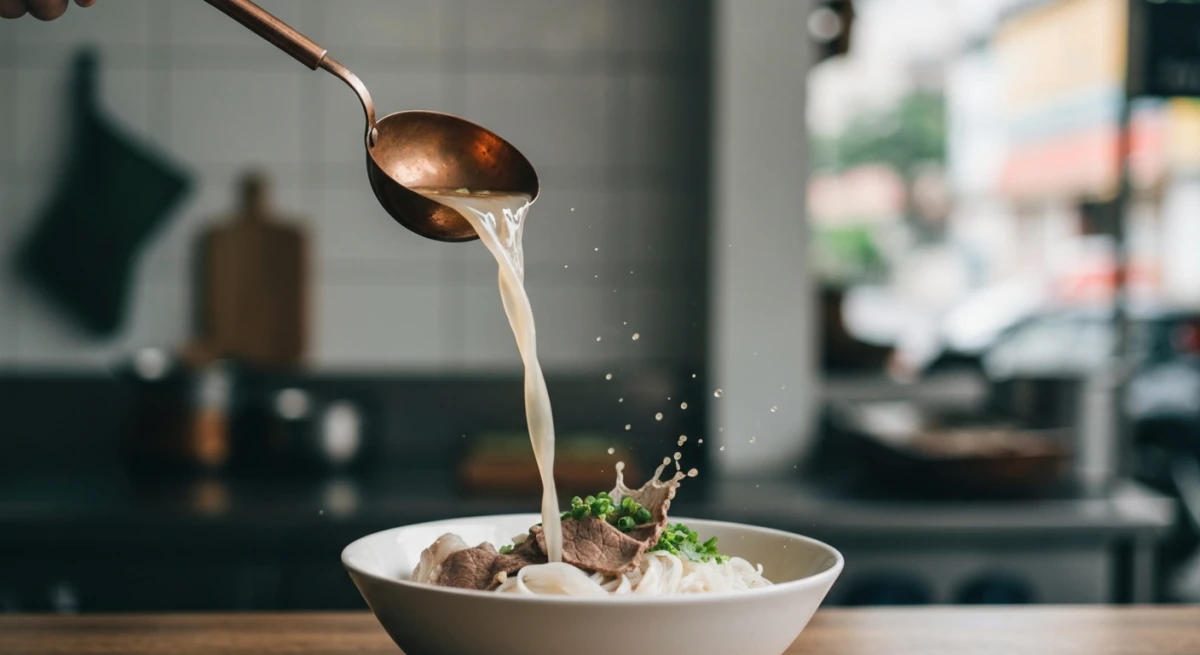
The broth is the absolute star of the show. It is crystal clear, deeply fragrant, and intensely savory, coaxed from beef marrow bones (for beef pho, Phở Bò) simmered gently for up to 24 hours alongside charred ginger, yellow onions, star anise, cinnamon, and black cardamom. The noodles are wide, flat, and soft, serving as the perfect vehicle for the delicate broth. The dish is finished simply with tender slices of beef (ranging from rare brisket to tender flank) and a generous handful of fresh green scallions and cilantro.
How to eat Pho like a local: When your steaming bowl arrives, resist the urge to immediately add seasoning. Taste the raw broth first to appreciate the cook's hard work. Then, customize it subtly. Squeeze a small wedge of fresh lime, add a spoonful of tỏi giấm (garlic thin-sliced and fermented in rice vinegar), and a dash of local fresh chili sauce. Do not put hoisin sauce in your bowl; doing so is considered an insult to the broth in Hanoi. Order a plate of quẩy (crispy, unsweetened fried dough sticks) to submerge in your broth, allowing them to soak up the soup like a savory sponge.
Where to try the best Pho in Hanoi:
- Phở Gia Truyền Bát Đàn (49 Bát Đàn, Old Quarter): This is the undisputed cathedral of beef Pho in Hanoi. Run by the same family for generations, they still cook their broth over traditional wood-fired stoves. The line stretches down the street starting at 6:00 AM, but the velvety, savory broth and incredibly tender phở tái nạm (half-cooked beef and brisket) are worth every single second of the wait.
- Phở Gà Nguyệt (5b Phủ Doãn, Hoan Kiem): If you prefer chicken over beef, this Michelin-recognized stall serves the absolute best chicken Pho (Phở Gà) in town. For a unique twist on a warm day, order their Phở Gà Trộn (dry chicken Pho), which features shredded chicken, peanuts, herbs, fried shallots, and a rich, sweet-and-savory soy-based dressing served with a side bowl of piping-hot chicken broth.
Bun Cha (Bún Chả): The Ultimate Lunchtime Sensation
If Pho represents the soul of Hanoi, Bun Cha represents its sheer, smoky joy. While Pho is a breakfast staple, Bun Cha is strictly a lunchtime affair. As midday approaches, the streets of Hanoi fill with clouds of fragrant white smoke as vendors grill marinated pork over glowing red-hot charcoal.
Bun Cha consists of two types of pork: succulent, caramelized pork belly slices and tender, seasoned ground pork patties. These are served warm, submerged in a light, sweet-and-savory dipping broth made of diluted fish sauce, vinegar, sugar, lime juice, and thin slices of crisp green papaya and kohlrabi. This is served alongside a plate of cold bún (delicate rice vermicelli noodles) and an overflowing basket of fresh green herbs, including perilla, mint, Vietnamese coriander, and sweet lettuce.
How to eat Bun Cha like a local: Take a small pinch of the cold vermicelli noodles with your chopsticks and dip them directly into the warm pork broth. Grab a piece of pork and a few herb leaves, assembling the perfect combination of smoky, sweet, savory, and fresh flavors in a single, balanced bite. For an authentic addition, order a side of nem cua bể (crispy, deep-fried sea crab spring rolls), shatter them with your chopsticks, and drop them into your broth for a wonderful crunch.
Where to try the best Bun Cha in Hanoi:
- Bún Chả 41 Cửa Đông (41 Cửa Đông, Old Quarter): Highly favored by local Hanoians, this small shop serves exceptional, heavily-charred pork and fresh herbs without the massive tourist buses.
- Bún Chả Hương Liên (24 Lê Văn Hưu, Hai Ba Trung): Widely known as the "Obama Bun Cha," this is where President Barack Obama and Anthony Bourdain famously dined on plastic stools. While highly commercialized now, the food remains delicious, and you can even order the exact "Combo Obama" they enjoyed.
Banh Mi (Bánh Mì): The Elegant Fusion
Unlike the towering, heavily-filled Banh Mi of Ho Chi Minh City, the Hanoi style is incredibly focused, light, and delicate. It relies on a perfectly baked baguette—a legacy of French colonial rule—that is exceptionally crispy on the outside and airy on the inside.
The classic Hanoi Banh Mi is spread with rich, freshly made liver pâté, a swipe of homemade mayonnaise, pork floss, thinly sliced head cheese, cured ham, fresh cucumber slices, and a drizzle of local chili sauce. It is warm, savory, crispy, and incredibly comforting.
Where to try the best Banh Mi in Hanoi:
- Bánh Mì Trâm (252 Cửa Nam, Hoan Kiem): Known for its legendary Bánh Mì Sốt Vang (Banh Mi with red wine beef stew). Instead of a traditional sandwich, you are served a hot bowl of rich, aromatic beef stew cooked with cinnamon and star anise, and a freshly toasted baguette to tear and dip.
- Bánh Mì Nguyên Sinh (17 Lý Quốc Sư, Old Quarter): Established in 1942, this historic bakery was one of the very first Vietnamese-owned Banh Mi shops in Hanoi. They are famous for their artisanal cold cuts and rich, exceptionally smooth pâté.
Hidden Gems and Neighborhood Specialties: The Deep Cuts
Once you have mastered the famous staples, it is time to move past the tourist-heavy areas and explore the complex, soul-stirring dishes that define Hanoi’s deep-rooted culinary heritage. These dishes showcase the true craftsmanship and historical depth of Northern cooking.
Cha Ca (Chả Cá): The Golden Turmeric and Dill Sensation
Cha Ca is so deeply woven into Hanoi's cultural and historical fabric that an entire street in the Old Quarter (Phố Chả Cá) was named in its honor. This unique dish features firm chunks of fresh catfish (typically hemibagrus, known as lăng fish) marinated in a rich mixture of earthy turmeric, galangal, ginger, garlic, and savory shrimp paste.
The preparation is interactive and theatrical. A small portable gas stove is set up at your table, topped with a sizzling cast-iron skillet. The marinated fish is added, followed by an incredibly generous mound of fresh dill and spring onions. As the herbs wilt and the fish sizzles, the aromas fill the air.
How to eat Cha Ca like a local: As the fish and herbs cook, prepare your bowl. Place a handful of cold rice vermicelli noodles at the bottom, add a piece of the sizzling golden fish, some of the wilted dill and spring onions, and a sprinkle of roasted peanuts. Finally, drizzle a small spoonful of mắm tôm (pungent fermented shrimp paste whisked with fresh lime juice and sugar until light and frothy) over the top. If the intense aroma of shrimp paste is too intimidating, you can easily substitute it with light fish sauce (nước chấm). Mix the bowl together and enjoy the incredible contrast of warm, savory fish, fresh herbs, and earthy peanuts.
Where to try the best Cha Ca in Hanoi:
- Chả Cá Lã Vọng (14 Chả Cá, Old Quarter): This is the historic birthplace of the dish, run by the same family for over a century. While it is more expensive than other spots and heavily touristed, the atmosphere and sense of history are unmatched.
- Chả Cá Anh Vũ (120 K1 Giảng Võ, Ba Dinh): Highly preferred by local families, this modern favorite offers exceptionally fresh fish, high-quality herbs, clean dining spaces, and a much more reasonable price point.
Bun Rieu Cua (Bún Riêu Cua): The Sour Crab Masterpiece
Bun Rieu Cua is a masterpiece of rustic, countryside Northern cooking that has become one of Hanoi's most beloved street foods. This vibrant noodle soup features a rich, tangy, and deeply comforting broth made from pounded freshwater field crabs, stewed tomatoes, tamarind, and rice vinegar.
The soup is topped with a cloud-like crab paste mixture (riêu cua), deep-fried golden tofu puffs, and a splash of scallion oil. Depending on the stall, you can also customize your bowl with tender slices of beef, Vietnamese pork sausage, or crispy fried snails (Bún Riêu Ốc).
How to eat Bun Rieu Cua like a local: Add a small dab of fermented shrimp paste to the broth to deepen the umami flavor. Squeeze a fresh lime wedge, throw in some sliced red chilies, and add a massive handful of finely shredded banana blossoms and split morning glory stems. The crunch of the raw greens against the hot, sour broth is culinary perfection.
Where to try the best Bun Rieu Cua in Hanoi:
- Bún Riêu Cua Hàng Bạc (11 Hàng Bạc, Old Quarter): A tiny, narrow street stall where you sit on small plastic stools right on the curb, watching the bustling traffic of the Old Quarter pass by as you eat a steaming bowl of crab perfection.
Banh Cuon (Bánh Cuốn): The Silky Morning Ritual
Banh Cuon is a delicate breakfast dish that showcases incredible culinary technique. To make it, the chef pours a thin layer of fermented rice batter onto a tightly stretched cloth placed over a giant pot of boiling water. The batter is spread into a paper-thin sheet and steam-cooked in seconds. Using a long bamboo stick, the chef delicately lifts the translucent sheet, fills it with minced pork, wood ear mushrooms, and minced shallots, rolls it up, and cuts it into bite-sized pieces. It is topped with a generous sprinkle of crispy fried shallots.
How to eat Banh Cuon like a local: Dip the warm, silky rolls into a bowl of mild, sweet-and-savory fish sauce (nước chấm) that is garnished with fresh coriander and crispy shallots. For a truly traditional touch, ask if they have cà cuống (the aromatic essence of a giant water bug), which adds a unique, slightly floral and minty depth to the dipping sauce. Eat it alongside chả quế (cinnamon pork sausage).
Where to try the best Banh Cuon in Hanoi:
- Bếp Tuệ An (Old Quarter, Hanoi): A beloved, family-run spot that has gained a massive local following for its exceptionally silky, fresh-to-order Bánh Cuốn and high-quality ingredients.
- Bánh Cuốn Bà Hoành (66 Tô Hiến Thành, Hai Ba Trung): Legendary for its rustic, slightly thicker rice sheets, generous portions of crispy shallots, and incredible homemade grilled pork patties.
Bun Thang (Bún Thang): The Elegant Multi-Ingredient Symphony
Bun Thang is perhaps the most elegant, visually stunning, and complex noodle soup in Hanoi's culinary repertoire. Historically prepared during the Tet (Lunar New Year) holiday to elegantly utilize leftover ingredients, it is a dish defined by precision, neatness, and patience.
The broth is a delicate, completely clear chicken and dried shrimp broth, simmered slowly and skimmed constantly to keep it pristine. The toppings are meticulously shredded into thin matchsticks and arranged in colorful, neat sections over a bed of fine rice vermicelli. These toppings include shredded chicken breast, thin strips of egg crepe, shredded pork sausage (giò lụa), pickled radish, fragrant herbs, and a tiny dollop of shrimp paste.
Where to try the best Bun Thang in Hanoi:
- Bún Thang Bà Đức (48 Cầu Gỗ, Old Quarter): Tucked away down a small, easily missed alleyway near Hoan Kiem Lake, this historic stall serves a remarkably clean broth and perfectly balanced bowls of Bun Thang.
Liquid Gold: Hanoi’s Iconic Coffee and Sweet Scene
Hanoi’s food culture is incomplete without exploring its vibrant, historical, and deeply passionate coffee scene. The city runs on caffeine, and its coffee shops are where locals of all generations gather to escape the chaotic streets, socialize with friends, and watch the world go by.
Cafe Trung (Cà Phê Trứng): Hanoi's Dessert in a Cup
Born in the 1940s during a severe wartime milk shortage, Egg Coffee was invented by Nguyen Van Giang, who was working as a bartender at the historic Sofitel Legend Metropole Hotel. Lacking fresh milk or condensed milk, he ingeniously substituted them by whisking fresh egg yolks with sugar and condensed milk until they formed a thick, creamy, meringue-like custard, which he then poured over hot, strong, bitter Vietnamese robusta coffee.
The result is a luscious, velvety, tiramisu-like drink that balances the sweet, creamy custard with the intensely bold, dark coffee underneath.
How to drink Egg Coffee like a local: Do not stir the drink immediately. Use a small spoon to eat some of the warm, sweet custard top first, enjoying it like a dessert. Once you have eaten a few spoonfuls, gently stir the remaining custard into the hot, bitter coffee underneath to create a perfectly balanced, rich beverage.
Where to try the best Egg Coffee in Hanoi:
- Café Giảng (39 Nguyễn Hữu Huân, Hoan Kiem): This is the birthplace of egg coffee, still run by Nguyen Van Giang’s descendants. Hidden down a long, dark, narrow alleyway, it opens up into a charming, rustic courtyard filled with low wooden tables and tiny stools.
- Café Đinh (13 Đinh Tiên Hoàng, Hoan Kiem): Run by Giang's daughter, this second-floor cafe is perched overlooking Hoan Kiem Lake. It has a gritty, incredibly authentic local vibe, complete with vintage posters and low wooden chairs.
Coconut Coffee & Kem Trang Tien
If egg coffee is too rich, Cà Phê Cốt Dừa (Coconut Coffee) is the ultimate summer refresher. Made by blending frozen coconut milk, condensed milk, and ice into a smooth, creamy slushy and pouring a shot of dark espresso over the top, it is sweet, nutty, icy, and highly addictive. The vintage-styled local chain Cộng Cà Phê is famous for pioneering this drink and serving it in a beautifully designed, retro military-themed space.
For a historic local dessert, walk down to Kem Tràng Tiền (35 Tràng Tiền) near the French Quarter. Established in 1958, this massive, historic ice cream parlor is a beloved cultural landmark. On hot summer nights, hundreds of locals park their motorbikes directly inside the lobby to grab cheap, incredibly refreshing ice cream bars in classic local flavors like coconut, mung bean, sweet taro, and young green rice (cốm).
Essential Hanoi Street Food Etiquette & Safety Tips
Navigating the bustling, high-energy streets of Hanoi can be overwhelming for first-time visitors. To make the most of your culinary adventure while staying safe, healthy, and respectful, keep these expert insider tips in mind:
- Embrace the Tiny Plastic Stools: The best food to try in hanoi is rarely found in pristine, air-conditioned dining rooms. It is found on the pavements. Sitting on tiny plastic stools is not a gimmick; it is a fundamental part of the Hanoian social fabric. Embrace the closeness, the motorbikes buzzing past, and the lively street energy.
- Observe the Cooking Process: If you are worried about hygiene, choose street stalls where you can see the food being prepared fresh right in front of you. A high turnover of local customers is the absolute best indicator of fresh ingredients and excellent food safety. If a place is packed with locals, the food is safe and delicious.
- Master the Table Condiments: Every Hanoi street food table is equipped with a selection of limes, fresh chilies, chili sauce, garlic vinegar, and soy sauce. These are not decorative. Northern food is designed to be customized by the diner to achieve their perfect balance of sour, spicy, sweet, and salty. Don't be afraid to experiment.
- Be Mindful of the Stalled Hours: Many of the best food stalls in Hanoi are highly specialized and only open during specific hours of the day. Some serve exclusively morning breakfast (like Banh Cuon) and close by 10:00 AM, while others only light their charcoal grills for lunch (Bun Cha) or open in the late evening for hot pot (Lẩu). Plan your day around peak local dining times to avoid showing up to closed doors.
- Always Carry Cash: Small, family-run street stalls and historic cafes do not accept credit cards or digital payments from international banks. Keep plenty of small-denomination Vietnamese Dong (VND) notes on hand (10,000, 20,000, and 50,000 bills) for quick, hassle-free transactions.
Frequently Asked Questions (FAQ)
What is the single best food to try in Hanoi if I only have one day?
If you only have one day, you must try Pho Bo (Beef Noodle Soup) for breakfast and Bun Cha (charcoal-grilled pork with noodles) for lunch. Complete your day with an Egg Coffee (Cafe Trung) at Café Giảng. These three represent the absolute pinnacle of Hanoi's culinary identity.
Is street food in Hanoi safe for travelers?
Yes, Hanoi's street food is generally very safe. To minimize any risk of travelers' diarrhea, eat at busy stalls with high local turnover, drink bottled water, and avoid raw vegetables at very quiet, slow-moving stalls. Ice in established cafes and busy restaurants is perfectly safe, as it is made in commercial ice factories.
What is the difference between Hanoi food and Ho Chi Minh City food?
Hanoi (Northern) food is characterized by delicate, clean, and subtle flavors, focusing on the quality of the primary ingredients with less sugar and chili. Ho Chi Minh City (Southern) food is sweeter, much spicier, and uses a vast abundance of fresh herbs, coconut milk, and sugar cane.
Where is the best area in Hanoi for food lovers to stay?
The Old Quarter (Hoan Kiem) is the absolute epicenter of street food in Hanoi. Staying here puts hundreds of historic food stalls, cafes, and markets within easy walking distance. The Truc Bach and West Lake (Tay Ho) areas are also excellent for travelers who want a slightly quieter vibe while still enjoying amazing local food.
Can vegetarians find good food to try in Hanoi?
Absolutely! While Northern Vietnamese cuisine is meat-forward, Hanoi has a flourishing Buddhist vegetarian culture. Look for signs that say Chay (which means vegetarian). You can find vegetarian Banh Mi at Bánh Mì 25, delicious tofu dishes, and beautiful vegan noodle soups throughout the city.
Conclusion
Hanoi’s street food is far more than mere sustenance; it is a living history book, a shared social ritual, and an incredibly rewarding sensory journey. From the complex, aromatic steam rising from a decades-old Pho pot to the sweet, smoky aroma of Bun Cha grilling on a busy sidewalk, every bite in this city tells a story of cultural resilience, artistic creativity, and deep family heritage.
By seeking out the best food to try in hanoi, stepping out of your comfort zone, and pulling up a tiny plastic stool on the sidewalk, you aren't just eating a meal—you are actively participating in a beautiful, daily cultural masterpiece. Pack your appetite, leave your expectations behind, and prepare to fall in love with the complex, delicate, and unforgettable flavors of Hanoi.