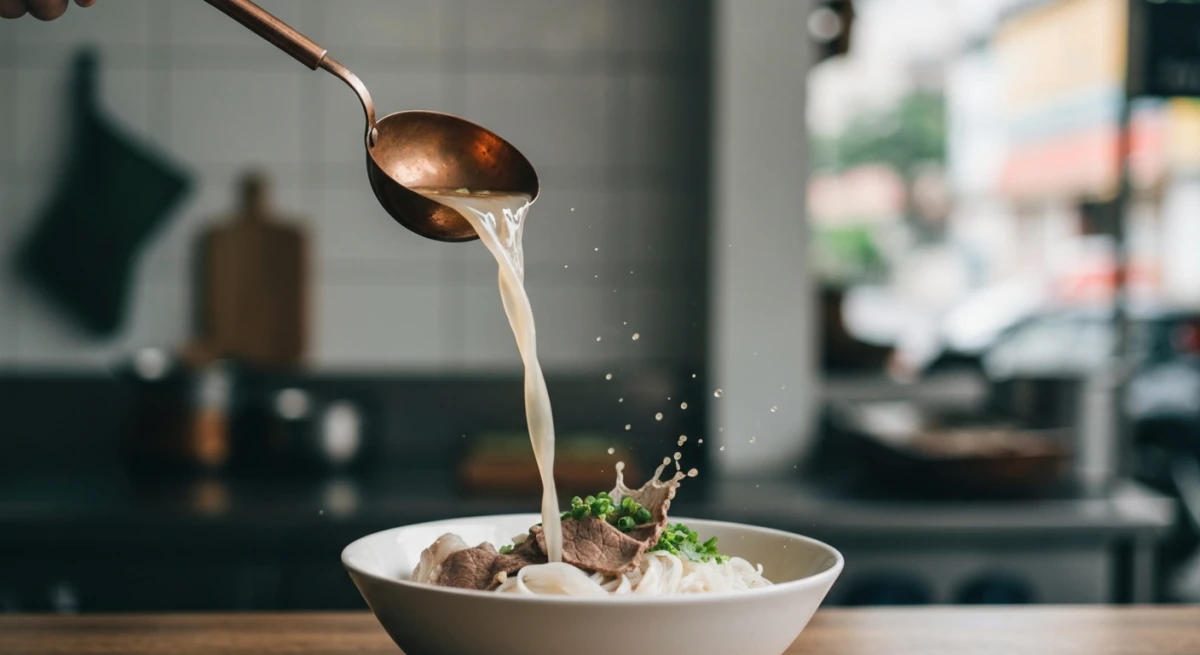
When you first step onto the buzzing streets of Saigon, your senses are immediately hijacked by the sights and sounds of thousands of motorbikes, the humid tropical air, and, above all, the intoxicating aromas of sizzling pork, simmering beef bones, and fresh herbs. To truly understand this dynamic metropolis, you have to eat your way through it. Finding the ultimate Ho Chi Minh must eat restaurant isn't just about picking a place with high online ratings; it's about navigating a rich, multi-layered culinary landscape where historic street carts, family-run institutions, and avant-garde fine dining spots coexist side by side.
While many travelers flock to the city expecting nothing but street food, Saigon’s dining scene has undergone a massive evolution. With the arrival of the Michelin Guide in Vietnam, local eateries have gained well-deserved international recognition. However, navigating this food capital can be overwhelming. Some iconic spots are hidden deep down unmarked alleyways, while others require reservations months in advance.
To help you conquer the city’s culinary scene, we have compiled the definitive guide to the best dining spots in Ho Chi Minh City. This list bridges the gap between legendary street food institutions and elevated modern masterpieces, giving you exact addresses, district locations, signature dishes, and expert insider tips to ensure every meal is unforgettable.
1. Elevated Masterpieces: Ho Chi Minh’s Fine Dining Icons
Saigon’s fine dining scene is currently one of the most exciting in Southeast Asia. Chefs from around the globe—and returning Viet Kieu (overseas Vietnamese) creators—are using French culinary techniques and modern gastronomy to re-examine traditional flavor profiles.
Ănăn Saigon (1 Michelin Star)
- Address: 89 Ton That Dam Street, District 1
- Vibe: Chic, narrow tube house nestled in the middle of a historic wet market
- Price Range: $$$$
- What to Order: The Chef's Tasting Menu, Banh Xeo Tacos, and the famous $100 Banh Mi
Ănăn (which translates directly to "eat, eat") is widely credited with putting Saigon’s modern culinary scene on the global map. Founded by award-winning Chef Peter Cuong Franklin, this was the first restaurant in Ho Chi Minh City to be awarded a coveted Michelin Star. What makes Ănăn truly special is its location. It sits on Ton That Dam Street inside Chợ Cũ (the Old Market), one of the oldest traditional wet markets in the city. The juxtaposition of fine dining inside a raw, bustling street market, with the ultra-modern Bitexco Financial Tower looming directly overhead, perfectly captures the spirit of modern Saigon.
Chef Peter applies French culinary techniques to traditional Vietnamese street food. If you dine a la carte, do not miss the Banh Xeo Tacos, which use a crispy, turmeric-infused rice flour shell shaped like a Mexican taco, stuffed with shrimp, pork, and fresh herbs. For a truly decadent experience, opt for one of their curated tasting menus, which lead you on a journey from the northern highlands to the southern delta. After dinner, head up to the second floor to Nhau Nhau, their retro-styled cocktail bar, or climb to the rooftop for an unrivaled view of the city center.
Insider Tip: Reservations are absolutely mandatory and often need to be booked weeks in advance, especially if you want to secure a table during weekends. If you are a solo traveler, ask for a seat at the ground-floor counter to watch the chefs at work.
CoCo Dining
- Address: 143 Nam Ky Khoi Nghia, District 3
- Vibe: Dark, moody, luxurious, and highly contemporary
- Price Range: $$$$
- What to Order: The seasonal 11-course tasting menu
Run by Chef Vo Thanh Vuong, the winner of Top Chef Vietnam, CoCo Dining represents the cutting edge of contemporary Vietnamese dining. Located in the leafy, historic District 3, the restaurant occupies a sleek, modern space with an open kitchen that serves as a stage for the culinary team. CoCo’s philosophy centers around the elevation of local, everyday Vietnamese ingredients that are rarely featured in fine dining, showcasing them through a highly technical, modern lens.
Their multi-course tasting menus rotate seasonally, focusing on dry-aged meats, locally sourced seafood from the central coast, and fermented elements made in-house. Expect dishes like charcoal-grilled octopus paired with indigenous highland herbs, or a reimagined Vietnamese sweet soup (che) featuring surprising savory notes.
Insider Tip: CoCo Dining features an exceptional wine and cocktail pairing program. Opt for the pairing to see how local ingredients like lemongrass, fish sauce, and local peppercorns are integrated into world-class mixology.
2. Nostalgic Home-Style Favorites: Saigon’s Comfort Food Sanctuaries
If you want to experience the warmth of a traditional Vietnamese family dinner, Saigon’s home-style restaurants are a must. These spots focus on "Com Gia Dinh" (family rice), serving comforting, rustic dishes in beautifully curated settings.
Cục Gạch Quán (Bib Gourmand)
- Address: 10 Dang Tat Street, Tan Dinh Ward, District 1
- Vibe: A serene, antique-filled French colonial villa with lush greenery and koi ponds
- Price Range: $$ - $$$
- What to Order: Deep-fried tofu with lemongrass and chili, soft-shell crab, and sweet-sour fish soup
Cục Gạch Quán is perhaps the most famous home-style Ho Chi Minh must eat restaurant, renowned worldwide after hosting celebrities like Brad Pitt and Angelina Jolie. Brainchild of architect Tran Binh, the restaurant is designed as a tribute to his grandmother and the simple, peaceful country life of Vietnam’s past. Housed in two restored French colonial villas facing each other on a quiet street, the interior features mismatched wooden furniture, vintage pottery, historical memorabilia, and open-air courtyards filled with hanging plants.
The menu is a massive, book-like registry of traditional countryside dishes. The absolute standout signature dish is the Đậu hũ chiên sả ớt (deep-fried tofu with finely chopped lemongrass and chili). The tofu is fried to a delicate, airy crisp on the outside while remaining incredibly soft and silky on the inside, buried under a mountain of fragrant, crunchy, toasted lemongrass flakes. Another must-try is the Canh chua cá hú, a traditional Southern sweet-and-sour fish soup packed with tamarind, pineapple, okra, tomatoes, and fresh herbs.
Insider Tip: There is actually no set menu order required; if you are overwhelmed by the hundreds of options, you can simply tell the staff your dietary preferences and let them curate a balanced, family-style meal for your table.
Bếp Mẹ Ỉn (Bib Gourmand)
- Address: 136 Le Thanh Ton Street, Ben Thanh Ward, District 1
- Vibe: Vibrant, high-energy alleyway eatery with rustic yellow walls and village house decor
- Price Range: $$
- What to Order: Banh Xeo (sizzling savory crepe) and Coconut Fried Rice
Located in a hidden alleyway just a stone's throw from the historic Ben Thanh Market, Bếp Mẹ Ỉn (which translates to "Mama In's Kitchen") delivers classic street food and home cooking in a clean, welcoming environment. The restaurant features bright yellow walls, blue shutters, and wooden stools that mimic the feel of a traditional Vietnamese village home. It is perpetually busy, filled with a lively mix of hungry locals and clued-in tourists.
The signature dish here is the Bánh Xèo, a massive, golden, sizzling crepe made from rice flour and turmeric, stuffed with pork, shrimp, and bean sprouts. Served in a shallow bamboo basket, it is incredibly crispy. To eat it like a local, tear off a piece of the crepe, wrap it in a large mustard leaf along with fresh herbs, roll it up, and dip it into their sweet-and-sour fish sauce. Another crowd favorite is the Coconut Fried Rice, which is fried with sweet, tender coconut meat and shrimp, then served directly inside a whole roasted coconut shell.
Insider Tip: Because of its proximity to Ben Thanh Market, Bếp Mẹ Ỉn is an ideal lunch stop after a morning of sightseeing. Try to arrive slightly before noon or after 2:00 PM to avoid the heaviest lunch crowds.
3. Historic Street Food and Casual Institutions
You cannot talk about a Ho Chi Minh must eat restaurant without detailing the legendary, single-dish street food stalls that have spent decades perfecting one specific recipe. These low-frills spots are where the soul of Saigon's food culture truly resides.
Cơm Tấm Ba Ghiền (Bib Gourmand)
- Address: 84 Dang Van Ngu Street, Phu Nhuan District
- Vibe: A smoky, open-air, high-traffic local joint where massive pork chops sizzle on street-side grills
- Price Range: $
- What to Order: Com Tam Suon Bi Cha Op La (Broken rice with pork chop, shredded pork skin, egg meatloaf, and fried egg)
Cơm Tấm (broken rice) is the ultimate culinary symbol of Southern Vietnam. Historically, it was a dish born of poverty; farmers would eat the broken rice grains that were damaged during milling and couldn't be sold. Over the decades, it evolved into a beloved national staple, and there is no better place to try it than Cơm Tấm Ba Ghiền in the Phu Nhuan District. Operating since 1995, this family-run restaurant has earned a Michelin Bib Gourmand for its exceptional quality and value.
As you approach the restaurant, you will see a massive charcoal grill billowing fragrant, sweet smoke onto the street. Ba Ghiền is famous for its colossal, marinated pork chops (sườn), which are so large they completely cover the plate of broken rice. The meat is marinated in a secret family recipe featuring honey, garlic, and fish sauce, then grilled to charred, juicy perfection. Order the "complete" plate, which includes Bi (shredded pork skin), Chả chưng (a savory steamed egg and pork meatloaf), and a crispy Ốp la (sunny-side-up egg) that coats the dry broken rice grains in rich yolk when broken.
Insider Tip: This is a true local joint with no air conditioning and stainless-steel tables. It gets hot and smoky, so wear casual clothing. The standard portion is massive—if you have a smaller appetite, consider sharing a plate or asking for a smaller pork chop.
Phở Hòa Pasteur
- Address: 260C Pasteur Street, District 3
- Vibe: A cavernous, historic, multi-generational noodle hall with bright lights and fast service
- Price Range: $
- What to Order: Pho Tai Nam (Noodle soup with rare beef and brisket) and a side of Quay (fried dough sticks)
Phở may have originated in Northern Vietnam, but when it migrated south, the residents of Saigon put their own distinct spin on it. Southern-style Phở features a sweeter, richer broth, wider noodles, and a massive array of fresh herbs and dipping sauces. Operating for over half a century, Phở Hòa Pasteur is arguably the most famous and historic Phở institution in the city.
Here, the broth is simmered for over twelve hours using beef bones, charred onions, ginger, and a complex blend of star anise, cinnamon, and cloves, resulting in an incredibly aromatic and deeply flavorful soup. When your bowl arrives, it will be accompanied by a giant platter of fresh herbs, including Thai basil, saw-tooth herb, and fresh cilantro, which you tear up and submerge into the hot broth. Be sure to order a plate of Quẩy (golden, crispy Chinese fried dough sticks) to dip into the broth—they act like delicious, savory sponges.
Insider Tip: Do not be put off by the stacks of plates, snacks, and wet towels already sitting on your table when you sit down. In traditional Vietnamese joints, these are optional add-ons; you will only be charged for the ones you actually open and consume.
Bánh Mì Huỳnh Hoa
- Address: 26 Le Thi Rieng Street, District 1
- Vibe: A chaotic, hyper-efficient, takeaway-only sandwich assembly line with endless queues
- Price Range: $
- What to Order: The signature Banh Mi (highly recommended to share)
Often described as the "heavyweight champion" of Vietnamese sandwiches, Bánh Mì Huỳnh Hoa is legendary. While some purists argue it is too meat-heavy, there is no denying that this shop serves one of the most intensely flavorful, decadent sandwiches in the world. The queue in front of the shop is a permanent fixture, filled with local food delivery drivers, residents, and tourists, all managed by a team of staff assembling sandwiches with lightning speed.
A single Bánh Mì here weighs nearly half a kilogram. The warm, incredibly crispy baguette is sliced open and spread with a thick layer of rich, savory French-style pork liver pâté and a signature house-made egg mayonnaise. It is then packed to the brim with layers of cured pork, Vietnamese ham, headcheese, and pork floss. To balance the intense richness of the meats, it is topped with crunchy pickled daikon and carrots, fresh cucumber slices, cilantro, and fiery bird's eye chilies.
Insider Tip: This sandwich is incredibly rich and easily large enough to feed two people. Ask the staff to cut it in half (cắt làm đôi) so you can easily share. If you cannot tolerate spicy food, make sure to yell "không ớt" (no chili), as the chilies they use are exceptionally spicy.
4. The Art of "Nhậu": Snails, Seafood, and Street Alleys
To eat like a true Saigonese, you must participate in the cultural ritual of Nhậu—the act of gathering with friends after work to drink cold beers, socialize, and share small plates of intensely flavored seafood, particularly sea snails (Ốc).
Ốc Đào
- Address: Alley 212B Nguyen Trai, District 1
- Vibe: A bustling, open-air alleyway courtyard packed with low plastic tables and chairs
- Price Range: $$
- What to Order: Oc Huong sot trung muoi (Sweet snails in salted egg yolk sauce) and Oc mong tay xao rau muong (Razor clams with water spinach)
Ốc Đào is a legendary destination for snail lovers, hidden away down a labyrinthine residential alley in District 1. Despite its hidden location, it is constantly packed with locals. Eating snails in Saigon is not just about the meat; it is about the incredible sauces they are cooked in—ranging from garlic butter and lemongrass chili to rich, creamy coconut milk.
The absolute must-order dish is the Ốc hương sốt trứng muối (sweet snails cooked in a rich, velvety, savory-sweet salted egg yolk sauce). It is served with a warm, crispy baguette, which you use to scoop up every single drop of the golden sauce. Another classic is the Ốc móng tay xào rau muống (razor clams stir-fried with crunchy water spinach and plenty of fried garlic). Wash it all down with a local Saigon Special beer served over ice, just like the locals do.
Insider Tip: Don't be afraid of the sheer variety of snails on display. Point to what looks interesting, or ask the staff for their recommendations (món ăn khách thích nhất - the dishes customers like most).
5. Practical Dining Tips for Foodies in Saigon
To make the most of your culinary adventures in Ho Chi Minh City, keep these expert dining tips in mind:
- Understand the Districts: Saigon is divided into numbered districts. District 1 is the tourist hub, home to upscale restaurants and famous landmarks. District 3 offers historical charm and great mid-range cafes. For raw, authentic street food experiences, head to the surrounding local neighborhoods like Phu Nhuan, District 4, or District 5 (Cholon / Chinatown).
- Embrace the Ice (Trà Đá): You will notice locals drinking everything—beer, water, tea—over large chunks of ice. In reputable restaurants and established street stalls, this ice is made from purified water in commercial factories and is perfectly safe to consume.
- Cash is King: While high-end establishments and modern restaurants accept credit cards, local street food stalls, snail joints, and historic noodle shops only accept cash (Vietnamese Dong - VND). Always carry smaller denominations (10,000, 20,000, and 50,000 VND notes) for street dining.
- Tipping Etiquette: Tipping is not traditionally expected in Vietnam. In casual eateries and street stalls, you do not need to tip. However, in high-end Western restaurants or luxury fine dining establishments, a 5-10% tip for exceptional service is highly appreciated, though many upscale places will add a 5% service charge and tax directly to your bill.
Frequently Asked Questions (FAQs)
What is the difference between Northern and Southern Pho?
Northern Pho (Phở Bắc) is defined by its simplicity and purity. The broth is clear, clean, and delicate, focusing heavily on the deep savory flavor of the beef bones, served with wider noodles and minimal garnishes (usually just green onions). Southern Pho (Phở Nam), which you will find throughout Ho Chi Minh City, features a sweeter, more intensely spiced broth. It is served with thinner noodles and accompanied by a mountain of fresh herbs (Thai basil, saw-tooth herb, culantro), bean sprouts, and sweet hoisin and spicy chili dipping sauces.
Are Saigon street food stalls safe for tourists to eat at?
Yes, Saigon’s street food is generally very safe, provided you follow a few basic rules. Look for stalls that have a high turnover of local customers—this guarantees that the ingredients are fresh and haven't been sitting out. Watch how the food is prepared; it should be cooked hot and fresh to order. Stick to bottled water, and avoid stalls that display raw meat or seafood uncovered in the open air for long periods.
What are the best vegetarian or vegan restaurants in Ho Chi Minh City?
Saigon has an incredible Buddhist vegetarian (Ăn Chay) culture, meaning vegetarian and vegan travelers will have no shortage of world-class dining options. For an elevated dining experience, head to Chay Garden in District 3, which serves exquisite, creative vegetarian dishes in a peaceful garden villa. For comforting, family-style vegan Vietnamese food, VK Kitchen is a fantastic Bib Gourmand-recognized spot that serves outstanding vegan versions of classic dishes like Bun Bo Hue.
Do I need to make reservations for restaurants in Saigon?
For high-end fine dining establishments like Ănăn Saigon or CoCo Dining, reservations are absolutely essential and should be made weeks in advance. For mid-range, home-style spots like Cục Gạch Quán, reservations are highly recommended during peak dinner hours (6:30 PM to 8:30 PM). For casual street food stalls and local noodle shops, simply show up, pull up a plastic stool, and enjoy!
Conclusion
Ho Chi Minh City is a place where culinary rules are constantly being rewritten. Whether you are cracking open sea snails in a hidden alleyway in District 1, savoring a colossal, smoky pork chop in Phu Nhuan, or tasting the future of Vietnamese gastronomy at a Michelin-starred rooftop overlooking the city, Saigon promises a dining journey unlike any other in the world. Embrace the chaos, step out of your comfort zone, and let your taste buds lead the way through this magnificent food capital.


