The real heartbeat of Ho Chi Minh City doesn't thump in its sleek skyscrapers, upscale rooftop bars, or air-conditioned shopping malls. Instead, it pulses on the low-slung blue and red plastic stools cluttering the sidewalks. In this dizzying metropolis of over nine million motorbikes, eating is a sensory spectacle. The air is a thick, intoxicating perfume of sizzling pork fat, charred lemongrass, star anise-scented steam, and the sharp tang of fresh herbs. To truly understand this city, you have to eat your way through it. Whether you are hunting for a self-guided adventure or deciding if the legendary "Saigon Street Eats" tour is worth your time, this comprehensive guide covers everything you need to know about navigating the culinary wonderland of saigon street eats ho chi minh.
1. The Soul of the Sidewalk: 7 Iconic Saigon Street Eats
To the uninitiated, Vietnamese food is synonymous with phở and bánh mì. But in the southern capital, the street food landscape is a sprawling, chaotic masterpiece influenced by Khmer, Chinese, French, and regional Vietnamese culinary traditions. Here are the seven non-negotiable dishes you must track down:
Bánh Mì (The Imperial French-Vietnamese Fusion)
You haven't truly experienced a bánh mì until you've stood on a dusty Saigon street corner as a vendor slices open a warm, impossibly airy baguette. The southern style of bánh mì is a masterclass in contrasting textures and flavors. It begins with a layer of rich, savory chicken liver pâté, followed by a smear of velvety homemade mayonnaise. Then comes the layer of meats: headcheese, pork roll (chả lụa), and crispy roast pork belly. This heavy richness is cut instantly by the bright, crunchy acidity of pickled daikon and carrots (đồ chua), a sharp kick of fresh cucumber slices, a bouquet of cilantro, and a fiery streak of fresh bird's eye chili. Seek out vendors who toast their baguettes over small charcoal braziers right before assembly. The contrast between the hot, shattering crust and the cool, aromatic fillings is life-changing.
Phở (The Scent of Saigon’s Mornings)
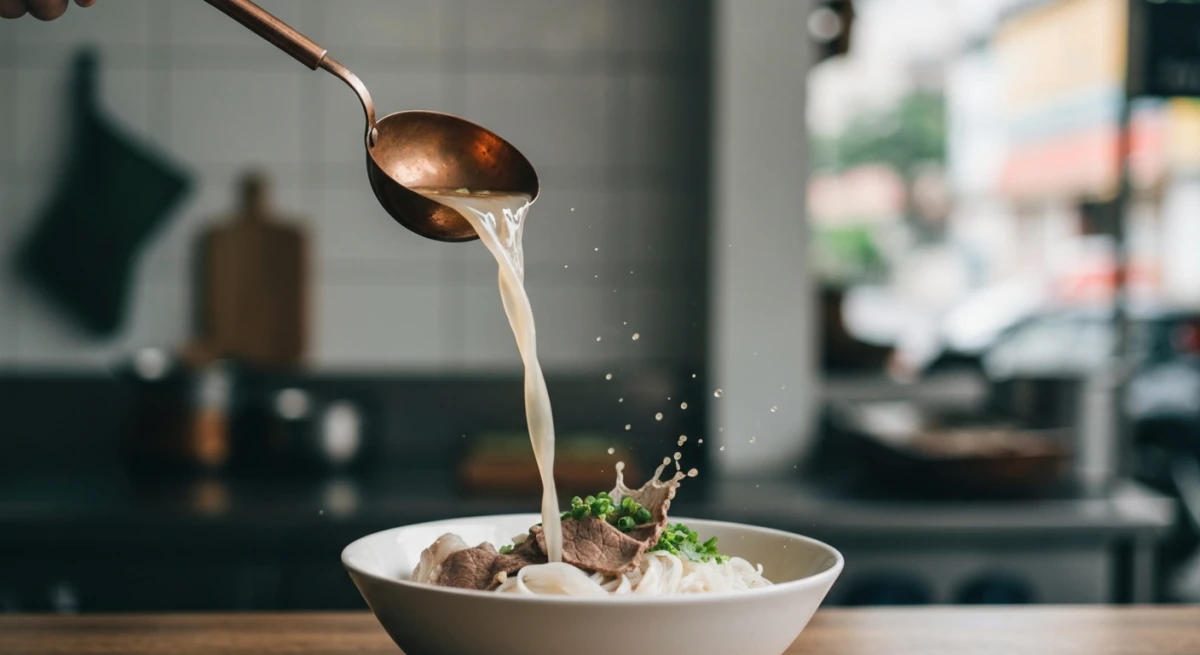
While phở originated in the North, Ho Chi Minh City has spent decades putting its own decadent spin on this national noodle soup. Southern-style phở is sweeter, bolder, and significantly more chaotic than its minimalist northern cousin. The broth, simmered for up to 24 hours with beef bones, charred ginger, onions, and an aromatic blend of star anise, cinnamon, and black cardamom, is served piping hot over flat rice noodles. What sets the Saigon experience apart is the mountain of fresh herbs (rau thơm) served alongside: Thai basil, saw-tooth herb (ngo gai), and rice paddy herb (ngo om). You are expected to tear these herbs by hand, drop them into the broth, squeeze in fresh lime juice, and add a dollop of sweet hoisin and spicy sriracha sauce.
Bún Thịt Nướng (The Perfect Harmony of Warm and Cool)
If you ask local Saigonese for their favorite daily lunch, many will point you to a smoke-filled alleyway serving bún thịt nướng. This dish is a beautiful, room-temperature noodle bowl that strikes a perfect balance of flavors. The base consists of cold, springy rice vermicelli noodles and a bed of shredded lettuce, cucumber, and fresh herbs. This is topped with hot, caramelized grilled pork shoulders (marinated in lemongrass, fish sauce, garlic, and sugar), crispy deep-fried spring rolls (chả giò), a spoonful of scallion oil (mỡ hành), and a generous sprinkle of crushed peanuts. The entire bowl is then drenched in nước chấm—a sweet, tangy, and slightly spicy fish sauce dressing. Every bite is a harmonious blend of warm and cool, crunchy and soft, sweet and savory.
Bò Lá Lốt (Beef Wrapped in Wild Betel Leaves)
Few street food sights in Ho Chi Minh City are as visually arresting as a row of bò lá lốt skewers sizzling over glowing red coals. Minced beef, seasoned with garlic, shallots, lemongrass, and five-spice powder, is tightly wrapped into cylindrical parcels using wild betel leaves (lá lốt). As they grill, the essential oils in the betel leaves heat up, imparting a deeply smoky, herbaceous, and slightly medicinal aroma to the beef, while keeping the meat incredibly juicy inside. To eat it, you grab a sheet of translucent rice paper, layer it with fresh lettuce, wild herbs, green bananas, sour starfruit, and a roll of the grilled beef, wrap it all up tightly, and dip it into mắm nêm—a pungent, fermented pineapple-anchovy sauce that is sweet, sour, and intensely savory.
Ốc (The Legendary Snail and Shellfish Culture)
In Saigon, eating ốc (which translates literally to 'snails' but refers broadly to all kinds of sweet and saltwater shellfish) is not just a meal; it’s a lifestyle. When the sun goes down, locals gather at lively roadside stalls to drink local beer (Bia Sài Gòn) and feast on an endless parade of shellfish. The variety is staggering: mud creepers simmered in sweet, rich coconut cream (ốc len xào dừa), sweet snails stir-fried with salted egg yolk sauce (ốc hương hoàng kim), clams steamed with fragrant lemongrass and chili (nghêu hấp sả), and grilled scallops topped with scallion oil and toasted peanuts. It is a loud, communal, and tactile dining experience where you use safety pins to pluck snail meat from their shells and lick rich, savory sauces off your fingers.
Bánh Xèo (The Sizzling Giant Crepe)
The name bánh xèo translates to "sizzling cake," named after the dramatic hiss the rice batter makes when poured into a roaring-hot, oil-slicked skillet. The batter, colored a brilliant yellow with turmeric powder and enriched with rich coconut milk, is spread incredibly thin. It is then stuffed with pork belly, sweet river shrimp, mung beans, and a handful of fresh bean sprouts, then folded in half. The result is a massive, lacy, and shatteringly crisp crepe. To eat it, you tear off a piece of the hot crepe, wrap it inside a large, bitter mustard leaf along with an assortment of fresh herbs, and dip it into a sweet, garlicky fish sauce.
Hủ Tiếu Nam Vang (The Melting Pot Noodle Soup)
While Phở dominates the global narrative, hủ tiếu is arguably the true noodle king of Southern Vietnam. Originating from the Cambodian pork-based noodle soup (Kuy teav) and heavily adapted by Chinese immigrants in the Mekong Delta, hủ tiếu Nam Vang is a spectacular fusion of flavors. It can be ordered "wet" (with a rich, clear pork bone broth poured over chewy tapioca noodles) or "dry" (where the noodles are tossed in a savory, slightly sweet soy-based sauce and served with a bowl of broth on the side). The bowl is loaded with a treasure trove of toppings: minced pork, sliced pork heart, quail eggs, succulent prawns, and sautéed garlic chives, creating a savory depth that is deeply satisfying.
2. Saigon Street Eats Tour Review: Is It Worth It?
For many travelers, diving headfirst into the chaotic sensory overload of Ho Chi Minh City’s street food scene can be deeply intimidating. How do you know which stalls are hygienic? How do you overcome the language barrier? What exactly are you ordering?
This is where guided food tours come in, and none are more famous or highly regarded than the team at Saigon Street Eats. Founded and operated by the dynamic Australian-Vietnamese husband-and-wife duo, Barbara and Vu, this boutique tour company has spent years helping travelers bypass tourist traps and eat like true locals.
The Founders' Edge
What makes Saigon Street Eats stand out in a sea of commercial tour operators is its deeply personal, culturally immersive approach. Vu, who grew up in post-war Vietnam, brings a wealth of generational culinary knowledge, an intimate understanding of medicinal herbs, and a raw, honest perspective on the country's modern history. Barbara, a former journalist, brings an analytical yet deeply empathetic storyteller's eye to the experience. When you join one of their tours, you aren't just a customer being shuttled between pre-vetted food stalls; you are hanging out with knowledgeable friends who love to eat and laugh.
The Signature Tour Packages
Saigon Street Eats focuses on intimate, small-group walking tours designed to get you off the beaten path and into the heart of local residential neighborhoods (hẻm—alleys). Here is a breakdown of their primary offerings:
- The Pho Trail (Morning Walking Tour): This tour takes you far away from the backpacker bubble of District 1. You'll begin your morning exploring vibrant, bustling local wet markets, watching vendors negotiate over fresh produce and live seafood. Along the way, you'll sample local breakfast staples, learn about the historical evolution of Phở, and conclude with a peaceful picnic in the courtyard of a quiet neighborhood temple.
- The Seafood Trail (Evening Snail Adventure): If you want to experience the legendary snail and beer culture of Saigon, this is the tour to book. Guides lead you deep into the heart of District 4's famous Vinh Khanh Street. You'll sit at roadside metal tables, learn the delicate art of extracting various shellfish from their shells, and taste exquisite dishes cooked in rich, savory sauces like salted egg yolk, chili-salt, and sweet tamarind.
- Street Food 101 (Evening Tour): Designed as the ultimate crash course for first-time visitors, this evening walking tour guides you through a maze of local food alleys to sample a wide cross-section of Southern Vietnamese classics, from bánh xèo to bò lá lốt. It is the perfect introduction to build your confidence for the rest of your trip.
Is It Worth the Price?
While booking a tour is naturally more expensive than wandering the streets alone, the value lies in the curated access, historical storytelling, and peace of mind. You are paying for food security, deep cultural insights you cannot find in a guidebook, and access to hyper-local vendors who have spent decades mastering a single dish. For solo travelers, families, or anyone wanting a rich historical context alongside their meals, Saigon Street Eats is an absolute must-booking.
3. Mapping the Flavors: Best Food Districts and Alleys
If you choose to explore the city's culinary wonders on a self-guided adventure, it helps to understand how Ho Chi Minh City's geography influences its flavors. The city is divided into several numbered and named districts, each with its own distinct culinary identity. Here is a curated guide to the best neighborhoods for street food hunting:
District 1: The Accessible Gateways
While District 1 is the high-rent, tourist-heavy center of the city, it still hides incredible, historic pockets of authentic street food if you know where to look.
- Tôn Thất Đạm Market: Nestled in the shadow of ultra-modern skyscrapers, this old-school street market is home to some of the oldest street food stalls in the city. Here you can find phenomenal bowls of hủ tiếu and crispy roast pork belly.
- Cô Giang Street: Located near the southern edge of District 1, Cô Giang is a bustling, smoke-heavy corridor famous for night-time dining. It is one of the best central locations to sample bò lá lốt and hủ tiếu nhân.
District 3: The Snack Paradise
District 3 strikes a wonderful balance between the convenience of District 1 and the raw, authentic local life of the outer districts. It is characterized by leafy, tree-lined streets and historic French colonial villas.
- Nguyễn Thượng Hiền Street: This narrow, frenetic street is legendary among local students and snack lovers. Known as the "snack street" of Saigon, it is packed shoulder-to-shoulder with small carts specializing in bánh tráng trộn (rice paper salad mixed with quail eggs, dried beef, green mango, and fresh herbs), grilled skewers, and fresh fruit juices.
District 4: The Snail and Seafood Capital
Historically a gritty port district, District 4 has evolved into the undisputed culinary crown jewel of Saigon's night scene. It is a labyrinth of narrow alleys where the air is thick with the scent of charcoal smoke and garlic.
- Vĩnh Khánh Street: When night falls, this street transforms into a loud, energetic, and sensory-defying seafood street. It is home to dozens of competing ốc (snail) restaurants. Pull up a tiny plastic chair, order a bucket of local beer, and start ordering plates of grilled scallops, garlic butter sweet snails, and lemongrass clams.
District 5: Cholon (Chinatown)
Cholon is Vietnam's largest Chinatown, a historic area where Chinese immigrants settled centuries ago. The food here is a spectacular, century-old fusion of Cantonese techniques and Southern Vietnamese ingredients.
- Hà Tôn Quyền Street: If you love dumplings, this is your paradise. The street is lined with historic family-run shops serving exquisite handmade wontons and pork dumplings in rich, clear pork broths.
- Phùng Hưng Market Alleyways: A bustling morning wet market where you can find unique Chinese-Vietnamese fusion dishes, such as hủ tiếu mì (egg noodles with roasted duck or char siu pork) and steamed herbal puddings.
4. Your Self-Guided Saigon Street Food Tour Itinerary
If you want to spend a day tasting the best of saigon street eats ho chi minh on your own terms, this carefully curated afternoon-to-evening walking itinerary will take you through some of the city's most authentic, safe, and mouth-watering food spots without requiring hours of driving.
Phase 1: The 3:00 PM Afternoon Awakening (District 1)
Start your food journey in the late afternoon when the heat of the day begins to break and street vendors start setting up their stalls.
- The Destination: Bánh Mì Hồng Hoa (62 Nguyễn Văn Tráng, District 1).
- The Bite: Order a classic bánh mì thịt nguội (pork cold cuts). The bread here is baked fresh continuously throughout the day, ensuring a warm, shatteringly crisp crust. Eat it standing up on the sidewalk, watching the afternoon traffic begin to build.
- The Drink: Walk a few doors down and grab a traditional cà phê sữa đá (Vietnamese iced coffee with sweet condensed milk) from a street cart. The thick, chocolatey robusta coffee provides the perfect sweet, caffeinated jolt to power your walking tour.
Phase 2: The 5:30 PM Sunset Grazing (District 3)
Take a short, leafy 15-minute walk or a quick Grab scooter ride into District 3 to experience the sensory magic of Saigon's golden hour.
- The Destination: Bánh Xèo Ăn Là Ghiền (74 Sương Nguyệt Ánh, District 3) or a nearby street vendor on Nguyễn Thượng Hiền.
- The Bite: If you opted for Nguyễn Thượng Hiền, hunt down a cart selling bánh tráng trộn (mixed rice paper salad) and eat it out of a plastic bag using chopsticks. If you prefer a sit-down experience, order a massive, crispy bánh xèo loaded with pork and shrimp. Wrap pieces of the lacy crepe in fresh mustard greens and enjoy the explosion of fresh, herbal flavors as the sun goes down.
Phase 3: The 8:00 PM Seafood Feast (District 4)
Cross the bridge into District 4 to experience the legendary nighttime energy of Saigon's snail and seafood culture.
- The Destination: Ốc Oanh (534 Vĩnh Khánh, District 4).
- The Bite: This is one of the most famous snail joints on Vinh Khanh Street, and for good reason. Order a plate of ốc hương hoàng kim (sweet snails stir-fried in a rich, velvety salted egg yolk sauce) and make sure to order a loaf of plain bánh mì to dip into the decadent sauce. Follow this with nghêu hấp sả (clams steamed in a fiery lemongrass broth) and sò điệp nướng mỡ hành (scallops grilled with green onion oil and crushed peanuts). Wash it all down with an ice-cold Saigon Red beer.
5. Street Food Safety and Etiquette: How to Eat Like a Local
One of the most common anxieties for travelers exploring street food in Southeast Asia is the dreaded "Saigon belly" (food poisoning). However, by following a few simple rules of local etiquette and observation, you can enjoy the incredible street food of Ho Chi Minh City with complete peace of mind.
The "High-Turnover" Rule
The golden rule of street food safety is simple: follow the crowds. If a stall is packed with local families and young students, it is a guarantee of two things: the food is delicious, and the ingredients are fresh. High turnover means meat and seafood do not sit out in the humid tropical air; they are cooked and served almost immediately after preparation. Avoid quiet, empty stalls where the food looks like it has been sitting under glass cases for hours.
Demystifying the Ice (Đá)
A common myth is that travelers should completely avoid ice in Vietnam. In reality, almost all commercial ice in Ho Chi Minh City is manufactured in clean, filtered-water factories and delivered in large blocks to street stalls. This ice is easily recognizable by its tubular shape with a hole through the center. If you see this clean, cylindrical ice, it is perfectly safe to drink. The only ice you should avoid is large, irregular, hand-crushed blocks of ice, which may have been transported or handled hygienically.
Chopstick and Utensil Hygiene
When you sit down at a street stall, you will usually find a container of chopsticks and spoons on the table, alongside a box of tissues. It is standard local practice to take a tissue, wipe down your chopsticks and spoon before eating, and discard the tissue on the floor (most street stalls have a dirt or concrete floor where trash is swept up at the end of the shift). Many stalls also provide a small dish of fresh lime wedges; squeezing a bit of lime juice over your utensils is a great, natural way to sanitize them.
Embrace the Side Herbage
When you order soups like phở or hủ tiếu, you will be handed a massive plate of raw, leafy green herbs. Do not be afraid to eat them! These herbs are meticulously washed by vendors. To enjoy them safely, plunge them directly into your piping-hot soup broth for a few seconds; the intense heat of the broth will instantly sterilize them while slightly cooking the greens and releasing their fragrant essential oils into your bowl.
6. Frequently Asked Questions (FAQ) About Saigon Street Food
Is it safe to eat street food in Ho Chi Minh City?
Yes, eating street food in Saigon is generally very safe. Because dishes are cooked at high heat right in front of you, bacteria does not have a chance to grow. To minimize risk, choose stalls with high customer turnover, ensure your food is served piping hot, and stick to filtered cylindrical ice.
How much does a typical street food meal cost in Saigon?
Street food in Ho Chi Minh City is incredibly affordable. A bowl of world-class phở or a plate of bún thịt nướng typically costs between 40,000 to 70,000 VND ($1.60 to $2.80 USD). A fresh bánh mì on the street usually ranges from 20,000 to 45,000 VND ($0.80 to $1.80 USD).
What is the most famous street food street in Ho Chi Minh City?
Vinh Khanh Street in District 4 is arguably the most famous street food street in the city, renowned for its energetic night-time snail and seafood stalls. For snacks and light bites, Nguyen Thuong Hien Street in District 3 is the top choice.
Should I book a guided street food tour like Saigon Street Eats?
If you are visiting Saigon for the first time, have dietary restrictions, or want to understand the deep cultural and historical stories behind the food, booking a guided tour like Saigon Street Eats is highly recommended. It offers a safe, curated, and deeply educational introduction to the city's food culture.
Can vegetarians find good street food in Saigon?
Absolutely. Vietnam has a rich Buddhist tradition, meaning vegetarian food (ăn chay) is widely available and incredibly delicious. Look out for signs that say "Quán Chay" or "Cơm Chay". You can enjoy vegetarian versions of phở, bánh mì, and hủ tiếu that utilize flavorful mushrooms, tofu, and mock meats.
The Sidewalk is Your Table
Ho Chi Minh City is a city that reveals its true self to those who are willing to pull up a tiny plastic stool, brave the chaotic swarm of motorbikes, and eat with an open mind. From the comforting warmth of a morning bowl of phở to the loud, beer-fueled camaraderie of a midnight snail feast in District 4, the street eats of Saigon offer a culinary experience unmatched anywhere else in the world. Whether you choose to dive deep into the culture with a guided Saigon Street Eats tour or set out on your own self-guided sensory quest, the sidewalks of Saigon are ready to welcome you to the feast.