Stepping onto the chaotic streets of Ho Chi Minh City, you are immediately enveloped in a sensory overload unlike anywhere else on earth. The roar of a thousand motorbikes mixes with the aromatic smoke of sweet lemongrass pork grilling over charcoal, while the rhythmic clatter of metal spoons hitting plastic bowls serves as the city’s true heartbeat. If you are seeking the ultimate saigon must eat culinary adventure, you must embrace eating as a full-contact sport, played out on tiny plastic stools along bustling sidewalks. This comprehensive Saigon food guide bypasses the typical tourist traps to deliver the authentic, deeply flavorful, and unforgettable culinary treasures that define Southern Vietnam.
1. The Southern Food Philosophy: Bold, Sweet, and Herb-Heavy
To master the saigon must eat landscape, you must first understand the sharp culinary divide between Northern and Southern Vietnam. While Hanoi's cuisine is steeped in ancient tradition, favoring subtle, clean, and balanced flavors, Saigon’s food is a wild, unapologetic celebration of abundance. Influenced by its tropical climate, rich agricultural surroundings, and historical waves of immigration, Southern Vietnamese food leans distinctly sweeter, richer, and far more herb-laden.
In Saigon, sugar is treated as a foundational seasoning, and creamy coconut milk frequently enriches savory dishes. Furthermore, no meal in the south is complete without the "rổ rau sống"—a towering basket of fresh, raw herbs containing Thai basil, mint, coriander, culantro, fish mint, lettuce, and crunchy banana flowers. Here, you are not a passive diner; you are an active chef at the table, customizing each dish with fresh lime wedges, fiery birds eye chilies, sriracha, and savory fermented fish sauce (nước mắm) to craft your perfect bite.
2. The Iconic Masterpieces: Saigon's Legendary Classics
No food journey in Ho Chi Minh City is complete without conquering the iconic foundational dishes that locals eat on a daily basis. Here are the absolute legends of the southern table.
Cơm Tấm (Broken Rice): The Soul of the Southern Lunch
Originally created by farmers who salvaged fractured, unsellable "broken" rice grains after the milling process, Cơm Tấm has evolved into a beloved staple. These tiny grains absorb moisture differently, creating a uniquely fluffy, slightly dry texture that acts as the perfect canvas for savory toppings.
A standard plate of Cơm Tấm Sườn Nướng is an architectural marvel. It features a smoking, tender pork chop marinated in lemongrass, garlic, honey, and fish sauce, grilled over open charcoal until caramelized. This is accompanied by Chả Chưng (a savory steamed egg-and-pork loaf studded with wood ear mushrooms and glass noodles), Bì (shredded pork skin tossed in toasted rice powder), and a perfectly fried egg with a runny yolk. The dish is finished with a drizzle of green scallion oil (mỡ hành) and served alongside sweet-and-spicy garlic-chili fish sauce.
- Where to eat: Skip the massive commercial chains and visit Cơm Tấm Ba Ghiền (84/115 Nguyễn Thanh Tuyền, Phú Nhuận District). Their enormous, flame-licked pork chops are legendary. For an authentic late-night experience, try Cơm Tấm Bãi Rác (77 Lê Quốc Hưng, District 4), celebrated for high-quality toppings served right next to a vibrant local market alley.
Phở Nam (Southern-Style Pho): A Rich and Herb-Filled Bowl
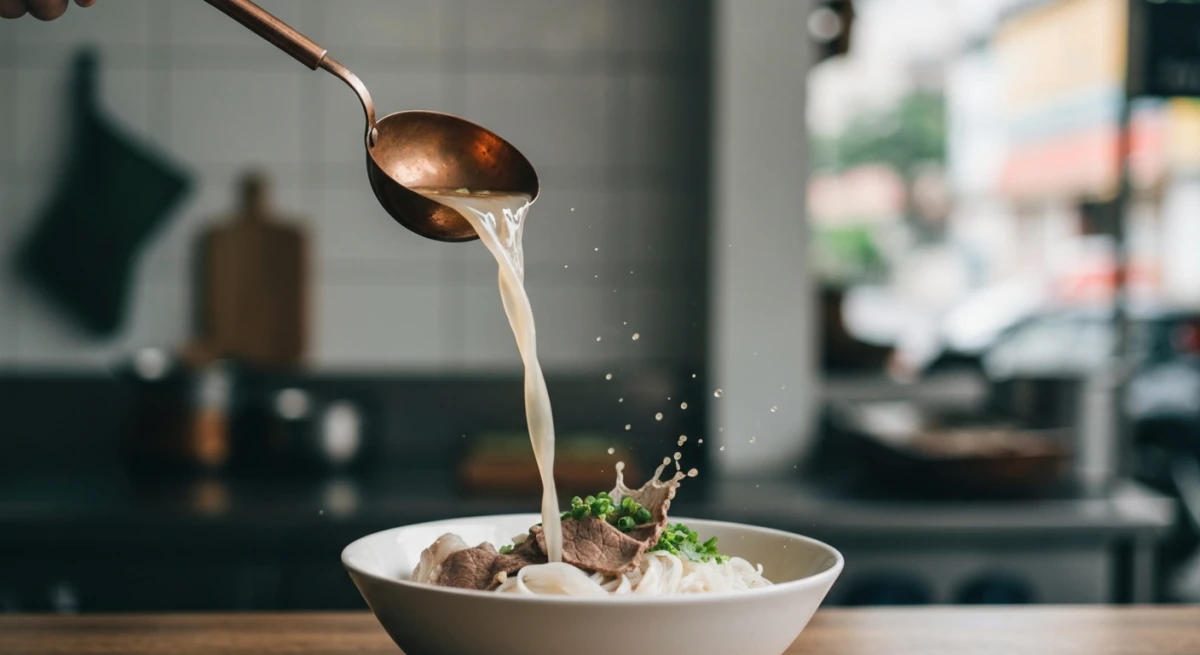
While Pho originated in the North, Saigon has transformed this national noodle soup into an herby, deeply aromatic beast. Unlike the minimalist, clear broth of Hanoi Pho, Southern Phở Nam features a sweeter, deeply complex broth simmered for twelve to fifteen hours with beef bones, charred ginger, onions, star anise, cinnamon, clove, and coriander seeds.
The true magic of eating Southern Pho lies in the personalization. When your steaming bowl arrives, take a handful of sweet Thai basil and culantro, tear them by hand, and submerge them in the piping hot liquid. Squeeze in a fresh lime wedge, throw in a couple of sliced birds eye chilies, and prepare your dipping saucer. Mix equal parts sweet hoisin sauce (tương đen) and sriracha chili sauce to dip your tender cuts of rare beef (tái), flank (nạm), and springy beef meatballs (bò viên).
- Where to eat: For an absolute masterclass in Southern broth-making, visit Phở Lệ (413-415 Nguyễn Trãi, District 5) in Saigon's historic Chinatown (Chợ Lớn). Their broth is incredibly robust, sweet, and heavily spiced. Another spectacular option is Phở Hòa Pasteur (260C Pasteur, District 3), famous for its lively, historic atmosphere.
Bánh Mì: The Perfection of Texture and Contrast
The globally beloved Bánh Mì is a brilliant example of French-Vietnamese culinary fusion. The French introduced the baguette, pâté, and mayonnaise, but Vietnamese cooks lightened the bread by mixing rice flour with wheat flour. This modification resulted in a baguette that is ultra-crispy on the outside, feather-light on the inside, and completely hollow—making it the ultimate vessel for savory fillings.
A classic Bánh Mì Thịt (pork baguette) is carefully layered to ensure a perfect bite every time. The interior of the warm baguette is smeared with rich pork liver pâté and a generous swipe of house-made egg yolk mayonnaise (bơ). Next, the vendor packs in a variety of cured cold cuts, including Vietnamese ham (chả lụa) and headcheese. To cut through the fat, the sandwich is finished with crisp cucumber strips, pickled daikon and carrots (đồ chua), fresh cilantro, and a long, fiery slice of green chili, all seasoned with a dash of savory soy sauce.
- Where to eat: While tourists wait in massive queues at Bánh Mì Huỳnh Hoa, locals prefer a lighter, better-balanced sandwich. Head to Bánh Mì Hồng Hoa (54 Nguyễn Văn Tráng, District 1) for a beautifully balanced, fresh-baked baguette. Alternatively, try Bánh Mì Bảy Hổ (19 Huỳnh Khương Ninh, District 1), which has been using its secret family pâté recipe since the 1930s.
Bún Thịt Nướng: The Ultimate Cold Noodle Salad
When the intense Saigon humidity makes hot noodle soup unappealing, Bún Thịt Nướng is the ultimate solution. This refreshing bowl consists of cold rice vermicelli noodles topped with warm, smoky grilled pork, crispy fried spring rolls (chả giò), a mountain of fresh herbs, shredded lettuce, bean sprouts, and pickled vegetables.
The bowl is sprinkled with crushed toasted peanuts and fragrant scallion oil. To eat like a local, pour the accompanying cup of light, sweet-and-sour garlic-chili fish sauce directly over the bowl, grab your chopsticks, and toss everything together. Each bite offers a sensational contrast of warm, smoky meat, refreshing cold noodles, and sweet, tangy dressing.
- Where to eat: Visit Bún Thịt Nướng Kiều Bảo (139 Đề Thám, District 1). This humble spot serves massive, incredibly cheap bowls packed with perfectly charred pork and crispy spring rolls, making it a favorite for students and budget-conscious travelers.
3. Deep-Dive Street Food: Shellfish, Sizzling Plates, and Late-Night Cravings
Beyond the globally famous staples, Saigon's food culture truly shines after dark. When the sun goes down, the sidewalk dining scene transforms into an energetic, neon-lit playground.
Ốc (Street Snail Culture): The Ultimate Social Culinary Ritual
To truly eat like a local, you must experience "Ăn Ốc"—the culture of eating sea snails, clams, and other shellfish. This is not just dining; it is a beloved social pastime. As night falls, entire side streets fill with tables, small gas burners, and iced buckets of local beer.
The variety of shellfish is astounding, and each is prepared in a rich, flavorful sauce. Try ordering Ốc Hương (sweet snail) cooked in a rich, creamy salted egg yolk sauce (sốt trứng muối), which you must mop up with a crusty baguette. Order Sò Lông (hairy clams) grilled over charcoal with scallion oil and crushed peanuts, or Ốc Móng Tay (razor clams) stir-fried with garlic and fresh water spinach (rau muống).
- Where to eat: For a truly raw, high-energy atmosphere, head to Ốc Như (212B/D90 Nguyễn Trãi, District 1), tucked deep inside a residential alleyway. For a highly accessible but fiercely authentic option in District 1, visit Ốc Khánh (25/5 Nguyễn Bỉnh Khiêm, District 1).
Bò Né (Dodging Beef): The Sizzling Cast-Iron Breakfast
If you need a high-octane breakfast to power you through a day of city exploration, Bò Né is the answer. Literally translating to "dodging beef"—due to the spitting grease from the hot cast-iron plate when it is served—this is the Vietnamese interpretation of steak and eggs.
Tender, thinly sliced beef steak, a rich dollop of pork liver pâté, a sunny-side-up egg, and a block of creamy Laughing Cow cheese are cooked directly on a cow-shaped iron skillet over high heat. It is served sizzling hot, accompanied by a fresh baguette and a side salad in a light vinaigrette. To eat it, tear off a piece of bread, smear it with the melting pâté and cheese, dip it in the runny egg yolk, and wrap it around a piece of savory beef.
- Where to eat: Bò Né Thanh Tuyền (14 Nguyễn Trường Tộ, District 4) is a highly rated local favorite where you can enjoy this sizzling feast alongside neighborhood residents.
Bột Chiên: The Quintessential Late-Night Comfort Food
Originating from the Chinese-Vietnamese community in Chinatown, Bột Chiên is a simple yet incredibly addictive street food classic. Thick cubes of steamed rice flour cake are pan-fried on a massive, flat iron griddle until they develop a deeply crispy, golden-brown crust while remaining soft and chewy on the inside.
The vendor then cracks one or two eggs over the crispy cakes, scattering green onions on top. The dish is served hot with a side of crunchy pickled green papaya to cut through the oil, accompanied by a sweet, diluted black soy sauce mixed with chili. It is the ultimate comfort food after a long night of exploring the city.
- Where to eat: Head to Bột Chiên Đạt Thành (277 Võ Văn Tần, District 3), a highly popular local spot that has perfected the balance of crispy-chewy textures.
4. Rich and Tangy Southern Soups: Hủ Tiếu and Bún Riêu
While Pho gets all the international attention, Saigon's noodle soup scene is incredibly diverse, offering rich regional specialties that reflect the city's multicultural history.
Hủ Tiếu Nam Vang: The Cambodian-Chinese Melting Pot Noodle
Hủ Tiếu Nam Vang is a brilliant culinary reflection of Saigon's diverse demographic history. Originally a Cambodian-Chinese dish (Nam Vang is the Vietnamese name for Phnom Penh), it was adapted by Southern Vietnamese cooks to suit the local taste profile.
The backbone of this dish is a sweet, light broth brewed from pork bones, dried shrimp, and squid. The toppings are exceptionally generous: minced pork, sliced pork loin, poached shrimp, quail eggs, pork liver, and heart, served with chewy, translucent tapioca noodles.
You can order this dish in two styles:
- Hủ Tiếu Nước (Soup style): The noodles and rich toppings are served submerged in the hot pork broth.
- Hủ Tiếu Khô (Dry style): The chewy noodles are tossed in a savory, slightly sweet dark soy sauce blend. The rich meat and seafood toppings are arranged on top, and the hot broth is served in a separate bowl on the side. This dry version is highly recommended as it highlights the unique, chewy texture of the tapioca noodles.
- Where to eat: Visit Hủ Tiếu Nhân Quán (122D Cách Mạng Tháng 8, District 3), famous for its exceptionally fresh ingredients and rich, savory sauce for the dry version.
Bún Riêu: The Tangy, Umami-Packed Crab Masterpiece
Bún Riêu is a rustic, incredibly complex crab and tomato noodle soup that demonstrates the Vietnamese mastery of savory-and-sour flavor balances. The soup’s rich red color comes from stewed tomatoes and annatto seed oil. The broth is a light, pork-based stock infused with freshwater crab paste, which floats in fluffy, cloud-like mounds (riêu cua) on the surface.
Accompanying the crab clouds are fried tofu cubes, juicy tomatoes, Vietnamese pork rolls (chả lụa), and occasionally a block of congealed pig’s blood (huyết). It is served with thin rice vermicelli noodles and a mountain of fresh split water spinach stems, banana flower, and herbs. To complete the dish, a small spoonful of pungent fermented shrimp paste (mắm tôm) is swirled into the hot broth, transforming it into an earthy, umami-rich masterpiece.
- Where to eat: Bún Riêu Gánh (4 Phan Bội Châu, District 1), located right opposite the East Gate of Ben Thanh Market, has been serving its famous, slightly sweet southern-style Bún Riêu for over forty years, making it an iconic culinary landmark.
5. Navigating Saigon's Street Food Scene: Etiquette and Safety Tips
Eating street food in Saigon is an exhilarating adventure, but it can be intimidating for first-time visitors. Follow these insider tips to navigate the street food scene like a seasoned pro:
- Check the Turnover (The 'Lượng Khách' Rule): The best way to judge the safety and quality of a street stall is by its crowd. Look for stalls packed with local families and young students. A high turnover of customers means the ingredients are exceptionally fresh and do not sit around in the heat.
- Utensil Hygiene: When you sit down at a street stall, you will find a container of chopsticks and spoons on the table. It is standard practice to grab a clean paper napkin (or the provided wet wipe) and thoroughly wipe down your chopsticks and spoon before eating.
- The 'Khăn Lạnh' (Wet Wipe) Charge: At most local restaurants and street stalls, the packaged wet wipes placed on your table are not free. They usually cost between 2,000 to 5,000 VND (about $0.10 to $0.20 USD) each. If you use one, it will be added to your final bill. If you don't want to pay, simply bring your own tissues or use the dry napkins provided.
- Embrace the Ice (Trà Đá): Many travelers are terrified of drinking ice in Vietnam. However, in Saigon, ice is produced commercially in modern factories using purified water and delivered daily in large blocks. It is generally very safe to drink the ubiquitous 'Trà Đá' (iced green tea), which is served for a nominal fee at almost every food stall.
- How to Pay: Always keep small cash on hand. Most street food stalls do not accept credit cards. Keep bills of 10,000, 20,000, and 50,000 VND handy, as paying for a 30,000 VND meal with a 500,000 VND bill can cause transactional friction for small vendors.
6. Frequently Asked Questions (FAQ)
Is street food in Saigon safe for tourists?
Yes, street food in Saigon is generally very safe. To minimize any risk of an upset stomach, stick to busy stalls with high customer turnover, ensure your food is cooked hot to order, and always wipe down your utensils before eating.
What is the average cost of street food in Ho Chi Minh City?
Street food in Saigon is incredibly affordable. A typical bowl of noodles, a plate of broken rice, or a fresh Bánh Mì will cost anywhere between 30,000 VND and 80,000 VND (approximately $1.20 to $3.25 USD).
What is the absolute must eat food in Saigon if I only have one day?
If you are short on time, prioritize Cơm Tấm (Broken Rice) for lunch and a classic Bánh Mì as a quick street side snack. These two dishes represent the ultimate culinary identity of Ho Chi Minh City.
How do I find authentic food stalls instead of tourist traps?
To experience authentic flavors, step away from the immediate tourist hubs of District 1 (like Bui Vien or Ben Thanh Market). Head into neighboring residential districts like District 3, District 4, District 10, or Phú Nhuận, where food stalls cater primarily to local residents.
7. Conclusion
Saigon is a city that never stops moving, and its culinary scene is the beating heart that fuels this endless energy. From the smoky charcoal grills on District 4 sidewalks to the complex, simmering broths in Chinatown’s historic noodle shops, eating your way through Ho Chi Minh City is an unforgettable sensory adventure. By stepping off the well-trodden tourist paths and pulling up a tiny plastic stool alongside local residents, you will discover that the true soul of Saigon is best experienced one delicious bowl at a time. Pack your appetite, leave your culinary comfort zone behind, and dive into the ultimate Saigon must eat journey today.