For first-time visitors, arriving in Ho Chi Minh City (still warmly referred to by locals as Saigon) is a sensory overload. The first thing you will notice is the traffic: an endless, synchronized ocean of motorbikes flowing smoothly around cars, pedestrians, and roundabouts. It looks like chaotic, high-stakes choreography. Yet, beneath the roaring engines and honking horns lies the true rhythm of Saigon. The motorbike is not just a mode of transport here; it is the lifeblood of the city's cultural, social, and culinary landscape.
If you want to truly experience the culinary magic of Vietnam's southern capital, there is no better way to do it than on a ho chi minh scooter food tour. Trying to navigate this sprawling metropolis on foot will restrict you to highly touristy, overpriced pockets of District 1. Taking a car or taxi will trap you in bumper-to-bumper traffic gridlock, preventing you from ever entering the narrow, labyrinthine alleyways where the best food is made. Sitting pillion behind an experienced local guide is the only way to dive deep into the city's authentic culinary hubs, zipping from district to district while feeling the cooling evening breeze on your face.
In this comprehensive guide, we will break down what makes a Saigon scooter food tour so unforgettable, the essential dishes you will sample, the vibrant districts you will explore, and the critical safety and licensing factors that most travel blogs completely fail to mention.
Why a Scooter Tour is the Ultimate Way to Experience Saigon
Saigon is a city built on hẻm—the Vietnamese word for the narrow, winding alleys that spiderweb off the main roads. Over 70% of Saigon's residents live down these alleyways, and it is here, far from the polished storefronts of District 1, that the city's legendary culinary history is preserved.
These micro-neighborhoods are physically inaccessible to cars, meaning a taxi or private tour van cannot get you anywhere near the best food. Walking, on the other hand, is exhausting in Saigon’s sweltering humidity. Sidewalks are frequently used for motorbike parking or outdoor seating, forcing pedestrians into active lanes of traffic. A walking tour limits your range to a single neighborhood, meaning you miss out on the incredible geographic diversity of Saigon's food scene.
By booking a ho chi minh scooter food tour, you get the best of both worlds. You gain the agility of a local on a motorbike, allowing you to breeze through traffic and zip directly down narrow, hidden alleys. At the same time, you cover vastly more ground, easily traveling between four or five distinct districts in a single evening. The sensation of riding pillion—safe in the hands of a professional driver—is an exhilarating attraction in its own right, offering a cinematic, front-row seat to the neon lights and energetic pulse of Saigon at night.
The Culinary Journey: What You’ll Eat on a Top-Tier Tour
The food of Southern Vietnam is distinct from its northern counterpart. Due to the abundant sunshine, warm climate, and historical trade routes, southern dishes tend to be sweeter, richer, and packed with fresh herbs, crisp vegetables, and coconut milk. A premium ho chi minh scooter food tour curated by food experts will typically guide you through a balanced menu of sweet, savory, salty, and texturally diverse local specialties. Here are the must-try dishes:
Bánh Xèo & Bánh Khọt (Sizzling Crepes and Savory Pancakes)
Your culinary journey often begins with these crispy, golden-yellow delights.
- Bánh Xèo: The name translates to "sizzling cake," referencing the loud hiss the rice batter makes when poured onto a scorching-hot pan. Colored with turmeric and cooked to a delicate crisp, it is folded over a filling of tender pork belly, whole shrimp, mung beans, and fresh bean sprouts.
- Bánh Khọt: Cooked in special cast-iron dimpled trays, these bite-sized, thick pancakes are crispy on the outside and creamy on the inside. They are typically topped with a single plump shrimp, green scallion oil, and a dusting of savory dried shrimp powder.
- The Art of Eating: You do not eat these with a fork. Instead, you tear off a piece of the crepe, place it onto a large leaf of wild mustard green or lettuce, add fresh Vietnamese herbs like perilla, mint, and Thai basil, roll it up tightly into a wrap, and submerge it in a bowl of sweet-and-sour nước chấm (chili-garlic fish sauce).
Chuối Nếp Nướng (Grilled Banana Wrapped in Sticky Rice)
This humble street food is a masterclass in contrasting textures and temperatures. A ripe, sweet banana is encased in a layer of glutinous sticky rice that has been infused with rich coconut cream. The entire parcel is wrapped in banana leaves and slow-grilled over hot coals until the outer rice layer develops a deeply caramelized, smoky, and crunchy crust. The vendor then slices it into rounds, drapes it in warm, sweet coconut sauce, and finishes it with toasted sesame seeds and chewy tapioca pearls.
Bánh Tráng Nướng (Vietnamese Pizza)
Originally hailing from the misty highlands of Da Lat, this snack has become the ultimate comfort food for Saigon's younger generations. A sheet of ultra-thin rice paper acts as the crust, toasted directly over an open charcoal grill. The street food vendor brushes it with melted butter and cracks fresh quail eggs directly onto the surface, spreading them evenly. It is then loaded with minced pork, dried shrimp, sliced green onions, and cheese, before being drizzled with sweet chili sauce and mayonnaise. It is crispy, smoky, rich, and incredibly satisfying.
Ốc (Vietnamese Snail Stalls)
To eat like a true Saigonese, you must visit a local ốc (snail and shellfish) stall. These open-air, high-energy joints are where locals gather to gossip, drink icy beers, and share communal plates of seafood. The variety is staggering, and the sauces are spectacular:
- Ốc Hương Sốt Trứng Muối: Sweet snail sautéed in a thick, velvety, salted egg yolk sauce that you will want to mop up with a fresh baguette.
- Sò Lông Nướng Mỡ Hành: Grilled blood cockles topped with fragrant, sizzling green scallion oil and crushed roasted peanuts.
- Ốc Móng Tay Xào Rau Muống: Razor clams flash-fried with heaps of garlic and crunchy water spinach.
Hủ Tiếu Nam Vang or Spicy Noodles
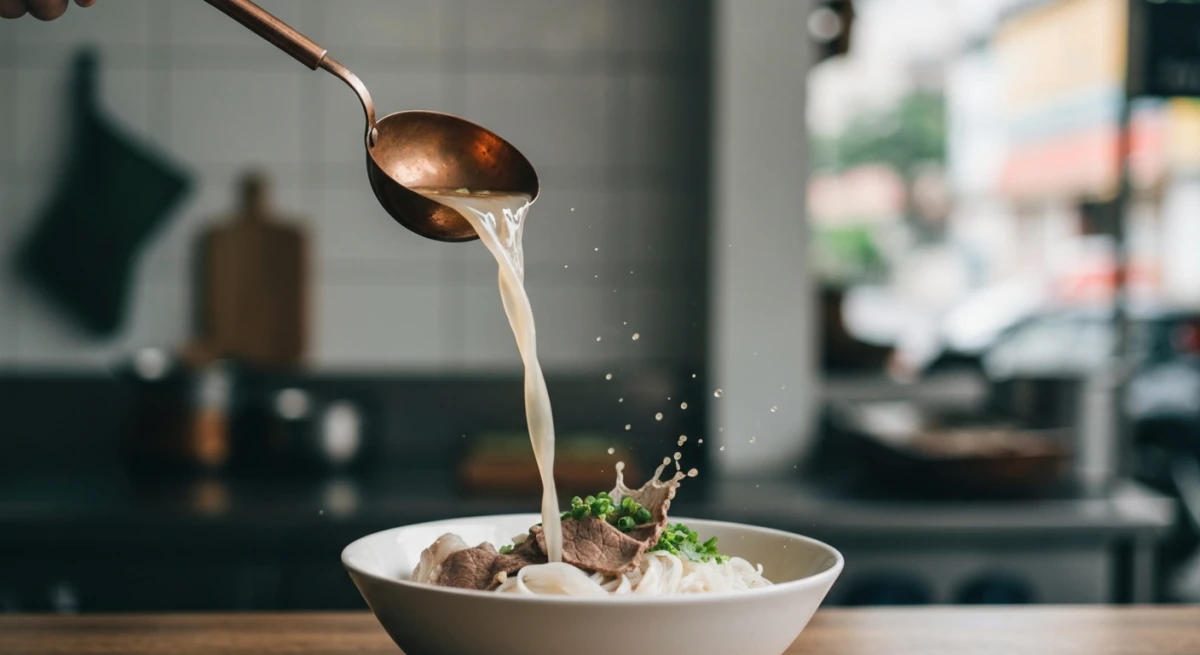
While tourists flock to Hanoi-style Pho, Saigon’s heart belongs to Hủ Tiếu. This multi-cultural dish has roots in Cambodia and China, featuring a clear, intensely sweet pork-bone broth. It is packed with chewy tapioca noodles, minced pork, sliced pork, quail eggs, shrimp, and fresh herbs like Chinese celery and chives. Some tours may alternatively feature Bún Bò Huế, a rich, spicy beef noodle soup from Central Vietnam infused with lemongrass and fermented shrimp paste.
Caramel Bánh Flan
To wrap up the night, you will enjoy a sweet dessert that highlights Vietnam’s historical French influence. Bánh Flan is a silky, smooth caramel custard cooked in small molds. In Saigon, it is served on a bed of crushed ice and drenched in strong, dark Vietnamese Robusta coffee. The bitter coffee perfectly cuts through the sweet, creamy custard, making for a refreshing, eye-opening final bite.
Navigating the Districts: Beyond District 1
While most tourists never leave District 1, a proper scooter food tour acts as your passport to the real, unvarnished neighborhoods of Saigon. Here is where you will ride:
District 3: The Historic Nguyễn Thiện Thuật Apartments
This district features tree-lined avenues, old colonial villas, and the historic Nguyễn Thiện Thuật apartment complex. Built in 1968 to house families displaced by war, these weathered, low-rise concrete buildings are a living museum of local community life. The ground level and narrow alleys surrounding the complex are packed with multi-generational food vendors serving iconic noodles and savory snacks.
District 4: The Snail and Seafood Haven
Once a rough, notorious port district run by local street gangs and dockworkers, District 4 has completely shed its old reputation to become the street food capital of Saigon. The density of food vendors here is incredible. Streets like Vĩnh Khánh are transformed every evening into giant, open-air seafood arenas filled with low plastic tables, billowing smoke from grills, and the lively clink of beer glasses (Một, Hai, Ba, Dô!).
District 10: Hồ Thị Kỷ Flower Market
This district is home to Saigon's largest 24-hour wholesale flower market. Wandering through the narrow lanes of Hồ Thị Kỷ feels like walking through a fragrant jungle of roses, lilies, orchids, and marigolds trucked in daily from Da Lat. Tucked right behind this floral paradise is a bustling pedestrian food street containing over a hundred stalls serving various Cambodian, Central, and Southern Vietnamese snacks.
District 5: Cholon (Chinatown)
Cholon is one of the oldest and largest Chinatowns in the world. As you cross into District 5, the architectural style shifts to traditional Chinese shophouses, ancient pagodas with burning incense coils, and Chinese medicine shops. The food here is a wonderful, decades-old fusion of Chinese-Cantonese cooking techniques and vibrant Vietnamese spices.
Safety, Licensing, and Choosing the Right Operator
Riding a motorbike in Saigon traffic is incredibly fun, but it is not without risk. While standard travel blogs tell you to "just book any top-rated tour on Viator," they miss crucial legal and safety facts that could put you in a highly vulnerable position.
The Travel Insurance Loophole
Under Vietnamese tourism law, any company operating tours for foreign travelers must hold a formal International Tour Operator License issued by the Vietnam National Authority of Tourism. To secure this license, the company must register a legal business entity and deposit a financial bond of 500 million VND (roughly $20,000 USD) with a state bank as a customer guarantee.
- The Problem: Over 90% of the scooter food tours you see advertised on social media or booking platforms are operated by unlicensed student groups, informal local collectives, or unregistered agencies.
- The Insurance Trap: Standard international travel insurance policies contain strict clauses regarding legal activities. If you ride pillion with an unlicensed tour operator and are involved in a traffic accident, your travel insurance company can legally deny your medical claim, leaving you with massive out-of-pocket bills.
- The Solution: Always confirm that your chosen tour company is a fully licensed International Tour Operator. Legitimate, premium companies will proudly display their license number on their website or happily provide it upon request.
Professional Drivers vs. Student Collectives
- Student Tours: Many budget tours are staffed by local university students. They are incredibly polite, passionate, and eager to practice their English, making for an enjoyable cultural chat. However, they rarely have professional safety training, structured emergency protocols, or third-party commercial liability insurance.
- Professional Companies: Premium operators employ professional, vetted drivers who undergo regular road safety training and defensive driving courses. These drivers are strictly monitored for speed and riding behavior.
Weight Limits and Vehicle Suitability
A common, yet rarely discussed, issue is passenger weight. Most standard scooters used by local students (like the Honda Vision) are small, lightweight, and designed for lighter frames. If you or a travel companion weighs over 100 kg (220 lbs) or is exceptionally tall, it can alter the scooter's center of gravity, making it unstable in tight traffic. Reputable, professional tour companies will actively ask for passenger weights during booking. They will match larger guests with stronger, highly experienced drivers and utilize heavy-duty scooters (like a Honda Lead, Honda SH, or vintage Vespa) that feature wider seats and more robust suspension systems.
Handling Dietary Restrictions
Many travelers worry that they cannot participate in a food tour due to dietary limits. Premium tour companies are fully equipped to handle this. They do not merely remove ingredients; they curate custom, parallel menus.
- Vegetarians/Vegans: Will be taken to stalls specializing in Buddhist vegetarian food (Quán Chay), serving dishes like crispy tofu-and-mushroom Bánh Xèo, or rich vegetable noodle soups with mock meats.
- Gluten-Free: Rice paper, rice noodles, and tapioca-based dishes are naturally gluten-free. Tour guides can easily swap out wheat-based baguettes or specific soy sauces to keep you safe.
- Halal: While challenging due to the heavy use of pork in Southern Vietnamese cuisine, specialized private tours can arrange seafood-only and beef-only stops at Halal-certified locations.
Essential Preparation and Survival Tips
To ensure your evening goes smoothly, follow these practical insider tips:
| Category | Practical Action Item |
|---|---|
| Footwear | Never wear flip-flops or open sandals. Your feet will sit close to hot metallic exhaust pipes and bustling traffic. Wear sturdy closed-toe shoes like sneakers. |
| Clothing | Wear comfortable, loose clothing. Avoid short skirts or tight dresses, as climbing onto a high scooter pillion seat requires flexibility. A light jacket or long-sleeved shirt is highly recommended to protect against the evening breeze and occasional soot. |
| Smartphone Safety | Do not hold your phone or camera out into the street while the scooter is moving to take photos. Drive-by phone snatching by opportunistic thieves can happen. If you want to film, use a secure chest mount, a wrist strap, or wait until the scooter is completely stopped. |
| Hydrate Wisely | Drink plenty of water beforehand, but keep an eye on the ice on tour. In Vietnam, if the ice served in your glass is a hollow, cylindrical tube (đá bi), it was made in an industrial factory using purified water and is completely safe to drink. Avoid crushed, irregular blocks of ice shaved from large blocks, as these are often transported in unhygienic conditions. |
| Pace Your Appetite | A great tour is a marathon, not a sprint. Do not eat a heavy meal for lunch, and do not feel pressured to clean every plate at the first two stops. Take small bites of the heavy carbs (rice and noodles) to ensure you have plenty of room for the street-side seafood and desserts later in the night. |
Frequently Asked Questions
Are scooter food tours in Saigon safe?
Yes, provided you book with a professional, licensed company. While the traffic flow looks chaotic to foreigners, it operates under a fluid, low-speed system where local riders are highly aware of their surroundings. Professional tour companies utilize strictly vetted drivers, enforce speed limits (typically under 40 km/h), provide high-quality helmets, and offer comprehensive safety briefings before the tour starts.
Do I have to drive the scooter myself?
No. You will sit comfortably as a pillion passenger on the back of the scooter. An experienced, English-speaking local guide will handle all the driving, allowing you to completely relax, enjoy the cool evening air, and take in the vibrant sights of Saigon.
What happens if it rains during the tour?
Saigon's wet season (May to November) features sudden, heavy downpours, usually in the late afternoon or early evening. Professional tour companies are fully prepared for this. They provide heavy-duty, reusable rain ponchos for all guests. Riding through a warm tropical rain shower is actually a fun, incredibly authentic local experience! If the downpour becomes too intense, the guides will simply alter the route to cozy, covered indoor food stalls until the rain passes.
Can children participate in scooter food tours?
Yes, older children can participate, but safety must come first. Many reputable tour operators allow children over the age of 6 or 8 to ride pillion with a highly experienced driver, often placing them on a larger scooter between the driver and a parent, or on a private vehicle. Always consult with the tour company beforehand to check their specific age, height, and safety equipment policies.
How much should I tip my driver and guide?
Tipping is not mandatory in Vietnam, but it is highly appreciated, especially on a scooter tour where your driver is also your personal guardian and companion for the night. If you had an exceptional experience, a tip of 100,000 to 200,000 VND (approximately $4 to $8 USD) per passenger for your driver/guide is a generous and welcome gesture.
Conclusion
A ho chi minh scooter food tour is far more than a simple food tasting; it is a wild, sensory dive into the culture, history, and daily life of Southern Vietnam. Zooming through the neon-lit streets of District 4, weaving through the historic residential complexes of District 3, and savoring crispy, sizzling Bánh Xèo alongside locals on low plastic stools is an experience that will undoubtedly become the highlight of your time in Vietnam.
By choosing a licensed, professional company that protects your safety and travel insurance, dressing appropriately, and arriving with an adventurous palate, you are guaranteed an unforgettable evening. Put on your helmet, hop on the back, and prepare to taste the real Saigon.