Introduction
Hanoi is a sensory kaleidoscope. From the moment you step into the maze of the Old Quarter, you are enveloped in a tapestry of sights, sounds, and most importantly, aromas. The low hum of motorbikes merges with the high-pitched calls of sidewalk vendors, while the smoky fragrance of charcoal-grilled pork dances through the humid air. In this ancient capital, dining is not merely a utility; it is a public spectacle and a communal ritual. To truly understand Vietnam, you must eat as the locals do—perched on low plastic stools on the sidewalk, surrounded by the rush of daily life.
For travelers, planning a street food tour in hanoi is often the absolute highlight of their Vietnamese itinerary. But with hundreds of tour operators, thousands of alleyway stalls, and a distinct lack of English menus in local spots, navigating this culinary wonderland can feel overwhelming. Whether you are wondering whether to book a professional guide, looking for a foolproof self-guided map, or trying to avoid the dreaded "Hanoi belly," this comprehensive guide covers everything you need to know to experience the absolute best of Hanoi’s world-famous street food scene.
1. Why Hanoi is the Ultimate Street Food Capital
Many travelers assume that Vietnamese cuisine is uniform from north to south, but nothing could be further from the truth. The geography, history, and climate of Northern Vietnam have forged a culinary identity that is completely distinct from the central and southern regions. Hanoi, as the historic cultural heart of the north, is the undisputed epicenter of this unique dining style.
Unlike the sweet, fiery, and coconut-milk-infused dishes of Ho Chi Minh City, Northern Vietnamese cuisine is defined by subtlety, balance, and restraint. Sugar is used sparingly; instead, dishes rely on the natural sweetness of bone broths and fresh ingredients. Chili is rarely cooked directly into dishes; rather, fresh bird's-eye chilis, lime wedges, or local garlic-infused vinegar are offered on the side for diners to customize their heat levels. The dominant seasoning here is black pepper and salt, combined with fresh dill, perilla, and Vietnamese balm—herbs that are less common in the southern provinces.
Furthermore, Hanoi is a city of hyper-specialization. Unlike Western restaurants that offer extensive, multi-page menus, street food vendors in Hanoi typically master a single dish. A family might spend three generations perfecting "bún chả" (charcoal-grilled pork) or "bánh cuốn" (steamed rice rolls), sourcing their ingredients from the same markets every morning and opening their stall for only a few hours a day. When you sit down at a Hanoi street stall, you aren't just getting a quick meal; you are tasting a family's legacy. This deep-rooted dedication to culinary craftsmanship is what makes a street food tour in hanoi an elite gastronomic adventure.
2. Guided Tour vs. DIY: Choosing Your Culinary Adventure
When planning your culinary adventure, the first major decision is whether to book a guided experience or design a self-guided route. Both options have distinct pros and cons, and your choice will largely depend on your budget, travel style, and comfort level with unfamiliar foods.
The Case for a Guided Street Food Tour in Hanoi
For first-time visitors, a guided food tour is highly recommended. Hanoi's best culinary gems are rarely found on main roads; they are tucked away in labyrinthine wet markets, behind residential courtyards, or down "invisible" alleyways that look like private residential entrances. A local guide acts as a cultural translator, explaining the history of each dish, showing you how to properly assemble and eat your food, and helping you navigate local dining etiquette. Furthermore, established tour companies—such as Curious About Vietnam, Ella's Hanoi Food Tour, or A Chef's Tour—pre-screen their vendors for hygiene, drastically reducing your risk of getting sick.
The Case for a Self-Guided Tour (DIY)
For independent travelers, budget backpackers, or seasoned foodies who want complete control over their itinerary, a DIY food tour offers unparalleled freedom. You can set your own pace, linger at a cafe for an extra hour, skip dishes you don't like, and eat whenever hunger strikes. It is also significantly cheaper, as you only pay for the cost of the food itself (which rarely exceeds $2 to $3 per dish). However, a DIY tour requires thorough research, a willingness to get lost, and a basic understanding of how to order in Vietnamese.
| Metric | Guided Street Food Tour | DIY Self-Guided Tour |
|---|---|---|
| Average Cost | $25 – $85 USD per person | $5 – $15 USD per person |
| Navigational Ease | Effortless (follow the guide) | Challenging (requires maps/GPS) |
| Cultural Insight | Deep (historical and cultural context) | Limited (observational only) |
| Hygiene & Safety | High (vendors are pre-vetted) | Variable (must judge for yourself) |
| Dietary Flexibility | Moderate (guides can adapt, but limited) | High (you choose exactly where to go) |
3. The Ultimate 6-Stop Self-Guided Hanoi Food Itinerary
If you choose the independent route, this curated, step-by-step walking itinerary will guide you through the heart of the Old Quarter. We have selected six distinct stops that represent the pinnacle of Northern Vietnamese flavor, ensuring a balance of textures, temperatures, and culinary styles.
Stop 1: Bánh Cuốn Nóng (Steamed Rice Rolls)
- The Dish: Start your morning or early evening with bánh cuốn nóng—delicate, paper-thin sheets of fermented rice batter steamed over a stretched cloth on a pot of boiling water. The chef masterfully lifts the translucent sheet using a long bamboo stick, fills it with minced wood ear mushrooms and seasoned pork, rolls it up, and tops it with a generous handful of crispy fried shallots.
- How to Eat It: Dip the rolls into a bowl of warm, diluted fish sauce (nước chấm) seasoned with lime juice, sugar, and sliced bird's-eye chili. Many traditional stalls also offer slices of chả lụa (Vietnamese pork sausage) in the dipping sauce.
- Where to Go: Bếp Tuệ An (Hanoi Old Quarter) or Bánh Cuốn Bà Hoành (Tô Hiến Thành Street).
Stop 2: Bún Chả (Charcoal-Grilled Pork with Rice Noodles)
- The Dish: Made globally famous when Anthony Bourdain and President Barack Obama shared a table over it, bún chả is the quintessential Hanoi lunch. The dish consists of smoky, caramelized pork patties and strips of fatty pork belly grilled over glowing coals. These are served submerged in a warm bowl of light, sweet-and-sour fish sauce broth along with pickled green papaya and carrots.
- How to Eat It: You will receive a side plate of cold bún (thin rice vermicelli noodles) and a massive basket of fresh herbs (perilla, mint, and lettuce). Grab a small bunch of noodles, dunk them into the warm broth with the pork, add a pinch of garlic, chili, and herbs, and eat everything together in one glorious bite.
- Where to Go: Bún Chả Đắc Kim (Hàng Mành Street) or the hidden alleyway stalls on Hàng Quạt Street.
Stop 3: Bánh Xèo & Nem Lụi (Sizzling Crepes & Lemongrass Pork Skewers)
- The Dish: Next, head to a stall serving bánh xèo—a crispy, sizzling crepe made from rice flour, turmeric, and coconut milk, stuffed with pork, tiny shrimp, and fresh bean sprouts. This is usually paired with nem lụi, which are skewers of seasoned minced pork wrapped around lemongrass stalks and grilled to savory perfection.
- How to Eat It: Tear off a piece of the crispy crepe or slide the pork off the lemongrass stick. Place it onto a sheet of dry rice paper, pile on fresh herbs (such as cucumber, green mango slices, and mint), roll it up tightly like a spring roll, and dip it into a rich, sweet-and-savory peanut dipping sauce.
- Where to Go: Bánh Xèo Sáu Phước (Cầu Đất Street).
Stop 4: Miến Lươn Xào (Stir-Fried Glass Noodles with Crispy Eel)
- The Dish: For a dish that truly showcases Hanoi's culinary depth, try miến lươn. This unique northern specialty features stir-fried glass noodles (made from canna starch) tossed with crispy, deep-fried eel strips, bean sprouts, scrambled eggs, fried shallots, and fresh laksa leaves (rau răm). The contrast between the chewy noodles and the crunch of the savory eel is unforgettable.
- How to Eat It: Squeeze a wedge of fresh lime over the noodles and toss them thoroughly before eating. If you prefer soup, you can order miến lươn nước, which serves the ingredients in a rich, deeply savory broth brewed from eel bones.
- Where to Go: Miến Lươn Đông Thịnh (Hàng Điếu Street).
Stop 5: Phở Bò (Northern-Style Beef Noodle Soup)
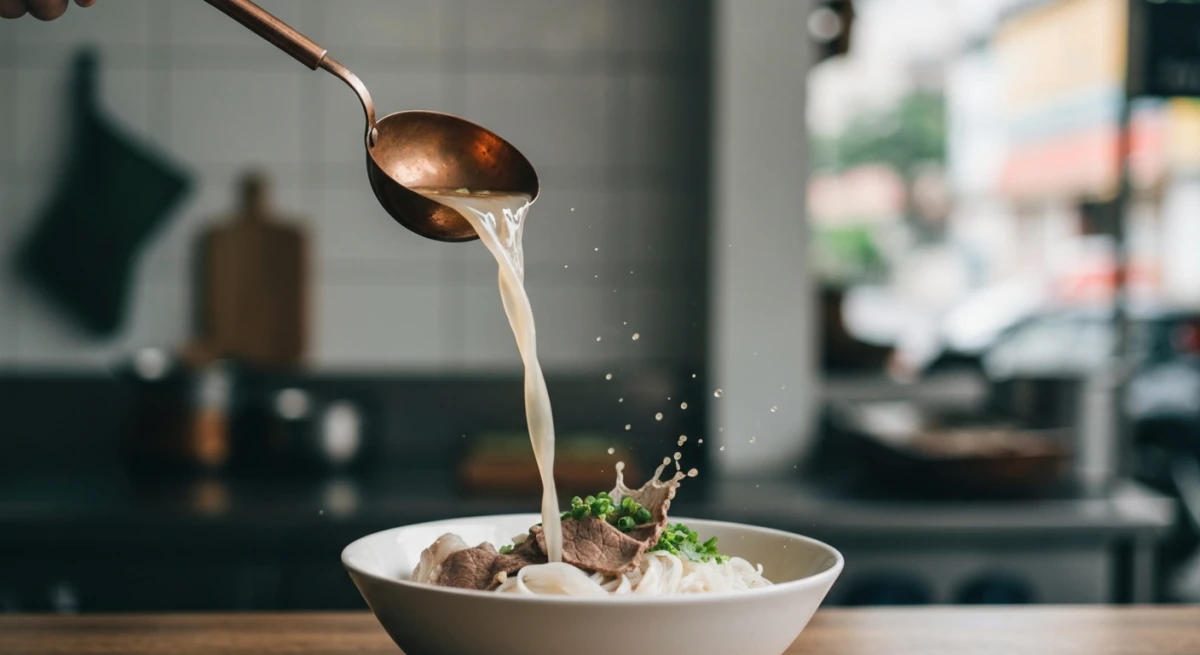
- The Dish: No street food tour in hanoi could possibly skip Vietnam's national dish. However, eating phở in Hanoi is a vastly different experience than eating it in the south. Hanoi-style phở is characterized by its stark simplicity. The broth is exceptionally clear and delicate, simmered for up to 24 hours with beef bones, charred ginger, onions, star anise, cardamom, and cinnamon. There are no sweet hoisin sauces, sriracha squirts, or raw bean sprouts here. It is just clean, pure broth, flat rice noodles, tender slices of beef, and a generous scatter of fresh green scallions.
- How to Eat It: Taste the broth first. Then, customize it the Northern way: add a dash of homemade garlic vinegar (giấm tỏi) for acidity and a spoonful of fresh chili sauce for a subtle kick. Order a side of quẩy (crispy fried dough sticks) to dip into the broth.
- Where to Go: Phở Gia Truyền Bát Đàn (Bát Đàn Street) or Phở 10 Lý Quốc Sư.
Stop 6: Cà Phê Trứng (Vietnamese Egg Coffee)
- The Dish: End your culinary pilgrimage with Hanoi’s legendary sweet treat: egg coffee. Invented in 1946 by Nguyen Van Giang, a bartender at the Sofitel Legend Metropole Hotel, this beverage was born out of necessity during the First Indochina War when fresh milk was scarce. Giang whisked egg yolks with sweetened condensed milk and sugar to create a rich, airy custard froth that floated perfectly on top of strong, bitter Vietnamese robusta coffee.
- How to Eat It: Do not stir it immediately! Use the small spoon provided to taste the sweet, warm, meringue-like egg foam on top first. Then, gently push the foam aside to let the dark, robust coffee mingle with the sweet custard, sipping them together.
- Where to Go: Café Giang (Nguyễn Hữu Huân Street) or Café Đinh (Đinh Tiên Hoàng Street, which overlooks Hoan Kiem Lake).
4. The Hidden Etiquette of Hanoi's Sidewalk Diners
To blend in like a seasoned local rather than an awkward tourist, it helps to understand the unwritten rules of sidewalk dining in Vietnam's capital.
- Embrace the Clutter: Sidewalk dining in Hanoi is a contact sport. Tables are crammed together, and you will likely be rubbing shoulders with strangers. Don’t be shy—pull up a plastic stool, squeeze in, and focus on your bowl.
- Master the Condiment Tray: Every table is equipped with a small plastic tray containing fresh lime wedges, bird's-eye chilis, garlic vinegar, and sweet chili sauce. These are designed to let you calibrate each dish to your specific palate. Always taste the food first before adding condiments, as the chef has spent hours balancing the flavors.
- The "Floor Trash" Rule: If you look down at a bustling Hanoi street stall, you will often see a carpet of discarded napkins, lime rinds, and toothpicks on the floor. While this might look chaotic or unhygienic to Western eyes, it is actually standard practice. Stalls are designed for high-turnover speed; diners throw waste on the floor, and the staff sweeps the entire area clean between rushes. If there is no small trash bin directly under your table, it is perfectly polite to drop your used tissues on the ground.
- Paying the Bill: When you are finished, catch the eye of a staff member and say "Thanh toán, em ơi" (pronounced tan toan, em oy). Cash is king on the streets of Hanoi; always carry small denominations (10,000 to 50,000 VND bills) as vendors may struggle to change a 500,000 VND note.
5. Food Safety & Hygiene: How to Avoid "Hanoi Belly"
The fear of food poisoning keeps many travelers from fully experiencing the joy of street food. However, by practicing a few smart habits, you can eat sidewalk food with absolute confidence.
- Follow the Crowds: The golden rule of street food safety is high turnover. If a stall is packed with local families and young Vietnamese locals, it means the food is delicious and the ingredients are fresh. Avoid empty stalls where raw meat or cooked ingredients have been sitting out in the open air.
- Watch the Preparation: One of the best things about street food is transparency. There is no hidden kitchen; everything is prepared right in front of you. Choose stalls where meats are cooked to order on a hot grill, broths are kept at a rolling boil, and the vendor wears gloves or uses tongs when handling raw ingredients.
- Practice Chopstick Hygiene: Before dining, take a piece of fresh lime from the table tray and run it over your chopsticks and spoon, then wipe them dry with a clean tissue. The acidity of the lime acts as a natural disinfectant.
- Stay Safe with Water and Ice: Tap water in Vietnam is not safe to drink. However, the ice (đá) used in Hanoi's restaurants and street stalls is almost always safe, as it is produced commercially from purified water and delivered daily in large blocks. If you are highly sensitive, stick to bottled water and canned sodas.
6. Frequently Asked Questions About Street Food in Hanoi
Is there a street food tour in hanoi suitable for vegetarians?
Yes! While traditional Northern Vietnamese food relies heavily on pork, beef, and fish sauce, Hanoi has a flourishing vegetarian scene driven by local Buddhist traditions. If you book a guided tour, inform your operator in advance, and they can easily swap out dishes for tofu, mushrooms, and plant-based spring rolls. If you are doing a DIY tour, look for signs containing the word "Chay" (vegetarian), such as Phở Chay or Bún Chả Chay.
What time of day is best for a Hanoi food tour?
Late afternoon and evening (from 5:30 PM to 9:00 PM) is the absolute best time for a food tour. This is when the Old Quarter truly comes alive, the air cools down, and locals pour onto the streets after work. Many of the best street food stalls only open for dinner. However, if you want a quieter, breakfast-focused experience, a morning tour (between 7:30 AM and 10:00 AM) is excellent for experiencing local market culture.
How much does a street food tour in Hanoi cost?
A high-quality guided walking street food tour typically costs between $25 and $45 USD per person, which includes all food, drinks, and a local guide. Premium private tours or motorbike food tours can range from $50 to $85 USD. If you choose a self-guided route, each dish costs between 30,000 and 70,000 VND ($1.25 to $3.00 USD), meaning you can eat incredibly well for under $12 USD total.
Can you find gluten-free options on a street food tour?
Yes, but you must be careful. Many of Vietnam’s staple foods—including phở, bún chả (the rice noodles), and bánh cuốn—are made entirely from rice flour and are naturally gluten-free. However, soy sauce (which contains wheat) is occasionally used in marinades for grilled meats. Additionally, deep-fried items like nem (spring rolls) or bánh tôm (prawn fritters) may contain wheat flour in the batter. Be sure to clarify your dietary needs to your guide or vendor.
Is it safe to eat street food in Hanoi?
Absolutely. In fact, street food is often safer than food served in mid-tier tourist restaurants. Because street vendors specialize in only one or two dishes, they have a massive daily turnover. Ingredients are bought fresh from the market at dawn and are usually completely gone by the afternoon or evening, meaning nothing sits in refrigerators for days.
Conclusion
A street food tour in hanoi is more than just a culinary journey—it is an initiation into the soul of Vietnam. From the delicate simmer of a spiced beef broth to the satisfying crunch of a charcoal-grilled pork patty, each bite offers a window into the history, resourcefulness, and community-driven culture of this incredible capital. Whether you choose to navigate the sensory maze of the Old Quarter with an expert local guide or embark on a self-guided DIY crawl, don't let the traffic, the heat, or the tiny plastic stools intimidate you. Pull up a seat, order with a smile, and prepare to have your culinary world forever expanded.