Ho Chi Minh City, still affectionately called Saigon by locals and travelers alike, is a sprawling, sensory-rich metropolis that truly lives on its sidewalks. To understand this city, you have to eat on its streets. Exploring streetfood saigon is not just a cheap way to fill your stomach; it is a full-throttle cultural initiation. From the sizzling woks of District 4 to the dense alleyways of Bình Thạnh, every corner offers a complex tapestry of sweet, salty, sour, and spicy flavors. Whether you are a first-time visitor or a seasoned foodie, this comprehensive guide will show you how to navigate Saigon's bustling street food lanes like a true local.
We will break down the essential cultural pillars, the iconic dishes you absolutely must eat, the premier culinary districts, and safety tips to ensure your stomach stays happy on this epic gastronomic adventure.
The Pillars of Saigon's Street Food Culture
What makes the streetfood saigon scene so uniquely intoxicating? To understand its magic, one must look at the geography and history of the southern capital. Unlike the capital city of Hanoi to the north, which favors delicate, clean, and balanced flavors, Saigon’s food is bold, loud, and unapologetically vibrant. The tropical climate of Southern Vietnam yields an abundance of fresh herbs, sugar cane, coconut milk, and fresh seafood, all of which find their way into daily recipes.
Furthermore, Saigon is a melting pot. It has absorbed culinary influences from the Khmer people of the Mekong Delta, Chinese immigrants who settled in Chợ Lớn (District 5), and French colonizers who introduced baguettes, coffee, and pâté. When you sit on a tiny, ankle-height plastic stool on a busy sidewalk, you are tasting centuries of migration, adaptation, and culinary genius.
The physical act of eating on the street is a sensory performance. The roar of thousands of passing motorbikes, the rhythmic metal-on-metal clang of a noodle vendor’s tongs, the sweet smoke of charcoal-grilled pork rising into the humid evening air, and the chatter of multi-generational families sharing a table—these are the essential ingredients of the streetfood saigon experience. It is casual, democratic, and incredibly fast-paced, yet there is a deep, slow-cooked soul behind every dish.
In Saigon, the sidewalk serves as the living room of the city. Vendors often specialize in just one single dish, spending decades perfecting a broth recipe passed down from their grandparents. This hyper-specialization is what makes the food taste so phenomenally rich. When you eat at a local stall, you are not just getting a meal; you are witnessing a lifetime of dedication to a singular culinary craft.
The Ultimate Saigon Street Food Checklist
To tackle the dizzying array of options, you need a targeted game plan. Here are the absolute must-try street food dishes that define the culinary identity of Ho Chi Minh City, complete with the legendary, vetted stalls where you can try them.
1. Bánh Mì (The Vietnamese Baguette)
While you can find bánh mì all over the world, nothing compares to tasting it on a Saigon sidewalk. Born from French colonial influence, the Vietnamese adapted the baguette by adding rice flour to the wheat dough, resulting in an incredibly airy, crispy crust that shatters upon the first bite. It is typically slathered with rich pork liver pâté, house-made mayonnaise, layers of cured ham, headcheese, roast pork, pickled daikon and carrots, fresh cucumber slices, cilantro, and a fiery kick of bird’s eye chili. The contrast between the warm, crispy bread and the cool, savory, and spicy fillings is pure culinary perfection.
- Where to try it:
- Bánh Mì Huỳnh Hoa (26 Lê Thị Riêng, District 1): Often called the "Michelin-level" bánh mì of Saigon. It is expensive by local standards but packed to the brim with nearly a pound of meats and pâté. Be prepared to wait in line.
- Bánh Mì Hồng Hoa (62 Nguyễn Văn Tráng, District 1): A lighter, more vegetable-heavy alternative that is perfect for a quick, fresh breakfast.
- Bánh Mì Hòa Mã (53 Cao Thắng, District 3): Famous for bánh mì ốp la (pan-fried eggs served sizzling in a small metal skillet with meats and pâté, meant to be scooped up with chunks of warm bread). This spot has been serving hungry customers since 1958.
2. Cơm Tấm (Broken Rice)
Historically a humble dish eaten by poor farmers who used the fractured, unsellable rice grains left over from the milling process, cơm tấm is now the undisputed king of Saigon comfort food. The broken rice has a unique, slightly dry texture that perfectly absorbs the savory pork fat and sweet-salty fish sauce (nước chấm). It is traditionally topped with a marinated charcoal-grilled pork chop (sườn nướng), a savory steamed egg-and-meat meatloaf (chả trứng), shredded pork skin (bì), and a scallion oil garnish (mỡ hành).
The pork chop is marinated in a secret blend of lemongrass, shallots, garlic, soy sauce, honey, and fish sauce before hitting the glowing charcoals, releasing an aroma that dominates entire city blocks.
- Where to try it:
- Cơm Tấm Ba Ghiền (84 Đặng Văn Ngữ, Phu Nhuan District): A legendary institution famous for serving a colossal, tender pork chop that completely covers the plate of broken rice beneath it. It is smoky, juicy, and legendary among local foodies.
- Tiệm Cơm 67 Tấm (99/1B Võ Văn Tần, District 3): A fantastic local spot that strikes a perfect balance between flavor, cleanliness, and authenticity.
3. Phở (Southern-Style Beef Noodle Soup)
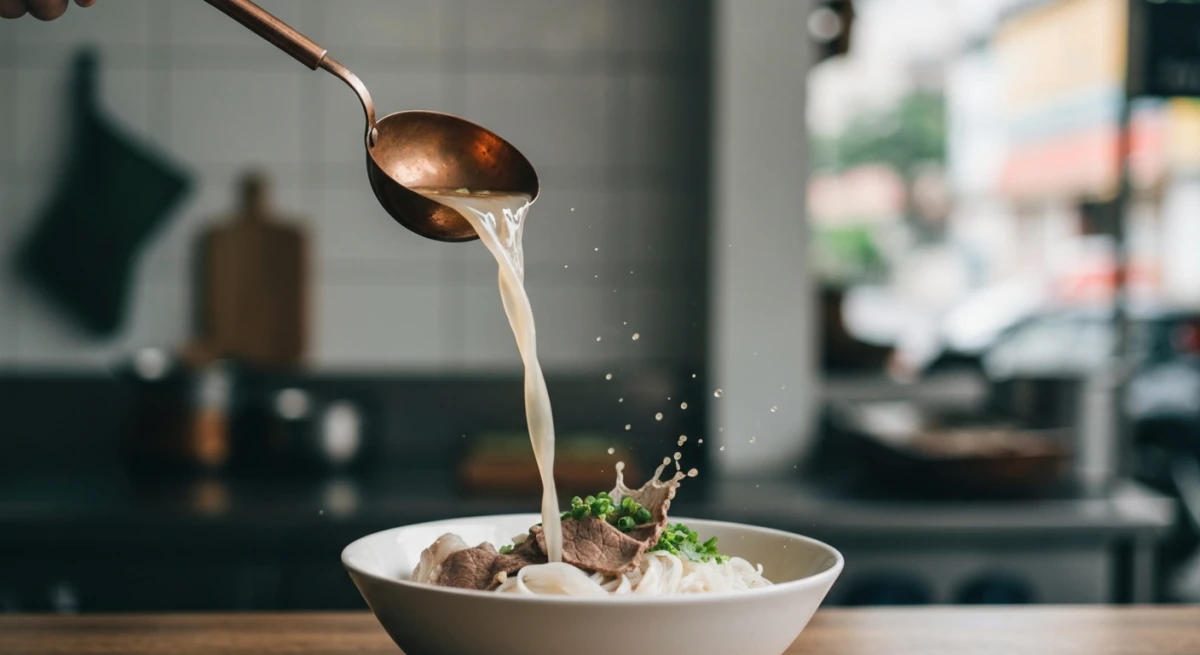
While northern Vietnam is the birthplace of phở, the southern variation found in Saigon is a completely different beast. Southern phở broth is sweeter, darker, and more robustly spiced. It uses toasted spices like star anise, cinnamon, cloves, coriander seeds, and black cardamom, simmered with beef bones for over 12 hours. It is served with an abundant mountain of fresh herbs (including sawtooth herb, Thai basil, and rice paddy herb), bean sprouts, and a selection of condiments like hoisin sauce and sriracha, allowing diners to customize their bowl to their exact liking.
- Where to try it:
- Phở Lệ (415 Nguyễn Trãi, District 5): A highly acclaimed, Michelin-recommended spot in Chợ Lớn serving rich, deeply flavorful broth with incredibly tender beef cuts and bouncy meatballs (bò viên).
- Phở Phượng 25 (25 Hoàng Sa, District 1): Located along the picturesque canal, this spot offers exceptional phở with a lighter broth and is heavily favored by locals over more touristy alternatives.
4. Bún Thịt Nướng (Grilled Pork over Vermicelli Noodles)
If the humid Saigon heat makes hot soup less appealing, bún thịt nướng is the ultimate refreshing alternative. This dish features a bed of cool rice vermicelli noodles topped with smoky, charcoal-grilled pork, crispy deep-fried spring rolls (chả giò), a colorful mix of herbs, shredded lettuce, bean sprouts, pickled vegetables, roasted peanuts, and a generous pour of sweet-and-sour fish sauce. It is a masterclass in contrasting temperatures and textures.
- Where to try it:
5. Bánh Xèo (Sizzling Savory Crepe)
Named for the loud "sizzling" sound the rice batter makes when hit by a ripping hot pan, bánh xèo is a crispy, turmeric-spiced crepe filled with pork belly, shrimp, mung beans, and fresh bean sprouts. To eat it, you tear off a piece of the crispy crepe, wrap it inside a large mustard leaf along with fresh herbs, roll it up tightly, and dip it into sweet, garlic-chili fish sauce.
- Where to try it:
- Bánh Xèo Ba Hai (119 Lê Văn Linh, District 4): Tucked away in the street food haven of District 4, this spot serves incredibly crispy, thin crepes with an abundance of fresh greens.
- Bánh Xèo Miền Tây (In front of Vạn Kiếp Market, Bình Thạnh District): Offers a classic Western-style crepe that is massive, thin, and satisfyingly crunchy.
6. Bột Chiên (Pan-Fried Rice Cakes)
A popular late-night street food snack with Chinese roots, bột chiên consists of thick cubes of rice flour cake that are fried on a massive flat iron skillet until crispy on the outside and chewy on the inside. They are then bound together with whisked eggs, topped with chopped green onions, and served with a tangy, sweet soy sauce and a mountain of shredded green papaya to cut through the richness.
- Where to try it:
- Bột Chiên Chú Bình (Hẻm 181 Nguyễn Thượng Hiền, District 3): A tiny, unassuming stall down a narrow alleyway where the owner has perfected the art of the crispy rice cake over decades.
7. Bún Mắm (Fermented Fish Noodle Soup)
For adventurous eaters seeking the deep, pungent soul of Mekong Delta cuisine, bún mắm is the holy grail. The broth is flavored with fermented fish paste, giving it an intensely savory, earthy aroma that is balanced by lemongrass and tamarind. It is packed with thick rice noodles, eggplant, shrimp, squid, crispy pork belly, and served with a unique platter of aquatic vegetables like water mimosa, banana blossoms, and sesbania flowers.
- Where to try it:
- Quán Dì Cẩm (181 Vạn Kiếp, Bình Thạnh District): A highly recommended spot that serves a remarkably well-balanced and authentic bowl of this Southern specialty.
8. Ốc (Sea Snails and Shellfish)
No guide to streetfood saigon is complete without mentioning the city's obsessed "ốc" (snail) culture. Eating snails is more than a meal; it is a social ritual known as nhậu (drinking and eating with friends). Sidewalk stalls display dozens of varieties of sea snails, sweet clams, scallops, and mud snails, which are cooked to order. Popular cooking methods include sautéing in sweet garlic butter, stir-frying with salted egg sauce, or grilling over charcoal with scallion oil and peanuts.
- Where to try it:
- Vĩnh Khánh Street (District 4): The ultimate seafood street in Saigon. Come after dark when the road turns into an open-air banquet of clinking beer glasses, live music, and mountains of fresh shellfish.
- Ốc Zuka (Corner of Phan Xích Long and Vạn Kiếp, Bình Thạnh District): A lively, energetic spot where you can watch the chefs cook your shellfish right next to your table.
9. Bò Lá Lốt (Beef Wrapped in Betel Leaves)
This savory street food consists of seasoned minced beef mixed with pork fat, tightly wrapped in wild betel leaves (lá lốt), and grilled over smoking coals. The heat charcoals release the essential oils from the betel leaves, imparting a unique peppery, herbal aroma to the juicy beef. It is served with delicate woven rice vermicelli sheets (bánh hỏi), rice paper, starfruit, green banana, fresh herbs, and a bold fermented pineapple-anchovy dipping sauce (mắm nêm).
- Where to try it:
- Bò Lá Lốt Hoàng Yến (Cô Giang Street, District 1): A bustling local favorite where you roll your own wraps on the edge of the street traffic.
Where to Eat: Saigon’s Premier Street Food Neighborhoods
To truly unlock the best streetfood saigon has to offer, you must venture beyond the manicured tourist centers and explore the distinct neighborhoods that make up Ho Chi Minh City. Each district has its own unique culinary personality.
District 1: The Accessible Gateway
While District 1 is the commercial hub, it still harbors incredible street food if you know where to look. Avoid the overpriced stalls inside Bến Thành Market and instead wander down the side streets like Cô Giang or Nguyễn Trung Trực. Here, you will find legendary stalls that have served the same single dish for generations, catering to local office workers and shoppers.
District 3: The Local Heartbeat
Adjacent to District 1, District 3 feels more residential but remains highly central. It is home to Nguyễn Thượng Hiền Street, famous for its dizzying concentration of bánh tráng trộn (spiced shredded rice paper salad) vendors, and Bàn Cờ Market, a labyrinth of narrow lanes where you can find exceptional noodle soups, sweet soups (chè), and crispy rice cakes.
District 4: The Seafood & Snail Kingdom
Historically a rough-around-the-edges port district, District 4 is now legendary among food lovers. It is the densest district in the city and boasts a street food stall on almost every square meter. Vĩnh Khánh Street is the crown jewel here, turning into a sprawling, smoky seafood street from late afternoon until the early hours of the morning. You will be entertained by fire-breathers, street musicians, and the energetic clinking of beer glasses.
Phú Nhuận & Bình Thạnh: The Foodie Borderlands
For those willing to travel just 10–15 minutes outside the tourist center, the bordering districts of Phú Nhuận and Bình Thạnh offer some of the most concentrated, authentic street food streets in the city.
- Vạn Kiếp Street: Running between Phú Nhuận and Bình Thạnh, this is a strong contender for Saigon's most food-dense street. Over fifty different dishes are sold along this relatively short stretch of asphalt, illuminated by neon signs and filled with local students and families sitting on plastic stools.
- Phan Xích Long: A neighboring street famous for high-energy dining, seafood spots, and regional Vietnamese specialties.
District 5: The Chinese-Vietnamese Fusion of Chợ Lớn
Chợ Lớn is Saigon's Chinatown, and its food reflects a century of Chinese-Vietnamese culinary fusion. Come here to eat roasted meats, hand-pulled noodles, savory dumplings, and unique herbal desserts that you won't find anywhere else in the city.
Street Food Etiquette, Hygiene, and Insider Survival Tips
Eating on the street in a developing metropolis can be intimidating for newcomers. However, with a few basic guidelines, you can safely and confidently enjoy the incredible world of streetfood saigon.
How to Gauge Hygiene
- Follow the crowds: The golden rule of street food globally holds true in Saigon. If a stall is packed with locals, it means the food turnover is extremely high, meaning the ingredients are incredibly fresh and haven't been sitting out.
- Look at the broth and grills: Steam and high heat are natural sterilizers. Dishes like piping-hot phở broth or meat freshly charred over charcoal are generally the safest options for sensitive stomachs.
- Observe the setup: Look for stalls where the cooking area is clean, the vendor wears gloves when handling ingredients, and there is a clear division between the person handling food and the person handling cash.
- Embrace the trash system: In Saigon, it is standard practice to drop used paper napkins, lime wedges, and herb stems directly onto the floor beneath your table. The staff sweep the floor continuously throughout the day. While it might look messy, a clean table with a busy floor is actually a sign of a fast-moving, popular stall!
The Truth About Ice and Water
A common fear among travelers is getting sick from local ice. In Saigon, almost all commercial ice used in restaurants and street stalls consists of manufactured cylindrical ice cubes with a hole in the middle (đá bi). This ice is made from purified water in factories and is generally safe to consume. However, avoid shaved ice or blocks of ice that have been crushed manually, as they may have been transported in unhygienic conditions. If in doubt, stick to bottled water or canned beers.
How to Order and Pay Like a Local
At many local stalls, the menu is simple, often consisting of just one or two dishes. If there is no English menu, simply look at what other diners are eating, point to a dish that looks delicious, and say, "Cho tôi một phần này" (Please give me one portion of this). Alternatively, showing a photo of the dish on your phone works wonders.
Street food in Saigon is strictly cash-only. Always keep small bills (20,000 VND, 50,000 VND, and 100,000 VND) on hand. Attempting to pay for a 30,000 VND bowl of noodles with a 500,000 VND bill is considered bad etiquette as it drains the vendor's change reservoir. When you are finished, catch the vendor's eye and say "Tính tiền" (pronounced tinh teen) to ask for the bill.
Getting Around
Do not try to walk between different street food districts—the traffic is chaotic, and the distances are deceptively large. Instead, download the Grab or Xanh SM apps. These ride-hailing services allow you to book cheap, reliable motorbike taxis or cars, making it incredibly easy to hop from a snail stall in District 4 to a dessert shop in District 3.
Frequently Asked Questions About Streetfood Saigon
Is street food in Saigon safe for tourists?
Yes, the vast majority of street food in Saigon is safe. To minimize any risk of an upset stomach, choose busy stalls with high customer turnover, ensure your food is cooked fresh to order, and drink bottled or canned beverages. Wiping down your metal utensils with a clean napkin before eating is a common local habit that you should also adopt.
How much does street food cost in Saigon?
Street food in Ho Chi Minh City is incredibly affordable. A standard bowl of noodles, a plate of broken rice, or a crispy bánh mì will typically cost between 20,000 to 60,000 VND ($0.80 to $2.50 USD). High-end or specialty street food, such as seafood feasts or premium bánh mì, can range from 80,000 to 150,000 VND ($3.20 to $6.00 USD).
What are the best hours for street food in Ho Chi Minh City?
Saigon's street food scene operates around the clock, but different dishes have distinct hours. Morning hours (6:00 AM to 9:00 AM) are dominated by bánh mì, phở, and sticky rice (xôi). Lunchtime (11:30 AM to 1:30 PM) is the prime time for cơm tấm (broken rice). The real magic happens after dark (from 6:00 PM onwards), when snail stalls, dessert spots, and buzzing food streets like Vạn Kiếp and Vĩnh Khánh come alive.
Are there vegetarian street food options in Saigon?
Yes! Vietnam has a rich Buddhist tradition, and you will frequently see signs for "Quán Chay" (vegetarian restaurant/stall). During the 1st and 15th days of the lunar month, many standard street food stalls also offer fully vegetarian versions of local favorites like vegetarian phở, bun chay, and banh mi chay.
Do I need to tip at street food stalls?
Tipping is not customary or expected at street food stalls or local restaurants in Vietnam. Simply pay the exact amount listed on the bill or menu. If the service was exceptionally friendly, leaving the small change is a nice gesture but never required.
Embark on Your Saigon Street Food Adventure
The vibrant world of streetfood saigon is an endless playground of flavor, community, and culture. It is a place where culinary rules are rewritten on the fly, and where some of the world's most sophisticated flavors are served on humble plastic furniture. By stepping away from the tourist traps, embracing the local chaos, and letting your nose guide you through the city's alleyways, you will discover the true heart of Ho Chi Minh City—one unforgettable bite at a time.