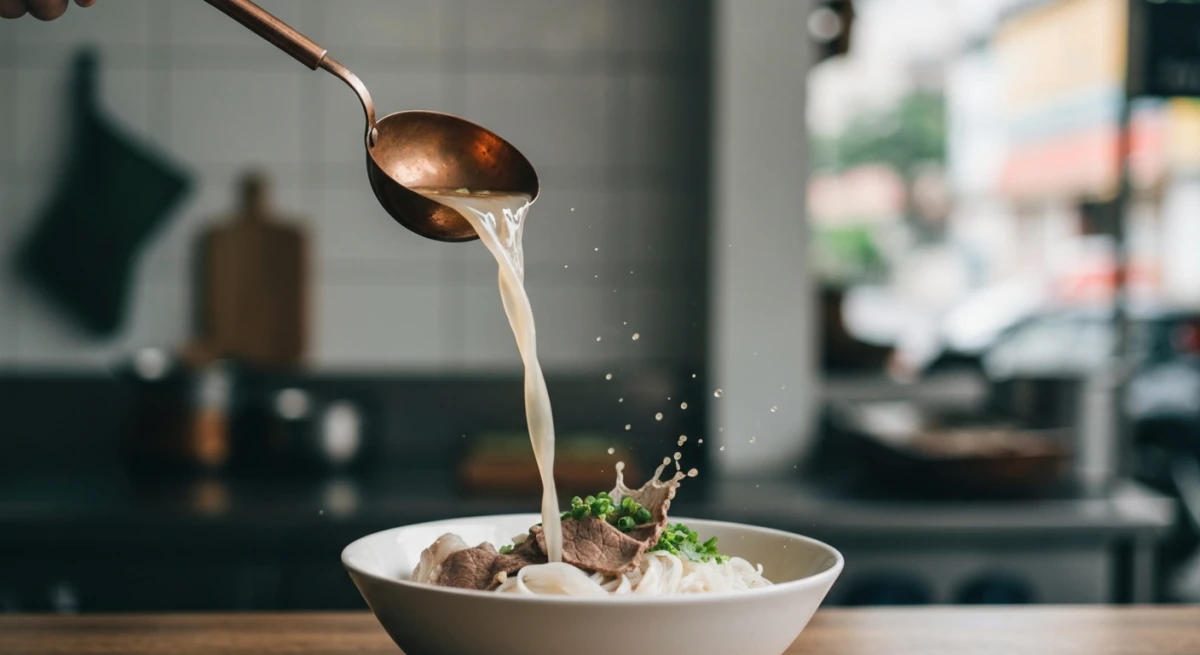
As the first light of dawn filters through the ancient, narrow streets of Hanoi’s Old Quarter, the city undergoes a quiet transformation. Before the chaotic roar of motorbikes takes over, a different kind of symphony begins. It is the steady hiss of steam escaping from massive aluminum pots, the rhythmic chopping of fresh herbs, and the clatter of porcelain bowls being stacked on metal carts. This is the morning overture of food culture hanoi, an immersive, living theater where every street corner tells a story that is centuries old.
For the people of Hanoi, food is not merely sustenance or a quick pause in a busy day. It is an art form, a historical archive, and a daily social ritual. Hanoi’s culinary landscape is shaped by a thousand years of royal dynastic history, Chinese and French colonial influences, and the sheer resourcefulness of a resilient populace. To truly understand this city, you cannot simply look at its monuments; you must eat your way through its sidewalks. Sitting on a low plastic stool, watching the world rush past while savoring a broth that took twenty-four hours to perfect, is the ultimate Hanoian experience. This guide will take you beyond the standard tourist lists, diving deep into the history, philosophy, and unspoken rules that define the extraordinary food culture of Vietnam's capital.
The Hanoian Palate: The Art of Subtle Restraint
To appreciate Hanoi’s food, one must first understand the fundamental culinary divide of Vietnam. While the south of the country embraces the bold, sweet, and tropical—heavily incorporating coconut milk, palm sugar, and fiery bird's eye chilies—and the central region of Hue glories in complex, highly seasoned, and intensely spicy profiles, Hanoi prides itself on subtle restraint. The defining characteristic of Northern Vietnamese cuisine is "thanh" (purity, elegance, and balance).
In Hanoi, seasoning is used not to mask or transform ingredients, but to elevate their natural essences. If a dish is beef, it should taste purely of high-quality beef. If it is fish, the delicate sweetness of the flesh should remain the star. This minimalist philosophy is most famously expressed in "nước dùng" (the broth). A master Hanoian broth is crystal-clear, devoid of excessive fat or muddy spices. It relies on the patient extraction of marrow from bones, charred ginger, and caramelized shallots, simmered gently over half a day.
Furthermore, herbs are not treated as a mere garnish in Hanoi; they are structural components of the meal. Dill ("thìa là"), which is rarely seen in southern dishes, is a cornerstone of northern fish preparations. Vietnamese balm ("kinh giới"), perilla ("tía tô"), and coriander are selected with microscopic precision to match the warming or cooling properties of the main protein, adhering to the traditional Eastern philosophy of yin and yang balance. To the untrained palate, Hanoi food may initially seem mild, but with a few bites, the layers of delicate, clean flavors reveal themselves, proving that true culinary mastery lies in knowing when to stop.
The Sidewalk as a Social Equalizer: The Philosophy of the Plastic Stool
To dine in Hanoi is to embrace the sidewalk. In Vietnamese, this is the culture of "quán vỉa hè" (sidewalk stalls). While Western cities partition their streets for transit and their buildings for dining, Hanoi blends the two seamlessly. The sidewalk is the city’s communal living room, and food is the medium through which life is shared.
The ultimate symbol of this culture is the miniature plastic stool, usually in primary shades of red or blue, rising barely a foot off the concrete. To the uninitiated traveler, sitting on these tiny chairs can feel comical, even uncomfortable. But to Hanoians, these stools represent a profound democratization of dining. At 7:30 AM, you will regularly witness a high-level government official or a wealthy tech entrepreneur in a tailored suit sitting elbow-to-elbow with a cyclo driver or a street sweeper. On these tiny stools, everyone is physically at the same level. Social hierarchies dissolve into the rising steam of a shared pot of broth.
This sidewalk culture also reflects a unique approach to time. Despite Hanoi being a fast-paced, rapidly modernizing metropolis, the act of eating remains remarkably slow. Hanoians do not grab a sandwich to eat while walking. Even if they only have fifteen minutes, they will sit down on a stool, order a hot bowl of noodles, and focus entirely on the sensory experience of eating. The street-side setting forces you to be present—to hear the chatter of neighbors, feel the humid breeze, and appreciate the immediate warmth of your food. It is an authentic, sensory engagement with the community that cannot be replicated inside a sterile, air-conditioned restaurant.
Deep-Dive: Iconic Dishes That Define Hanoi’s Culinary Soul
While Hanoi’s street corners are packed with hundreds of culinary creations, several key dishes stand as historical monuments of flavor. To eat these dishes is to consume chapters of Hanoi’s history.
Phở Bò: The Northern Soul and the "No-Lime" Philosophy
Phở is Vietnam's national dish, but its spiritual home is the North, where it was born in the early 20th century near Nam Dinh and refined in Hanoi. While Southern-style Pho is loaded with bean sprouts, sweet hoisin sauce, and Sriracha, traditional Hanoi Pho ("Phở Bắc") is a study in purism. It consists of flat, delicate rice noodles ("bánh phở"), tender slices of beef, and a pristine, deeply savory beef broth finished with a shower of green scallions and cilantro.
The pursuit of pure flavor has led to some of Hanoi's most fascinating culinary boundaries. In the city's most legendary, multi-generational establishments—such as the historic family-run shop on Hàng Đồng Street—you will find a strict "no-lime" policy. The owners will refuse to serve you fresh lime wedges. Why? Because Hanoian purists believe that the citric acid in lime reacts harshly with the delicate beef fat in the broth, clouding its clarity and souring its natural sweetness. Instead, tables are equipped with "giấm tỏi" (garlic vinegar). This house-made infusion of sliced garlic in light rice vinegar provides a soft, rounded acidity that brightens the beef broth without muddying its clean, complex finish.
Bún Chả: The Midday Smoky Ritual
If Pho belongs to the morning, Bún Chả is the undisputed king of Hanoi's lunch hour. As noon approaches, the streets of Hanoi fill with a sweet, hypnotic smoke as vendors grill marinated pork patties and thick slices of pork belly over red-hot charcoal directly on the sidewalk.
Bún Chả is an interactive feast of textures and temperatures. It is served as a bowl of warm, light dipping sauce ("nước chấm")—made from fish sauce, vinegar, sugar, and water—swimming with grilled pork and crunchy slices of green papaya and carrot. Alongside this, you are given a plate of cold rice vermicelli ("bún") and a mountain of fresh herbs. To eat it like a local, you take a small nest of noodles, dip it into the warm, pork-infused sauce, grab a piece of smoky meat and a leaf of perilla, and eat it all in one bite. This dish famously captured the world’s imagination when President Barack Obama and culinary legend Anthony Bourdain sat on low plastic stools in Hanoi to share a cold Hanoi beer and a bowl of Bún Chả, cementing its status as a global culinary icon.
Chả Cá Lã Vọng: A Sizzling Revolution
Chả Cá Lã Vọng is not just a meal; it is a theatrical experience and a piece of revolutionary history. Created by the Đoàn family at 14 Hàng Sơn Street in 1871 during the French colonial era, the dish served as a brilliant cover. The family’s home was a secret meeting place for anti-colonial activists. To raise funds and mask these forbidden political gatherings from French authorities, the family began serving turmeric-marinated catfish grilled over charcoal and fried tableside. The dish became so legendary that the entire street was officially renamed Phố Chả Cá (Cha Ca Street) in its honor.
When you order Chả Cá, a portable stove and a small sizzling skillet are brought to your table. Chunks of firm, golden, turmeric-and-galangal-marinated fish sizzle in hot oil. You are then handed baskets of fresh spring onions and mounds of fresh dill. You toss these herbs directly into the hot pan, watching them wilt into the fragrant oil. To assemble your bowl, you combine cold rice noodles, roasted peanuts, the sizzling fish, the wilted herbs, and a splash of mắm tôm (a pungent, fermented purple shrimp paste whipped with lime juice, sugar, and hot oil until it froths). The combination of hot and cold, earthy turmeric, aromatic dill, and the bold, savory punch of the shrimp paste is a sensory explosion that represents the pinnacle of Hanoian culinary complexity.
Bánh Cuốn: The Delicate Morning Whisper
For a lighter start to the day, Hanoians turn to Bánh Cuốn (steamed rice rolls). This dish showcases the incredible dexterity of Hanoi’s street cooks. A thin batter of fermented rice flour is poured onto a tightly stretched piece of cloth over a pot of boiling water. In seconds, a translucent, paper-thin sheet forms. Using a long bamboo stick, the cook lifts the delicate sheet, places it on a greased surface, fills it with a mixture of minced pork, wood ear mushrooms, and shallots, and rolls it up.
Topped with crispy fried shallots, Bánh Cuốn is served warm with a side of light fish dipping sauce and slices of chả lụa (Vietnamese pork sausage). The texture is incredibly silky, almost melting in the mouth, offering a clean, comforting flavor profile that highlights the freshness of the rice.
Cà Phê Trứng: Egg Coffee and the Genius of Scarcity
No exploration of Hanoi's food culture is complete without its most famous beverage innovation: Cà Phê Trứng (Egg Coffee). Born in 1946 during the First Indochina War, the beverage is a testament to Hanoian resourcefulness. Milk was heavily rationed and incredibly scarce due to the French blockade. Nguyen Van Giang, a creative bartender at the prestigious Sofitel Legend Metropole Hanoi, decided to try a daring experiment. He took fresh egg yolks, whipped them vigorously with sugar and condensed milk, and poured the rich, creamy mixture over a cup of hot, dark robusta coffee.
The result was a revelation: a beverage with a velvety, custard-like head that perfectly balanced the bitter, smoky punch of the robusta beans. Today, Café Giảng is still run by Nguyen’s descendants, serving hundreds of cups of this liquid gold daily. It tastes like a warm, liquid tiramisu, and is a must-try symbol of how Hanoi turns hardship into culinary art.
The Rhythms of Liquid Culture: Slow Drips and Fresh Drafts
To fully understand food culture hanoi, one must look at how the city drinks. Hanoians have mastered two distinct liquid rituals that dictate the tempo of the day: the slow drip of morning coffee and the fast flow of evening beer.
Cà Phê Phin: The Art of Waiting
Hanoi’s coffee culture is a legacy of French colonial rule, but it has been thoroughly Vietnamized. The heart of this culture is the phin filter—a small, metal gravity-drip filter that sits directly on top of a glass. To make a traditional Cà Phê Nâu Đá (Iced Coffee with Sweetened Condensed Milk), dark roast robusta beans are packed into the phin, hot water is added, and the coffee begins to slowly drip, drop by precious drop, onto a thick layer of condensed milk at the bottom of the glass.
This process cannot be rushed. In a world of instant gratification and espresso shots pulled in ten seconds, the phin filter requires you to sit and wait. For Hanoians, this waiting is a feature, not a bug. It is a daily meditation. Locals will sit on low stools facing the busy streets, watching the motorbikes navigate the chaos, while waiting for their coffee to brew. It is a slow, quiet start to the day, offering a moment of mental clarity before the city’s energy ramps up.
Bia Hơi: The Sunset Celebration
As the sun dips below the horizon and the heat of the day begins to break, the tempo of Hanoi shifts from slow coffee to fast beer. This is the hour of Bia Hơi (fresh draft beer). Brewed daily with no preservatives, this light, bubbly lager is delivered in aluminum kegs to street corners across the city every morning and must be consumed by nightfall.
Bia Hơi is remarkably cheap, incredibly refreshing, and low in alcohol (around 3%), making it the perfect beverage for socializing. "Bia Hơi Corners" (most famously at the intersection of Tạ Hiện and Lương Ngọc Quyến streets) become hubs of electric energy. Hundreds of people—locals, expats, and travelers—sit packed together on plastic stools, clinking heavy, hand-blown green glass mugs to the chorus of "Một, hai, ba, dô!" (One, two, three, cheers!).
Bia Hơi is never drunk alone; it is always accompanied by mồi (drinking snacks). Popular pairings include deep-fried tofu dipped in salt and lime juice, crispy fermented pork rolls (nem chua), and roasted peanuts. It is a celebration of community, fresh air, and the simple joy of winding down after a hard day's work.
Navigating Hanoi's Food Culture: A Practical Guide for Travelers
For first-time visitors, diving into Hanoi's street food scene can feel overwhelming. The sights, smells, and chaotic traffic can make ordering feel like a daunting task. However, by understanding a few local rules, you can navigate the sidewalks with the confidence of an insider.
The Golden Rules of Sidewalk Etiquette
- The Chopstick Ritual: When you sit down at a street stall, you will find a container of chopsticks and spoons. It is a local custom to take a tissue paper and wipe down your utensils before eating. Alternatively, squeeze a little fresh lime juice over them to sanitize them.
- The Condiment Masterclass: Do not blindly dump sauces into your bowl. Taste the broth first in its natural state. Then, add condiments gradually. For beef Pho, use garlic vinegar and fresh chili. For chicken Pho, a squeeze of fresh lime is preferred. For dry noodle dishes, a dash of fish sauce or soy sauce can help bind the flavors.
- Sharing is Expected: Space is at a premium on the sidewalks of the Old Quarter. If a stall is busy, the owner will point you to an open stool at a table where strangers are already eating. Simply sit down, give a polite nod, and focus on your meal. It is completely normal and expected.
- Tipping: Tipping is not customary in traditional Vietnamese street food stalls or casual eateries. If you want to show appreciation, simply round up your bill to the nearest 5,000 or 10,000 VND.
Meal Timings: Eat Like the Clock
Hanoi’s food vendors operate on a strict, time-sensitive schedule. To get the best quality, you must align your stomach with the city’s clock:
- Breakfast (6:00 AM – 8:30 AM): The best time for steaming bowls of Pho, silky Bánh Cuốn, or comforting pork rib congee (Cháo Sườn). Many of the best breakfast vendors pack up their carts by 9:00 AM.
- Lunch (11:30 AM – 1:30 PM): This is when Bún Chả, Bún Đậu Mắm Tôm (tofu and rice noodles with shrimp paste), and Cơm Bình Dân (buffet-style rice plates) vendors open.
- Dinner (6:00 PM – 9:00 PM): The streets come alive with communal dining. This is the time for Lẩu (Vietnamese hotpot), street-side barbecue (Nướng), and sizzling pans of Bánh Mì Chảo.
Frequently Asked Questions
Why is food in Hanoi different from Ho Chi Minh City (Saigon)?
Hanoi food is characterized by subtle, delicate, and savory flavors (thanh), relying on natural ingredients and traditional techniques. It is rarely sweet or intensely spicy. Saigon food, influenced by southern tropical abundance and Cambodian/Thai neighbors, is much sweeter, richer (using lots of coconut milk), and incorporates fresh chili heat, raw vegetables, and bean sprouts in almost every dish.
Is it safe to eat street food in Hanoi?
Yes, street food in Hanoi is generally very safe and often fresher than restaurant food because of the high turnover. To minimize risk, follow two simple rules: eat at stalls that are packed with locals (high turnover means the ingredients are fresh), and choose places where the food is cooked hot right in front of you.
Why do traditional Hanoi pho shops refuse to serve lime?
Traditional Northern pho relies on a highly refined, clear beef broth. Purists believe the strong citric acid in lime cuts through the delicate fats and overpowers the natural sweetness of the beef marrow. They prefer garlic vinegar (giấm tỏi), which adds a softer, more complementary acidity that elevates the beef profile without clouding the broth.
What is the best way to book a street food tour in Hanoi?
While you can certainly explore on your own, booking a street food tour with a local guide on your first evening is highly recommended. A guide can navigate language barriers, introduce you to hidden alleyway spots (ngõ) you would never find on your own, explain the history of the dishes, and teach you correct dining etiquette.
Conclusion
Hanoi’s food culture is not something that can be fully captured in a glossy culinary magazine or experienced from behind the window of a luxury restaurant. It is a culture that demands participation. It requires you to step onto the bustling sidewalk, lower yourself onto a tiny plastic stool, and embrace the sensory overload of a city that has spent a thousand years perfecting the art of the simple meal.
From the quiet clarity of a morning bowl of Pho to the smoky, charcoal-kissed perfection of midday Bún Chả, and the vibrant, laughing crowds of an evening Bia Hơi, the soul of Hanoi is found in its streets. By slowing down, respecting local traditions, and dining like a local, you don't just eat the food of Hanoi—you become a part of its living history.