Hanoi is a city that is best experienced through your taste buds. As the motorbikes weave like a school of fish through the labyrinthine alleyways of the historic center, the scent of sizzling pork, charred lemongrass, and boiling beef bone broth hangs heavy in the humid air. Taking a hanoi old quarter food tour is not just an optional activity for tourists; it is a fundamental rite of passage. Whether you choose to book an experienced local guide to lead you through the hidden backstreets or embark on a self-guided, DIY culinary adventure, this guide will provide you with everything you need to navigate Hanoi's iconic "vỉa hè" (sidewalk) food culture like a seasoned local.
In this ultimate guide, we will unpack the absolute best, non-negotiable dishes of the Old Quarter, dissect the pros and cons of guided versus self-guided tours, lay out an optimized walking route, and share the unwritten rules of Vietnamese street dining etiquette that most guides omit.
The Soul of Hanoi Street Food: 7 Must-Try Dishes and Secret Spots
Hanoian cuisine is distinct from its southern counterpart. Where southern Vietnamese food is sweet, herb-laden, and bold, northern cuisine leans on subtlety, clean broths, and a delicate balance of savory, sour, and spicy notes. To truly appreciate a Hanoi old quarter food tour, you must understand the history and flavor profiles of these seven core dishes.
1. Bún Chả (Charcoal-Grilled Pork with Rice Noodles)
If there is one dish that represents the culinary heart of Hanoi, it is Bún Chả. This dish features charcoal-grilled pork patties (chả viên) and sliced pork belly (chả miếng) submerged in a warm, sweet-savory dipping sauce made of diluted fish sauce, sugar, vinegar, and lime. It is served with a plate of cold vermicelli rice noodles (bún) and a mountain of fresh herbs, including perilla (tía tô), Vietnamese balm (kinh giới), and coriander.
- The Ritual: Do not dump all your noodles into the broth at once. Take a small nest of noodles with your chopsticks, dip them into the broth along with a few herbs, and eat them together with a piece of smoky pork.
- Where to Try It: Avoid the hyper-touristy "Obama Bun Cha" (which is actually in Hai Ba Trung district) and stick to Bún Chả Ta (21 Nguyễn Hữu Huân) for an incredibly balanced broth, or the chaotic and deeply local Bún Chả 41 Cửa Đông in the heart of the Old Quarter.
2. Bánh Cuốn Nóng (Steamed Rice Sheet Rolls)
Bánh Cuốn is a breakfast and late-night staple. It consists of a thin, translucent sheet of fermented rice batter steamed over a stretched cloth. The chef skillfully lifts the delicate sheet with a bamboo stick, stuffs it with minced pork and wood ear mushrooms (mộc nhĩ), and rolls it up. It is then topped with a generous sprinkle of crispy fried shallots (hành phi) and served with warm dipping fish sauce, often accompanied by slices of Vietnamese pork sausage (chả lụa).
- The Secret: Ask for a drop of "cà cuống" (giant water bug essence) in your dipping sauce. This rare, traditional addition gives the sauce an incredibly unique, slightly floral, and pungent aroma.
- Where to Try It: Bánh Cuốn Gia Truyền Thanh Vân (14 Hàng Gà). Watch the masters steam the sheets right at the entrance.
3. Phở Sướng & Phở Bát Đàn (The Purist’s Noodle Soup)
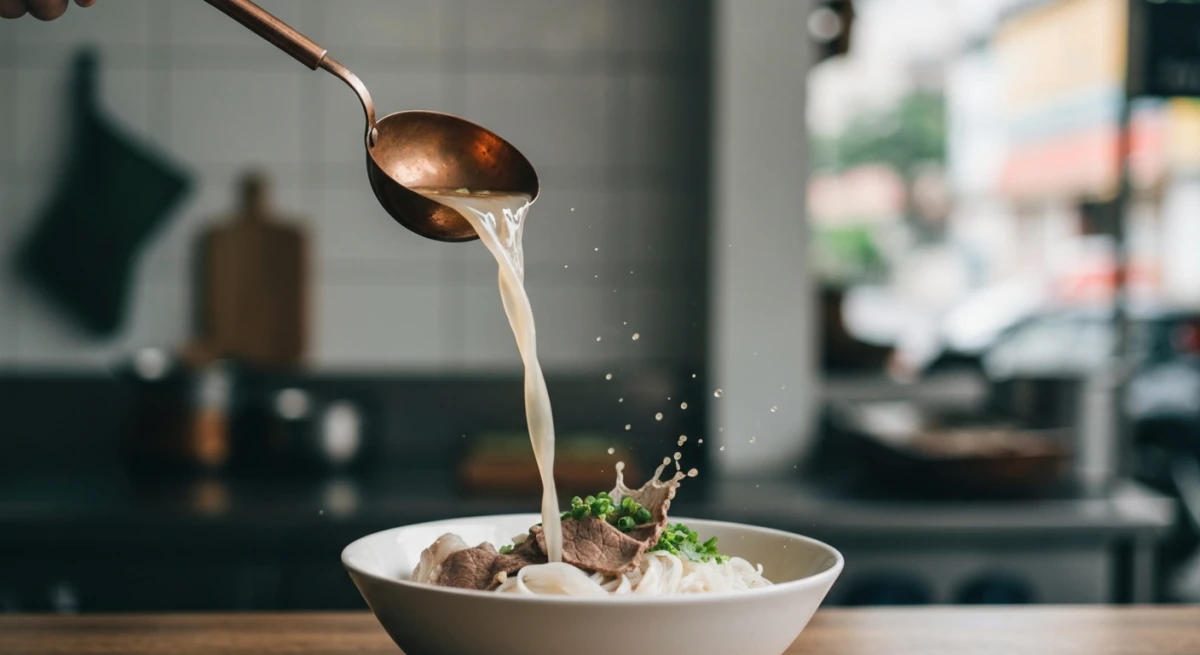
You cannot visit Hanoi without eating Pho. Northern Pho is minimalist: it is all about the clarity and depth of the broth, which is simmered for up to 24 hours with beef bones, charred ginger, star anise, and cinnamon. Unlike southern Pho, you will not find bean sprouts, hoisin sauce, or basil on the table here. Instead, it is garnished simply with green onions and cilantro.
- The Ritual: Order a side of "quẩy" (deep-fried dough sticks). Dip these crispy, oily sticks into the hot beef broth until they soften up and absorb the soup.
- Where to Try It: For an intense, rich beef broth, queue up at the historic Phở Gia Truyền Bát Đàn (49 Bát Đàn) or head to Phở Sướng (24B Ngõ Trung Yên), a tucked-away alleyway spot that serves exceptionally tender beef.
4. Bánh Mì (The Indochinese Classic)
While Bánh Mì can be found all over Vietnam, Hanoi's version is distinct. It is less crowded with fillings than the southern style, focusing instead on a perfectly warm, shatteringly crisp baguette, a generous smear of rich liver pâté, homemade mayonnaise, a sprinkle of pork floss, and simple meats.
- Where to Try It: While Bánh Mì 25 (25 Hàng Cá) is wildly popular and highly accommodating for Western palates (offering avocado and vegetarian options), purists should seek out Bánh Mì Mama (54 Lý Quốc Sư) for a dirt-cheap, authentic street-side crunch.
5. Nộm Bò Khô (Green Papaya Salad with Dried Beef)
For a refreshing palate cleanser amidst the heavy noodle dishes, Nộm Bò Khô is unmatched. This dish combines finely shredded green papaya and carrots with chewy pieces of spiced dried beef jerky, fresh mint, coriander, and roasted peanuts, all tossed in a sweet-and-sour vinaigrette.
- Where to Try It: Nộm Bò Khô Long Vi Dung (23 Phố Hoàn Kiếm), located right next to the lake. Sit on the curb on tiny plastic chairs and watch the lakefront crowds go by.
6. Chè (Traditional Sweet Soup Desserts)
Vietnamese desserts are usually soupy, icy, and highly textured. Chè is a generic term for sweet soups, puddings, and drinks. A typical bowl of "Chè Thập Cẩm" (mixed dessert) includes colorful grass jellies, sweetened mung beans, lotus seeds, coconut cream, and shaved ice.
- Where to Try It: Xôi Chè Bà Thìn (95 Hàng Bạc). Operating since the 1930s, this historic shop is famous for traditional hot sweet soups poured over savory, chewy sticky rice, as well as refreshing summer iced versions.
7. Cà Phê Trứng (Hanoi's Iconic Egg Coffee)
Invented in 1946 by a bartender at the Sofitel Legend Metropole during a wartime milk shortage, egg coffee has become a global sensation. Creamy, sweet egg yolks are whipped with condensed milk and sugar into a thick, meringue-like froth, which is then layered over a cup of intense, dark-roasted Vietnamese robusta coffee. It tastes like a warm liquid tiramisu.
- Where to Try It: Café Giảng (39 Nguyễn Hữu Huân), founded by the inventor himself. Enter through a narrow, dark alleyway to find a rustic multi-level cafe filled with low wooden chairs and the hum of conversation.
Guided vs. DIY Hanoi Old Quarter Food Tour: Which is Best?
When planning your culinary journey, you will face a fundamental decision: Should you book an organized tour or map out your own itinerary? Both options offer uniquely different experiences.
Guided Food Tours: The Hassle-Free Deep Dive
Booking a guided walking or motorbike food tour is ideal for first-time visitors, solo travelers, or those with limited time.
- Pros:
- Zero Friction: You don't have to navigate chaotic streets while looking at Google Maps.
- Storytelling: A local guide (often bilingual university students) will explain the cultural history of the dishes and the families who have been cooking them for generations.
- Access to Hidden Alleys: Guides will take you through narrow "dark tunnels" and private residential blocks to find spots that are completely invisible from the main streets.
- Hygiene and Communication: Guides know which stalls are consistently safe and can easily communicate food allergies to vendors.
- Cons: Less flexibility to linger, slightly higher cost ($25–$45 USD per person), and you are sharing the experience with a group of strangers.
DIY (Self-Guided) Food Tour: The Ultimate Adventure
If you love exploring at your own pace, a DIY food tour allows you to customize every bite, eat whenever you want, and save money.
- Pros: Highly flexible, incredibly budget-friendly, and provides a raw, unfiltered sense of adventure.
- Cons: It is easy to get overwhelmed by the traffic, language barriers make customizing dishes difficult, and you might accidentally wander into low-quality tourist traps.
The Ultimate 3-Hour DIY Food Tour Walking Itinerary
If you decide to go the DIY route, here is a highly optimized, logical walking path that minimizes backtracking and maximizes flavor variety:
- 5:00 PM - The Appetizer: Start at Bánh Cuốn Gia Truyền Thanh Vân (14 Hàng Gà) for a light, delicate plate of steamed rice rolls. This is the perfect, non-filling starter.
- 5:45 PM - The Main Event: Walk 10 minutes southeast to Bún Chả Ta (21 Nguyễn Hữu Huân). Enjoy a steaming bowl of charcoal-grilled pork and cold rice noodles.
- 6:45 PM - The Palate Cleanser: Head southwest toward Hoan Kiem Lake. Stop at Nộm Bò Khô Long Vi Dung (23 Phố Hoàn Kiếm) for a refreshing, crunchy green papaya salad with beef jerky.
- 7:30 PM - The Grab-and-Go: Walk slightly north to Bánh Mì Mama (54 Lý Quốc Sư) to grab a crispy baguette to share.
- 8:15 PM - The Sweet Finish: End your evening at Café Giảng (39 Nguyễn Hữu Huân) for a luxurious hot egg coffee, or Xôi Chè Bà Thìn (95 Hàng Bạc) for a cooling bowl of sweet dessert soup.
The Unwritten Rules of Hanoi Dining: Etiquette & Condiment 101
To eat like a local, you must act like a local. Hanoi’s street food stalls operate on a set of unspoken social contracts that can surprise uninitiated travelers.
1. Sidewalk "Vỉa Hè" Culture & The Tiny Blue Stools
In Hanoi, the sidewalk is not for walking; it is a communal dining room, living room, and parking lot. You will sit on tiny plastic stools that are barely a foot off the ground.
- The Reason: These stools are highly practical. They allow vendors to maximize tiny spaces, quickly pack up their entire shop if the police arrive to clear the sidewalks, and keep the dining experience informal and egalitarian. Embrace the tight squeeze—it is part of the charm.
2. The Table Condiment Tray is Your Control Panel
Vietnamese dishes are rarely served fully seasoned. Instead, chefs expect you to customize the dish at the table using the condiment tray.
- Kumquat (Quất) vs. Lime (Chanh): Northern Vietnamese prefer kumquats for their aromatic skin and sweet-sour juice. Squeeze 1-2 halves into your dipping sauce or noodle broth.
- Garlic Vinegar (Giấm Tỏi): Essential for beef Pho. A spoonful of this tangy garlic liquid cuts through the rich, fatty broth, instantly brightening the flavor profile.
- Chili Sauce (Tương Ớt): Hanoi-style chili sauce is bright orange, smooth, and tangy, made from fermented local chilis. It is completely different from sweet Thai sweet chili sauce or sriracha.
- Fresh Chili (Ớt Tươi): Tiny bird's eye chilis are incredibly hot. Use with extreme caution.
3. The Floor is the Trash Can (And That's Okay!)
When you sit down, you will likely notice used tissues, lime wedges, and wooden skewers littered all over the floor under the tables. Do not be disgusted.
- The Etiquette: Tables at street food stalls are incredibly small. To keep the eating surface clean, locals throw their trash directly on the floor. Staff constantly sweep the floors in batches between customer rushes. Putting your trash back on the tiny table or trying to stack dirty tissues is actually considered more of an inconvenience to the vendors. Throw it under the chair and let the system work.
Street Food Safety & Hygiene: Eat Without Fear
"Hanoi Belly" is a common worry among travelers, but simple precautions can keep you completely healthy.
- Follow the Crowds (Đông Khách): This is the golden rule of street food globally. A stall packed with local families and office workers means two things: the food is delicious, and the ingredient turnover is extremely high. Raw meats and vegetables do not sit around in the heat; they are cooked in real-time.
- Watch the Water and Ice: In Hanoi’s Old Quarter, almost all commercial ice is manufactured in central plants as hollow, cylindrical tubes. This ice is made from purified water and is perfectly safe to consume. Avoid crushed block ice, which is often transported in questionable conditions.
- Opt for Hot, Fully Cooked Meals: Soups that are boiling on the stove, meats grilled to order, and steamed rice sheets are naturally pasteurized by the heat.
- Listen to Your Body: If you have an exceptionally sensitive stomach, pack activated charcoal tablets or a daily probiotic. Stick to popular, brick-and-mortar street food joints rather than highly mobile street carts early in your trip.
Booking a Guided Tour: What to Look For
If you decide that a guided experience is more your style, look for tours that offer specific advantages:
- Small Group Sizes: Ensure the tour caps bookings at 8-10 people. Walking through the narrow, crowded streets of the Old Quarter with a group of 20 is chaotic and slows down the tasting process.
- Walking vs. Motorbike: Walking tours are ideal for the Old Quarter, as the streets are tightly packed and highly walkable. Motorbike food tours are fantastic if you want to venture outside the Old Quarter to districts like Tây Hồ (West Lake) or Trúc Bạch.
- The "Train Street" Add-On: Many modern food tours include a stop at Hanoi's famous Train Street for a drink. Ensure your tour has a verified connection with a local cafe owner along the tracks, as access to the street is heavily restricted by local authorities for safety.
Frequently Asked Questions (FAQ)
Can I find vegetarian or vegan options on a Hanoi old quarter food tour?
While Hanoi is heavily meat-centric (with pork and beef being the dominant proteins), vegetarian options do exist. Look for "Chay" (vegetarian/vegan) signs. Excellent vegetarian street options include Bánh Mì Chay (with tofu, mushroom pâté, and veggies), Nộm Đu Đủ Chay (papaya salad without beef), and Cà Phê Trứng (egg coffee, which contains dairy/eggs but no meat). For a fully vegan experience, visit specialized vegetarian restaurants like Nhà Hàng Chay Ưu Đàm or Vegito.
How much does street food cost in the Old Quarter?
Hanoi street food is incredibly budget-friendly. A bowl of high-quality Pho or Bun Cha costs between 40,000 to 70,000 VND ($1.60 to $2.80 USD). A Banh Mi costs around 25,000 to 45,000 VND ($1.00 to $1.80 USD), and egg coffee is roughly 30,000 to 40,000 VND ($1.20 to $1.60 USD). A massive, multi-stop DIY food crawl will rarely cost more than $15 USD per person.
Is the street food safe for children?
Yes! Many street dishes are mild and sweet (like Bun Cha or Banh Cuon) and are very appealing to children. Just ensure you stick to highly reputable brick-and-mortar stalls with high customer volume, and avoid adding raw chilis to their dishes.
What is the best time of day to take a food tour?
Late afternoon to early evening (5:30 PM to 8:30 PM) is the prime time. This is when the sidewalk culture truly comes alive, locals finish work, and vendors fire up their grills, filling the streets with incredible aromas and a buzzing atmosphere.
Conclusion
A hanoi old quarter food tour is far more than a simple culinary checklist—it is an immersive dive into the history, social fabric, and resilient spirit of Vietnam’s capital. From the smoky charcoal grills of Bun Cha stalls to the hidden staircases leading to egg coffee sanctuaries, every bite tells a story of survival, adaptation, and culinary mastery. Whether you plunge into the sensory chaos on your own or walk hand-in-hand with a local guide, keep an open mind, grab a tiny blue stool, and let the flavors of Hanoi guide you.