Hanoi is a city that lives, breathes, and eats on the pavement. Walk down any narrow alleyway in the historic Old Quarter, and you are immediately enveloped in a mesmerizing symphony of sights, sounds, and aromas: the sweet, smoky smell of pork grilling over red-hot charcoal, the rich steam rising from massive pots of simmering beef bones, and the clinking of glasses filled with fresh local draft beer. However, for first-time visitors, navigating this legendary culinary landscape can feel like an overwhelming sensory overload. With thousands of street-side stalls, hidden courtyard cafes, and unmarked doorway eateries, knowing what is safe, what is authentic, and how to order is a massive challenge.
This is where booking a private food tour hanoi becomes your ultimate secret weapon. Instead of following generic tourist crowds or eating at Westernized restaurants, a private guide unlocks the real culinary soul of Vietnam's capital. They tailor every single bite to your specific palate and take you to the hidden, generation-old spots where locals have dined for decades. This comprehensive guide will show you why a private tour is the ultimate way to experience Hanoi's street food scene, what iconic dishes you will taste, and how to customize your itinerary for an unforgettable culinary adventure.
Why Choose a Private Food Tour in Hanoi Over a Group Tour?
When planning your culinary journey, you will quickly notice dozens of cheap, mass-market group tours advertised online. While these might seem budget-friendly on the surface, they often come with significant drawbacks that can compromise your dining experience.
First and foremost, group tours operate on rigid schedules and pre-determined menus. With 10 to 15 other travelers in tow, a guide must take you to large, spacious restaurants that are structurally equipped to handle crowds. Unfortunately, these "tourist-friendly" spots rarely represent the pinnacle of Hanoian cuisine; they are often sanitized, dumbed-down versions of local dishes designed not to offend any generic palate. In contrast, a private food tour in Hanoi allows you to squeeze onto the tiniest plastic stools in hidden alleyways that can only accommodate three or four people at a time. This is where the truly exceptional, generation-old food is served by families who have perfected a single recipe over several decades.
Secondly, a private tour offers absolute customization. If you have dietary restrictions—whether you are strictly gluten-free, vegan, vegetarian, or have severe peanut allergies—navigating street food stalls on your own or in a large group can be incredibly risky. A private guide can speak directly to the stall owners in native Vietnamese, ensuring that your food is prepared safely, freshly, and correctly without cross-contamination.
Finally, the pacing of a private experience is entirely up to you. If you fall in love with a particular dish and want to order a second portion, or if you want to spend an extra 30 minutes chatting with your guide about the history of the neighborhood, a private tour affords you that luxury. It transforms a checklist-style tourist activity into an intimate, educational, and deeply personal adventure.
The Culinary Anatomy of Hanoi: Iconic Dishes You Must Try
To truly appreciate your Hanoi private food tour, you must understand the foundational dishes that make Northern Vietnamese cuisine so distinct from its Southern counterpart. Northern food is celebrated for its balanced, subtle, and clean flavors, relying heavily on black pepper, fresh herbs, and savory slow-simmered broths rather than the sweetness and heavy chili heat found in Saigon. Here are the non-negotiable dishes you should request on your custom itinerary.
1. Phở Bò & Phở Gà (The Masterclass in Broth)
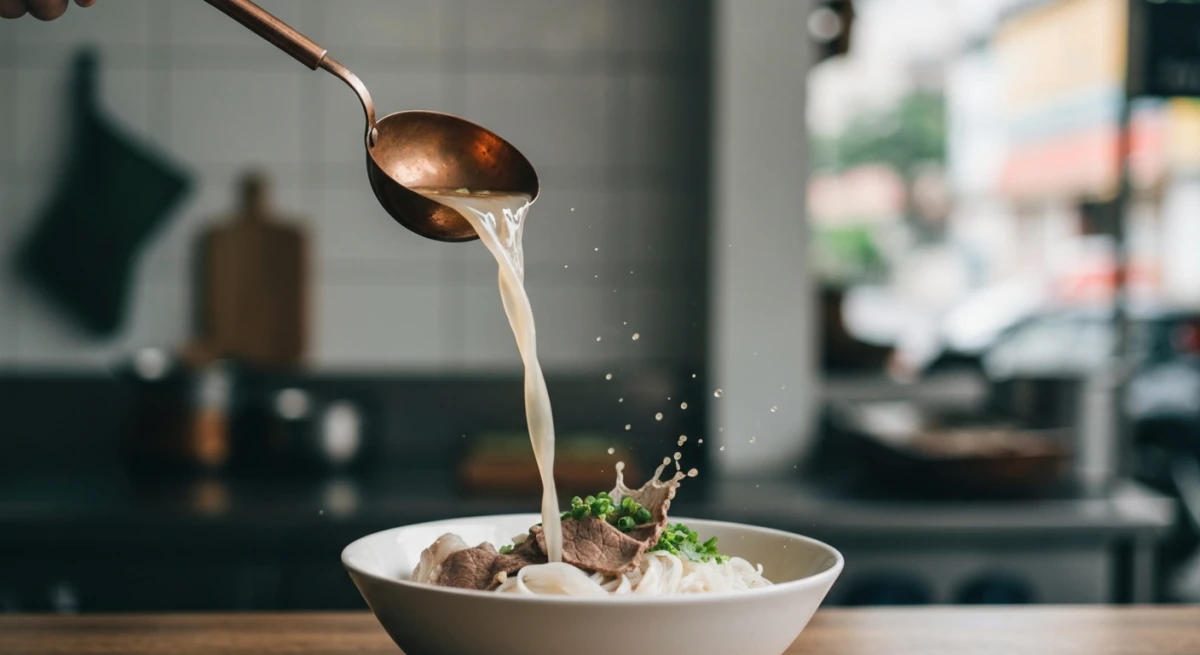
While Pho is famous worldwide, Hanoi is its spiritual birthplace. A true Hanoi Pho is defined by its minimalist elegance. Unlike the Southern style, which is often loaded with bean sprouts, hoisin sauce, and sriracha, Northern Pho features a pristine, clear broth. The beef version (Phở Bò) boasts a deeply aromatic soup simmered for up to 24 hours with beef bones, charred ginger, star anise, cinnamon, and black cardamom. It is served with tender slices of beef, flat rice noodles, and a simple garnish of scallions and coriander. For an adventurous twist, ask your guide to take you to Truc Bach Lake to try Phở Cuốn (Pho Rolls)—uncut sheets of steamed pho noodle wrapped around savory stir-fried beef and fresh herbs, dipped in a sweet-and-sour fish sauce.
2. Bún Chả (The Charcoal-Grilled Lunch of Champions)
No trip to Hanoi is complete without eating Bun Cha, a dish made globally famous when President Barack Obama dined on it with Anthony Bourdain. The dish consists of charcoal-grilled pork patties (chả) and caramelized sliced pork belly submerged in a warm, sweet, savory, and slightly acidic broth made from premium fish sauce, sugar, vinegar, and lime. This is served alongside a plate of cold rice vermicelli noodles (bún) and a literal mountain of fresh herbs, including perilla, coriander, mint, and lettuce. The secret to eating it like a local? Drop a small nest of noodles and a handful of herbs into your warm pork broth, let them absorb the smoky flavors, and slurp them up together.
3. Bánh Cuốn (The Art of Steamed Rice Rolls)
Watching a local vendor prepare Bánh Cuốn is a mesmerizing performance art. The chef pours a thin ladle of fermented rice batter onto a tightly stretched piece of fabric over a steaming pot of water. Within seconds, a tissue-thin, translucent crepe forms. This is gently lifted off using a bamboo stick, filled with a mixture of seasoned minced pork and wood ear mushrooms, and rolled up. Served warm, it is topped with crispy fried shallots and dipped in a light fish sauce infused with fresh lime and chili. Many of the best private food tours will take you to family-run shophouses, such as the famous Tuệ An in the Old Quarter, where the recipe has remained unchanged for over fifty years.
4. Cháo Sườn Sụn (Pork Cartilage Porridge)
For a comforting dish that many tourists miss, ask your guide to find a street-side vat of Cháo Sườn Sụn. Unlike Western-style oat porridge or standard Chinese congee, this Hanoian specialty is made with rice flour ground with rich pork stock, giving it a silky-smooth, almost custard-like texture. It is cooked with tender, slow-simmered pork ribs and crunchy pork cartilage, then topped with quẩy (deep-fried dough sticks), savory pork floss, and a generous dusting of ground black pepper. It is the ultimate Hanoi comfort food, especially on a cool winter evening.
5. Bánh Tôm (Crispy West Lake Shrimp Fritters)
If you venture slightly outside the Old Quarter toward West Lake (Hồ Tây), your guide can introduce you to Bánh Tôm. These are crispy, golden-brown fritters made from shredded sweet potato and whole, fresh-caught prawns. The batter is seasoned with turmeric, deep-fried to a perfect crunch, and served with crisp lettuce leaves and local herbs for wrapping. You dip the entire package into a sweet, sour, and spicy dipping sauce, creating a perfect contrast of textures and flavors.
6. Cà Phê Trứng (Egg Coffee) and Cà Phê Muối (Salt Coffee)
Hanoi’s coffee culture is legendary, and no food tour is complete without a caffeine stop. Egg Coffee (Cà Phê Trứng) was invented in 1946 by Nguyen Van Giang, a bartender at the Sofitel Legend Metropole Hotel, during a wartime milk shortage. He whipped egg yolks with condensed milk to create a rich, creamy, meringue-like foam, which he layered over hot, robust black Vietnamese coffee. It tastes like a warm, liquid tiramisu. Today, while egg coffee remains an iconic classic, a modern twist called Salt Coffee (Cà Phê Muối) has captured the hearts of locals. It balances the bitterness of robusta beans with a savory, salted cream layer, creating a complex and incredibly addictive flavor profile.
Tailoring Your Private Food Itinerary to Your Needs
The beauty of a private food tour in Hanoi is that it is not a one-size-fits-all experience. It can be completely tailored to match your specific interests, dietary requirements, and physical comfort levels.
Overcoming Dietary Restrictions
Eating street food can be a minefield if you have food allergies or dietary restrictions. Here is how a private food tour solves this:
- Gluten-Free / Celiac: While Vietnamese food is naturally rice-heavy, soy sauce, wheat-based thickeners, and cross-contamination are common. A private guide can steer you toward naturally gluten-free dishes like Pho, Bánh Cuốn, and fresh fruit desserts, while explicitly instructing vendors to avoid adding seasoning powders containing wheat.
- Vegetarian and Vegan: Many street food dishes rely heavily on fish sauce (nước mắm) and pork broths. A private guide can curate a customized tour using Hanoi's vibrant network of Chay (Buddhist vegetarian) restaurants. You can enjoy plant-based versions of Pho, Bun Cha, and crispy spring rolls that are just as flavorful as the originals.
- Peanut Allergies: Peanuts (lạc) are a common garnish in Vietnamese salads and noodle dishes. Your guide will pre-screen every single stall and ensure that your dishes are prepared completely peanut-free.
Choosing Your Mode of Transport
How do you want to explore the city? A private food tour can take several forms:
- Walking Tour: Ideal for exploring the tightly packed, atmospheric streets of the Old Quarter. It allows you to slowly absorb the historic architecture, navigate hidden alleyways, and walk off your meals between stops.
- Motorbike or Vespa Tour: For a thrill-seeking foodie, riding on the back of a vintage Vespa or a local motorbike is unmatched. It allows you to cover much more ground, whisking you away from the touristy Old Quarter to residential neighborhoods like Truc Bach, West Lake, and Ba Dinh.
- Cyclo Tour: A slower, highly romanticized way to see the city. While not as nimble as a motorbike, it is highly comfortable and perfect for travelers who want to sit back and watch the city glide past.
What to Expect: A Step-by-Step Walkthrough of Your Tour
If you are wondering how your evening will unfold, here is a breakdown of a typical, highly rated private food experience:
Phase 1: The Personalized Meetup Your English-speaking local guide will meet you directly at your hotel lobby in the late afternoon (typically around 5:30 PM, when the street food stalls begin prepping for the dinner rush). Over a brief introductory chat, your guide will gauge your spice tolerance, verify any food allergies, and outline the tentative route they have mapped out for you.
Phase 2: The Warm-Up Appetizers Your tour begins with light, textural appetizers to awaken your palate. You might start at a small street corner stall specializing in crispy Nem Rán (fried spring rolls) or delicate Bánh Cuốn (steamed rice rolls). Your guide will teach you how to properly assemble your dipping sauce, showing you the exact ratio of fresh lime, garlic vinegar, and sliced bird's eye chili to add.
Phase 3: The Heavy Hitters Next, you will move on to the heartier main courses. This is where you will dive into a steaming bowl of Pho or a sizzling platter of Bun Cha. Your guide will share the historical context behind these dishes—explaining, for instance, how French colonial rule influenced the consumption of beef in Pho, or how Hanoi's geography shaped its unique herb choices.
Phase 4: The Palate Cleanser and Cultural Break To break up the heavy mains, your guide will lead you through a maze of residential alleyways, perhaps stopping at a hidden local wet market or a historic temple. Here, you will try fresh local fruits (like dragon fruit, rambutan, or custard apple) or a refreshing bowl of Chè—a sweet, chilled dessert soup made with coconut milk, grass jelly, lotus seeds, and tapioca pearls.
Phase 5: The Sweet, Caffeinated Finale Your tour will conclude at a hidden café—often located up a narrow, dimly lit staircase or behind a seemingly private shopfront. Here, you will sip on an authentic egg coffee or a salted cream coffee, reflecting on the culinary adventure you just experienced and receiving a list of personalized recommendations from your guide for the rest of your trip.
Essential Street Food Hygiene and Etiquette Tips
Eating street food in Hanoi is incredibly rewarding, but it does require some basic knowledge to keep your stomach happy and respect local customs.
Street Food Hygiene 101
- Follow the Crowds: A busy street food stall with a high turnover of customers guarantees that the ingredients are fresh and have not been sitting out in the heat.
- Look for Boiling Pots: Broth that is kept at a rolling boil is highly sterile and completely safe to consume.
- Ice and Water: In Hanoi, most ice used in drinks is commercially manufactured in clean factories and shipped in tubes. It is generally very safe to consume. However, always stick to bottled water for drinking.
- Wipe Your Utensils: You will notice local diners wiping their chopsticks and spoons with a paper napkin before eating. Feel free to do the same!
Local Dining Etiquette
- Embrace the Stool: The tiny plastic stools are part of the heritage. Sitting low to the ground keeps you out of the flow of street traffic and connects you directly to the street-level energy of the city.
- Handling Your Trash: Most street food stalls have small trash cans or buckets directly under the low tables. Toss your used tissues, lime wedges, and herb stems directly into these bins rather than leaving them on the table.
- Paying the Bill: On a private tour, your food is fully covered, saving you the hassle of carrying small change and calculating currency conversions at every single stall.
Frequently Asked Questions (FAQs)
Q: How much does a high-quality private food tour in Hanoi cost?
A: A reputable private food tour in Hanoi typically costs between $45 and $85 USD per person. This price generally includes a highly trained, English-speaking local guide, all food and drink tastings (typically 6 to 10 distinct items), hotel pickup/drop-off, and transportation.
Q: Are alcoholic drinks included in the tour?
A: Most tours include at least one local beverage, which can be a Vietnamese beer (such as Bia Hà Nội or Bia Trúc Bạch) or a glass of fresh Bia Hơi (Hanoi’s famous, unpasteurized daily draft beer). If you wish to drink more beer throughout the tour, your guide can easily arrange this, though extra drinks may incur a small additional cost.
Q: Is a walking tour physically demanding?
A: Not at all. A typical walking food tour covers roughly 1.5 to 2.5 kilometers (1 to 1.5 miles) over a 3-to-4-hour period. The walking is broken up by frequent sit-down food stops every 15 to 20 minutes, making it highly accessible for travelers of average fitness levels.
Q: What happens if it rains?
A: Hanoi’s street food stalls are highly adaptable. If it starts to rain, vendors will quickly roll out large plastic awnings or move your stools inside their indoor shophouse spaces. Food tours run rain or shine, and eating hot, steaming soup during a sudden tropical downpour is actually a highly atmospheric Hanoi experience!
Q: Can a private food tour accommodate children?
A: Yes! Because the tour is private, the itinerary can be easily modified to include child-friendly dishes, such as sweet banana fritters, non-spicy fried spring rolls, and fresh fruit juices, while keeping the walking distances short and manageable.
Conclusion
A culinary journey through Hanoi is more than just a feast for your stomach; it is an immersive dive into the history, resilience, and heart of Vietnamese culture. By booking a professional private food tour hanoi, you bypass the tourist traps and step directly into the authentic, vibrant world of Hanoi’s culinary masters. From slurping pristine Pho broth in a hidden courtyard to sipping velvety egg coffee overlooking the chaotic streets of the Old Quarter, a personalized tour ensures that your culinary memories of Hanoi will be the absolute highlight of your travels. Prepare your appetite, step onto a tiny plastic stool, and let the real flavors of Hanoi unfold before you.