The Ultimate Guide to Food Tours in Hanoi Vietnam: A Culinary Journey Through the Old Quarter and Beyond
Hanoi is a city that does not merely feed you; it consumes you. From the moment you step onto the bustling pavements of the Vietnamese capital, your senses are bombarded with a chaotic symphony of sights, sounds, and aromas. Motorbikes zip past in a seemingly lawless ballet, the air is thick with the scent of roasted star anise and sizzling pork fat, and the sidewalks are lined with locals sitting on tiny, brightly colored plastic stools, deeply engrossed in steaming bowls of noodles. For any traveler, navigating this sensory overload can be daunting. This is exactly why booking food tours in Hanoi Vietnam has become the ultimate rite of passage for food lovers from across the globe.
Hanoi's culinary identity is distinct from the rest of Vietnam. While Southern Vietnamese cuisine leans sweet and is heavily influenced by coconut milk and fresh herbs, Northern cuisine is characterized by its balance, subtlety, and deep appreciation for clean, savory flavors. It is a kitchen defined by centuries of history, French colonial influences, Chinese proximity, and a fierce pride in local ingredients. In this ultimate guide, we will unpack everything you need to know about experiencing the best street food tours, highlighting the must-taste dishes, explaining how the Michelin Guide has transformed the local scene, and offering crucial tips to ensure your culinary adventure is absolutely unforgettable.
Why a Guided Food Tour is Essential in Hanoi (The Local Advantage)
When planning a trip to Vietnam, many travelers ask themselves: "Can’t I just do a DIY food tour?" While a self-guided stroll through the Old Quarter with a mapping app is entirely possible, it often misses the very soul of Hanoian cuisine. There are several structural and cultural reasons why a guided food tour in Hanoi Vietnam is not just convenient, but essential.
First, there is the "visual barrier" of local dining. To the untrained eye, a local street food stall can look incredibly intimidating. The setup often consists of nothing more than a metal cart, a single propane burner, and a cluster of low plastic chairs spilling onto a narrow sidewalk, right next to rushing traffic. For tourists concerned about hygiene or simply unsure of how to order, it is easy to walk right past some of the city’s culinary masterpieces. A local guide acts as a bridge of trust. They understand which vendors maintain rigorous standards of cleanliness, which ingredients are freshly sourced that morning, and how to navigate the chaotic environment with confidence.
Second, the best food in Hanoi is hidden. The city's geography is defined by its ngõ (narrow, labyrinthine alleys) that wind behind the main thoroughfares. Some of Hanoi's most legendary food stalls are tucked deep inside residential courtyards or down corridors so narrow you have to walk single file. For instance, finding Bún Cá Sâm Cây Si (a legendary fish noodle soup spot) inside the cramped alleys of Ngõ Trung Yên requires local knowledge that Google Maps simply cannot replicate.
Finally, a guided tour offers invaluable cultural context. In Hanoi, street food is a highly specialized craft. Unlike Western restaurants that offer expansive menus, a traditional Hanoian street vendor usually perfects just one dish, utilizing recipes that have been passed down through three or four generations. A passionate local guide doesn't just hand you a bowl of noodles; they tell you the story of the family who made it, explain the delicate balance of the ingredients, and teach you the correct etiquette—such as exactly how many spoonfuls of garlic vinegar to add to your broth, or how to wrap your herbs inside a rice paper roll.
The Must-Taste Dishes on Your Hanoi Food Tour
Any high-quality food tour in Hanoi Vietnam will take you on a curated journey through a sequence of sweet, savory, hot, cold, crispy, and comforting dishes. To help you prepare your palate, here are the non-negotiable culinary icons of the capital that you must look out for:
1. Phở Bỏ (Beef Noodle Soup)
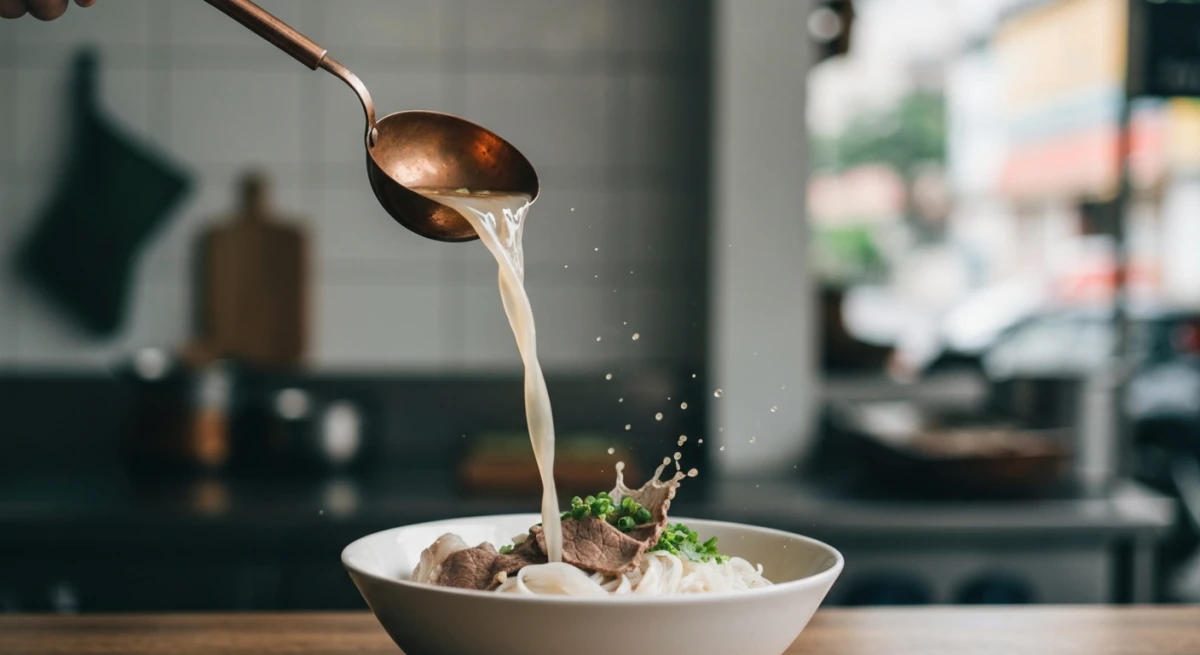
No trip to Vietnam is complete without a bowl of phở, but the Northern variation (Phở Bắc) is a completely different beast compared to the sweet, herb-laden bowls found in Ho Chi Minh City. In Hanoi, phở is an exercise in minimalism. The broth is the star of the show: a clear, deeply aromatic consommé made by simmering beef bones, charred ginger, onions, cinnamon, star anise, and black cardamom for upwards of twelve hours. It is served with flat, artisanal rice noodles, tender slices of beef (such as phở bỏ chín for well-done brisket or phở bỏ tái for rare beef cooked instantly by the boiling broth), and a generous handful of fresh green onions. To eat it like a true Hanoian, squeeze a wedge of lime, add a dash of homemade chili sauce, and dip crispy quẩy (deep-fried dough sticks) directly into the hot broth.
2. Bún Chả (Charcoal-Grilled Pork with Rice Noodles)
Perhaps the most famous street food dish in Hanoi, Bún Chả exploded onto the global stage in 2016 when the late Anthony Bourdain and President Barack Obama shared a casual meal of it at a local joint. The dish is a magnificent interplay of smoky, sweet, and sour flavors. Fatty cuts of pork belly and minced pork patties are marinated in caramelized sugar, garlic, and fish sauce, then grilled over hot charcoal until caramelized and charred. These smoky meats are served submerged in a warm, diluted dipping sauce (nước chấm) made of fish sauce, sugar, vinegar, lime juice, and thin slices of green papaya and carrot. On the side, you receive a plate of cold rice vermicelli noodles (bún) and a massive mountain of fresh herbs, including perilla, Vietnamese balm, and coriander. You dip the noodles and herbs into the warm pork broth, creating a perfect bite.
3. Bánh Mì (Hanoi Style)
While the Southern bánh mì is famous for being loaded with cold cuts, pickled daikon, cucumber, jalapeños, and massive handfuls of cilantro, Hanoi's version is beautifully simple and elegant. Here, the focus is on the quality of the bread and the core ingredients. The baguette is toasted until incredibly light and shatteringly crispy. It is sliced open and spread with a thick, rich layer of warm liver pâté, followed by a smear of homemade mayonnaise, a sprinkle of pork floss, and perhaps some simple cucumber slices and a dash of local chili sauce. It is warm, savory, crispy, and comforting—the ultimate street snack.
4. Bánh Cuốn (Steamed Rice Rolls)
Watching a street vendor make Bánh Cuốn is akin to watching a masterclass in culinary performance art. The chef ladles a thin spoonful of fermented rice batter onto a tightly stretched piece of cloth over a pot of boiling steam. Within seconds, the batter solidifies into a translucent, delicate sheet. Using a thin bamboo stick, the vendor deftly lifts the hot sheet off the cloth, places it on a greased surface, fills it with a mixture of minced pork and wood ear mushrooms, and rolls it up. It is served warm, topped with a generous sprinkle of crispy fried shallots, accompanied by chả quế (cinnamon-flavored pork sausage) and a mild, sweet-savory dipping sauce.
5. Cà Phê Trứng (Egg Coffee)
To top off your culinary journey, you must try Hanoi's legendary egg coffee. This unique beverage was born out of necessity in 1946 during the First Indochina War. A bartender named Nguyen Van Giang, who worked at the historic Sofitel Legend Metropole Hanoi hotel, found himself facing a severe shortage of fresh milk. Resourceful and creative, he decided to whip egg yolks with sweetened condensed milk and sugar to create a rich, creamy, meringue-like foam, which he poured over robust, dark-roasted Vietnamese robusta coffee. The result is an incredibly decadent drink that tastes like a warm, liquid tiramisu. Visiting the original Café Giảng on Nguyen Huu Huan Street to sip this liquid gold is an absolute highlight of any Hanoi itinerary.
The Michelin Guide Impact: Hanoi Street Food Under the Spotlight
The arrival of the Michelin Guide in Vietnam has fundamentally changed how travelers perceive the local culinary scene. Rather than focusing exclusively on high-end, white-tablecloth restaurants, the Michelin inspectors heavily recognized the genius of Hanoi's humble street food culture. Several local street food spots have been awarded the prestigious "Bib Gourmand" status (representing exceptionally good food at a moderate price) or are designated as "Michelin Selected."
For instance, Phở 10 Lý Quốc Sư and the legendary Phở Gia Truyền Bát Đàn have both received major Michelin recognition for their masterfully crafted broths. Bún Chả Ta in the Old Quarter has been celebrated for its perfectly balanced, smoky dipping sauce. Meanwhile, places like Bánh Cuốn Bà Hoành have been highlighted for keeping multi-generational recipes alive.
While this global recognition is well-deserved, it has also resulted in massive, chaotic queues of tourists at these celebrated spots. This is where booking a curated, guided food tour in Hanoi Vietnam provides a massive advantage. Reputable food tour companies have established deep relationships with these Michelin-rated vendors. When you travel with an expert guide, they can often bypass the peak wait times, secure seating for your group on those coveted plastic stools, and ensure you experience the absolute best of Hanoi’s Michelin-recognized street food without wasting hours of your precious vacation standing in line.
Types of Food Tours in Hanoi Vietnam: Walking, Motorbike, and Train Street
To cater to different travel styles, dietary preferences, and adventure levels, food tours in the capital are generally divided into three distinct formats:
The Classic Street Food Walking Tour
For first-time visitors, a walking tour is the gold standard. These tours typically take place in the historic Hoan Kiem district, specifically within the maze of the Hanoi Old Quarter’s 36 Guild Streets. Because the streets are highly dense and packed with historical architecture, walking is the most practical way to transition from one hidden alleyway stall to the next. These tours typically cover 6 to 8 stops over a 3-hour period, allowing you to walk off the calories as you transition from savory mains to refreshing desserts.
The Thrilling Motorbike/Vespa Food Tour
If you are looking for an injection of adrenaline alongside your culinary adventures, a motorbike food tour is unmatched. On these tours, you ride pillion on the back of a vintage Vespa or a local scooter, guided by an experienced local driver. Motorbike tours allow you to escape the tourist-heavy Old Quarter and explore outer districts like West Lake (Tây Hồ), Ba Dinh, and the Truc Bach neighborhood. You can zoom across the historic Long Bien Bridge, stop at lakeside stalls for Bánh Tôm (crispy sweet potato and shrimp cakes), and experience the vibrant, neon-lit nightlife of Hanoi from a local's perspective.
The Train Street & Night Market Food Tour
Hanoi’s famous "Train Street"—where a railway track runs directly down a narrow residential corridor, just inches from the front doors of homes and cafes—is one of the most Instagrammed spots in the world. Many modern food tours combine a culinary walking tour with a scheduled stop at a Train Street cafe. This allows you to feast on local snacks like dried beef salad (Nộm Bò Khô) or crispy spring rolls (Nem Rán) while waiting for the thrilling rush of the local train as it barrels past.
Navigating Dietary Restrictions & Allergies in Hanoi
One of the major weaknesses of generic travel listicles is that they ignore the realities of travelers with dietary restrictions. Vietnamese street food is incredibly delicious, but it can be a minefield for vegetarians, vegans, celiacs, or those with severe peanut allergies. Here is how a professional food tour can help, along with some essential phrases and tips:
For Vegetarians and Vegans
Traditional Northern Vietnamese street food heavily relies on nước mắm (fish sauce) and lard for frying. Even a simple vegetable broth might have been simmered with pork bones. If you are vegetarian or vegan, trying to navigate the street food stalls on your own can be highly frustrating. Booking a private, vegetarian-specific food tour in Hanoi Vietnam is highly recommended. Your guide can coordinate directly with vendors to ensure your dishes are made with mushroom-based seasoning, soy sauce, and vegetable oil. Look out for Bún Đậu Hũ (rice noodles with crispy fried tofu, served with fresh herbs) and Chè (sweet coconut milk and mung bean desserts).
- Key Phrase: "Tôi ăn chay" (I eat vegetarian) / "Không nước mắm" (No fish sauce).
For Gluten-Free Travelers (Celiac)
The good news is that the vast majority of Vietnamese noodles are made of rice (bún and phở), and bánh cuốn sheets are made from fermented rice batter. However, gluten can hide in soy sauce, marinades, deep-fried batters, and of course, the wheat-based baguettes used for bánh mì. A knowledgeable food tour guide will be able to steer you toward safe, naturally gluten-free options like fresh spring rolls (gỏi cuốn) or dry rice noodle dishes that use pure fish sauce dressings instead of soy sauce.
- Key Phrase: "Tôi không ăn được bột mì" (I cannot eat wheat flour).
For those with Peanut Allergies
Peanuts (lạc) are a very common garnish in Vietnamese cuisine. They are frequently sprinkled over salads, mixed into dipping sauces (especially for spring rolls), and added to traditional desserts. If you have a severe peanut allergy, you must communicate this clearly. A food tour guide will verify every single kitchen preparation before any plate is placed in front of you.
- Key Phrase: "Tôi bị dị ứng lạc" (I am allergic to peanuts) / "Không cho lạc" (Do not put peanuts).
How to Choose and Book the Perfect Food Tour
With dozens of tour operators occupying the streets of Hanoi, selecting the right experience can feel overwhelming. To ensure you have a safe, authentic, and highly enjoyable tour, keep the following criteria in mind:
- Keep Group Sizes Small: Avoid large, commercial group tours. If a tour group exceeds 8 to 10 people, it becomes highly impractical to sit together at authentic, local street food stalls, which are often incredibly tiny. Look for boutique operators that limit their group sizes to 6 or 8 guests for a more intimate, conversational experience.
- Prioritize Licensed, Local Guides: Make sure the tour company employs passionate local students or professional guides who actually grew up in Hanoi. Their personal stories, childhood memories, and cultural insights are what elevate a simple food tour into a profound travel experience.
- Verify What is Included: Read the fine print before booking. A premium food tour should be fully all-inclusive, covering all food tastings, mineral water, local beer or egg coffee, and transport if applicable. You should not have to pull out your wallet at every single stop.
- Read Recent Reviews: Culinary landscapes change rapidly. A street food stall that was legendary three years ago might have closed down or changed ownership. Look at recent reviews on TripAdvisor, Google, or travel forums to ensure the tour operator is actively curating the best, fresher locations.
Frequently Asked Questions (FAQ)
Are street food tours in Hanoi safe for sensitive stomachs?
Yes, absolutely, provided you go with a reputable guide. Local guides understand which vendors have high ingredient turnover—meaning the food is cooked fresh to order and never sits out. As a general rule of thumb, look for stalls that are packed with locals; a high volume of customers guarantees fresh, safe ingredients. Additionally, always ensure that your drinks use purified ice and that you stick to bottled mineral water.
How much do food tours in Hanoi typically cost?
A high-quality street food walking tour in Hanoi generally costs between $20 and $35 USD per person. Premium motorbike tours or curated Michelin-themed experiences that include specialized transport, private guides, and premium ingredients typically range from $45 to $75 USD per person.
What is the best time of day to take a food tour?
Evening tours (typically starting around 5:30 PM or 6:00 PM) are highly recommended. Not only is the weather cooler and more comfortable for walking, but Hanoi’s street food culture truly comes alive after dark. Sidewalks fill up, neon signs light up the alleys, and the atmosphere becomes incredibly vibrant. However, if you are a morning person, a breakfast tour is a fantastic way to experience the city's waking rituals, fresh market produce, and the iconic morning phở culture.
Is beer or alcohol included in Hanoi food tours?
Most guided food tours in Hanoi will include at least one local beer, usually Bia Hơi (fresh, unpasteurized draught beer brewed daily, containing a low alcohol content of around 3%). Sipping ice-cold Bia Hơi on a lively street corner like Ta Hien (known as Beer Street) while munching on roasted peanuts or skewered meats is a quintessential Hanoian experience.
Conclusion
Food tours in Hanoi Vietnam offer far more than just a full stomach; they provide an intimate, sensory-rich window into the history, soul, and daily life of this ancient city. By stepping out of your comfort zone, sitting on those iconic tiny plastic stools, and trusting a local guide to lead you down the historic, narrow ngŁ of the Old Quarter, you will discover that Hanoi's street food is not just a culinary style—it is a beautiful, thriving way of life. Book your tour, bring an open mind and an empty stomach, and prepare to fall in love with the ultimate street food capital of the world.