Hanoi is a sensory explosion. In the heart of Vietnam's capital, the air is thick with the scent of roasted star anise, sizzling pork fat, and rich robusta coffee. For travelers, embarking on a hanoi street food walking tour is not just an activity; it is the ultimate way to unlock the city's culture. Whether you choose a guided experience or a self-guided DIY journey, navigating the maze of the Old Quarter on foot is the only way to truly experience how locals eat. This guide covers everything you need to know to conquer Hanoi's legendary food scene safely and deliciously.
Sidewalks and Low Stools: The Heart of Hanoi's Food Culture
To understand the magic of a hanoi street food walking tour, one must understand the anatomy of a Hanoi sidewalk. In the labyrinth of the Old Quarter (Phố Cổ), the sidewalk is a living stage where daily life, commerce, and gastronomy collide. The architecture of the city drives this street-centric lifestyle. Due to an ancient tax based on storefront width, traditional Hanoian homes were built as 'tube houses' (nhà ống)—narrow, deep structures with tiny facade openings. Because these homes are dark and cramped, residents gravitate outward. The sidewalk became the natural living room, workshop, and kitchen of the neighborhood.
Historically, the Old Quarter is famous for its 36 guild streets, each historically dedicated to a specific craft—such as Hàng Bạc for silver or Hàng Gai for silk. This specialization translates directly into Hanoi's contemporary food culture. Unlike Western restaurants with massive menus, a traditional Hanoian street food stall does one thing. A bún chả stall makes bún chả; a phở shop makes phở. They focus on perfecting a single family recipe, often passed down through generations. This absolute mastery of one dish is why street food in Hanoi achieves culinary heights that rival Michelin-starred restaurants.
At the center of this outdoor theater is the ubiquitous plastic stool. Measuring barely six inches off the ground, these colorful stools are the great equalizers of Vietnamese society. On any given evening, you will see high-earning business executives in suits sitting knee-to-knee with cyclo drivers, all hunched over the same steaming bowls. Status is stripped away, and only the quality of the broth matters. Eating here requires a willingness to embrace the chaos—the roar of passing motorbikes, the calls of mobile vendors, and the steam curling up from charcoal burners. It is a highly sophisticated culinary philosophy that rewards slow, mindful eating.
Crucially, a walking tour introduces travelers to the distinct culinary identity of Northern Vietnam. Unlike the sweet, herb-packed dishes of Ho Chi Minh City or the fiery, spice-forward profiles of Central Hue, Hanoian cuisine is defined by restraint, balance, and clean, subtle flavors. Northern chefs do not rely on heavy sugar or excessive chili; instead, they focus on the natural sweetness of bone broths, the earthy warmth of black pepper, and the bright acidity of lime and vinegar. It is a highly sophisticated culinary philosophy that rewards slow, mindful eating.
The Sacred Six: Dishes That Define a Hanoi Street Food Walking Tour
No culinary exploration of the capital is complete without sampling the foundational dishes that have put Hanoi on the global gastronomic map. Here are the six essential specialties you must look for on your hanoi street food walking tour, along with the legendary spots where generations of families have perfected them.
1. Phở Bò (Beef Noodle Soup)
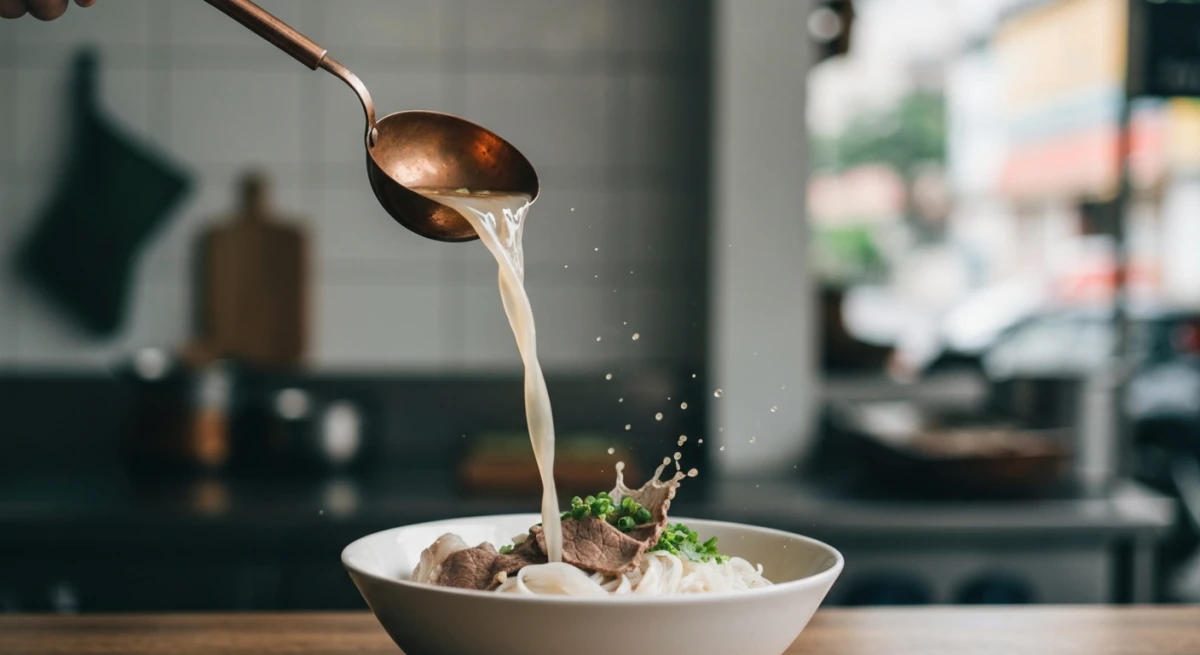
Phở is the undisputed national dish of Vietnam, but its spiritual home is Hanoi. Born of a late-19th-century culinary fusion between French colonial beef-eating habits and Chinese noodle-making traditions, Hanoian Phở Bò is a masterclass in clarity. The broth is boiled for up to twelve hours using beef marrow bones, charred ginger, onions, cinnamon, star anise, cloves, and black cardamom, resulting in a rich, amber liquid that is deeply savory.
- How to eat it like a Hanoian: Under no circumstances should you add bean sprouts or sweet hoisin sauce. Hanoians view these additions as a direct insult to the chef's hard-won broth. Instead, appreciate the purity of the soup first, then customize it gently with a squeeze of fresh lime (or garlic vinegar) and a few slices of bird's-eye chili. Pair it with quẩy (crispy fried dough sticks) which you dunk directly into the soup.
- Where to go: Phở Gia Truyền Bát Đàn (49 Bát Đàn, Hoàn Kiếm). Be prepared to wait in line—a rare sight in Vietnam, which proves its legendary status.
2. Bún Chả (Grilled Pork with Vermicelli Noodles)
If Phở is Hanoi’s morning prayer, Bún Chả is its midday celebration. This dish achieved international fame in 2016 when the late Anthony Bourdain and President Barack Obama sat on plastic stools to share a cold Hanoi beer and a hot bowl of grilled pork. The dish consists of charcoal-grilled fatty pork belly and pork patties suspended in a warm, sweet-and-sour dipping sauce made of diluted fish sauce, sugar, vinegar, and lime. This is served alongside a plate of cold rice vermicelli noodles (bún) and a massive basket of fresh herbs (perilla, coriander, and mint).
- How to eat it like a Hanoian: Do not pour the sauce over your noodles. Instead, grab a small nest of vermicelli with your chopsticks, dip it into the warm broth containing the pork, grab a piece of the smoky meat along with fresh herbs, and guide the entire mouthful into your mouth. Order nem cua bể (crispy, square crab spring rolls) on the side to dip into the broth.
- Where to go: For the famous presidential experience, visit Bún Chả Hương Liên (24 Lê Văn Hưu). For an Old Quarter classic, seek out Bún Chả 34 (34 Hàng Than).
3. Bánh Cuốn (Steamed Rice Rolls)
Bánh Cuốn is a delicate, light breakfast or late-afternoon snack that showcases incredible culinary dexterity. The dish is prepared by spreading a ladle of fermented rice batter onto a tightly stretched cotton cloth over a steaming pot of boiling water. Within seconds, a paper-thin, translucent rice sheet is formed. The chef lifts it off using a thin bamboo stick, fills it with seasoned minced pork and wood-ear mushrooms, rolls it up, and snips it into bite-sized pieces, topping the rolls with a generous handful of golden, crispy fried shallots.
- How to eat it like a Hanoian: Use your chopsticks to pick up a roll, dunk it into the accompanying warm, sweetened fish sauce (traditionally flavored with a drop of cà cuống, giant water bug essence), and pair it with a slice of chả lụa (Vietnamese pork ham).
- Where to go: Bánh Cuốn Gia Truyền Thanh Vân (14 Hàng Gà, Hoàn Kiếm). Watch the master craft these rolls at lightning-fast speed right at the storefront.
4. Bánh Mì (Hanoian Simplicity)
While the Southern version is a loaded salad bar, the Hanoian Bánh Mì is a lesson in minimalism. Born from French colonial baking techniques and adapted with local ingredients, the classic Northern baguette is smaller, narrower, and incredibly light and crispy. The secret to its crispness is the addition of rice flour to the wheat dough, creating a thin crust that shatters beautifully when bitten.
- The flavor profile: A warm baguette is sliced open, lightly smeared with salted butter and a rich pork liver pâté. It is then filled with simple pork charcuterie, fresh cucumber slices, cilantro, and a drizzle of homemade chili sauce. The result is a perfect harmony of crispy, creamy, savory, and spicy textures.
- Where to go: Bánh Mì 25 (25 Hàng Cá, Hoàn Kiếm) is a beloved favorite that serves exceptionally fresh baguettes. For a traditional taste, try Bánh Mì Lãn Ông (8 Chả Cá) which has been famous for its rich pâté for decades.
5. Cà Phê Trứng (Vietnamese Egg Coffee)
Often called 'liquid tiramisu,' Egg Coffee is Hanoi’s ultimate sweet indulgence. Created in 1946 by Mr. Nguyen Van Giang, a bartender at the Metropole Hotel, the drink was born out of wartime necessity. Due to severe shortages of fresh milk during the First Indochina War, Giang whisked egg yolks with sugar and condensed milk to create a thick, airy custard, which he poured over a shot of intensely bitter, hot robusta coffee.
- How to eat it like a Hanoian: Egg coffee is served in a small bowl of warm water to keep the temperature hot. Do not immediately stir the entire cup together. Use a small spoon to eat some of the sweet, rich egg custard from the top first, then gently stir the thick robusta coffee from the bottom to create a perfect bittersweet balance.
- Where to go: Cafe Giảng (39 Nguyễn Hữu Huân) is the official birthplace and is still run by Giang’s descendants. Alternatively, find Cafe Đinh (13 Đinh Tiên Hoàng), which sits on a rustic second floor overlooking Hoan Kiem Lake.
6. Cháo Sườn Sụn (Pork Cartilage Porridge)
To truly dive into the local food scene, you must try dishes that rarely make it to Western travel shows. Cháo Sườn Sụn is a deeply comforting, silky rice porridge that is a favorite winter snack for Hanoians. Unlike congee made with whole rice grains, this porridge is made from finely ground wet rice flour, giving it a smooth, velvety, almost pudding-like consistency. It is slow-cooked in a rich pork bone broth until thick and creamy, then studded with tender chunks of pork ribs and soft, edible cartilage.
- How to eat it like a Hanoian: The porridge is topped with ruốc (shredded, savory pork floss) and a mound of crispy quẩy (fried dough sticks). Stir the toppings gently into the smooth porridge, allowing the dough sticks to absorb the warm pork broth while remaining slightly crispy.
- Where to go: Cháo Sườn Huyền Anh (14 Đồng Xuân) is situated right next to the historic Dong Xuan Market and comes alive in the afternoon and late into the night.
The Ultimate DIY Hanoi Street Food Walking Tour Itinerary
If you prefer the thrill of self-guided discovery, you can easily conduct your own hanoi street food walking tour. This curated, step-by-step route takes you on an atmospheric three-hour loop through the heart of the Old Quarter, timing each stop perfectly to avoid the heaviest rushes while experiencing the transition of the city from afternoon to evening.
The Walking Route and Timeline
- 3:00 PM — The Starting Point: Chợ Đồng Xuân (Dong Xuan Market) Begin your tour at Hanoi's largest covered market. The streets surrounding the market are packed with vibrant fruit stalls and mobile vendors. Start light: look for a vendor selling Bánh Rán (crispy, deep-fried glutinous rice balls filled with sweetened mung bean paste) for a quick, sweet bite to fuel your walk.
- 3:30 PM — Stop 1: Bánh Mì 25 (25 Hàng Cá) Walk south down Hàng Đường, turning onto Hàng Cá. Here, order a classic Bánh Mì with pâté and grilled pork. Pro-tip: share one baguette between two people to ensure you do not fill up too early on your culinary journey.
- 4:15 PM — Stop 2: Bánh Cuốn Gia Truyền Thanh Vân (14 Hàng Gà) Head west toward Hàng Gà Street. This is the perfect time for a lighter, delicate dish. Grab a table inside and watch the master chef spread the rice batter over steam screens. Order a plate of the classic minced pork and wood-ear mushroom rolls.
- 5:00 PM — Stop 3: Phở Gia Truyền Bát Đàn (49 Bát Đàn) Walk south on Hàng Gà, then turn right onto Bát Đàn. Most phở stalls close in the afternoon and reopen around 5:00 PM for dinner. By arriving right at opening, you will beat the massive local dinner queue. Order a bowl of Phở Tái Nạm (half-done and well-done beef) and a side of quẩy.
- 6:15 PM — Stop 4: Cafe Giảng (39 Nguyễn Hữu Huân) As dusk falls and the streetlights turn on, make your way east toward Hoan Kiem Lake, walking down the historic Hàng Bạc Street. This walk will help you digest your noodles. Turn onto Nguyễn Hữu Huân and enter the narrow alleyway leading to Cafe Giảng. Head upstairs, sit on a low wooden stool, and order a classic hot egg coffee to recharge your energy.
- 7:15 PM — Stop 5: The Grand Finale at Bia Hơi Corner (Tạ Hiện & Lương Ngọc Quyến) Conclude your walking tour at the pulsating epicenter of Hanoi’s nightlife: the Bia Hơi Corner. Walk to the intersection of Tạ Hiện and Lương Ngọc Quyến streets. Grab a tiny plastic stool on the sidewalk, order a freezing-cold glass of Bia Hơi (fresh local light draft beer, brewed daily and sold for under 50 cents a glass), and order a plate of nem chua rán (deep-fried fermented pork rolls) to snack on while enjoying the incredible, chaotic energy of the capital by night.
Survival Skill: Crossing the Hanoi Street like 'Sticky Rice'
Navigating your DIY tour requires mastering the terrifying art of crossing the street in Hanoi. The Old Quarter’s roads are a swirling river of thousands of motorbikes, and waiting for a gap in traffic is a hopeless endeavor. To cross safely, you must implement the legendary 'sticky rice' (xôi) technique:
- Stick Together: If you are traveling in a group, bunch up closely side-by-side. Do not walk in a single-file line. By sticking together like sticky rice, you present a single, easily visible obstacle for oncoming motorbikes to steer around.
- Move at a Slow, Predictable Pace: Step off the curb and walk forward slowly and steadily. Do not run, do not jump, and do not make sudden stops.
- Trust the Flow: Motorcyclists are constantly calculating your trajectory. If you move predictably, they will fluidly part and flow around you like water around a stone.
- No Sudden Eye Contact or Hesitation: Keep your eyes looking ahead and walk with calm confidence. Hesitation is what causes accidents.
Guided Tour vs. DIY: Which is Right for You?
Deciding whether to book a professional guided hanoi street food walking tour or attempt a self-guided DIY crawl comes down to your budget, travel experience, and dietary requirements.
The Guided Experience (The Effortless Dive)
For first-time visitors, booking a tour with a local guide is highly recommended. A professional guide acts as a cultural translator. They don’t just show you where to eat; they explain the history of the dishes, introduce you to the multigenerational families behind the stalls, and navigate the language barrier for you. Furthermore, reputable tour operators carefully vet their stalls for food hygiene, significantly reducing the risk of foodborne illnesses. Most guided tours are small groups (under 10 people) and cost between $20 and $45 USD, which typically includes all food and drinks.
- Best for: First-time travelers to Vietnam, solo travelers wanting to meet others, families with children, and those with mild food anxieties.
The DIY Route (The Spontaneous Adventure)
A self-guided walking tour offers ultimate flexibility. You can sleep in, start whenever you want, skip dishes that do not appeal to you, and spend as long as you like at a single spot. It is also incredibly budget-friendly, as you only pay local street prices. A full DIY crawl of 5 to 6 dishes will rarely exceed $10 to $15 USD total per person. However, you will miss out on the deep historical context, and communicating dietary preferences (like allergies or vegetarianism) can be highly challenging at traditional local stalls.
- Best for: Experienced backpackers, adventurous eaters, budget travelers, and those who want complete control over their schedule.
Street Food Survival Guide: Safety, Etiquette, and Dietary Needs
Eating on the street is one of the safest ways to dine in Vietnam because of the high turnover, but a few basic guidelines will keep your stomach happy and your dining etiquette respectful.
How to Avoid 'Hanoi Belly'
Contrary to popular belief, street food is often safer than tourist-facing restaurants because the food is cooked right in front of you, and high local turnover means ingredients do not sit in refrigeration for days. To stay safe:
- Follow the Crowds: Always choose stalls that are packed with local diners. A busy stall means the food is fresh and constantly replenished.
- Watch the Steam: Ensure that your soups, broths, and fried items are served piping hot. Heat kills bacteria.
- The Ice Debate: You do not need to avoid ice in Hanoi. Most street stalls purchase industrially manufactured ice, which is made from purified water. You can recognize safe, purified ice by its hollow, cylindrical shape. Avoid large, hand-crushed ice blocks which may have been transported unhygienically.
- Sanitize Your Utensils: Look for the basket of chopsticks and spoons on your table. It is standard local practice to take a dry paper napkin and thoroughly wipe down your utensils before digging in.
Table Etiquette: Throwing Tissues on the Floor
When you sit down at a traditional street food stall, you might be shocked to see the floor littered with used paper napkins, lime wedges, and wooden toothpick wrappers. In Western dining, this is considered littering or offensive; in Vietnamese street food culture, it is the norm. Because table space is extremely limited on the tiny plastic tables, diners throw waste directly under the table to keep the dining surface clean. Staff sweep the floors continuously between diners, so do not hesitate to do as the locals do if there is no trash bin directly under your plastic stool.
Navigating Dietary Restrictions
Traditional Hanoian street food can be difficult to navigate for vegetarians, vegans, or those with severe allergies due to the widespread use of fish sauce (nước mắm), pork-based broths, and peanuts (lạc).
- Eating Vegetarian/Vegan: Look for the word Chay (vegetarian/Buddhist food). A standard noodle stall will use bone broth even if you ask for no meat, so it is safer to eat at dedicated Quán Chay (vegetarian restaurants) or seek out specialized vegetarian food tours. To state your preference, say: 'Tôi ăn chay' (I eat vegetarian) or 'Không nước mắm' (No fish sauce).
- Peanut Allergies: Peanuts are commonly used as a garnish in dishes like phở trộn (dry mixed noodles) or papaya salads. To warn vendors, say: 'Tôi bị dị ứng lạc' (I am allergic to peanuts).
FAQ: Answering Your Hanoi Street Food Questions
Here are the answers to the most common questions travelers ask when planning a hanoi street food walking tour.
Is Hanoi street food safe for kids? Yes, absolutely. Stick to universally loved, mild dishes like Bánh Mì, Bánh Cuốn, and chicken phở (Phở Gà). Make sure to wipe down utensils, and stick to highly-rated, clean-looking stalls.
Do I need to carry cash for street food? Yes. Hanoi's street food scene is entirely cash-based. Most street vendors do not accept credit cards or foreign currencies. Keep small bills of Vietnamese Dong (VND)—specifically 10,000, 20,000, 50,000, and 100,000 VND notes—handy. A standard street food dish costs between 30,000 and 70,000 VND ($1.20 to $3.00 USD).
Are there guided tours that cater to vegetarians? Yes! Several boutique tour operators in Hanoi offer specialized vegan and vegetarian walking food tours. They will take you to hidden Buddhist vegetarian eateries that serve mind-blowing plant-based versions of classic dishes like phở chay and bún chả chay.
What should I wear on a street food walking tour? Dress comfortably and casually. You will be walking on uneven sidewalks and sitting on extremely low plastic stools, so wear comfortable, closed-toe walking shoes and breathable clothing. Avoid wearing expensive jewelry or carrying bulky bags.
Is the tap water in Hanoi safe to drink? No. Do not drink tap water in Hanoi. Always drink bottled, purified water, which is readily available at every street stall and convenience store.
Conclusion
There is no better way to understand the soul, history, and vibrant spirit of Vietnam’s capital than through a hanoi street food walking tour. From the first slurp of a perfectly balanced beef phở broth to the velvety indulgence of a warm egg coffee, every bite tells a story of cultural resilience, historical adaptation, and pure culinary passion. Whether you choose to navigate the maze of the Old Quarter with an expert local guide or embark on a self-guided DIY adventure, eating on a tiny plastic stool on a buzzing Hanoi sidewalk is a travel rite of passage you will never forget. Grab your appetite, embrace the chaotic charm, and prepare to eat your way through one of the world's greatest food capitals.