There is a distinct magic to Hanoi’s Old Quarter at dusk. The humid air fills with the aroma of charcoal-grilled pork, sizzling turmeric fish, and boiling star-anise beef broths. Sidewalks transform into open-air dining rooms where locals and tourists sit knee-to-knee on tiny plastic stools, completely ignoring the chaotic swarm of motorbikes zipping past. If you want to truly experience the soul of Vietnam's capital, booking or planning a walking food tour hanoi itinerary is not just highly recommended—it is an absolute travel necessity. Hanoi's culinary landscape is complex, historic, and delightfully chaotic, making a walking food tour hanoi experience the ultimate way to eat your way through this ancient city.
Whether you are a seasoned foodie or a cautious traveler taking your first steps into Southeast Asia, this comprehensive guide will help you navigate Hanoi's vibrant street food scene. We will compare guided vs. DIY options, break down the must-try regional specialties, map out an actionable 4-hour self-guided walking itinerary, and share critical insider tips on street food safety, traffic navigation, and cultural etiquette.
Guided vs. DIY: Choosing Your Walking Food Tour Hanoi Adventure
When planning a walking food tour hanoi culinary adventure, your first decision is whether to hire a local guide or strike out on your own. Both approaches have distinct advantages and drawbacks, and the right choice depends on your budget, comfort level with chaotic environments, and interest in cultural history.
The Guided Experience: Deep Cultural Immersion and Stress-Free Navigation
For most first-time visitors, booking a guided walking food tour hanoi experience is the best way to start. Hanoi's Old Quarter can be overwhelming. The sidewalks are crowded with parked motorbikes, active kitchens, and dining patrons, forcing pedestrians to walk in the streets alongside constant traffic. An experienced local guide acts as both a shield and a translator.
Pros of a Guided Tour:
- Insider Knowledge: Guides take you to hidden alleyways and family-run stalls that have spent generations perfecting a single dish. These spots rarely appear on Google Maps or in mainstream English travel blogs.
- Cultural Context: You will learn how to eat each dish. Vietnamese cuisine is highly interactive, requiring specific dipping, wrapping, and herb-pairing techniques. A guide ensures you do not eat a dish incorrectly.
- Food Safety and Hygiene: Reputable tour companies vet their vendors carefully, choosing stalls with high ingredient turnover and clean water filtration systems, drastically reducing your risk of foodborne issues.
- Language Barrier: Ordering custom items or communicating dietary restrictions (such as gluten-free or vegetarian diets) is effortless when a local guide is speaking directly to the cook.
- Cost: Guided tours typically cost between $20 and $35 USD per person, which includes all food, drinks, and guide fees. It is exceptional value.
The DIY Route: Complete Freedom and Adventure
If you prefer to move at your own pace, skip specific ingredients, or enjoy the thrill of getting lost and discovering things spontaneously, a self-guided walking food tour hanoi experience is highly rewarding.
Pros of a DIY Tour:
- Flexibility: You can spend as much or as little time at each stop as you want. If you fall in love with a dish, you can order seconds without worrying about keeping up with a group.
- Customization: You can curate your own menu, focusing exclusively on Michelin-starred spots like Pho 10 Ly Quoc Su or focusing entirely on vegetarian-friendly variations.
- Budget-Friendly: If you are traveling on a shoestring budget, a DIY tour is incredibly cheap. You can eat five or six dishes and have a couple of drinks for less than $10 USD total.
8 Must-Try Northern Specialties on Your Hanoi Food Tour
Northern Vietnamese cuisine is distinct from the sweet, herb-heavy dishes of the South. Hanoian food focuses on delicate, balanced flavors, utilizing black pepper, green onion, and savory dipping broths to create comforting, earthy profiles. Here are the eight unmissable dishes you must look for on your walking food tour hanoi journey.
1. Bún Chả (Charcoal-Grilled Pork with Vermicelli)
Arguably the culinary mascot of Hanoi, Bún Chả consists of seasoned pork patties (chả viên) and slices of pork belly (chả miếng) grilled over open wood-charcoal embers. The smoky, caramelized pork is served swimming in a warm, sweet-savory dipping broth made from fish sauce, vinegar, sugar, and water, garnished with sliced green papaya and carrots. On the side, you receive a plate of cold rice vermicelli noodles (bún) and a massive mountain of fresh herbs, including perilla, Vietnamese balm, mint, and lettuce.
- How to eat it: Grab a small bunch of noodles with your chopsticks, dip them directly into the warm broth, grab a piece of pork, and eat them together with a leaf of fresh perilla.
- Where to go: Bun Cha Dac Kim (1 Hang Manh) for a hearty, Michelin-recommended portion, or Bun Cha Ta (21 Nguyen Huu Huan) for a cleaner, modern setting.
2. Bánh Cuốn Nóng (Steamed Rice Sheet Rolls)
Bánh Cuốn is a breakfast and light dinner staple that showcases incredible culinary technique. The cook pours a thin ladle of fermented rice batter onto a fabric sheet stretched tightly over a pot of boiling water. The batter steams instantly under a domed lid. Using a thin bamboo stick, the cook lifts the translucent, delicate sheet and rolls it up with a filling of minced pork and wood-ear mushrooms.
- How to eat it: The rolls are topped with crispy fried shallots and served with a bowl of warm dipping sauce, which you can customize with fresh lime juice, sliced chilies, and coriander. It is often served with slices of Vietnamese pork sausage (chả lụa).
- Where to go: Bánh Cuốn Gia Truyền (14 Hang Ga) or Bánh Cuốn Bà Hoành (66 To Hien Thanh).
3. Bánh Mì (The Iconic French-Vietnamese Fusion)
While Bánh Mì can be found throughout Vietnam, Hanoi's version is simpler and less heavy on fresh vegetables than its Southern counterpart. It focuses on the quality of the crispy, airy baguette, a generous smear of rich pork liver pâté, salted butter, a sprinkle of cucumber slices, cilantro, pickled carrots, and proteins like barbecued pork or fried eggs, finished with a drizzle of local chili sauce.
- Where to go: Bánh Mì 25 (25 Hang Ca) is extremely popular with tourists for its wide variety of fillings, while Bánh Mì Trâm (252 Cua Nam) offers a fantastic rustic beef stew dip version (Bánh Mì Sốt Vang).
4. The Diversity of Phở (Phở Bò, Phở Trộn, & Phở Cuốn)
Do not make the mistake of thinking Phở is only a hot soup. A comprehensive walking food tour hanoi experience should introduce you to the different formats of this iconic noodle dish:
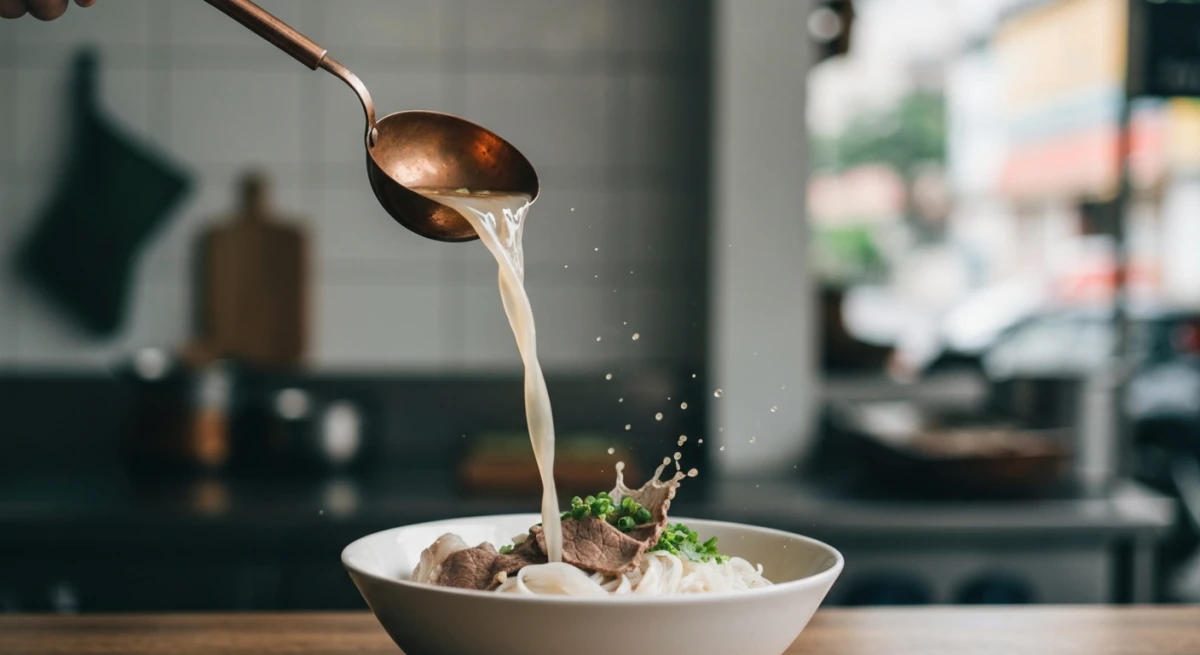
- Phở Bò (Beef Pho Soup): The classic. A clear, deeply aromatic broth spiced with star anise, cinnamon, cloves, and ginger, poured over flat rice noodles and thin slices of rare or brisket beef.
- Phở Trộn (Dry Mixed Pho): Perfect for hot evenings. Cold pho noodles are tossed with shredded chicken or beef, roasted peanuts, fried shallots, fresh herbs, soy sauce, and a touch of sweet vinegar.
- Phở Cuốn (Pho Rolls): Uncut sheets of pho noodles are used as a wrap for stir-fried garlic beef and fresh cilantro, served with a sweet-and-sour dipping sauce. This dish originated near the scenic Truc Bach Lake.
- Where to go: Phở 10 Lý Quốc Sư (10 Ly Quoc Su) for the ultimate soup, or Phở Cuốn Hương Mai (25 Ngu Xa) for the rolls.
5. Bánh Xèo (Sizzling Crispy Savory Pancakes)
Bánh Xèo translates literally to "sizzling cake," named after the sound the rice flour batter makes when hit by a roaring hot skillet. The batter is seasoned with turmeric powder (which gives it a vibrant yellow color, not egg) and coconut milk, then filled with pork, small shrimp, and fresh bean sprouts.
- How to eat it: Cut a piece of the pancake, place it on a sheet of dry rice paper, load it with fresh mint, perilla, and lettuce, roll it up tightly, and dip it into a sweet-and-sour fish sauce mixture.
- Where to go: Bánh Xèo Sáu Phước (74 Cau Dat).
6. Chả Cá Lăng (Turmeric Fish with Dill)
Chả Cá is such an iconic Hanoi dish that an entire street in the Old Quarter was renamed after it (Cha Ca Street). Chunks of firm river catfish are marinated in galangal, turmeric, garlic, and shrimp paste, then pan-fried at your table on a small portable gas stove filled with massive handfuls of fresh dill and spring scallions.
- How to eat it: Assemble your bowl by adding rice vermicelli, roasted peanuts, fresh herbs, a piece of the sizzling turmeric fish, and a drizzle of dipping sauce (traditionalists use pungent shrimp paste/mắm tôm, but fish sauce is widely available for beginners).
- Where to go: Chả Cá Thăng Long (21-31 Duong Thanh).
7. Cà Phê Trứng (Hanoi's Legendary Egg Coffee)
Often described as "liquid tiramisu," egg coffee was invented in Hanoi in 1946 by a bartender named Nguyen Giang. Due to severe milk shortages during the war, Giang whisked egg yolks with sugar and condensed milk to create a rich, velvety foam that could replicate milk in espresso. It was an instant success.
- How to eat it: Sip the hot, bitter robusta coffee through the thick, sweet, custardy egg foam, or scoop up the foam with a spoon like a dessert.
- Where to go: Café Giảng (39 Nguyen Huu Huan), the original birthplace, or Café Đinh (13 Dinh Tien Hoang) for a rustic local vibe overlooking Hoan Kiem Lake.
8. Bánh Tôm (Crispy West Lake Prawn Fritters)
Originating from the shores of West Lake (Hồ Tây), Bánh Tôm consists of sweet potato julienne batter topped with whole fresh prawns, deep-fried until perfectly crispy. The sweetness of the sweet potato matches beautifully with the savory, crispy shrimp.
- Where to go: Nhà hàng Thanh Tâm (43 Phu Tay Ho) or street stalls around the West Lake pagoda areas.
The Ultimate 4-Hour DIY Hanoi Walking Food Tour Itinerary
If you have decided to take the adventure into your own hands, this carefully curated, step-by-step DIY walking food tour hanoi itinerary will guide you through five legendary culinary stops in the heart of the Old Quarter. It is designed to be completed over four leisurely hours, starting at 5:00 PM when the street food vendors are firing up their grills.
Stop 1 (5:00 PM): The Delicate Starter at Bánh Cuốn Gia Truyền
- Location: 14 Hang Ga Street, Hang Bo Ward
- What to order: Bánh Cuốn Nhân Thịt Heo (steamed rice rolls with minced pork and mushrooms) and a side of Chả Quế (cinnamon pork sausage).
- The Experience: Start your evening light. Watch the chef steam the delicate rice sheets right at the front entrance with blinding speed. Eat slowly, enjoy the herbal dipping broth, and prepare your palate for the bold flavors to come.
Stop 2 (5:45 PM): The Charcoal Masterpiece at Bun Cha Ta
- Location: 21 Nguyen Huu Huan Street, Ly Thai To Ward
- What to order: Bun Cha with pork patties and a side of Nem Cua Bể (crab spring rolls).
- The Experience: Walk roughly 10 minutes east from Hang Ga Street. You will smell the sweet smoke of Bun Cha Ta before you see it. Find a seat, and enjoy the perfect balance of hot, smoky grilled pork swimming in a refreshing sweet-and-sour broth, cooled down by fresh herbs.
Stop 3 (6:45 PM): Street Snacks and Fresh Draft Beer at Bia Hơi Junction
- Location: Corner of Ta Hien and Luong Ngoc Quyen Streets
- What to order: A glass of Bia Hơi (freshly brewed local draft beer) and a plate of Nem Chua Rán (deep-fried fermented pork rolls).
- The Experience: Walk north into the pulsing heart of Hanoi’s nightlife. Grab a tiny blue plastic stool directly on the sidewalk of Ta Hien Street. Order a glass of Bia Hơi—Vietnam’s iconic, unpasteurized light beer brewed fresh daily. It costs about 10,000 to 15,000 VND (roughly $0.50 USD). Pair it with crispy, slightly sour nem chua ran to experience how Hanoian youth spend their evenings.
Stop 4 (7:45 PM): The Grab-and-Go Classic at Bánh Mì 25
- Location: 25 Hang Ca Street, Hang Dao Ward
- What to order: Bánh Mì Thập Cẩm (Mixed Banh Mì with pâté, barbecued pork, and ham) or a vegetarian tofu and avocado version.
- The Experience: Walk west back towards the center of the Old Quarter. Bánh Mì 25 offers a lighter, crispy style of baguette that won’t weigh you down. Eat it while wandering through the historic, colorful streets, taking in the bustling evening energy.
Stop 5 (8:30 PM): The Sweet Dessert Finale at Café Giảng
- Location: 39 Nguyen Huu Huan Street, Ly Thai To Ward
- What to order: Cà Phê Trứng Nóng (Hot Egg Coffee) or Cacao Trứng (Egg Cocoa if you prefer no caffeine).
- The Experience: Circle back to Nguyen Huu Huan street to end your evening at the birthplace of egg coffee. Walk down the narrow, unassuming alleyway into a cozy, plant-filled courtyard. Order a hot egg coffee, which is served in a bowl of hot water to keep the egg custard warm and airy. It is the sweet, decadent ending your walking food tour hanoi adventure deserves.
Crucial Tips for Surviving and Thriving in Hanoi's Street Food Scene
Eating on the streets of Hanoi is an active sport. To make the most of your walking food tour hanoi experience, keep these practical survival rules in mind:
1. Master the "Hanoi Slow Walk" to Cross the Street
Crossing the street in Hanoi for the first time can be terrifying. Motorbikes stream continuously like water, and traffic lights are often treated as mere suggestions. The secret is simple: step off the curb, look in the direction of oncoming traffic, and walk forward at a slow, completely predictable, steady pace. Do not stop, run, or make sudden movements. The riders will calculate your speed and seamlessly glide around you like water around a stone.
2. Spot the Signs of High-Quality Street Stalls
To avoid food-borne illnesses, look for stalls with a high turnover of customers. If a vendor is surrounded by a crowd of local families and there is a high pile of bones and discarded napkins on the floor (which is normal in rustic Vietnamese spots), the food is fresh and safe. The ingredients are moving fast, meaning nothing has been sitting out in the heat.
3. Carry Small Cash Denominations
Street food vendors do not accept credit cards, and many will struggle to make change for large 500,000 VND notes on a 30,000 VND order. Keep a stash of 10,000, 20,000, and 50,000 VND notes handy. Also, pay close attention to your bills: the 20,000 VND note (blue polymer) looks remarkably similar to the 500,000 VND note (light blue-green polymer) in low light. Always double-check before handing over cash.
4. Navigating Food Allergies and Dietary Restrictions
- Gluten-Free (Celiac): Vietnamese food is heavily rice-based, meaning noodles (bún, phở) and rice papers are naturally gluten-free. However, soy sauce, wheat binders in meatballs, and crispy wheat-based batters are common. Stick to clean dishes like Pho soup (ensure no soy sauce is added), Bun Cha (skip the spring rolls), and fresh fruits. Carry a translation card explaining that you cannot eat wheat flour (bột mì).
- Vegetarians/Vegans: Look for stalls displaying the word "Chay" (vegetarian). Traditional street stalls use fish sauce in almost every dipping broth. However, Hanoi has a booming vegetarian scene. You can easily find vegetarian Banh Mi (with egg or tofu), Bánh Cuốn filled with wood-ear mushrooms and no pork, and dairy-free coconut ice creams.
Frequently Asked Questions About Walking Food Tours in Hanoi
Is it safe to eat street food in Hanoi?
Yes, street food in Hanoi is generally safe. The city has a highly active culinary culture where dishes are cooked fresh to order at roaring temperatures. To minimize risk, choose busy stalls with high local turnover, drink bottled water, and avoid raw salads that may have been washed in tap water.
How much does a guided walking food tour in Hanoi cost?
Guided walking food tours in Hanoi generally cost between $20 and $35 USD per person. This price typically covers an English-speaking guide, 5 to 8 food stops, drinks (including egg coffee and local beer), and hotel pickup in the Old Quarter.
What should I wear on a walking food tour in Hanoi?
Wear comfortable, closed-toe walking shoes, as you will be navigating broken pavement, wet sidewalks, and active cooking areas. Dress in breathable, casual clothing suitable for warm, humid weather. If you are touring in the winter months (November to February), bring a light jacket as evening temperatures can drop.
Can I do a walking food tour if I am vegetarian?
Absolutely. While classic dishes like Bun Cha and Pho are meat-heavy, most street vendors can customize dishes with tofu or mushrooms. Alternatively, you can book a specialized vegetarian walking food tour or design a DIY itinerary focusing entirely on dedicated "Chay" (vegetarian) restaurants in the Old Quarter.
What is the best time of day to do a walking food tour in Hanoi?
The best time for a walking food tour in Hanoi is in the evening, from 5:00 PM to 9:00 PM. During these hours, the heat of the day dissipates, the night markets open, and popular evening-only street food vendors set up their charcoal grills, creating an incredibly vibrant atmosphere.
Conclusion: More Than Just a Meal
A walking food tour hanoi adventure is more than just a culinary journey; it is an intimate look into the history and spirit of Vietnam. Each family-run stall, tucked-away alley, and shared plastic table tells a story of culinary resilience, French and Chinese historical influences, and the warmth of Hanoian hospitality. By stepping onto the sidewalks, embracing the traffic, and eating like a local, you will discover that the real heart of Hanoi is found in its steaming bowls of broth and sweet cups of egg coffee.