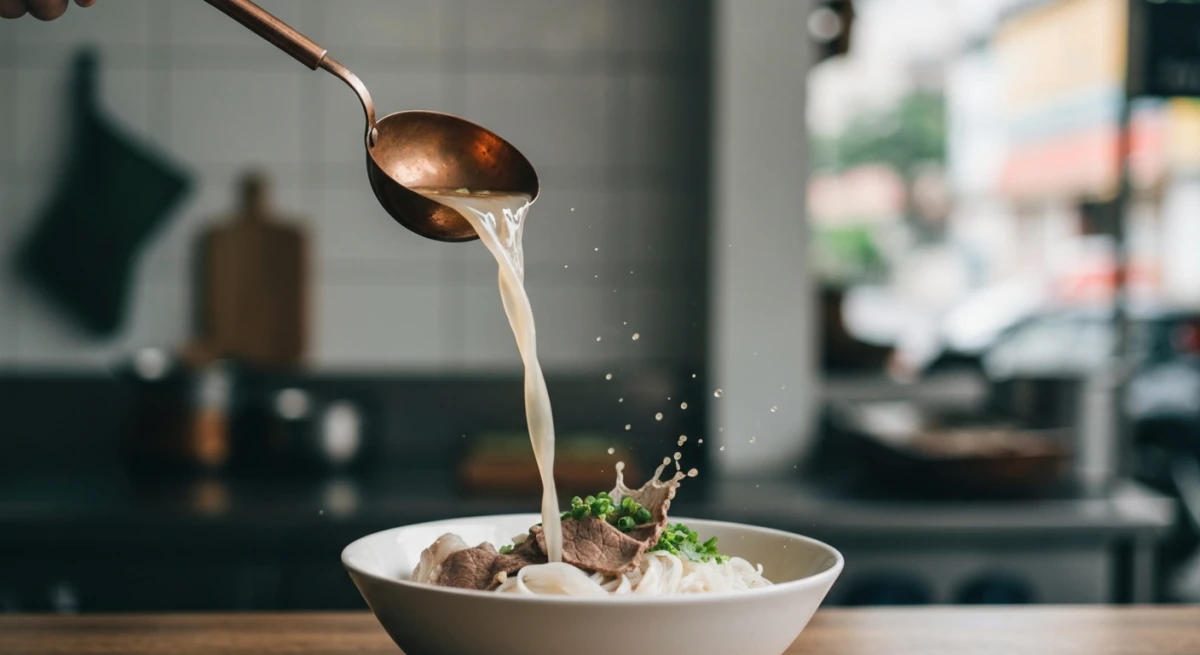
The Soul of Hanoi Street Food: Why the North Hits Different
To truly understand Vietnam, you must eat your way through its capital. But if you arrive in Hanoi expecting the sweet, herb-heavy, chili-laden profiles of Ho Chi Minh City or the fiery spices of Central Vietnam, your palate is in for a shock. Hanoi street food is a completely different beast—one defined by subtlety, deep culinary heritage, and a reverence for the purity of ingredients.
While Southern Vietnamese cuisine was influenced heavily by Cambodian, Thai, and French tastes, resulting in sweeter profiles, heavier uses of coconut milk, and piles of raw herbs, Northern cuisine is restrained and minimalist. Here, flavor is coaxed slowly. Broths are simmered for eighteen hours to extract natural bone sweetness; MSG is used sparingly; and the heat comes from a dash of freshly ground black pepper or a few slices of local bird's-eye chili rather than heavy chili pastes. In Hanoi, a dish is considered perfect when no single ingredient overpowers another. It is a masterclass in culinary balance.
To experience this, you must leave the comfort of air-conditioned dining rooms. The true culinary theater of Hanoi plays out on the sidewalks of the Old Quarter. Here, the pavement serves as the city's communal dining room. On any given evening, you will see well-dressed business executives, scooter-delivery drivers, and foreign backpackers sitting side-by-side on tiny, low-slung plastic stools. There is no hierarchy on the sidewalk; there is only the shared pursuit of a perfectly seasoned bowl of noodles.
10 Must-Eat Hanoi Street Food Dishes & Cult Local Stalls
1. Phở Bò (Beef Noodle Soup) — The Ancestral Standard
Phở is Vietnam's national dish, but Hanoi is its spiritual birthplace. Unlike the Southern version, which is accompanied by hoisin sauce, Sriracha, and a forest of Thai basil and bean sprouts, authentic Hanoian 'phở bắc' (Northern phở) is minimalist. The star of the show is the clear, fragrant broth, simmered overnight with beef marrow bones, charred ginger, shallots, star anise, cinnamon, and black cardamom. It is served simply with flat rice noodles, tender cuts of beef, and a generous handful of green onions and cilantro.
To eat it like a local, order 'quẩy' (deep-fried dough sticks) to dip into the broth, and season your bowl with a splash of rice vinegar infused with garlic and a squeeze of fresh lime. Avoid adding sweet sauces; Hanoians view this as an insult to the chef's hours of broth preparation.
- Where to try it: Phở Gia Truyền Bát Đàn (49 Bát Đàn Street, Hoàn Kiếm). Be prepared to wait in line—this institution has been serving locals since the 1940s. For a lesser-known gem featuring exceptionally rare beef cuts like beef heel muscle, head to Phở Khôi Hói (50 Hàng Vải Street).
2. Phở Trộn & Phở Cuốn (Dry & Rolled Noodle Variations)
When the sticky summer heat hits Hanoi, hot soup becomes less appealing. Enter the city's brilliant cold and dry phở variations. 'Phở Trộn' (dry mixed phở) replaces the hot broth with a sweet, savory, and tangy soy-based dressing. The noodles are tossed with tender chicken or beef, fresh herbs, crispy fried shallots, crushed roasted peanuts, and fresh bean sprouts. It is light, refreshing, and deeply satisfying.
Alternatively, try 'Phở Cuốn' (rolled phở). This dish features wide, uncut sheets of steamed phở noodles used to wrap stir-fried beef, garlic, and fresh herbs (mostly cilantro and Vietnamese mint). You dip these soft, chewy rolls into a light sweet-sour-spicy dipping sauce ('nước chấm').
- Where to try it: For the ultimate dry chicken noodles (Phở Trộn Gà), visit Phở Hạnh (65 Lãn Ông Street). For Phở Cuốn, head to the Ngũ Xã area near Truc Bach Lake, specifically Phở Cuốn Hương Mai (25 Ngũ Xã Street).
3. Bún Chả (Charcoal-Grilled Pork with Vermicelli)
Made famous globally when late chef Anthony Bourdain shared a meal with President Barack Obama in Hanoi, 'Bún Chả' is the undisputed king of Hanoi lunches. The magic of this dish lies in the smoky aroma of pork belly strips and seasoned ground pork patties grilled over open charcoal pits.
These caramelized pork pieces are submerged in a warm, diluted dipping sauce made of fish sauce, vinegar, sugar, and lime juice, garnished with slices of green papaya and carrot. On the side, you receive a plate of cold 'bún' (thin rice vermicelli noodles) and a massive basket of fresh herbs (including perilla, lettuce, and Vietnamese coriander). To eat, you grab a clump of noodles with your chopsticks, dip them into the warm pork-filled broth, and eat them along with a piece of meat and a few herbs.
- Where to try it: While Bún Chả Hương Liên (the 'Obama' spot) is historic, it has become highly commercialized. For an authentic, smoky neighborhood favorite, head to Bún Chả 34 Hàng Than (34 Hàng Than Street, Ba Đình) or the legendary Bún Chả Tuyết (34 Hàng Than is excellent, but Bún Chả Tuyết at 34 Hàng Than is actually a famous Michelin-selected spot).
4. Bánh Mì Sốt Vang (Beef Stew with Baguette)
While the classic cold-cut 'bánh mì' is widely available, Hanoi's cool winter nights call for a comforting French-Vietnamese hybrid: 'Bánh Mì Sốt Vang'. This dish features a rich, wine-infused beef stew heavily spiced with cinnamon, star anise, lemongrass, and ginger. The beef is slow-cooked until it melts in your mouth, swimming in a thick, savory red gravy.
Instead of being served inside the bread, the piping-hot stew is presented in a bowl, flanked by a freshly baked, ultra-crispy Vietnamese baguette. You tear off pieces of the warm bread and use them to scoop up the tender beef and rich sauce.
- Where to try it: Bánh Mì Trâm (252 Cửa Nam Street, Hoàn Kiếm). Their broth is incredibly rich, sweet, and aromatic, making it a beloved local hangout.
5. Bánh Cuốn (Steamed Rice Rolls)
'Bánh Cuốn' is a delicate breakfast staple that showcases incredible culinary technique. A thin batter of fermented rice flour is poured onto a tightly stretched piece of cloth over a pot of boiling water. Within seconds, it steams into a translucent, paper-thin sheet. The chef deftly lifts the sheet off the cloth with a bamboo stick and wraps it around a filling of seasoned minced pork and minced wood-ear mushrooms.
The rolls are brushed with a touch of shallot oil, sprinkled with crispy fried shallots, and served with a bowl of warm, mild fish sauce. Some locals like to add a slice of 'chả lụa' (Vietnamese pork sausage) or ask for a drop of 'cà cuống' (a rare, fragrant giant water bug extract that adds a unique, pine-like aroma to the dipping sauce).
- Where to try it: Bánh Cuốn Gia Truyền Thanh Vân (14 Hàng Gà Street, Hoàn Kiếm). Watch the master chefs steam and roll the sheets right at the entrance of the shop.
6. Bún Đậu Mắm Tôm (Tofu, Pork, Noodles & Fermented Shrimp Paste)
This is the ultimate test for adventurous foodies. 'Bún Đậu Mắm Tôm' is a rustic platter consisting of deep-fried cubes of tofu (crispy on the outside, creamy on the inside), boiled pork leg slices, fried rice-flake patties ('chả cốm'), and pressed blocks of vermicelli noodles.
But the defining element is 'mắm tôm'—a thick, pungent, fermented purple shrimp paste. To prepare your dip, you add a squeeze of fresh kumquat juice, a spoonful of sugar, a splash of hot oil from the frying pan, and fresh chilies, then vigorously whip it with your chopsticks until it froths. If you can handle the intense, earthy, salty aroma, you will find it creates an incredibly complex and addictive flavor profile.
- Where to try it: Bún Đậu Trung Hương (49 Ngõ Phất Lộc, Hoàn Kiếm). Tucked deep inside a charming, winding alley, this family-run spot is famous for sourcing the highest-quality mắm tôm directly from Thanh Hóa province.
7. Chả Cá (Turmeric Dill Fish)
A meal so legendary that an entire street in Hanoi was named after it. 'Chả Cá' features chunks of firm river fish (traditionally hemibagrus, known as 'cá lăng') marinated in turmeric, galangal, ginger, and garlic.
The dish is prepared tableside. A small portable gas stove and a sizzling pan are set in front of you. The server tosses in heaps of fresh dill, spring onions, and herbs, stir-frying them with the marinated fish. You assemble your bowl by combining rice vermicelli, the hot turmeric fish, wilted dill, roasted peanuts, and a splash of 'mắm tôm' (fermented shrimp paste) or light fish sauce. The combination of earthy turmeric, fragrant dill, and salty shrimp paste is phenomenal.
- Where to try it: While the original Chả Cá Lã Vọng on Chả Cá Street is historic, many locals agree the quality has declined. Instead, visit Chả Cá Thăng Long (6B Đường Thành, Hoàn Kiếm), where the fish is consistently tender and the service is excellent.
8. Nộm Bò Khô (Dried Beef Salad)
For a refreshing palate cleanser, look for 'Nộm Bò Khô'. This vibrant street salad features a mountain of thinly shredded green papaya and carrot, topped with strips of sweet and chewy beef jerky, slow-cooked beef spleen, and aromatic herbs like mint and Thai basil.
The salad is drenched in a sweet, sour, and mildly spicy fish sauce dressing and topped with crushed roasted peanuts. The contrast between the crunchy papaya, chewy beef, and zesty dressing makes it a favorite afternoon snack for Hanoian students and workers.
- Where to try it: Nộm Mai Nga (25 Hàm Long Street, Hoàn Kiếm), situated right across from the historic Hàm Long Church.
9. Cà Phê Trứng (Hanoi Egg Coffee)
No culinary tour of Hanoi is complete without drinking 'Cà Phê Trứng'. Invented in 1946 during a dairy shortage caused by the French war, a clever bartender named Nguyen Giang substituted condensed milk and whipped egg yolks for fresh milk.
The result is a decadent beverage. A shot of dark, intense Vietnamese Robusta coffee sits at the bottom of the cup, topped with a thick, velvety custard made by whipping pasteurized egg yolks, sugar, and condensed milk until it achieves a meringue-like consistency. It tastes like a warm, coffee-flavored tiramisu.
- Where to try it: Café Giảng (39 Nguyễn Hữu Huân Street, Hoàn Kiếm). This narrow, hidden cafe is owned by the descendants of the original inventor, and they still serve the best cup in town.
10. Kem Xôi (Sticky Rice Ice Cream)
To finish your meal on a sweet note, seek out 'Kem Xôi'. This humble dessert consists of a scoop of sweet, creamy coconut ice cream sitting atop a bed of warm, pandan-infused green sticky rice. The entire creation is topped with toasted coconut flakes.
The magic of Kem Xôi is the interplay of temperatures and textures: the cold, melting ice cream blending with the warm, chewy, fragrant sticky rice. It is comforting, rich, and incredibly unique.
- Where to try it: Kem Xôi Hai Bà Trưng (No. 8 Hai Bà Trưng Street, Hoàn Kiếm).
The Ultimate DIY Hanoi Street Food Crawl: An Actionable Half-Day Itinerary
If you only have one day in Hanoi and want to experience the best of its street food without booking an expensive guided tour, follow this meticulously planned walking route through the historic Old Quarter.
Phase 1: The Morning Wake-Up (8:30 AM – 10:30 AM)
- Stop 1 (8:30 AM) — Breakfast at Phở Gia Truyền Bát Đàn (49 Bát Đàn): Start your morning early to beat the peak rush. Order a bowl of Phở Tái Nạm (half-rare, half-cooked beef noodle soup) and a plate of quẩy (fried dough). Grab a stool inside or on the sidewalk, pay cash at the counter, and observe the chaotic symphony of the morning commute.
- Stop 2 (9:45 AM) — Mid-Morning Coffee at Café Giảng (39 Nguyễn Hữu Huân): Walk roughly 15 minutes east through the bustling lanes of the Old Quarter. Slide through the narrow alleyway of Café Giảng and find a seat upstairs. Order the classic hot egg coffee (Cà Phê Trứng Nóng). Take your time sipping the rich, sweet custard layers.
Phase 2: The Midday Feast (12:00 PM – 2:00 PM)
- Stop 3 (12:00 PM) — Lunch at Bún Chả 34 Hàng Than: Walk north towards the leafy streets of the Ba Đình boundary. Locate this local favorite and order a serving of Bún Chả. Dip your vermicelli, grab the smoky pork, and enjoy a side of crispy fried crab spring rolls (nem cua bể).
- Stop 4 (1:30 PM) — Sweet Steamed Rice Rolls at Bánh Cuốn Gia Truyền Thanh Vân (14 Hàng Gà): Head back down south into the heart of the Old Quarter. This is the perfect light, savory follow-up. Order a plate of pork and mushroom steamed rolls to share.
Phase 3: The Afternoon Sweet & Savory Stroll (3:30 PM – 6:00 PM)
- Stop 5 (3:30 PM) — Papaya Salad at Nộm Mai Nga (25 Hàm Long): Wander south towards Hoàn Kiếm Lake. Walk past the lake's edge to Hàm Long Street. This crisp, tangy green papaya salad is the ultimate refreshing pick-me-up to conquer the midday heat.
- Stop 6 (5:00 PM) — Evening Sizzler at Bánh Mì Trâm (252 Cửa Nam): As the sun begins to set, head west toward Cửa Nam. Sit down for a comforting bowl of beef stew cooked in red wine with crispy bread. This rich, heavy meal marks the perfect transition into Hanoi's vibrant night scene.
Hanoi Street Food Etiquette: Tiny Stools, VietQR, and Hygiene Survival Tips
Eating on the street can be intimidating for first-timers. Navigating the traffic, understanding the payment customs, and keeping your stomach happy require a bit of local know-how. Here is your practical handbook for street-dining survival:
1. Master the Sidewalk Dance
Space is premium in Hanoi. If a stall is busy, do not expect a private table. You will likely be gestured to sit on a low plastic stool right next to locals. Do not be shy—just sit down, tuck your legs in, and enjoy the proximity.
- The Garbage Rule: You will notice napkins, lime wedges, and wooden chopsticks scattered on the floor beneath the tables. In traditional street stalls, this is standard practice. Many places have small trash buckets under the tables, but if they don't, dropping waste on the floor is socially acceptable. Staff sweep the floors constantly throughout the day.
2. The Great Payment Revolution: Cash vs. VietQR
Hanoi has undergone a rapid digital transformation. Almost every permanent street food vendor—even those operating out of a tiny alcove—now displays a VietQR code.
- For Tourists: If you have a local Vietnamese bank account or use apps like Apple Pay or e-wallets linked to local digital services (like MoMo or ZaloPay), you can pay digitally.
- Cash is Still Essential: For temporary street carts, mobile vendors carrying baskets, or small purchases under 50,000 VND (~$2 USD), cash is still king. Always keep small bills (10,000 VND, 20,000 VND, and 50,000 VND) in your pocket. Handing a vendor a 500,000 VND bill for a 20,000 VND street snack is highly discouraged, as they often do not have change.
3. Food Safety and Hygiene Rules of Thumb
You do not have to get sick to eat street food. By following a few simple parameters, you can enjoy the culinary scene with peace of mind:
- Look for Crowds and High Turnover: A busy stall means the ingredients are not sitting around. Look for places packed with local families and young people.
- Watch the Preparation: The beauty of street food is transparency. You can see exactly how your food is being handled. If the broth is boiling hot and the meat is sliced fresh to order, it is generally highly safe.
- Ice is Safe: Many travelers fear ice ('đá') in Southeast Asia. However, in Hanoi, almost all commercial ice is manufactured in purified water factories. Look for cylindrical ice with holes in the middle—this indicates it is machine-made and safe to consume. Avoid crushed, block ice if you have an extremely sensitive stomach.
Frequently Asked Questions About Hanoi Street Food
Is street food in Hanoi safe for tourists?
Yes, Hanoi street food is generally very safe. Because vendors operate with limited storage, they buy fresh ingredients from wet markets daily, and food is cooked at extremely high temperatures right in front of you. To be safe, eat at stalls with high local turnover, drink bottled water, and ensure your food is served steaming hot.
How much does street food cost in Hanoi?
Hanoi is incredibly affordable. A bowl of phở or bún chả costs between 40,000 and 70,000 VND ($1.60 to $2.80 USD). Snacks like bánh mì, nộm bò khô, or egg coffee range from 25,000 to 45,000 VND ($1.00 to $1.80 USD). You can easily eat three spectacular meals a day for under $10 USD.
Are there vegetarian street food options in Hanoi?
While Northern Vietnamese cuisine heavily emphasizes pork and beef, vegetarian travelers will not starve. Look for the word Chay (vegetarian). Excellent options include Bánh Mì Chay (with tofu, mushroom pate, and herbs), Bún Chay (vegetarian noodle soups), and sweet desserts like Kem Xôi or Chè (sweet bean and coconut milk soups).
What time of day do street food vendors open?
Hanoi's food culture is highly synchronized with the sun. Breakfast spots (serving phở, bánh cuốn, and xôi) open as early as 5:30 AM and often close by 10:00 AM. Lunch spots (specializing in bún chả and bún đậu) typically operate from 11:00 AM to 2:00 PM. Night stalls and barbecue vendors start setting up around 5:30 PM and run late into the night.
Embers, Steam, and Unforgettable Flavors
Eating street food in Hanoi is not just about sating your hunger; it is an active engagement with the city's living history. Every bowl of broth represents generations of refined family recipes, and every plastic stool offers a front-row seat to the daily rhythm of Hanoian life. Do not let the chaotic traffic or the unfamiliar ingredients deter you. Step onto the pavement, follow the fragrant smoke of charcoal-grilled pork, take a seat, and let Hanoi show you why it is undisputed as one of the culinary capitals of the world.