Hanoi is a paradise of sizzle, steam, and spice, where tiny plastic stools line the pavement and the air is thick with the aroma of simmering broths. For plant-based travelers, however, navigating this legendary culinary landscape can feel like a high-stakes challenge. Traditional Vietnamese street food is famously meat-heavy, with fish sauce and bone broths hidden in seemingly innocent dishes. But here is the good news: with a rich Buddhist history and a booming modern plant-based movement, finding incredible Hanoi vegetarian street food is not only possible—it is one of the most rewarding culinary adventures you can have in Southeast Asia. This ultimate guide will unlock Hanoi's hidden alleyway gems, teach you how to decode menus like a local, and showcase the best street food stalls where you can eat safely and deliciously.
The Chay Culture: Understanding Hanoi's Vegetarian Heritage
To successfully navigate Hanoi's street food scene, you must understand "Chay" (pronounced like "try" but with a soft "ch"). Rooted in Mahayana Buddhism, which was historically embraced by the Vietnamese royal court and general populace, eating ăn chay is a centuries-old spiritual practice. Traditional Buddhist chay food is naturally vegan: it completely eschews meat, poultry, seafood, fish sauce, lard, and dairy. Furthermore, strict Buddhist vegetarianism also avoids the "five pungent roots" (alliums like garlic, onions, leeks, chives, and scallions), as they are believed to excite the senses.
If you are a strict vegan, eating at a designated quán chay (vegetarian restaurant or stall) is the safest bet in Vietnam. Because dairy is historically not a major component of traditional Vietnamese cooking, and eggs (trứng) are usually excluded from Buddhist chay cooking, almost all traditional vegetarian food in Hanoi is inherently vegan.
The Lunar Calendar Effect (Ngày Rằm & Mồng Một)
Hanoi's street food landscape shifts beautifully depending on the moon. On the 1st and 15th days of the lunar month (known as Mồng Một and Ngày Rằm), a large portion of the local population practices temporary vegetarianism to cleanse their minds and bodies. On these days, the city explodes with plant-based options. Regular street vendors who normally sell pork or chicken might set up a special table with a sign reading "Có Cơm Chay" (vegetarian rice available). Tiny pop-up street stalls appear in neighborhood wet markets, offering a spectacular array of tofu dishes, mock meats, and vegetable stir-fries. If you are in Hanoi during these lunar dates, head to any local market early in the morning for a mind-blowing feast of authentic, cheap street food.
Deciphering the Street Food Language: Essential Phrases and "Hidden" Ingredients
The biggest hurdle for vegetarians in Hanoi is communication. Many street vendors speak limited English, and their understanding of "vegetarian" may differ from yours. For instance, a vendor might happily tell you a noodle soup is vegetarian because they picked the pork slices out of the bowl before serving it to you, completely oblivious to the fact that the broth was simmered with pork bones for twelve hours.
To avoid these culinary mishaps, memorize these essential Vietnamese phrases and write them down on your phone:
- "Tôi ăn chay." (I eat vegetarian/vegan. Pronounced: Toy an chay)
- "Không nước mắm." (No fish sauce. Pronounced: Khong nuoc mam)
- "Không thịt, không cá, không hải sản." (No meat, no fish, no seafood. Pronounced: Khong thit, khong ca, khong hai san)
- "Không nước dùng xương." (No bone broth. Pronounced: Khong nuoc dung xuong)
- "Không hạt nêm từ thịt." (No meat-based seasoning powder. Pronounced: Khong hat nem tu thit)
- "Không mỡ lợn." (No lard/pork fat. Pronounced: Khong mo lon)
- "Không trứng." (No eggs. Pronounced: Khong trung)
Understanding the Hidden Ingredients
- Nước Mắm (Fish Sauce): This is the soul of Vietnamese cuisine. It is used as a base seasoning in almost every dipping sauce, marinade, and soup broth. Even if you order a vegetable dish, it may be seasoned with a splash of fish sauce. Always request nước tương (soy sauce) instead.
- Hạt Nêm (Seasoning Powder): Street vendors love using instant granulated seasoning powders to boost the umami flavor of their broths and stir-fries. Unfortunately, the most common brand in Vietnam is pork-based. Specifying không hạt nêm từ thịt ensures they don't throw a spoonful of this powder into your custom-made dish.
- Nước Dùng Xương (Bone Broth): Standard noodle soup stalls keep a massive cauldron of bone broth boiling all day. If you ask for a vegetarian noodle soup at a regular stall, they might simply swap the meat toppings for tofu but pour the pork/chicken bone broth over your noodles. Always ensure you are eating at a dedicated Phở Chay or Quán Chay stall where the broth is brewed entirely from radishes, carrots, and mushrooms.
The Hall of Fame: Essential Hanoi Vegetarian Street Food Dishes to Hunt Down
Now that you have the vocabulary down, let's explore the mouthwatering dishes that define Hanoi's plant-based street food landscape. These are not sad imitations of meat dishes; they are flavor-packed masterpieces in their own right.
1. Bánh Mì Chay (Vegetarian/Vegan Baguette)
The humble bánh mì is a triumph of textures: a shatteringly crisp baguette, rich spreads, savory fillings, and a bright burst of fresh herbs and pickles. The vegetarian version, bánh mì chay, is equally spectacular. Instead of pork liver pate, creative vegetarian vendors use a rich, savory spread made from kidney beans, walnuts, or sautéed mushrooms. Slices of braised tofu, mock ham (chả lụa chay), or caramelized king oyster mushrooms act as the main protein. It's then loaded with pickled carrots and daikon, fresh cucumber spears, cilantro, and a drizzle of homemade soy-chili sauce. While you can find street carts across the Old Quarter, dedicated spots like Banh Mi 25 (25 Hang Ca) and Bonbagu Vegan Baguette (1 Hang Dau) serve outstanding, heavily-stuffed plant-based baguettes.
2. Phở Chay (Vegetarian Pho)
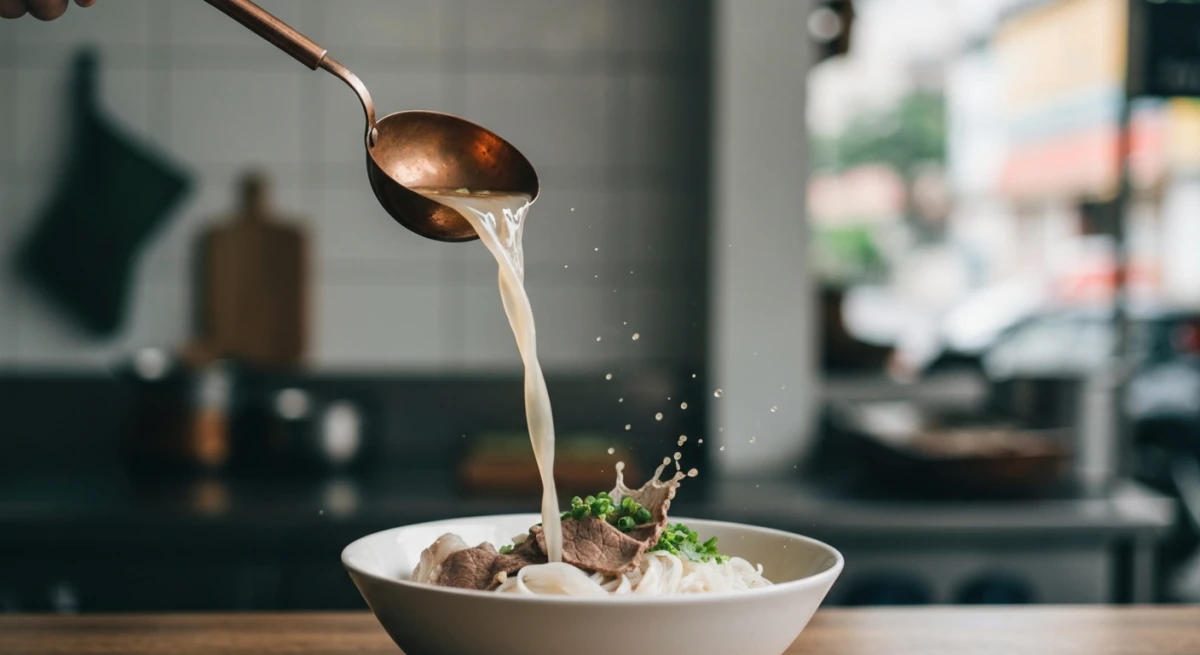
Hanoi is the birthplace of phở, and missing out on this iconic noodle soup would be a tragedy. A bowl of phở chay is a comforting, aromatic experience that rivals the original. Crafting a great vegetarian pho broth is an art form. Instead of beef bones, vendors char whole ginger and red shallots over an open flame until caramelized and sweet. These are simmered for hours with star anise, cinnamon quills, cloves, coriander seeds, and black cardamom. The broth is sweetened naturally with root vegetables like radishes, carrots, and sweet onions. Fresh, flat rice noodles are topped with a colorful medley of fried tofu puffs, king oyster mushrooms, fresh wood-ear mushrooms, and coriander, served with lime wedges, fresh red chilies, and sweet basil.
3. Bún Chả Chay (Vegetarian Grilled "Pork" with Noodles)
Bún chả is Hanoi’s ultimate lunchtime classic—famously made world-renowned by Barack Obama and Anthony Bourdain. The plant-based version captures the smoky, sweet, and savory magic perfectly. Vendors use a mixture of minced shiitake and wood-ear mushrooms, tofu, and wheat gluten, seasoned with garlic, lemongrass, and sugar. This mixture is formed into patties and grilled over natural wood charcoal on miniature hand-held wire grates. The smoky, charred patties are served swimming in a warm, sweet-savory dipping bowl made of soy sauce, vinegar, sugar, and sliced green papaya. Grab a clump of cold rice vermicelli noodles (bún) with your chopsticks, dip it into the warm broth, grab a piece of the grilled patty, and eat it along with fresh perilla, mint, and lettuce.
4. Bún Riêu Chay (Vegetarian Sour Tomato & Noodle Soup)
Standard bún riêu is a tangy noodle soup made with freshwater crab paste. The plant-based version, bún riêu chay, is a masterpiece of complex, sour, and savory flavors. To mimic the fluffy, soft texture of crab roe, vendors curdle fresh soy milk with vinegar or tomato acid, creating soft cloud-like mounds of tofu roe. The soup is deeply red, flavored with sautéed tomatoes, tamarind, and fermented rice (mẻ), giving it a sharp, refreshing sourness. It is loaded with fried tofu cubes, fresh banana flower shavings, water spinach stems, and a generous handful of dill.
5. Bánh Đa Trộn Chay (Dry Brown Rice Noodles)
If you prefer dry, tossed noodles over hot soups, this is the dish for you. Originally from the coastal city of Hai Phong, bánh đa are thick, chewy, flat brown rice noodles colored naturally with caramelized sugar. The noodles are blanched and tossed in a sweet-savory soy-based dressing. They are piled high with blanched morning glory (water spinach), fried shallots, crushed roasted peanuts, fried tofu, and mock meat strips. It is an incredibly texturally satisfying dish that is light, aromatic, and perfect for hot Hanoi afternoons.
6. Nộm Đu Đủ Chay (Green Papaya Salad)
This is a refreshing, crunchy street side snack that is perfect for grazing between main meals. Shredded green papaya and carrots are tossed with fresh mint, coriander, and crushed peanuts. Instead of beef jerky, the vegetarian version features thinly sliced, deeply marinated soy jerky or fried tofu strips. A sweet-and-sour vinaigrette made of soy sauce, lime juice, vinegar, and chili replaces the traditional fish-sauce-based dressing.
7. Bánh Rán & Sweet Desserts
Do not forget Hanoi's sweet street treats! Bánh Rán are small, deep-fried glutinous rice balls coated in sesame seeds. The sweet version (bánh rán ngọt) is stuffed with sweetened mung bean paste and is naturally vegan. Keep an eye out for women carrying these in woven baskets balanced on their shoulders in the Old Quarter. Chè (Sweet Soup) is a generic term for a wide variety of sweet, refreshing dessert soups. They typically feature layers of sweetened coconut milk, shaved ice, colorful grass jellies, lotus seeds, grass jelly, and various sweet beans (red bean, mung bean). It is the ultimate cooling street food dessert on a humid Hanoi night.
Where to Find the Best Spots: Handpicked Local Gems
While high-end vegetarian restaurants are plentiful in Hanoi, the magic of street food lies in the alleyways, the steam, and the low plastic stools. Here are the top handpicked, budget-friendly local spots where you can experience authentic Hanoi vegetarian street food.
Quán Phở Chay Anh Hải (27 P. Hàng Vôi, Hoàn Kiếm)
This is the holy grail of local, no-frills vegetarian street eating. Tucked deep inside a narrow, atmospheric alley in the French Quarter, this tiny, legendary spot is run by Anh Hải, a passionate cook who walked away from a high-paying professional chef job to serve accessible, affordable plant-based meals to locals. There is no fancy decor here—just a few small plastic tables and stools crammed inside an alleyway. It operates on a semi-self-service basis and is incredibly popular with local office workers. Anh Hải serves a single, daily-rotating noodle soup dish each day (when the broth runs out, he closes). One day you might get a comforting, aromatic Phở Chay, and the next, a deeply flavorful, sour Bún Riêu Chay. A massive, steaming bowl costs around 20,000 to 30,000 VND (roughly $1 to $1.25 USD). The flavors are complex, deeply traditional, and completely vegan.
Banh Mi 25 (25 Hàng Cá, Hoàn Kiếm)
While originally famous for its classic meat bánh mì, this wildly popular spot near the north of the Old Quarter has embraced vegetarian and vegan travelers with an exceptional, dedicated plant-based menu. Bustling, friendly, and highly efficient, you can order at the street-side wooden cart and grab a stool, or sit in their air-conditioned dining area across the street. They offer several outstanding vegan options. Try the baguette filled with sautéed mushrooms, avocado, and homemade tofu, paired with their rich, vegan-friendly mushroom pate. The bread is toasted to absolute perfection, and the pricing is incredibly budget-friendly.
Bonbagu Vegan Baguette (1 Hàng Dầu, Hoàn Kiếm)
For an entirely 100% vegan bánh mì experience in the heart of the Old Quarter, Bonbagu is an absolute must-visit. It is a cozy, narrow boutique shop with a few stools on the lower level and a comfortable seating area upstairs. They elevate the traditional street sandwich with creative fillings like pulled jackfruit, mushroom char siu, and homemade vegan meatballs (xíu mại chay). The baguette is incredibly crispy, and they use a spectacular house-made cashew-based vegan butter and pâté.
Cơm Chay Bình Dân (Everyday Vegetarian Rice Buffets)
For the ultimate authentic local street food experience, keep your eyes peeled for signs reading "Cơm Chay" or "Cơm Chay Bình Dân." These are local, family-run budget buffets that operate exactly like standard Vietnamese lunch spots. You are handed a plate of steamed white or brown rice (cơm). You then point to an array of 15 to 20 different metal trays displayed on a counter. The options include braised tofu in tomato sauce, stir-fried morning glory with garlic (oil-based), crispy mock-meat spring rolls, sweet-and-sour mock pork, and seasoned seaweed. Once your plate is piled high, the vendor will look at it and charge you a flat fee—usually between 30,000 and 50,000 VND ($1.25 to $2 USD). It is an incredibly cheap, filling, and authentic way to eat like a Hanoi local.
Navigating Street Stall Cross-Contamination & Food Safety
For strict vegetarians and vegans, dining at general street food stalls can sometimes raise concerns regarding cross-contamination and general food safety. Here is how to navigate the busy streets of Hanoi with peace of mind.
- Prioritize "100% Chay" Establishments: If cross-contamination is a major concern for you, stick to stalls and restaurants that display the word "Chay" on their main sign. Traditional Buddhist chay spots will never have meat on their premises, meaning their grills, pans, knives, and cutting boards are entirely free from animal fats and juices.
- Watch the Cooking Process at Shared Stalls: Many popular street stalls are "vegetarian-friendly," meaning they sell meat dishes but can whip up a vegetarian version if asked. If you choose to eat at one of these spots, stand near the cooking station and observe. Standard practices often involve using the same hot plate to grill pork and toast bread, or using the same ladle for bone broth and hot water. If you see this, it is best to politely decline and move on to a dedicated Quán Chay.
- Check the Oil: In general street food stalls, spring rolls (nem rán) or fried tofu (đậu phụ rán) are often fried in the same large wok of boiling oil used to fry chicken or pork. At a 100% vegetarian stall, you are guaranteed that only vegetable oil is used.
- Mind the Ice and Water: While Hanoi's municipal water has improved, tap water is still not safe to drink. Street food stalls almost always use commercially manufactured ice cubes (which have a cylindrical shape with a hole in the middle) that are safe. However, avoid crushed ice or shaved ice if you have a sensitive stomach, and always drink bottled water or freshly squeezed sugarcane juice (nước mía).
FAQ: Hanoi Vegetarian Street Food
Q: Is street food in Hanoi safe for vegetarians?
A: Yes, absolutely! However, because traditional Vietnamese cuisine relies heavily on hidden ingredients like pork-based seasoning powders and fish sauce, you must exercise caution. The safest and most rewarding strategy is to seek out dedicated vegetarian stalls (Quán Chay) rather than trying to modify dishes at standard meat-centric street stalls.
Q: Does "Chay" mean 100% vegan in Hanoi?
A: In 95% of cases, yes. Traditional Buddhist chay food in Vietnam is inherently vegan, as it excludes all meat, poultry, seafood, animal fats, and dairy. However, some modern street vendors might occasionally use condensed milk in desserts, or add a fried egg (trứng) to a bánh mì chay if they cater to non-Buddhist vegetarians. If you are strictly vegan, always confirm by saying không sữa (no milk) and không trứng (no eggs).
Q: How do I find local "Cơm Chay" buffets?
A: The easiest way is to use a map app like Google Maps or HappyCow and search for "Cơm Chay." Alternatively, take a walk through local residential alleys away from the main tourist hubs of the Old Quarter. Look for yellow and red signs that say "Cơm Chay." These spots are incredibly cheap and offer a massive variety of authentic homestyle dishes.
Q: Are eggs considered vegetarian (Chay) in Vietnam?
A: Traditionally, strict Buddhist chay food does not include eggs. However, some casual street vendors may assume vegetarians eat eggs. If you want to avoid eggs entirely, make sure to state không trứng.
Q: Is fish sauce used in vegetarian food in Hanoi?
A: At a dedicated vegetarian restaurant or stall (Quán Chay), they will never use real fish sauce. Instead, they use a fermented soybean sauce (nước tương) or a specially brewed plant-based "fish" sauce made from fermented pineapple, salt, and soy. At standard meat stalls, however, real fish sauce is used in almost everything, so you must specifically ask them to omit it.
Conclusion
Hanoi’s street food is a chaotic, sensory, and beautiful experience that no traveler should miss. While navigating the city as a vegetarian or vegan requires a bit of local knowledge and preparation, the payoff is spectacular. By looking out for the magic word "Chay," mastering a few key Vietnamese phrases, and hunting down legendary local alleyway spots like Quán Phở Chay Anh Hải, you will discover a vibrant, centuries-old world of plant-based culinary art. So pull up a tiny plastic stool, grab a pair of chopsticks, and immerse yourself in the rich, smoky, and aromatic flavors of Hanoi's legendary vegetarian street food scene.