Introduction: Welcome to the Beautiful Chaos of Hanoi
Hanoi is a city that does not hide its secrets. It spills them onto the sidewalk in a symphony of roaring motorbike engines, clanging metal bowls, and the fragrant, woodsy steam of simmering beef bones. For first-time visitors, stepping out of a hotel lobby into the capital's historic Old Quarter can feel less like a gentle introduction and more like a full-contact sport. Navigating the dizzying array of alleys, vendors, and traffic is a thrilling rite of passage, and there is no better way to decode this urban landscape than a structured hanoi street tour.
A proper street tour is more than just a culinary checklist. It is an immersive masterclass in Hanoian survival, culinary history, and street etiquette. Whether you choose to explore on foot, hop on the back of a vintage motorbike, or weave through traffic in a cyclo, diving into Hanoi's street culture is the definitive key to understanding the heartbeat of Vietnam's thousand-year-old capital. This comprehensive guide will show you exactly what to expect, what to eat, and how to conquer the sensory overload of Hanoi like a seasoned local.
1. The Anatomy of a Hanoi Street Tour: Walking, Motorbikes, and Cyclos
When planning your street adventure, the first decision you must make is how you want to move. The physical mode of transport entirely dictates the rhythm, safety, and flavor of your experience.
The Classic Walking Tour
The Old Quarter is a labyrinth of ancient alleys designed long before the advent of the internal combustion engine. Because of this, a walking tour is the most intimate and thorough way to explore. Led by a local guide, you will duck into narrow passageways—some barely wide enough for one person—that open up into hidden residential courtyards.
Walking allows you to slow down, notice the architectural fusion of French colonial facades and traditional Chinese shophouses, and stop at a moment's notice when the aroma of fried shallots grabs your attention. It is the best option for travelers who want to focus on a high density of food tastings within a concentrated area. Be prepared to navigate crowded pavements, step around parked motorbikes, and squeeze past sidewalk dining areas. It is an active, immersive experience that puts you directly on the level of the street.
The Thrilling Motorbike (Scooter) Tour
If you want to experience Hanoi the way ninety percent of its residents do, you must get on a scooter. On a motorbike tour, you will ride pillion (on the back) behind an experienced local driver who doubles as your culinary guide.
While it might look terrifying from the sidewalk, riding with a professional is surprisingly smooth. The traffic in Hanoi behaves like a school of fish; it flows fluidly, organically, and predictably. A motorbike tour expands your radius far beyond the crowded lanes of the Old Quarter. You can zoom past the grand neoclassical buildings of the French Quarter, cruise along the breezy banks of West Lake (Ho Tay), cross the historic Long Bien Bridge designed by Gustave Eiffel, and sample regional dishes that tourist-heavy central alleys do not offer.
When choosing a motorbike tour, ensure the operator provides high-quality, full-face or three-quarter helmets, carries passenger liability insurance, and uses professional, licensed drivers. Your safety should always come first.
The Nostalgic Cyclo and Vintage Jeep Tour
For those seeking a more relaxed pace or a touch of vintage flair, cyclo (three-wheeled bicycle taxi) and military jeep tours offer a unique perspective. Cyclos are ideal for slow-motion photography, letting you glide through the bustling craft streets at eye-level with street vendors. It is a peaceful, nostalgic way to sit back while someone else handles the traffic.
Vintage open-air military jeeps, on the other hand, provide a rugged, stylish adventure through the wider boulevards of the city. They combine historical sightseeing (passing by the Ho Chi Minh Mausoleum and the ancient Temple of Literature) with culinary stops at iconic eateries located just outside the main tourist hubs.
2. Decoding the Old Quarter: Markets, Alleys, and Train Street
To fully appreciate a Hanoi street tour, you need to understand the geography and history of the historic center. The Old Quarter, often referred to as the "36 Streets" (36 Phố Phường), has been the commercial heart of Hanoi for over ten centuries.
The 36 Guild Streets
Historically, each street in this neighborhood was dedicated to a specific guild of merchants and craftsmen who traveled from surrounding rural provinces to sell their wares. While some streets have modernized, many still retain their ancient specialization.
As you walk, you will cross Hang Bac (Silver Street), where silver workshops still hammer out delicate jewelry; Hang Ma (Paper Street), which explodes in a sea of red lanterns, decorations, and paper offerings used in ancestral worship; and Hang Thiec (Tin Street), where the metallic din of workers shaping sheet metal echoes off the narrow walls. Understanding this commercial history transforms a simple walk into a journey through time, allowing you to see how Hanoi's past directly shapes its present-day street life.
Dong Xuan Market: The Sensory Core
At the northern edge of the Old Quarter lies Dong Xuan Market, a massive three-story wholesale market built by the French administration in 1889. While the interior is packed with fabrics, household goods, and bulk spices, the real action happens in the wet market lanes flanking the building.
Here, on any given morning, you will find vendors selling live fish splashing in shallow plastic basins, mountains of fresh herbs, exotic tropical fruits like mangosteen and rambutan, and raw meats processed just hours prior. A guided street tour will help you navigate this busy space without disrupting the fast-paced commerce around you, letting you observe daily life without feeling intrusive.
The Modern Reality of Hanoi Train Street
No discussion of a Hanoi street tour is complete without mentioning the famous Train Street. Located in a narrow residential corridor, a fully functioning railway line passes just inches from the front doors of local homes and cafes.
Due to safety concerns and shifting regulations, local authorities frequently restrict public access to the tracks. Today, you cannot simply wander onto Train Street unaccompanied; barricades and security guards block the main entrance points. To experience this architectural marvel, you must either be escorted by a local cafe owner who meets you at the security barriers or book a structured guided tour. Your guide will ensure you are safely seated in a trackside cafe, enjoying a cold drink, when the massive train rumbles past, brushing incredibly close to your table.
Ta Hien Beer Street: The Evening Energy
As the sun sets, the intersection of Ta Hien and Luong Ngoc Quyen streets transforms into a sprawling open-air pub. Known to travelers as "Beer Street," this area is packed with low plastic stools spilling onto the asphalt.
Locals and travelers sit side-by-side drinking Bia Hoi—freshly brewed, daily draft beer with a light, crisp flavor and low alcohol content, typically costing less than fifty cents a glass. It is accompanied by street snacks like roasted sunflower seeds, grilled dried squid, and fried fermented pork rolls (nem chua ran). The energy here is electric, filled with the sounds of clinking glasses and shouts of "Mot, Hai, Ba, Yo!" (One, Two, Three, Cheers!).
3. The Ultimate Taste Test: 9 Iconic Dishes You Must Try
The true soul of any Hanoi street tour lies in its bowls, plates, and glasses. Northern Vietnamese cuisine is distinct from its southern counterpart; it is subtle, balanced, and deeply comforting, prioritizing black pepper, fresh herbs, and savory broths over heavy sugar and chili. Here are the unmissable dishes your tour should cover:
1. Bún Chả (Grilled Pork Noodles)
Famously shared by Anthony Bourdain and President Barack Obama in 2016, Bun Cha is Hanoi's signature lunchtime dish. It consists of sweet, smoky charcoal-grilled pork patties and caramelized pork belly submerged in a warm bowl of light fish sauce, vinegar, and sugar broth. This savory broth is accompanied by a mountain of cold rice noodles (bun) and a basket of fresh herbs (perilla, cilantro, and mint). To eat it, dip a small bunch of noodles and herbs directly into the pork broth, assemble the perfect bite with a piece of grilled pork, and enjoy.
2. Bánh Cuốn (Steamed Rice Rolls)
Banh Cuon is a delicate breakfast food and snack that showcases incredible culinary technique. Chefs pour a thin layer of fermented rice batter onto a tightly stretched steam cloth over boiling water. Within seconds, the batter solidifies into a paper-thin, translucent sheet. The chef lifts it off with a bamboo stick, fills it with seasoned minced pork and wood ear mushrooms, rolls it up, and tops it with crispy fried shallots. It is served with a dipping sauce made from fish sauce, lime juice, and a drop of ca cuong (giant water bug essence) if you are feeling adventurous.
3. Egg Coffee (Cà Phê Trứng)
Invented in 1946 during a wartime milk shortage, egg coffee has become a legendary Hanoian delicacy. Nguyen Van Giang, a bartender at the Sofitel Metropole Hotel, substituted sweetened condensed milk and whisked egg yolks for fresh milk, creating a warm, thick, custard-like cream that sits atop a shot of intense, bitter robusta espresso. It tastes like a rich, velvety liquid tiramisu and is best enjoyed at Giang Cafe on Nguyen Huu Huan Street, where the original recipe is still kept a closely guarded family secret.
4. Bánh Mì (The Vietnamese Baguette)
While Banh Mi is celebrated worldwide, Hanoi's version has its own distinct character. Unlike the heavily stuffed, salad-filled baguettes of Ho Chi Minh City, a classic Hanoi Banh Mi is minimalist and warm. It usually features a thin smear of rich chicken liver pate, a layer of roasted pork, headcheese, or fried egg, a sprinkle of cucumber slices, fresh cilantro, and a dash of fiery local chili sauce, all toasted to crispy perfection in a small oven.
5. Nem Cua Bể (Square Crab Spring Rolls)
Unlike the thin, cylindrical spring rolls found elsewhere, Nem Cua Be is a large, square parcel wrapped in multi-layered rice paper. Stuffed to the brim with minced sea crab, pork, wood ear mushrooms, bean sprouts, and vermicelli, it is deep-fried until shatteringly crisp. It is typically cut into quarters with metal shears and served alongside Bun Cha to add a delightful crunch to your meal.
6. Phở (Beef or Chicken Noodle Soup)
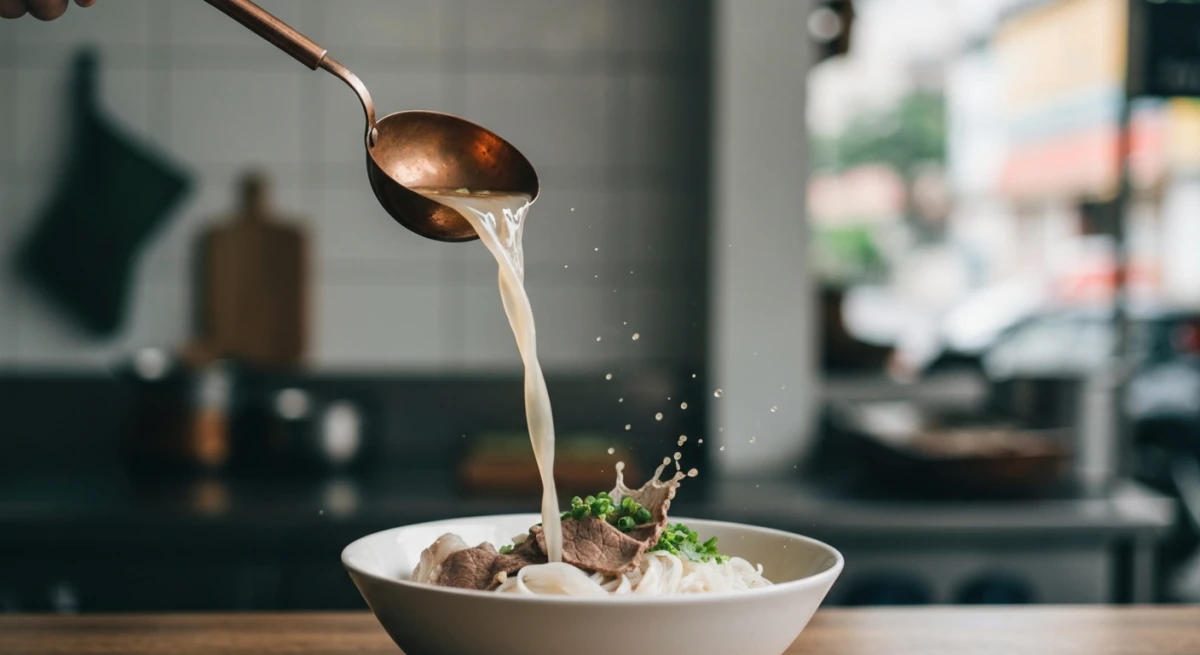
No trip to Vietnam is complete without Pho, but Hanoi is its undisputed birthplace. Northern Pho is elegant and minimalist. The broth is clear, fragrant with charred ginger, cinnamon, and star anise, and simmered for up to twelve hours. It is served with flat rice noodles and tender cuts of beef (Pho Bo) or shredded chicken (Pho Ga), garnished simply with green onions. Unlike in the south, you will not find hoisin sauce, sweet chili sauce, or bean sprouts on a traditional Hanoian table—only fresh lime wedges, pickled garlic, and homemade chili sauce are used to customize the broth.
7. Bún Riêu (Crab and Tomato Noodle Soup)
For a burst of color and complex flavor, Bun Rieu is unmatched. This noodle soup features a rich, slightly sour broth made from freshwater paddy crabs, tomatoes, tamarind, and rice vinegar. It is topped with delicate clouds of pounded crab paste, fried tofu cubes, sliced pork, and occasionally congealed pig's blood, all served over round rice noodles and shredded banana blossoms.
8. Bún Ốc (Snail Noodle Soup)
For the adventurous foodie, Bun Oc is a classic Hanoian soul food. It features chewy, fresh-water snails harvested from local ponds, served in a hot, sour, and spicy tomato-based broth made with snail stock, rice vinegar, and scallions. The broth has a beautiful orange hue from chili oil and tomatoes, offering a perfect balance of tartness and warmth.
9. Bánh Rán (Deep-Fried Sticky Rice Balls)
For a sweet finish, look for a vendor frying Banh Ran. These are crispy balls made from glutinous rice flour, filled with sweetened mung bean paste, and coated in fragrant toasted sesame seeds or a sticky, sweet sugar glaze. They are best enjoyed warm, straight from the frying oil.
4. The Secret to Surviving Hanoi’s Streets: Hygiene, Scooters, and Tiny Stools
Taking a street tour is an exercise in cultural immersion, and there are a few unwritten rules and practical tips that will make your journey seamless and safe.
The Art of Crossing the Street
Hanoi's traffic can look like an impenetrable wall of motorized chaos. The secret to crossing the street is counterintuitive but incredibly simple: walk slowly, steadily, and predictably.
Do not run, do not stop unexpectedly, and do not make sudden backward movements. The scooter riders are looking at you; they calculate your trajectory yards in advance and will gently swerve around you. If you panic and freeze, you disrupt their calculations. Keep your eyes forward, maintain a steady stride, and enjoy the thrill of the traffic parting around you like water. If you feel overwhelmed, wait for a local to cross and walk closely alongside them on the side facing the oncoming traffic.
The Stool Culture and Sidewalk Etiquette
Street dining in Hanoi happens low to the ground. You will sit on tiny, colorful plastic stools that look like they belong in a preschool classroom. This stool culture is a profound social equalizer; you will find wealthy businessmen in tailored suits sitting elbow-to-elbow with construction workers and backpackers, all hunched over the same steaming bowls of noodles.
Embrace the posture—it is the literal foundation of Hanoi's community life. When dining, keep your personal belongings off the wet ground by placing them on an empty stool or your lap. It is also polite to discard used napkins and lemon wedges in the small plastic baskets placed under the tables rather than throwing them directly onto the pavement.
Navigating Food Safety, Hygiene, and "Hanoi Belly"
A major concern for many travelers is food hygiene. While "Hanoi belly" is a valid concern, street food is often fresher than restaurant food because of the incredibly high turnover. Street vendors buy their ingredients fresh from the wet markets every morning, prep them on-site, and sell out by midday. To ensure your street food experience is safe:
- Look for Crowds: Choose stalls packed with local families. High volume means the food hasn't been sitting around.
- Observe the Cook: Ensure the food is cooked hot and fresh to order. Steaming broth and boiling oil kill bacteria.
- Is the Ice Safe?: Yes. In Hanoi, almost all commercial food stalls use factory-made ice cubes with a cylindrical shape and a hole through the middle. This ice is manufactured using purified water and is completely safe to consume. Avoid crushed ice from large blocks, as it can be contaminated during transport.
- Wipe Your Utensils: It is standard practice in Hanoi to use a dry napkin to wipe down your chopsticks and spoon before eating. Most stalls provide a small container of lime slices; squeezing lime juice onto your utensils is an excellent natural way to sanitize them.
Solving the Dietary Restriction Gap
If you are vegetarian, vegan, or gluten-free, a Hanoi street tour can feel like a minefield. Vietnam is famous for its fish sauce (nuoc mam), which finds its way into almost every dipping sauce, broth, and marinade. Furthermore, savory dishes often use wheat-based thickeners or soy sauce.
- For Vegetarians/Vegans: Look for the word Chay (vegetarian). A specialized "Hanoi Street Food Tour Chay" is highly recommended. You can enjoy Banh My Chay (stuffed with fried tofu, mock meat, and mushroom pate) or Banh Cuon Chay (without the pork filling, dipped in a soy-based sauce).
- For Gluten-Free Travelers: Rice noodles (pho, bun) and rice rolls (banh cuon) are naturally gluten-free. However, you must ask vendors to avoid seasoning with soy sauce or wheat-based condiments. Having a pre-translated Vietnamese card explaining your allergy is highly recommended.
Mobile Street Vendors and the "First Customer" Rule
As you explore, you will see women carrying twin bamboo baskets balanced on a shoulder pole (gánh hàng rong), selling seasonal fruits, flowers, or snacks. While they make for beautiful photographs, keep vendor etiquette in mind. Never grab a vendor's pole for a photo without asking permission or intending to buy some of their goods.
Additionally, be aware of the "Mở Hàng" (First Customer) superstition. Locals believe that the first transaction of the business day dictates the vendor’s financial success for that entire day. If you are the first customer of the morning, it is considered extremely rude to negotiate aggressively or walk away without buying anything, as it is believed to bring bad luck to the vendor.
5. Guided Tour vs. DIY: How to Choose Your Experience
Should you book a guided tour or navigate the culinary lanes on your own? The answer depends on your travel style and confidence level.
| Feature | Guided Hanoi Street Tour | Do-It-Yourself (DIY) Tour |
|---|---|---|
| Cultural Context | High. Your guide explains the history, ingredients, and customs. | Low. You must research every dish and spot beforehand. |
| Language Barrier | None. Your guide handles all ordering and special requests. | High. Explaining dietary preferences can be difficult. |
| Safety & Hygiene | High. Guides vet stalls for clean water, fresh ingredients, and ice. | Moderate. You must rely on your own observation and instincts. |
| Access to Hidden Spots | Excellent. Access to residential alleys, private homes, and Train Street. | Restricted. Difficult to find hidden alleys; limited Train Street access. |
| Flexibility | Set itinerary (though private tours offer customization). | 100% flexible. Eat when and where you want at your own pace. |
| Cost | Mid to High ($25 - $60 USD per person). | Very Low (dishes cost $1 - $4 USD each). |
If you are a first-time visitor, a guided tour on your very first night is highly recommended. It acts as an orientation session, giving you the confidence, vocabulary, and basic navigation skills to explore the streets independently for the remainder of your trip.
4 Essential Apps for a DIY Street Tour
If you decide to go the DIY route, make sure to download these apps before you step out:
- Grab: The absolute lifesaver for getting around Hanoi. It is Southeast Asia's equivalent of Uber, offering transparent, upfront pricing for car or motorbike rides, eliminating the need to haggle with taxi drivers.
- Google Maps: Essential for saving pinned food stalls, though be aware that GPS signals can occasionally bounce off tight alley walls in the Old Quarter.
- Google Translate: Use the camera feature to translate physical menus instantly, and download the offline Vietnamese pack so you can translate without a cellular connection.
- Foody / ShopeeFood: The local equivalent of Yelp and UberEats. It is perfect for seeing where local Hanoians actually order food from and finding highly rated, hidden street food gems.
Frequently Asked Questions (FAQ)
Is Hanoi street food safe to eat?
Yes, Hanoi's street food is generally very safe. Because ingredients are purchased fresh daily and prepared right in front of you, the risk of foodborne illness is often lower than at tourist-focused buffets. Stick to stalls with high local turnover, drink bottled water, and ensure your food is served hot.
How much does a Hanoi street tour cost?
A high-quality guided street food tour typically costs between $25 and $55 USD per person. This price usually includes an English-speaking guide, all food and drink tastings (typically 6 to 10 stops), and occasionally hotel pickup. If you choose to go DIY, a single street food dish costs between 30,000 VND and 80,000 VND ($1.20 to $3.20 USD).
What should I wear on a street tour?
Wear comfortable, lightweight clothing and sturdy closed-toe walking shoes. You will be walking along uneven sidewalks, stepping over puddles, and climbing on and off motorbikes or cyclo carriages. If you plan to visit temples or historical sites during your tour, ensure your shoulders and knees are covered.
Can I do a street food tour if I am vegetarian or vegan?
Yes, but it requires preparation. Traditional street food rely heavily on fish sauce and pork broth. We highly recommend booking a dedicated vegetarian food tour, as guides know the specific stalls that use vegetable-based broths and soy-based dipping sauces.
What is the best time of day for a street tour?
Evening tours (starting around 5:30 PM or 6:00 PM) offer the most vibrant atmosphere. This is when the heat of the day breaks, locals head out to socialize, and the street-side grills light up, filling the air with aromatic smoke. Morning tours (starting around 8:00 AM) are excellent for experiencing the bustling wet markets and traditional breakfast foods like Banh Cuon and Pho.
Conclusion: Take the Leap and Pull Up a Stool
A Hanoi street tour is far more than a simple sightseeing excursion; it is a full-throttle invitation to participate in local life. By stepping off the sidewalk, squeezing onto a tiny plastic stool, and leaning into the beautiful chaos of the Old Quarter, you transition from a passive observer to an active part of Hanoi's vibrant daily tapestry. The city's legendary culinary landscape is waiting to be explored—one steaming bowl, one scooter ride, and one egg coffee at a time. Pull up a stool, open your mind, and let Hanoi surprise you.