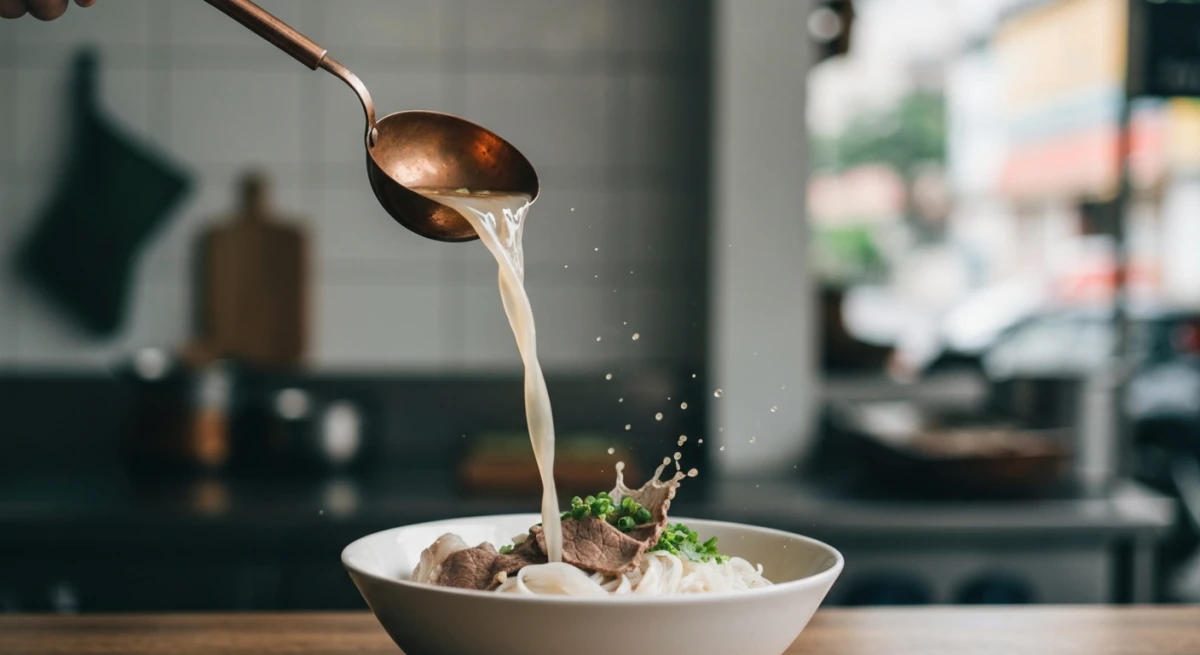
Hanoi, the culinary capital of Vietnam, is a dream destination for travelers who live to eat. Step onto any sidewalk in the historic capital and you will be greeted by the sensory symphony of sizzling pork, aromatic herbs, and steaming beef broth. Hanoi's vibrant street food scene is legendary not just for its complex flavors, but also for its remarkable affordability.
If you are planning a trip, you are likely wondering: what are the actual Hanoi street food prices in 2026? With global inflation shifting costs over the past few years, outdated travel guides can leave you with unrealistic expectations.
In this comprehensive guide, we break down the real, current street food prices in Hanoi. You will learn exactly how much to budget, how prices differ by neighborhood, how to avoid common overcharging scams, and how to navigate the local sidewalk culture like a seasoned expat.
The Reality of Hanoi Street Food Prices in 2026
Hanoi remains one of the most budget-friendly food destinations on Earth. In 2026, a standard street food dish in Hanoi costs between 25,000 VND and 80,000 VND ($1.00 to $3.20 USD). For a basic handheld snack like a banh mi, you might pay as little as 15,000 VND ($0.60 USD), while a premium, ingredient-heavy noodle bowl or specialty dish rarely exceeds 90,000 VND ($3.60 USD).
Because street food vendors operate with incredibly low overhead—often consisting of nothing more than a few plastic stools, a gas burner, and a prep table on a public sidewalk—they pass these savings directly to customers. They rely on high-volume turnover rather than high profit margins. This business model means you can easily eat three incredibly satisfying, authentic meals a day for less than $10.00 USD (approximately 250,000 VND).
However, "cheap" does not mean uniform. Street food pricing in Hanoi is highly localized. Factors such as proximity to tourist hotspots, the cut of meat used, the time of day, and even your ability to communicate in Vietnamese can influence the final bill. Understanding these nuances is the key to planning a seamless budget for your culinary trip.
Comprehensive 2026 Hanoi Street Food Price List
To help you budget accurately, we have compiled an up-to-date price sheet for Hanoi's most iconic street food dishes. These prices represent the standard rates you will find at local sidewalk stalls and "quán" (no-frills local eateries) in 2026.
Noodle Bowls and Soups
Noodles are the backbone of Hanoi's culinary identity. Most noodle dishes are served piping hot and are meant to be eaten as a main meal.
- Phở Bò / Phở Gà (Beef or Chicken Noodle Soup): 35,000 – 60,000 VND ($1.40 – $2.40 USD). A standard bowl of beef pho at a local neighborhood stall costs around 40,000 VND. If you visit highly-rated, historic establishments in the Old Quarter (such as Pho 10 Ly Quoc Su or Pho Gia Truyen Bat Dan), expect to pay between 60,000 and 95,000 VND ($2.40 – $3.80 USD) depending on the premium cuts of beef (such as "gầu" or fatty brisket) that you select.
- Bún Chả (Charcoal-Grilled Pork with Noodles): 45,000 – 75,000 VND ($1.80 – $3.00 USD). This Hanoi classic features grilled pork patties and pork belly swimming in a warm, sweet-savory dipping sauce, served with vermicelli rice noodles and a mountain of fresh herbs. A side of "Nem Cua Bể" (crispy crab spring rolls) typically costs an additional 15,000 to 25,000 VND ($0.60 – $1.00 USD) per piece.
- Bún Bò Nam Bộ (Southern-Style Beef Noodle Salad): 60,000 – 80,000 VND ($2.40 – $3.20 USD). A dry noodle dish featuring tender stir-fried beef, fresh herbs, bean sprouts, crushed peanuts, and crispy shallots, tossed in a light, sweet fish sauce dressing.
- Bún Riêu Cua (Crab and Tomato Noodle Soup): 35,000 – 55,000 VND ($1.40 – $2.20 USD). A comforting, slightly sour broth flavored with freshwater crab paste, tomatoes, and fried tofu. You can often add beef, pork rolls ("chả lụa"), or snails ("ốc") for an extra 10,000 to 15,000 VND.
- Miến Lươn (Eel Glass Noodles): 45,000 – 70,000 VND ($1.80 – $2.80 USD). Glass noodles served either dry ("trộn") or in broth ("nước") topped with crispy, deep-fried local river eels and fresh Vietnamese coriander.
Handhelds, Savory Bites, and Snacks
If you are looking for a quick bite between sightseeing stops, these budget-friendly handhelds and quick snacks are perfect.
- Bánh Mì (Traditional Baguette): 15,000 – 35,000 VND ($0.60 – $1.40 USD). A classic banh mi stuffed with pâté, homemade mayonnaise, coriander, cucumber, pickled carrots, and pork floss or ham is incredibly cheap. Specialty options with roasted pork belly, fried egg, or grilled chicken at popular spots (like Bánh Mì 25 or Bánh Mì Lành) can range from 30,000 to 55,000 VND ($1.20 – $2.20 USD).
- Xôi Xéo / Xôi Mặn (Savory Sticky Rice): 20,000 – 45,000 VND ($0.80 – $1.80 USD). A heavy, filling breakfast favorite. Xoi Xeo is yellow sticky rice topped with ground mung bean paste, liquid chicken fat, and fried shallots. You can add toppings like braised pork belly ("thịt kho tàu"), shredded chicken, or Chinese sausage ("lạp xưởng") to make it a hearty meal.
- Bánh Xèo & Nem Lụi (Crispy Crepes & Pork Skewers): 15,000 – 30,000 VND ($0.60 – $1.20 USD) per crepe; 8,000 – 12,000 VND ($0.32 – $0.48 USD) per pork skewer. You wrap these crispy, turmeric-infused rice crepes (filled with shrimp, pork, and bean sprouts) and grilled pork skewers in rice paper with fresh herbs and dip them in a thick peanut sauce.
- Nem Rán (Fried Spring Rolls): 8,000 – 15,000 VND ($0.32 – $0.60 USD) per piece. Sizzling, crispy pork and vegetable spring rolls that make the perfect accompaniment to any noodle dish.
Beverages and Sidewalk Sweets
No Hanoi street food experience is complete without sampling the city's legendary drink and dessert culture on the sidewalk.
- Bia Hơi (Fresh Draft Beer): 5,000 – 10,000 VND ($0.20 – $0.40 USD) per glass. Brewed fresh daily and delivered in metal kegs each morning, Bia Hoi is exceptionally light, refreshing, and holds the title of the cheapest beer in the world.
- Cà Phê Trứng (Egg Coffee): 35,000 – 55,000 VND ($1.40 – $2.20 USD). Robust, dark-roasted Robusta coffee topped with an incredibly thick, sweet custard made from whipped egg yolks and condensed milk. Historic spots like Cafe Giảng (the birthplace of egg coffee) charge around 40,000 to 45,000 VND.
- Cà Phê Sữa Đá (Iced Coffee with Condensed Milk): 20,000 – 35,000 VND ($0.80 – $1.40 USD). A classic Vietnamese eye-opener. A black iced coffee ("Cà Phê Đen Đá") is slightly cheaper, usually ranging from 15,000 to 25,000 VND.
- Chè (Sweet Dessert Soup): 15,000 – 30,000 VND ($0.60 – $1.20 USD). A cold, colorful dessert filled with layers of sweet beans, grass jelly, tapioca pearls, coconut milk, and shaved ice.
- Nước Mía (Fresh Sugarcane Juice): 10,000 – 15,000 VND ($0.40 – $0.60 USD). Freshly squeezed sugarcane stalks run through a press with a hint of calamansi citrus, served over crushed ice.
Neighborhood Pricing Playbook: Old Quarter vs. Local Districts
One of the biggest mistakes travelers make when researching Hanoi street food prices is assuming that costs are the same across the city. In reality, the neighborhood you choose to dine in has a dramatic impact on the final price of your meal.
Hanoi Old Quarter (Hoan Kiem District)
The Old Quarter is the historical and tourist heart of Hanoi. Because of the massive concentration of international travelers and extremely high commercial rents, street food prices here carry a "tourist premium".
- Price Markup: Expect to pay 20% to 50% more than in residential districts.
- What to expect: A bowl of pho that costs 35,000 VND in a local neighborhood will easily cost 50,000 to 75,000 VND here. However, English menus are widely available, and vendors are highly accustomed to catering to foreign palates.
Ba Dinh & Dong Da Districts
Located just west of the Old Quarter, these districts are bustling commercial and residential hubs for locals.
- Price Markup: None. This is the baseline for local, authentic Hanoian pricing.
- What to expect: You will find outstanding, highly authentic food at pristine local prices (e.g., Pho for 35,000 VND, Bun Cha for 45,000 VND). Because these stalls rely on repeat business from local residents rather than transient tourists, food quality and ingredient freshness are exceptionally high. English menus may be scarce, but pointing and using translation apps works perfectly.
Tay Ho (West Lake District)
Tay Ho is the preferred residential enclave for expats, diplomatic staff, and digital nomads.
- Price Markup: Moderate to high, leaning toward Westernized pricing structures.
- What to expect: While there are still cheap street food pockets, Tay Ho is characterized by trendy sidewalk cafes and hybrid dining. Traditional street stalls here charge slightly more (usually a 10% to 20% markup), but they often offer highly comfortable seating and English-speaking staff.
Cau Giay & Hai Ba Trung (Student Districts)
These districts are home to Hanoi's major universities (such as Hanoi National University and National Economics University).
- Price Markup: Deeply discounted "student prices".
- What to expect: Because college students operate on razor-thin budgets, street vendors in these areas offer the absolute cheapest food in the city. You can find piles of fried skewers, mini-banh mi, and basic noodle dishes for 10,000 to 20,000 VND ($0.40 – $0.80 USD). It is loud, energetic, and incredibly budget-friendly.
How to Avoid the "Tourist Tax": Common Scams and Pricing Tricks
While the vast majority of Hanoians are incredibly warm, honest, and welcoming, tourist-heavy areas do have their share of opportunistic vendors. If you are not careful, you might end up paying double or triple the local rate—a phenomenon locals call the "Tourist Tax."
Here is how to spot and avoid the most common street food scams in Hanoi:
1. The "No Written Prices" Menu Trap
If you walk up to a street stall and do not see a menu on the wall, a physical card, or a sign with prices, proceed with caution. Some vendors will size up foreign tourists and charge an inflated rate at the end of the meal.
- The Defense: Before you sit down or order, always ask: "Bao nhiêu tiền?" (How much money?) while pointing to the dish. If there is a language barrier, open the calculator app on your phone and hand it to them so they can type out the price. If they hesitate or quote a price that seems outrageously high (such as 100,000 VND for a basic banh mi), simply walk away.
2. The Blue Polymer Note Confusion
Vietnam's currency, the Vietnamese Dong (VND), is printed on high-quality polymer plastic. However, the designs can be highly confusing to newcomers. Most notably, the 20,000 VND note (worth roughly $0.80 USD) and the 500,000 VND note (worth roughly $20.00 USD) are both a similar shade of blue.
- The Defense: Dishonest vendors may occasionally "forget" to give you change if you accidentally hand over a 500,000 VND note thinking it is a 20,000 VND note. To prevent this, organize your wallet carefully. Keep high-denomination bills (100,000 VND and above) in a secure, separate compartment of your wallet, and keep smaller bills (10,000, 20,000, and 50,000 VND) easily accessible for quick street transactions.
3. The Old Quarter "Photo Opportunity" Fruit Scam
While walking around Hoan Kiem Lake or the Old Quarter, you will see street vendors carrying traditional bamboo shoulder poles with baskets of fruit ("đòn gánh"). They will often smile warmly, place the pole on your shoulder, hand you a conical hat ("nón lá"), and encourage you to take a photo.
- The Defense: As soon as the photo is taken, the vendor's demeanor changes. They will quickly slice up a pineapple or scoop fruit into a bag and aggressively demand an exorbitant price—often 150,000 to 200,000 VND ($6.00 to $8.00 USD) for fruit that legitimately costs 15,000 VND. If you want a photo, negotiate the price of the fruit before you touch the pole. Otherwise, politely wave them off and keep walking.
4. The "Free" Doughnut or Baguette Hustle
Walking vendors carrying baskets of small, sugar-glazed doughnuts or French baguettes may approach you and hand you one, saying it is a "free sample" or a "gift".
- The Defense: There is no such thing as a free lunch on the streets of the Old Quarter. Once you touch or take a bite of the pastry, they will loudly demand 50,000 to 100,000 VND. If a mobile street vendor hand-delivers something to you without you asking, keep your hands in your pockets, say a firm "Không, cảm ơn" (No, thank you), and maintain your pace.
Pro Tip: Establish a Baseline Using GrabFood
To instantly know if a street vendor is quoting you a fair price, open the Grab app (the Southeast Asian equivalent of Uber) on your phone and tap on "Food". Search for the dish you are about to order (e.g., "Phở Bò" or "Bún Chả") and look at the prices of nearby local stalls. Because Grab prices are clearly listed and include a small platform markup, they serve as an excellent, un-scammable baseline. If a physical street vendor quotes you a price higher than what is listed on GrabFood, you are being overcharged.
Practical Guide to Street Dining in Hanoi: Cash, Etiquette, and Hygiene
Eating on the streets of Hanoi is an immersive cultural experience, but it requires adjusting to local norms. To ensure your culinary adventure is smooth and sanitary, keep these practical street dining logistics in mind.
1. Cash is King (and Small Bills are Emperor)
Digital payments, QR codes, and bank transfers (via VietQR) are incredibly popular among locals, but international credit cards (Visa, Mastercard) are virtually useless at sidewalk stalls. You must carry cash.
- Keep change handy: Always try to break your large 500,000 VND and 200,000 VND bills at convenience stores (like Circle K or WinMart) or formal restaurants. Trying to pay for a 15,000 VND banh mi with a 500,000 VND bill is highly discouraged, as street vendors rarely carry enough small change early in the day. Keep a steady supply of 10,000, 20,000, and 50,000 VND notes in your pocket.
2. Tipping Etiquette
Tipping is completely uncustomary at street food stalls in Vietnam. The price listed is exactly what you are expected to pay.
- If you leave extra cash: If you try to leave a tip on a small plastic table, the vendor will almost certainly assume you forgot your change and run down the street to return it to you. If you truly want to show appreciation for an exceptional meal, simply say "Cảm ơn" (Thank you) with a warm smile, or round up to the nearest 5,000 or 10,000 VND (e.g., telling them to keep the change on a 47,000 VND bill paid with a 50,000 VND note).
3. Street Food Hygiene: Staying Safe
Many travelers worry about "Hanoi Belly" (food poisoning) when eating on the sidewalk. However, street food can actually be safer than mid-range restaurants because the cooking process is entirely transparent—you can see exactly how the ingredients are handled and cooked.
- Look for high-turnover stalls: Choose stalls that are packed with local customers. High turnover means the ingredients are flying off the shelves and are constantly being replenished with fresh stock, rather than sitting out in the heat.
- Eat during peak hours: Align your dining schedule with the locals. Eat breakfast between 7:00 AM and 9:00 AM, lunch between 11:30 AM and 1:30 PM, and dinner between 6:00 PM and 8:30 PM. This guarantees you are getting the freshest broth and newly grilled meats.
- The Lime and Herb Trick: Local tables are always stocked with fresh limes, garlic vinegar, and chili sauce. Take a wedge of fresh lime and squeeze the juice onto a paper napkin, then use it to thoroughly wipe down your metal chopsticks and spoon before eating. It is a highly effective, natural disinfectant that locals use every day.
Frequently Asked Questions (FAQ)
How much does an average meal cost in Hanoi?
In 2026, an average local street food meal (such as a bowl of Pho or Bun Cha and an iced tea) costs between 45,000 and 80,000 VND ($1.80 to $3.20 USD). If you opt for a casual, air-conditioned local restaurant, expect to pay between 80,000 and 150,000 VND ($3.20 to $6.00 USD) per person.
What is a realistic daily food budget for Hanoi?
For a budget traveler sticking to street food, local markets, and bia hoi, a daily budget of 200,000 to 250,000 VND ($8.00 to $10.00 USD) is plenty. Mid-range travelers who want to mix street eats with trendy specialty cafes and international dining should budget 400,000 to 600,000 VND ($16.00 to $24.00 USD) per day.
Can I pay for street food using mobile payments or credit cards?
No. While many local Hanoians use bank-to-bank QR code transfers, street vendors do not accept international credit cards, Apple Pay, or Google Pay. Cash is absolutely mandatory for street food dining.
Is tap water safe to drink at street stalls?
No, never drink tap water in Hanoi. Street stalls will often serve iced tea ("Trà Đá") for 3,000 to 5,000 VND ($0.12 to $0.20 USD). The ice used at reputable, busy stalls is manufactured from purified water and is safe to consume, but if you have a highly sensitive stomach, it is best to stick to sealed bottled water.
Why do people eat on tiny plastic stools in Hanoi?
The "plastic stool culture" is a practical response to Hanoi's limited sidewalk space and high population density. These light, stackable chairs allow vendors to quickly set up and tear down their stalls to comply with local sidewalk clearance regulations. It also fosters an incredibly social, democratic dining atmosphere where doctors, students, construction workers, and tourists sit side-by-side.
Conclusion
Hanoi's street food scene is a masterclass in culinary balance: it is complex yet comforting, chaotic yet deeply organized, and globally celebrated yet incredibly cheap. By understanding the real Hanoi street food prices in 2026, targeting local neighborhoods like Ba Dinh and Dong Da, and staying vigilant against common overcharging traps, you can embark on a world-class gastronomic journey without ever straining your wallet.
So pull up a tiny plastic stool, wipe down your chopsticks with a fresh lime wedge, and dive headfirst into the best budget dining experience the world has to offer.