Hanoi is a legendary culinary playground, but for plant-based travelers, navigating its labyrinth of narrow streets can feel like a high-stakes guessing game. The air of the Old Quarter is thick with the aromas of wood-grilled meats, simmering bone broths, and sizzling seafood. While iconic dishes like pho and banh mi are famous worldwide, their standard street-side versions are almost always steeped in animal fats, fish sauce, and pork stock.
This is where a specialized hanoi vegetarian street food tour becomes your ultimate secret weapon. Instead of missing out on Hanoi's world-famous street food culture or sticking to boring western-style salads, a dedicated plant-based food tour lets you pull up a tiny plastic stool on a buzzing sidewalk and feast on authentic, meat-free versions of northern Vietnamese classics.
In this comprehensive guide, we will dive deep into Hanoi's rich vegetarian heritage, uncover the must-try dishes you will experience on a premium hanoi vegetarian street food tour, and arm you with the ultimate local tips and vocabulary to navigate the city's food stalls safely. Whether you are a strict vegan, a vegetarian, or a curious foodie looking to explore Hanoi's green side, here is everything you need to know.
The Buddhist Heritage: Why Hanoi Has a Thriving "Chay" Scene
To truly appreciate a hanoi vegetarian street food tour, you must first understand the deep-rooted cultural context of Vietnamese plant-based eating. Vegetarianism in Vietnam is not a modern fitness trend or a western import; it is an ancient practice deeply intertwined with Mahayana Buddhism.
The Vietnamese word for vegetarian is "Chay" (pronounced like "chigh" with a flat tone). Historically, devout Buddhists in Hanoi and across Vietnam eat purely plant-based meals at least twice a month: on the 1st and 15th days of the lunar calendar (the new moon and full moon), as well as during major religious festivals like Vu Lan (Parents' Day) and Tet (Lunar New Year).
On these days, a remarkable transformation occurs across Hanoi. Street vendors who normally sell pork noodles will hang up a sign that says "Phở Chay" or "Cơm Chay," and thousands of locals line up for a meat-free feast. Furthermore, Hanoi is home to a vast network of permanent, year-round vegetarian establishments known as "Quán Chay" (vegetarian eateries) and "Cơm Chay" (vegetarian rice buffet spots).
Here is a critical insider secret that many travel bloggers miss: traditional Vietnamese "Chay" food is naturally almost entirely vegan. In Buddhist culinary tradition, dairy is not a staple, and eggs are historically avoided because they are seen as representing potential life. Additionally, strict temple-style "chay" cooking avoids the five pungent roots (garlic, onions, leeks, chives, and shallots) because they are believed to excite the senses. However, modern street-side "chay" spots in Hanoi do use garlic and shallots to create those incredibly bold, punchy flavors we love.
By taking a structured hanoi vegetarian street food tour, you will get to explore this fascinating culinary history. You won't just be eating "vegetables on a plate"; you will be tasting centuries-old culinary art designed to replicate the textures, appearance, and savory satisfaction of traditional Vietnamese comfort food using strictly plant-based ingredients.
Must-Try Dishes on a Hanoi Vegetarian Street Food Tour
The best part of booking a dedicated street food experience is the sheer variety of dishes you get to sample. Northern Vietnamese cuisine is famous for its delicate balance of sweet, sour, salty, spicy, and herbal notes. Here are the absolute star dishes that a high-quality hanoi vegetarian street food tour will introduce you to:
1. Phở Chay (Vegetarian Pho)
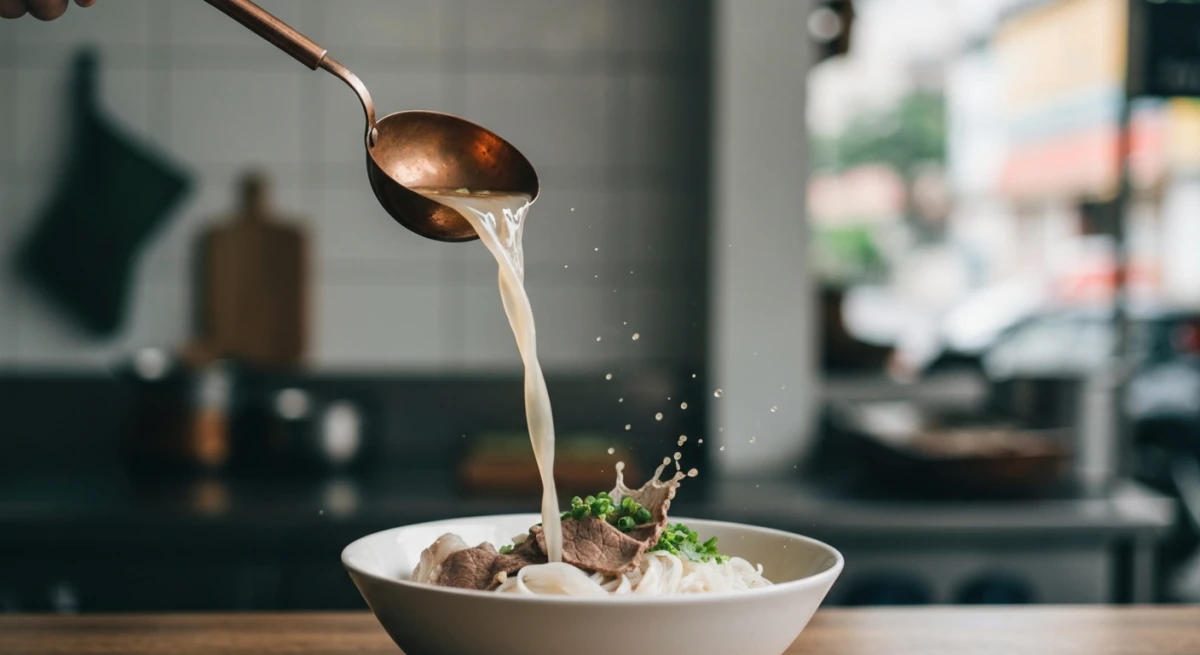
Standard street pho gets its rich flavor from beef or chicken bones simmered for over twelve hours. How do local vegetarian masters replicate this depth? The answer lies in the brilliant use of charred root vegetables and spices. A proper bowl of Phở Chay features a clear, amber broth brewed from charred onions, ginger, star anise, cinnamon, cloves, coriander seeds, daikon, carrots, and apples or pears for a natural, subtle sweetness. It is served with silky flat rice noodles, fresh green scallions, cilantro, and is topped with strips of pressed tofu, wood-ear mushrooms, and house-made wheat-gluten mock meats. Squeeze a fresh lime wedge and add a splash of homemade chili sauce for the ultimate morning or late-night comfort bowl.
2. Bánh Mì Chay (Vegetarian Baguette)
You haven't truly experienced Hanoi until you have bitten into a perfectly crispy, airy baguette. While traditional banh mi is loaded with pork pate, headcheese, and pork floss, a street-style Bánh Mì Chay is a revelation. The standard meat pâté is replaced with a rich, savory spread made from mashed tofu, mung beans, and mushrooms. It is stuffed with marinated tofu strips, crispy mushroom-based "ham," pickled daikon and carrots, fresh cucumber slices, and a handful of aromatic cilantro. If you are a strict vegan, ensure you ask your tour guide to skip the mayonnaise ("bơ") and Laughing Cow cheese ("phô mai"), which are common additions in some stalls.
3. Bún Chả Chay (Vegetarian Grilled "Pork" with Noodles)
Bún Chả is Hanoi's signature dish, famously enjoyed by President Barack Obama and Anthony Bourdain on their visit. The traditional version features grilled pork patties floating in a warm, sweet, and sour fish sauce broth, served with cold rice vermicelli noodles and a mountain of fresh herbs. On a specialized hanoi vegetarian street food tour, you will taste a magnificent plant-based adaptation. The grilled patties are ingeniously crafted using mashed soy protein, mashed taro, and minced wood-ear mushrooms, seasoned with lemongrass and sesame oil, and then charcoal-grilled to smoky perfection. The dipping broth is remade using a base of high-quality mushroom-based soy sauce, vinegar, sugar, and lime, yielding that exact same sweet-savory punch without a single drop of real fish sauce.
4. Bánh Cuốn Chay (Steamed Rice Rolls)
Watching a local vendor steam bánh cuốn is like watching a live performance art show. The cook spreads a thin ladle of fermented rice batter onto a tightly stretched cloth over a pot of boiling water. Within seconds, a delicate, translucent sheet forms, which is gently lifted off with a bamboo stick. In Bánh Cuốn Chay, this silky roll is stuffed with finely chopped jicama, wood-ear mushrooms, and tofu. It is topped with a generous sprinkle of crispy, golden fried shallots and served with a light dipping sauce. It is light, fragrant, and texture-heaven.
5. Nộm Đu Đủ Chay (Green Papaya Salad)
If your palate needs a refreshing contrast, this salad is the perfect mid-tour palate cleanser. It features a mound of shredded green papaya and carrots, tossed with fresh mint, Vietnamese coriander (rau răm), and roasted crushed peanuts. The dressing is a tangy, sweet blend of lime juice, sugar, chili, and soy sauce. It is wonderfully crunchy and serves as the perfect showcase for the vibrant herbs that make northern Vietnamese cuisine so famous.
6. Bánh Gối & Nem Chay (Fried Empanadas & Spring Rolls)
Crispy, golden-fried treats are a staple of Hanoi's afternoon street snack culture. Bánh Gối (pillow cakes) are pastry pockets filled with glass noodles, wood-ear mushrooms, jicama, and minced soy meat, deep-fried until shatteringly crisp. Nem Chay (fried vegetarian spring rolls) offer a similar crispy satisfaction. Both are chopped into bite-sized pieces and dipped in a sweet-and-sour soy dipping sauce along with pickled green papaya.
7. Hanoi's Sweet Treats & Coffee Culture
No hanoi vegetarian street food tour is complete without diving into the city's legendary drink and dessert scene.
- Chè Chay: A traditional sweet dessert soup made with layers of sweetened mung beans, lotus seeds, grass jelly, tapioca pearls, and warm coconut milk.
- Cà Phê Trứng (Egg Coffee): This legendary drink features a thick, velvety custard whipped from egg yolks, sugar, and condensed milk poured over a shot of intense Vietnamese robusta coffee. While it is vegetarian-friendly, it is not vegan.
- Cà Phê Cốt Dừa (Coconut Coffee): The ultimate vegan alternative. This is a frosty, blended mixture of rich coconut cream, condensed coconut milk, and ice, topped with a shot of bold black espresso. It tastes like a tropical coffee milkshake and is completely dairy-free at many modern plant-based cafés.
Guided Tour vs. DIY: Avoiding the Hidden Meat Traps
Many independent travelers ask: "Can't I just explore Hanoi's street food on my own using Google Maps or HappyCow?" While DIY exploration is highly rewarding, doing a street food crawl in Hanoi without a guide presents some serious, often stomach-churning challenges for vegetarians and vegans.
Here is why a dedicated hanoi vegetarian street food tour is vastly superior to trying to wing it on your own:
The Hidden Ingredient Minefield
In standard Vietnamese cooking, fish sauce (nước mắm) is treated like salt—it is splashed into almost every broth, marinade, and dipping sauce. Even if a vendor tells you a dish is "không thịt" (no meat), the broth may have been brewed with pork bones, or the wok may have been greased with pork lard (mỡ lợn). Furthermore, many vendors use chicken or pork-based seasoning powder (hạt nêm) as a standard flavor enhancer in vegetable soups. A local, specialized guide knows exactly which questions to ask, only takes you to vendors who use 100% vegetarian seasoning, and ensures your dipping sauces are made from soy sauce (nước tương) or pineapple-based "chay" fish sauce (nước mắm chay).
Cross-Contamination Issues
At general street food stalls, the same grill, woks, knives, and cutting boards used to prepare pork, beef, and seafood are used for the tofu and vegetables. For strict vegetarians and vegans, this can make dining highly stressful. A dedicated hanoi vegetarian street food tour meticulously vets each stop, taking you either to 100% "chay" establishments (which are entirely free of meat products) or specific stalls with separated preparation zones and dedicated cookware.
Discovering Hidden Alleyway Gems
The most authentic and mouthwatering street food in Hanoi is not found on main thoroughfares or touristy corners. It is hidden deep within the labyrinth of the Old Quarter's narrow alleys, inside residential courtyards, or tucked away on the upper floors of crumbling French colonial buildings. These places don't have English signs or websites. A local guide who lives and breathes Hanoi's culinary scene will lead you directly to these family-run, micro-stalls that have been perfecting their single plant-based recipe for decades.
The Plant-Based Traveler's Vietnamese Survival Phrasebook
If you do decide to explore Hanoi outside of your guided tour, carrying a list of written phrases is an absolute lifesaver. Pronunciation in Vietnamese is highly tonal and can be extremely challenging for westerners, so showing these phrases written down on your phone is often the most effective approach.
Here are the essential phrases every vegetarian and vegan traveler should keep handy:
- "Tôi ăn chay." (Toy an chigh) - I eat vegetarian (and often interpreted as vegan by traditional Buddhist standards).
- "Tôi ăn chay trường." (Toy an chigh truong) - I am a strict, full-time vegetarian (highly respected phrase that signals you cannot eat any meat or seafood extracts).
- "Không nước mắm." (Khong nuoc mam) - No fish sauce.
- "Không mỡ lợn." (Khong mo lon) - No pork lard. (Essential for deep-fried items like fried tofu or spring rolls).
- "Không hạt nêm thịt." (Khong hat nem thit) - No meat seasoning powder.
- "Tôi không ăn thịt, cá, hải sản." (Toy khong an thit, ka, hie san) - I do not eat meat, fish, or seafood.
- "Tôi không ăn trứng và sữa." (Toy khong an trung va sua) - I do not eat eggs and dairy (Crucial for vegans!).
- "Có món chay không?" (Ko mon chigh khong?) - Do you have vegetarian dishes?
- "Nước mắm chay" (Nuoc mam chigh) - Vegetarian fish sauce (usually fermented from soy or pineapple).
Pro Tip: Save these phrases as a photo or lock screen wallpaper on your phone. When ordering street food, simply point to the exact phrase. Local vendors are incredibly warm and accommodating; once they understand your dietary limits, they will happily customize your plate!
Essential Safety & Etiquette Tips for Hanoi Street Food
To get the absolute most out of your hanoi vegetarian street food tour, you should embrace the local lifestyle and dining customs. Street food dining in Hanoi is fast, raw, and incredibly social.
Pull Up a Stool
Hanoi's street food culture revolves around the sidewalk. Stalls feature rows of low-lying, brightly colored plastic stools and tables. This "stool culture" maximizes space on the busy walkways and keeps the experience casual and communal. Embrace the squeeze, watch the motorbikes whiz past, and enjoy the organized chaos of the city!
The Art of the Table Setup
When you sit down at a local street food stall, you will notice a small plastic basket containing chopsticks, spoons, paper napkins, fresh limes, chili sauce, and garlic vinegar. It is local custom to use a tissue to wipe down your chopsticks and spoon before eating. If you order a noodle soup, don't hesitate to customize it! Locals always add a squeeze of fresh lime, a spoonful of garlic vinegar, and a dab of fresh chili paste to adjust the broth to their exact liking.
Cash is King
The vast majority of Hanoi street food vendors do not accept credit cards. Always carry small denominations of Vietnamese Dong (VND)—such as 10,000, 20,000, and 50,000 VND bills. Handing a street vendor a 500,000 VND note for a 30,000 VND bowl of Pho is considered bad form, as they often don't have enough change early in the day.
Food Safety Guidelines
Many travelers worry about "Hanoi belly." However, street food is often fresher than restaurant food because of the incredibly high turnover. The ingredients are bought fresh from local wet markets at dawn, prepared, and sold out by noon or evening. To ensure safety:
- Eat where the crowds are: A busy stall with lots of locals is a guarantee of fresh ingredients and excellent food.
- Watch the cooking process: Ensure your food is cooked hot and fresh right in front of you.
- Drink bottled water: Avoid tap water, though the tube ice (đá bi) used in iced green tea and coffees in Hanoi is factory-made and generally safe for travelers.
Frequently Asked Questions (FAQ)
Q: Is fish sauce used in vegetarian food in Vietnam?
A: In standard restaurants, yes, fish sauce is often used in sauces or marinades. However, at dedicated vegetarian spots (Quán Chay) or on a professional hanoi vegetarian street food tour, vendors use "nước mắm chay," which is a wonderful plant-based replica made from fermented soybeans or pineapples.
Q: Can gluten-free travelers find options on a vegetarian food tour?
A: Absolutely, but you must be careful. While rice noodles (used in Pho, Bun Cha, and Banh Cuon) are naturally gluten-free, local soy sauces and mock meats (which are heavily made from wheat gluten/seitan) are not. Inform your food tour operator in advance so they can substitute mock meats with fresh tofu and mushrooms and provide gluten-free dipping alternatives.
Q: Are eggs and dairy commonly used in Vietnamese vegetarian food?
A: Traditional Buddhist "Chay" food does not use eggs or dairy. However, modern street snacks, desserts (like Chè), and coffees (like Egg Coffee or condensed milk coffee) do contain them. If you are vegan, always specify "không sữa" (no milk) and "không trứng" (no egg).
Q: How long does a typical Hanoi vegetarian street food tour last?
A: Most guided walking tours last around 3 to 4 hours, usually starting in the late afternoon or early evening (around 5:30 PM) when the street food stalls are most active and vibrant.
Q: What should I wear on a walking food tour in Hanoi?
A: Dress comfortably and wear sturdy, closed-toe walking shoes. You will be walking through uneven pavements, narrow alleyways, and stepping over puddles or street curbs. Dress in lightweight, breathable layers, especially during the hot, humid summer months.
Conclusion
A hanoi vegetarian street food tour is far more than just a culinary journey; it is a profound window into the soul, history, and vibrant street life of Vietnam's capital. By diving into the world of "Chay" cuisine, you get to experience the exact same bold, complex, and comforting flavors as local residents, entirely cruelty-free. From the smoky depths of charcoal-grilled Bún Chả Chay to the aromatic, warming broth of Phở Chay, Hanoi’s plant-based scene is a world-class adventure waiting to be explored. Pull up a plastic stool, pick up your chopsticks, and prepare to have your mind (and taste buds) completely blown.