Embarking on a hanoi walking street food tour is more than just a culinary journey; it is an immersive plunge into the sensory heart of Vietnam's capital. As you weave through the labyrinthine alleys of the historic Old Quarter, the air is thick with the aromas of roasting pork, star anise, simmered bone broth, and freshly brewed coffee. Hanoi's vibrant street food scene is legendary, offering a tapestry of flavors that can intimidate the uninitiated. This comprehensive guide will show you how to navigate this gastronomic paradise, whether you choose to explore independently or join an expert-led guided tour.
The Anatomy of Hanoian Street Food: Flavor Profiles & Sidewalk Culture
To truly appreciate Hanoi’s street food, one must understand that it differs significantly from the sweet, coconut-heavy dishes of Southern Vietnam (Saigon) and the fiery, spice-forward profiles of Central Vietnam (Hue). Hanoian cuisine is characterized by its elegance, subtlety, and remarkable balance.
Northern Vietnamese chefs practice a culinary philosophy rooted in Yin and Yang. Every dish balances cooling ingredients (like fresh cilantro, mint, and cucumber) with warming elements (such as ginger, garlic, and chili). Northern broth is notoriously clean and savory, relying on hours of bone-simmering and delicate spicing rather than sugar to achieve depth. Sourness is introduced naturally through calamansi citrus or pickled vinegar, rather than tamarind.
But the flavor is only half the experience; the other half is the "vỉa hè" (sidewalk) culture. In Hanoi, the sidewalk is not merely a pedestrian walkway—it is a communal dining room, social hub, and kitchen all in one.
Dining here requires getting low. You will pull up a tiny, brightly colored plastic stool (usually no more than 12 inches off the ground) at a metal table on the curb. This physical proximity to the pavement, the chaotic traffic hum, and the steam rising from the vendor's giant metal pots creates an intimate, unpretentious atmosphere. Food is prepared fresh to order, often using recipes that have been passed down through three or four generations within the same family. Here, the barriers between the cook, the diner, and the city itself completely dissolve.
The Ultimate DIY Hanoi Walking Street Food Tour: Step-by-Step Itinerary
If you prefer to march to the beat of your own drum, you can embark on a self-guided Hanoi walking street food tour. This carefully curated, logical walking route takes you through the heart of the Old Quarter, minimizing walking distance while maximizing culinary variety.
Stop 1: Bánh Cuốn Nóng (Steamed Rice Rolls)
Where to go: Bánh Cuốn Gia Truyền Thanh Vân (14 Hàng Gà Street) The Dish: Begin your morning or early evening tour with a light, delicate appetizer. Bánh cuốn consists of ultra-thin sheets of fermented rice batter steamed over a stretched cloth fabric. The chef masterfully lifts the translucent sheet with a bamboo stick, fills it with seasoned minced pork and wood ear mushrooms, rolls it up, and showers it with crispy fried shallots. How to eat it: Dip the rolls into the accompanying bowl of warm, diluted fish sauce ("nước chấm"), which is subtly sweet and tangy. For an authentic touch, add a drop of "cà cuống" (giant water bug essence) if offered, which lends a unique floral, anise-like aroma to the sauce.
Stop 2: Bún Chả (Charcoal-Grilled Pork with Rice Noodles)
Where to go: Bún Chả Tuyết (34 Hàng Than Street) or Bún Chả Đắc Kim (1 Hàng Mành Street) The Dish: While former U.S. President Barack Obama famously put "Bún Chả Hương Liên" on the global map, the Old Quarter houses even more exceptional, local-favorite spots. Bún chả features smoky, charcoal-grilled pork patties ("chả viên") and sliced pork belly ("chả miếng") submerged in a warm, sweet-savory green papaya-infused fish sauce. It is served alongside a mountain of fresh rice vermicelli ("bún") and a massive basket of herbs (perilla, coriander, and lettuce). How to eat it: Take a portion of noodles, dip them directly into the warm pork-and-broth bowl, grab a piece of grilled meat, add a pinch of fresh herbs, and eat everything in one harmonious bite. Don’t forget to order a side of "nem cua bể" (crispy deep-fried crab spring rolls) to share.
Stop 3: Bánh Mì (The French-Vietnamese Fusion Masterpiece)
Where to go: Bánh Mì 25 (25 Hàng Cá Street) or Bánh Mì Trâm (252 Hàng Bông Street) The Dish: Unlike the heavily loaded, multi-meat bánh mì found in Saigon, Hanoi's version is more minimalist and focused on texture. The baguette must be warm, incredibly light, and shatteringly crisp on the outside while remaining airy inside. A classic Hanoi bánh mì features a smooth smear of rich pork liver pâté, a swipe of mayonnaise, slices of headcheese or ham, pickled cucumber, cilantro, and a drizzle of homemade chili sauce. How to eat it: Enjoy it on the go or perched on a stool. The contrast of the warm, savory pâté with the cool, crunchy pickled vegetables is pure culinary magic.
Stop 4: Phở Bò (Traditional Beef Noodle Soup)
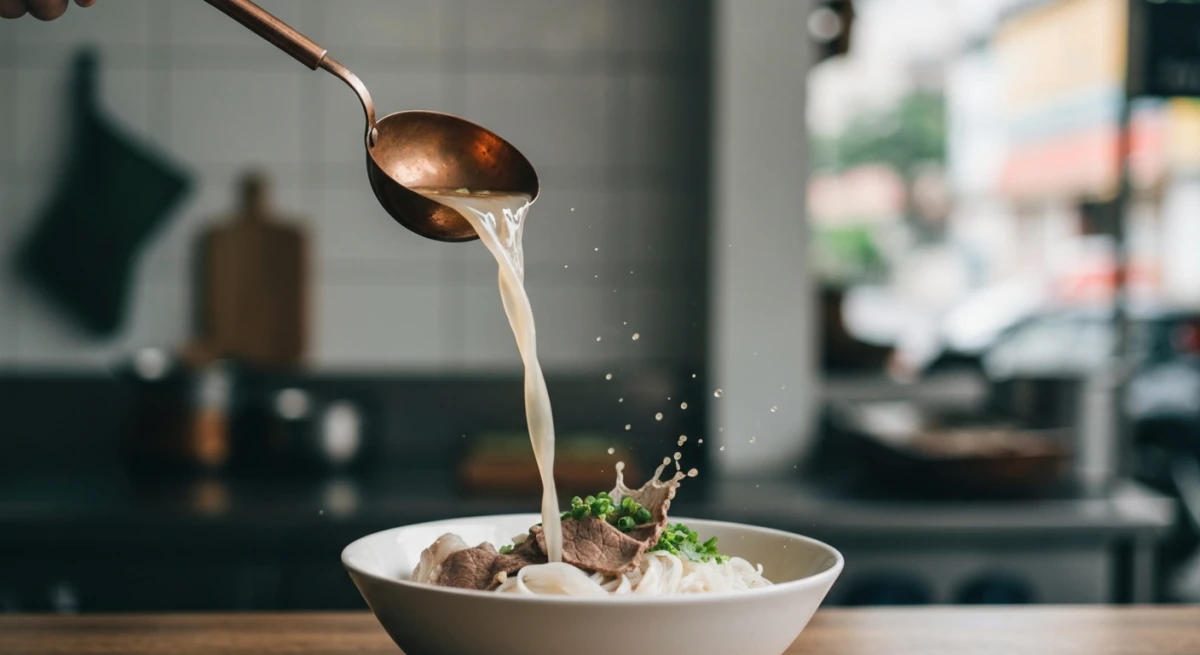
Where to go: Phở Gia Truyền Bát Đàn (49 Bát Đàn Street) or Phở Thìn (13 Lò Đúc Street) The Dish: No street food tour is complete without Vietnam’s national dish. Phở in Hanoi is treated with religious reverence. The broth is clearer and cleaner than its southern counterpart, flavored gently with charred ginger, onions, star anise, cinnamon, and black cardamom. At Bát Đàn, you’ll join a queue of locals waiting for a bowl of "Phở Tái Nạm" (rare beef and beef flank). How to eat it: Taste the broth first before adding any condiments to appreciate the complexity. Then, customize it with a squeeze of fresh lime, a few slices of raw bird's eye chili, and a splash of garlic vinegar. Order some "quẩy" (golden, deep-fried dough sticks) to dip into the broth—they act as delicious, crispy sponges.
Stop 5: Hoa Quả Dầm or Kem Xôi (Hanoian Sweet Desserts)
Where to go: Tô Tịch Street (often called "Fruit Salad Street") or Kem Xôi Hai Bà Trưng The Dish: After savoring deep savory flavors, cleanse your palate. On Tô Tịch Street, you’ll find vendors preparing "hoa quả dầm"—a colorful bowl of fresh seasonal tropical fruits (jackfruit, mango, avocado, papaya, dragonfruit) drizzled with sweet condensed milk, coconut cream, and crushed ice. Alternatively, seek out "kem xôi", a delightful dessert featuring pandan-flavored green sticky rice topped with a scoop of coconut ice cream and toasted coconut flakes. How to eat it: Mix everything together vigorously so the ice melts slightly into the cream and condensed milk, creating a refreshing, sweet soup.
Stop 6: Cà Phê Trứng (The Famous Hanoian Egg Coffee)
Where to go: Café Giảng (39 Nguyễn Hữu Huân Street) or Café Đinh (13 Đinh Tiên Hoàng Street) The Dish: Conclude your tour with Hanoi's liquid gold. Egg coffee was invented in 1946 by Nguyen Van Giang, a bartender at the Sofitel Legend Metropole Hotel. Due to a severe wartime shortage of fresh milk, he whisked chicken egg yolks with sugar, condensed milk, and a dash of honey to create a thick, meringue-like foam, pouring it over strong, bitter Vietnamese robusta coffee. How to eat it: Spoon the thick, custard-like egg foam from the top first—it tastes like liquid tiramisu. Then, stir gently to mix the sweet foam with the dark, intense coffee below for a perfect bitter-sweet finale.
Guided vs. Self-Guided: How to Choose the Best Food Experience
Deciding whether to tackle the streets independently or book a guided Hanoi walking street food tour depends on your travel style, dietary needs, and comfort level with the chaotic local environment.
The Guided Tour Experience
For first-time visitors to Vietnam, a guided street food walking tour is highly recommended.
- The Access Factor: Local guides know the "hidden gems" that aren't listed on travel blogs. They can lead you down narrow, residential alleyways to kitchen setups operating out of a family's living room.
- The Storytelling: A great guide doesn't just hand you food; they explain the history of the dishes, the stories of the families cooking them, and the cultural context of Hanoi's neighborhoods.
- Stomach Safety & Dietary Customization: Guided tours curate vendors with high hygiene standards. Furthermore, if you are vegetarian, vegan, or have gluten sensitivities, a local guide is invaluable for customizing dishes that are traditionally heavily reliant on fish sauce and wheat-based ingredients.
The DIY (Self-Guided) Experience
For seasoned travelers or those on a tight budget, doing a self-guided tour offers ultimate flexibility.
- Pacing: You can eat at your own speed, linger at places you love, and skip dishes you aren't interested in.
- Cost-Efficient: A guided tour generally costs between $20 and $45 USD per person. A DIY tour allows you to pay local street prices, meaning you can easily feast on five different dishes and drinks for under $10 to $12 USD total.
- The Thrill of Discovery: There is immense satisfaction in using a map, navigating the streets, and communicating with vendors using hand gestures and basic Vietnamese.
Street Food Safety, Etiquette, and Navigating the Old Quarter
To ensure your culinary adventure is memorable for all the right reasons, keep these practical survival tips in mind.
The Art of Crossing the Street in Hanoi
Hanoi's traffic is legendary and can feel terrifying. Thousands of motorbikes swarm the streets, seemingly without stopping.
- The Golden Rule: Walk slowly, predictably, and consistently. Maintain eye contact with oncoming riders. Do not run, stop suddenly, or backtrack. The motorbike riders are calculating your trajectory; as long as you move at a steady, predictable pace, they will fluidly part around you like water around a stone.
Stomach Safety and Hygiene
Contrary to popular belief, you do not have to get sick eating street food in Vietnam. Follow these rules of thumb:
- Look for High Turnover: Choose stalls crowded with locals. If a vendor has a rapid turnaround of customers, the ingredients are guaranteed to be fresh and haven't been sitting out in the humid air.
- Check the Setup: Observe the cook's station. Are the ingredients covered? Is there a constant stream of boiling water to clean bowls?
- Wipe Your Utensils: It is standard practice in Hanoi to grab a tissue from the table and wipe down your chopsticks and spoon before eating.
Street Food Etiquette
- Don't Linger Forever: Because street food stalls have limited seating (often just a few plastic stools), it is polite to finish your food, pay, and vacate your seat so other customers can sit down.
- Tipping is Not Expected: Tipping is not a traditional part of Vietnamese culture, especially at street food stalls. However, leaving the change or a small tip for exceptional service is always appreciated.
- Cash is King: Street vendors do not accept credit cards. Always carry small denominations of Vietnamese Dong (VND)—ideally 10,000, 20,000, and 50,000 bills. Trying to pay for a 30,000 VND bowl of pho with a 500,000 VND bill can drain a vendor's change reserve and is frowned upon.
Frequently Asked Questions (FAQ)
Can I find vegetarian options on a Hanoi street food tour?
Yes, but it requires caution. While traditional Vietnamese food uses a lot of fresh herbs and vegetables, almost every savory dish contains fish sauce ("nước mắm") or pork-based broth. If you are doing a DIY tour, look specifically for signs saying "Chay" (which means vegetarian). Dishes like Bánh Mì Chay (with tofu and mock meats) and Phở Chay are available at dedicated vegetarian establishments. If booking a guided tour, inform the operator in advance so they can tailor the stops.
What is the best time of day to take a walking food tour in Hanoi?
The best time is either mid-morning (9:00 AM to 12:00 PM) or early evening (6:00 PM to 9:00 PM). Mid-morning allows you to catch the bustling market activity, while the evening tour offers cooler temperatures, a lively street atmosphere, and access to vendors who only open after dark, such as those grilling meats over open charcoal.
How much should I expect to pay per dish on a DIY tour?
Hanoi street food is incredibly affordable. On average, a bowl of phở costs between 40,000 and 60,000 VND ($1.60 to $2.40 USD). A classic bánh mì ranges from 25,000 to 40,000 VND ($1.00 to $1.60 USD). Egg coffee costs around 30,000 to 45,000 VND ($1.20 to $1.80 USD). You can easily experience a full, multi-course feast for under $10 USD.
Are food tours safe for kids and elderly travelers?
Guided walking tours are generally safe, but the physical environment of Hanoi's Old Quarter can be challenging. Sidewalks are often blocked by parked motorbikes, forcing pedestrians to walk on the street alongside traffic. The heat, humidity, and constant walking can be exhausting. For young children or elderly travelers with mobility concerns, a private food tour via cyclo (a traditional three-wheeled bicycle taxi) or motorbike is a highly comfortable alternative.
Conclusion
A hanoi walking street food tour is an unforgettable rite of passage for any traveler visiting Vietnam. It is a sensory immersion that challenges your comfort zone, rewards your curiosity, and introduces you to some of the most sophisticated flavor combinations on earth. By pulling up a tiny plastic stool on a chaotic sidewalk, you aren't just eating lunch—you are participating in a rich, living culinary heritage. Pack your walking shoes, bring an open mind and an empty stomach, and prepare to fall in love with Hanoi, one delicious bite at a time.