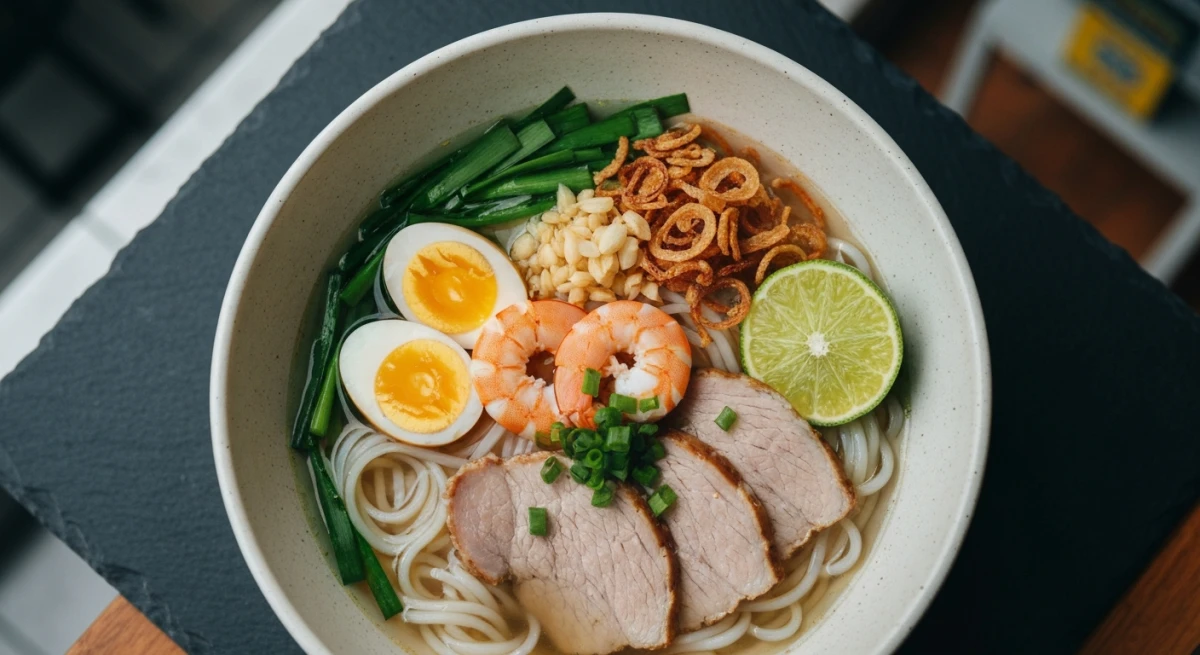
The Pulse of Hanoi’s Sidewalk Cuisine
To truly understand Hanoi, you must leave the polished dining rooms behind, step onto the bustling sidewalks, and pull up a tiny plastic stool. In the historic heart of Vietnam’s capital, the historic Hanoi Old Quarter serves as a living, breathing culinary museum. For over a thousand years, these labyrinthine streets have been organized by trade—with names like Hang Bac (Silver Street) and Hang Chieu (Mat Street). Today, while the commerce has modernized, the street food culture remains spectacularly intact.
Finding the absolute best hanoi old quarter street food is not about looking for glossy signs or English-friendly menus. Instead, it is about following the fragrant steam of simmering star anise, the crackle of charcoal grills, and the dense crowds of locals huddled on the pavement. The street food here is a masterclass in culinary balance: a delicate play of sweet, salty, sour, spicy, and umami, brightened by an abundance of fresh herbs and structured around incredibly fresh, hyper-local ingredients. Whether you are a first-time traveler or a seasoned foodie, this guide will lead you past the tourist traps and deep into the culinary soul of Hanoi.
8 Iconic Hanoi Old Quarter Street Food Dishes (And Where to Find the Best Ones)
Navigating the overwhelming options in the Old Quarter can be daunting. To help you conquer the sidewalks like a local, here are the eight essential dishes you must try, complete with phonetic pronunciations, flavor profiles, and the best local-approved stalls.
1. Phở Bò & Phở Gà (Traditional Beef or Chicken Noodle Soup)
Pronunciation: fuh baw / fuh gah
Phở is the undisputed king of Vietnamese cuisine, and Hanoi is its birthplace. Unlike the sweeter, herb-heavy southern style, Northern-style pho is defined by its clean, elegant, and deeply savory broth. The soup relies on a pure bone broth simmered for over 12 hours with charred ginger, onions, cinnamon, star anise, and black cardamom, poured over flat, silky rice noodles and topped with tender cuts of beef or hand-shredded chicken.
- The Touristy Option: Phở 10 Lý Quốc Sư (10 Lý Quốc Sư). While the pho here is undeniably delicious and Michelin-recognized, you will often face massive queues, a chaotic atmosphere, and inflated prices (around 70,000 to 100,000 VND per bowl).
- The Local Goldmine: Phở Sướng (24B Ngõ Trung Yên). Tucked deep inside a narrow, historic alleyway off Đinh Liệt Street, this legendary stall has been serving locals for decades. The name "Sướng" translates to "ecstasy" or "sheer happiness"—a fitting description of how you will feel after tasting their exceptionally clear, beefy broth. A bowl costs around 55,000 VND (~$2.25 USD).
- How to Eat It Like a Local: Do not immediately pour sriracha or chili sauce into the bowl; this ruins the delicate, long-simmered broth. Taste the broth first. Then, add a squeeze of fresh lime juice, a few slices of fresh bird's eye chili, or a splash of garlic-infused vinegar. Order a plate of quẩy (deep-fried dough sticks) and submerge them in the broth to soak up the savory liquid.
2. Bún Chả (Charcoal-Grilled Pork with Rice Noodles)
Pronunciation: boon chah
If pho is Hanoi’s soul, bún chả is its midday obsession. This iconic dish consists of charcoal-grilled pork patties and caramelized pork belly swimming in a warm, sweet-and-savory dipping sauce made of diluted fish sauce, sugar, vinegar, and lime, garnished with crunchy slices of green papaya and carrot. It is served with a mountain of fresh cold rice vermicelli (bún) and an overflowing basket of fresh herbs.
- The Touristy Option: Bún Chả Hương Liên (24 Lê Văn Hưu). Famous worldwide as the "Obama Pho" spot where Anthony Bourdain and former US President Barack Obama shared a meal. However, it is located south of the Old Quarter, heavily commercialized, and perpetually crowded with tour groups.
- The Local Goldmine: Bún Chả Đắc Kim (1 Hàng Mành) is a historic Old Quarter classic, but for an even more authentic, balanced flavor profile, head to Bún Chả Ta (21 Nguyễn Hữu Huân). This cozy spot serves incredibly smoky, perfectly seasoned pork and offers sensational nem cua bể (crispy crab spring rolls) wrapped in delicate, flaky rice paper. A full set runs about 60,000 to 80,000 VND (~$2.50 - $3.25 USD).
- How to Eat It Like a Local: Grab a small bunch of noodles and a handful of fresh herbs (perilla, coriander, and mint), dunk them directly into the bowl of warm dipping sauce with the grilled pork, and eat everything together in one glorious, savory-sweet bite.
3. Bánh Mì (The French-Vietnamese Baguette)
Pronunciation: bahn mee
Born from French colonial influence and transformed by Vietnamese culinary ingenuity, the bánh mì is the ultimate street sandwich. In Hanoi, the style is delightfully minimalist compared to the jam-packed southern versions. It focuses on a incredibly light, airy, and ultra-crisp baguette spread with rich liver pâté, homemade mayonnaise, cold cuts, headcheese, pickled daikon and carrots, fresh cucumber, and cilantro, finished with a drizzle of fiery local chili sauce.
- The Touristy Option: Bánh Mì 25 (25 Hàng Cá). Once a humble cart, it has expanded into a massive multi-stall operation. While highly sanitary and offering Westernized options like avocado or cheese, it lacks the deep, punchy traditional flavor profiles that purists crave.
- The Local Goldmine: Bánh Mì Mama (54 Lý Quốc Sư). Located just steps from St. Joseph’s Cathedral, this tiny, unassuming sidewalk cart is run by a lady who makes some of the most spectacular, traditional pâté in the city. Her baguettes are toasted to order over small coals, ensuring the perfect texture. Try the classic mixed pork (bánh mì thập cẩm) for about 30,000 VND (~$1.20 USD).
- How to Eat It Like a Local: Bánh mì is designed for the move. Grab it, wrap it in its small paper sleeve, and eat it while strolling through the historic alleyways of the Old Quarter.
4. Bánh Cuốn (Steamed Rice Rolls)
Pronunciation: bahn kuan
Perfect for breakfast or a light dinner, bánh cuốn is a delicate dish made from a fermented rice batter spread thinly over a fabric screen stretched over boiling water. Once steamed, the silky, translucent sheet is rolled with minced wood-ear mushrooms and seasoned ground pork, then topped with a generous handful of crispy, golden-fried shallots. It is served with a warm dipping sauce (nước chấm) and slices of chả lụa (Vietnamese pork sausage).
- The Touristy Option: Bánh Cuốn Gia Truyền Thanh Vân (14 Hàng Gà). Highly rated on major travel platforms, but can feel rushed and overcrowded.
- The Local Goldmine: Bếp Tuệ An (also known as Tuệ An, located on Hàng Giấy street). This tiny, family-run breakfast spot specializes in handmade, silky-smooth bánh cuốn and comforting phở bò. You can watch the owner expertly lift the paper-thin rice sheets with a bamboo stick right at the entrance. A plate here costs around 35,000 to 45,000 VND (~$1.50 - $1.85 USD).
- How to Eat It Like a Local: Use your chopsticks to cut the roll into bite-sized pieces, submerge them in the warm dipping sauce, and eat them along with a slice of pork sausage and a pinch of fresh coriander.
5. Phở Trộn & Phở Cuốn (Dry Mixed Pho & Pho Rolls)
If the humid Hanoi heat makes hot soup less appealing, the city has brilliant dry noodle alternatives. Phở Trộn features thick, flat pho noodles tossed with sweet soy-based sauce, roasted peanuts, fried shallots, fresh herbs, and beef or shredded chicken. Phở Cuốn consists of wide, uncut sheets of pho noodle wrapped around stir-fried beef and fresh cilantro, forming a refreshing roll dipped in sweet-sour fish sauce.
- The Local Goldmine: Phở Hạnh (65 Lãn Ông). This famous evening spot specializes in chicken dishes. Their phở gà trộn (dry mixed chicken pho) is legendary, featuring tender local chicken, crispy shallots, and a perfectly balanced sweet soy glaze. A plate is around 50,000 VND (~$2.00 USD).
6. Bún Riêu Cua (Crab and Tomato Noodle Soup)
Pronunciation: boon ree-oo
Bún riêu is a rustic, intensely flavorful noodle soup that showcases northern Vietnam’s love for freshwater ingredients. The reddish, slightly acidic broth is made from freshwater paddy crabs, tomatoes, tamarind, and a touch of shrimp paste. It is served with thin rice noodles, fried tofu puffs, meatballs, and fresh banana flower shreds.
- The Local Goldmine: Bún Riêu Trang (23 Nguyễn Siêu). Sitting on a tiny plastic stool on the sidewalk of Nguyễn Siêu street while slurping a bowl of Trang’s crab soup is a quintessential Hanoi experience. The broth is incredibly robust, sour, and complex. You can choose to add beef or snails (ốc) to your bowl. Expect to pay around 45,000 to 60,000 VND (~$1.85 - $2.50 USD).
7. Nem Chua Rán (Fried Fermented Pork Skewers)
Pronunciation: nem chua rahn
For the ultimate late-night street snack, locals head to the dark alleys of the Old Quarter for nem chua rán. These are cured, fermented pork skewers that are lightly breaded and deep-fried until crispy on the outside and wonderfully chewy on the inside. They are served hot on a banana leaf alongside sliced cucumber, green mango, and a spicy, sweet chili sauce.
- The Local Goldmine: Ngõ Tạm Thương (off Hàng Bông Street). This tiny, narrow alley is the undisputed spiritual home of nem chua rán. Several competing stalls line the alleyway, but they all serve incredible, crispy skewers. Grab a seat on a plastic stool, order a plate of skewers, some fried potatoes, and a cold iced tea (trà đá).
8. Cà Phê Trứng (Egg Coffee) & Chè (Sweet Dessert Soup)
No culinary tour of the Old Quarter is complete without exploring Hanoi’s historic beverage and dessert culture. Cà Phê Trứng is a luxurious concoction of robust robusta coffee topped with a thick, velvety custard made of egg yolks whipped with condensed milk and sugar. Chè refers to a traditional sweet dessert soup consisting of layers of sweetened beans, jellies, tapioca pearls, and rich coconut cream.
- The Local Goldmine for Egg Coffee: Café Giảng (39 Nguyễn Hữu Huân). This is the birthplace of egg coffee, created in 1946 by Mr. Nguyen Giang during a wartime milk shortage. For a more hidden, atmospheric vibe, climb the narrow, dark staircase of Café Đinh (13 Đinh Tiên Hoàng) on the second floor of an ancient building overlooking Hoan Kiem Lake.
- The Local Goldmine for Chè: Chè 4 Mùa (4 Hàng Cân). Operating since 1975, this iconic dessert spot serves incredibly refreshing traditional sweet soups. Try the lotus seed and black bean chè with coconut shreds for a perfect palate cleanser.
The Ultimate DIY Hanoi Old Quarter Street Food Walking Route
To help you maximize your eating experience without constantly backtracking, we have mapped out a geographically logical, self-guided walking food tour. This route covers approximately 1.5 kilometers (0.9 miles) and takes you through the most scenic and flavorful corners of the Old Quarter. Pace yourself—this is a marathon, not a sprint!
[START] St. Joseph's Cathedral
   │
   ▼ (1 min walk)
Stop 1: Bánh Mì Mama (54 Lý Quốc Sư) ─── Quick breakfast or midday sandwich
   │
   ▼ (5 min walk through Hàng Trống street)
Stop 2: Café Đinh (13 Đinh Tiên Hoàng) ─── Egg coffee with a second-story view of the lake
   │
   ▼ (8 min walk north past Hoan Kiem Lake)
Stop 3: Phở Sướng (24B Ngõ Trung Yên) ─── A comforting bowl of traditional beef pho
   │
   ▼ (4 min walk north to Nguyễn Siêu)
Stop 4: Bún Riêu Trang (23 Nguyễn Siêu) ─── Tangy, savory crab noodle soup
   │
   ▼ (3 min walk east)
Stop 5: Bún Chả Ta (21 Nguyễn Hữu Huân) ─── Smoky charcoal-grilled pork lunch
   │
   ▼ (5 min walk west into the heart of the nightlife)
Stop 6: Ta Hien "Beer Street" ─── Fresh Bia Hơi, fried skewers, and lively people-watching
Step-by-Step Walking Directions:
- Start at St. Joseph's Cathedral: Take in the beautiful French neo-gothic architecture before turning onto Lý Quốc Sư Street. Stop immediately at Bánh Mì Mama to grab a crispy, warm baguette.
- Stroll to the Lake: Walk east down Hàng Trống and Hàng Gai streets, which are lined with boutique silk shops. Once you reach Hoan Kiem Lake, locate the unassuming entrance of Café Đinh (look closely for a narrow hallway between souvenir shops). Climb up to the second floor for an exceptional egg coffee.
- Enter the Alleyways: Walk north along Đinh Tiên Hoàng and turn left onto Ngõ Trung Yên, a narrow alleyway bursting with local life. Pull up a stool at Phở Sướng for a beautiful, clear beef broth.
- Deep into the Old Quarter: Head further north into the heart of the 36 streets. Walk up to Nguyễn Siêu Street and sit down at Bún Riêu Trang to experience the complex, tangy flavors of northern crab soup.
- The Charcoal Grand Finale: Walk east to Nguyễn Hữu Huân Street, famous for its coffee shops and dining spots. Find Bún Chả Ta for a brilliant feast of grilled pork and crispy crab spring rolls.
- Unwind at Beer Street: As dusk falls, walk a few minutes west to Tạ Hiện Street (known to travelers as Beer Street). Grab a low blue plastic stool, order a glass of Bia Hơi (fresh draft beer) for under 15,000 VND (~$0.60 USD), and enjoy the chaotic, energetic pulse of Hanoi at night.
Navigating Hanoi’s Sidewalks: Etiquette, Safety & Dietary Hacks
Eating on the streets of Hanoi is an incredible adventure, but it requires a bit of practical know-how to navigate safely and confidently.
Sidewalk Etiquette and Ordering
- The Plastic Stool Culture: Do not be afraid of the tiny plastic stools! They are a practical solution for crowded sidewalks. When you sit down, keep your legs tucked in slightly so you do not block the narrow pathways of passing motorbikes.
- How to Order: Menus are rarely in English at the most authentic stalls because they only serve one or two dishes. Simply point to what the person next to you is eating or state the name of the dish followed by the quantity (e.g., "Một" for one, "Hai" for two).
- Paying the Bill: Cash is absolutely king on the streets of Hanoi. Carry small denominations (10,000, 20,000, and 50,000 VND notes). Large bills like 500,000 VND can be difficult for small street vendors to change. You will typically pay at the very end of your meal.
The Herb Basket Demystified
Every table in Hanoi is adorned with a large, communal basket of fresh, raw herbs. These are not garnishes; they are essential flavor components. Here are the most common herbs you will find:
- Húng Láng (Hanoi Basil/Mint): A delicate, highly aromatic mint unique to the region.
- Kinh Giới (Vietnamese Balm): Features a bright, citrusy, and slightly lemony flavor.
- Tía Tô (Purple Perilla): Earthy, peppery, and slightly minty leaves with purple undersides.
- Mùi Tàu (Sawtooth Herb/Culantro): A strong, pungent herb that tastes similar to cilantro but is much more intense.
Pro-tip: Always inspect the herbs to ensure they are fresh and clean. Peel off the leaves and drop them directly into your hot noodle broth, or wrap them together with your grilled meats.
Avoiding "Hanoi Belly" (Health & Hygiene Tips)
While street food in Hanoi is generally very fresh due to high turnover, it is always wise to take a few precautions:
- Follow the Crowds: A busy stall with a high turnover of local families is the best guarantee of fresh, safe ingredients. Avoid empty stalls where food has been sitting out.
- Boiling Broth is Your Friend: Soup-based dishes like pho and bun rieu are incredibly safe because the broth is kept at a rolling boil throughout the day.
- Ice Safety: Most ice used in Hanoi's Old Quarter tourist areas is "tube ice" made from purified water, which is completely safe to consume. However, if you have a highly sensitive stomach, skip the ice and stick to bottled water or hot teas.
- Sanitize: Carry a small bottle of hand sanitizer with you, as running water is not always available at sidewalk stalls.
Vegetarian and Vegan Hacks in the Old Quarter
Traditional Vietnamese street food is heavily reliant on pork, beef, and fish sauce (nước mắm). However, navigating the food scene as a vegetarian or vegan is entirely possible with the right vocabulary and destinations.
- Key Phrases to Memorize:
- "Tôi ăn chay" (I eat vegetarian/vegan)
- "Không cho nước mắm" (No fish sauce)
- "Không có thịt" (No meat)
- Vegetarian Street Foods to Look For:
- Bánh Mì Chay: Many bánh mì vendors offer a vegetarian version filled with fried tofu, mock meats, fried eggs, and mushroom pâté.
- Chè: These sweet dessert soups are inherently vegetarian and often entirely vegan, made with coconut milk, beans, grass jelly, and tapioca.
- Bánh Trôi Tàu: Warm ginger soup with sweet rice balls filled with black sesame or mung bean paste.
- Tào Phớ: Silky tofu pudding served in a sweet, jasmine-infused syrup.
- Top Vegetarian Spots: Head to the area around Chùa Quán Sứ (Quán Sứ Pagoda), just south of the Old Quarter, which features a high concentration of excellent, authentic Buddhist vegan restaurants serving plant-based versions of classic street dishes.
Frequently Asked Questions
Is street food in Hanoi safe to eat? Yes, street food in Hanoi is highly safe, provided you eat at busy stalls with high local turnover. Because most dishes are prepared fresh to order and soups are kept at a rolling boil, the risk of foodborne illness is relatively low.
How much does street food cost in Hanoi? Street food in Hanoi is incredibly budget-friendly. A bowl of pho or bun cha typically costs between 40,000 and 70,000 VND ($1.65 to $2.90 USD). A bánh mì ranges from 25,000 to 45,000 VND ($1.00 to $1.85 USD). A full day of eating like a local will easily cost under 200,000 VND ($8.20 USD).
What is the best street food street in Hanoi’s Old Quarter? Tống Duy Tân is famous as the official late-night "Food Street," open 24/7 and serving excellent hotpots, grilled meats, and rice dishes. Tạ Hiện Street is the go-to spot for beer and street snacks, while Hàng Buồm Street is fantastic for sweet treats and night markets on weekends.
Can I pay for street food with a credit card? No. Street food stalls in the Old Quarter are strictly cash-only operations. Always carry small change (10,000 to 50,000 VND notes) when heading out to eat.
What are the peak hours for street food in Hanoi? Hanoi’s street food operates on a strict clock. Breakfast dishes like pho and bánh cuốn are best enjoyed between 6:00 AM and 9:00 AM. Lunch options like bún chả peak from 11:30 AM to 1:30 PM. Evening dishes like hotpots, BBQ, and street snacks come alive after 6:00 PM and run late into the night.
Conclusion: Savoring the Chaos
Eating your way through the Hanoi Old Quarter is more than just a culinary journey; it is a profound cultural experience. Amid the roar of motorbikes, the clinking of glasses, and the warm hospitality of generational cooks, you will discover a city that expresses its history and soul through its food. Leave your map behind, follow your nose, pull up a plastic stool, and embrace the delicious chaos of Hanoi’s sidewalks.