The Culinary Pulse of Ho Chi Minh City
Saigon—officially Ho Chi Minh City—does not ask you to eat; it demands that you surrender your senses to it. From the second you step onto the bustling streets, your nose is hit with the sweet, smoky aroma of charcoal-grilled pork, the rich, star anise-perfumed steam of simmering beef bones, and the sharp, citrusy sting of freshly crushed calamansi. Eating food in saigon isn't just a pastime; it is the ultimate expression of the city's identity.
For decades, this southern metropolis has served as Vietnam's grand culinary melting pot. While Hanoi is celebrated for its rigid, minimalist preservation of centuries-old recipes, Saigon is a wild, beautiful culinary rebel. Here, traditional regional dishes from the North, Central Highlands, and Mekong Delta collide, adapt, and evolve. Sweet, spicy, herbal, and creamy notes harmonize in a single bowl, reflecting a culture that welcomes innovation with open arms.
To truly understand the city, you must look past the flashy rooftop bars and dive headfirst into the chaotic web of narrow alleys (hẻm). It’s in these hidden pathways, sitting on a low plastic stool just inches from the whirring traffic of passing motorbikes, that you'll find the absolute best food in Saigon. This comprehensive guide is your culinary map to navigating the dizzying, delicious world of southern Vietnamese cuisine, from legendary street stalls to modern gastronomic marvels.
1. The Anatomy of Southern Flavor: Northern vs. Southern Cuisine
Before you take your first bite, it’s crucial to understand what makes Southern Vietnamese cuisine distinct. If Hanoi’s flavor profile is defined by subtlety, elegance, and savory restraint, Saigon’s food profile is unapologetically bold, sweet, and herb-dense. Several historical and geographical factors shape the food in Saigon:
- The Sweetness Factor: Southern cooking heavily incorporates palm sugar and coconut milk, a clear influence from Cambodia, Thailand, and the bountiful coconut groves of the nearby Mekong Delta. Even savory dishes like phở and thịt kho (braised pork) carry a distinct sweetness that surprises visitors accustomed to Northern versions.
- The Herb Mountain: In Saigon, no meal is complete without a massive plate of fresh, raw herbs (rau sống). You will find sweet basil, culantro, rice paddy herb, perilla, fish mint, and banana blossoms served alongside almost every dish. Locals use these herbs to customize their bites, adding fresh texture, bitterness, and cooling properties to heavy, savory dishes.
- Acidity and Heat: While Northern food relies on lime and black pepper, Southern food embraces fresh bird's eye chilies and direct acidity from calamansi, tamarind, and vinegar-pickled vegetables.
By understanding this culinary philosophy, you will appreciate why a bowl of Pho in Saigon looks and tastes entirely different from its Hanoi counterpart.
2. The Iconic Four: Non-Negotiable Dishes to Try in Saigon
While there are hundreds of dishes to sample, these four pillars of Saigon cuisine are the absolute starting point for any food-focused traveler.
Cơm Tấm (Broken Rice)
If Saigon had an official state dish, it would be Cơm Tấm. Originally a humble peasant meal made from cheap, broken rice grains that farmers couldn't sell, it has become the ultimate Saigon breakfast, lunch, and late-night comfort food. A standard plate of Cơm Tấm Sườn Nướng features a bed of fragrant, slightly dry broken rice topped with a thick, caramelized pork chop marinated in lemongrass, garlic, and fish sauce, then grilled over open charcoal. It is accompanied by chả trứng (a savory steamed egg, pork, and glass noodle meatloaf), bì (shredded pork skin tossed in toasted rice powder), a fried egg with a runny yolk, scallion oil, and quick-pickled daikon and carrots. The magic ingredient that ties it all together is the warm, sweetened fish sauce (nước chấm), which is drizzled generously over the entire plate.
- Where to try it:
- Cơm Tấm Ba Ghiền (84 Dang Van Ngu, Phu Nhuan District): Famous for its legendary, massive pork chops that literally spill off the sides of the plate. It is a Michelin Bib Gourmand recipient and a local institution.
- Cơm Tấm Nguyễn Văn Cữ (74 Nguyen Van Cu, District 1): An upscale, premium option known for using arguably the highest-quality, smokiest charcoal-grilled pork in the city.
Bánh Mì (The Saigon Style)
The bánh mì is a testament to culinary colonization turned into gastronomic triumph. The French introduced the baguette, pate, and mayonnaise, but Saigonese vendors localized it by lightening the dough with rice flour (creating an ultra-crispy crust and airy interior) and stuffing it with savory Vietnamese ingredients. Unlike the minimalist, butter-and-pate-heavy bánh mì of Hanoi, the Saigon version is a multi-layered masterpiece. A standard bánh mì thịt (cold cut sandwich) is smeared with rich homemade egg-yolk mayonnaise and savory pork liver pate, then stuffed with a colorful assortment of pork roll (chả lụa), headcheese, roasted pork belly, fresh cucumber spears, cilantro, raw scallions, and pickled carrots and daikon. A splash of savory soy-based sauce and a few slices of fiery bird's eye chili complete this masterpiece.
- Where to try it:
- Bánh Mì Huỳnh Hoa (26 Le Thi Rieng, District 1): Often called the "heavyweight champion" of Saigon bánh mì. It is incredibly rich, packed with over a dozen layers of meats and pate. One sandwich is easily large enough for two people. Expect long lines, but it moves quickly.
- Bánh Mì Hồng Hoa (54 Nguyen Van Trai, District 1): A fantastic, more balanced alternative with an exceptionally crispy baguette baked fresh on-site.
- Bánh Mì Bảy Hổ (19 Huynh Khuong Ninh, District 1): A multi-generational street cart that has been serving a simpler, deeply nostalgic, and incredibly budget-friendly bánh mì for over 80 years.
Phở Nam (Southern Pho)
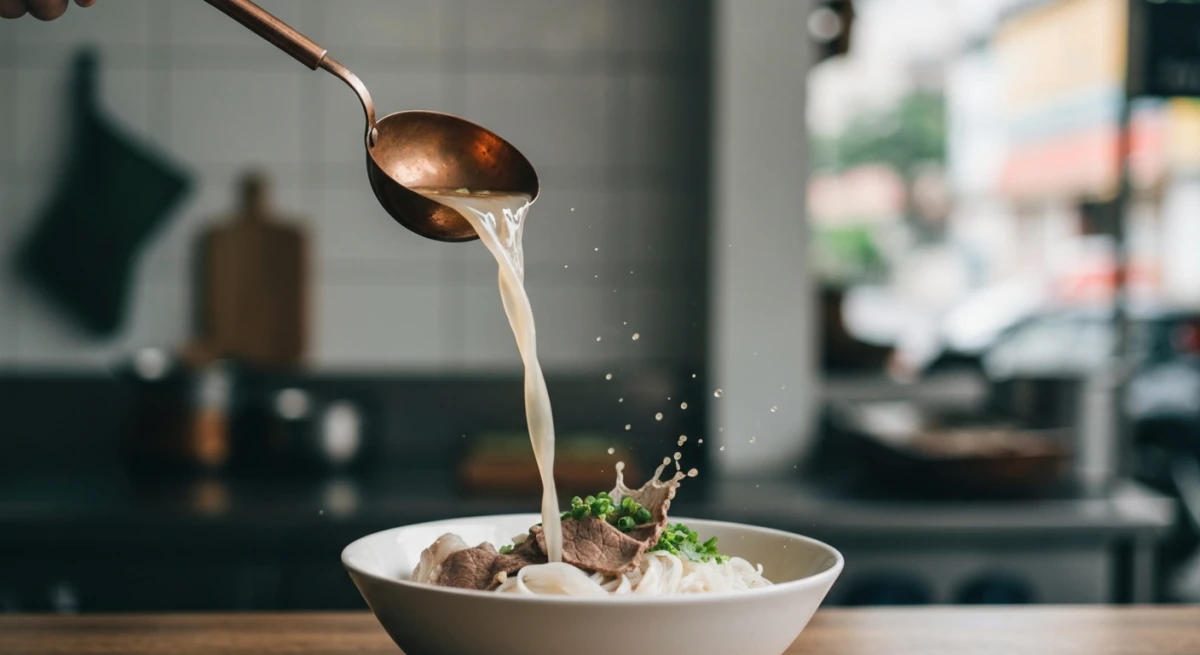
Do not make the mistake of assuming all pho is the same. Southern-style pho (Phở Nam) features a sweeter, darker, and more complex broth seasoned with charred onions, ginger, star anise, cinnamon, cloves, and coriander seeds. The noodles are slightly thinner than those in the North, and the beef cuts are incredibly varied—ranging from rare ribeye (tái) to tender brisket (gầu), chewy tendon (gân), and savory beef meatballs (bò viên). When you order Southern pho, it arrives with a massive basket of fresh herbs (including Thai basil and culantro), raw bean sprouts, lime wedges, sliced chilies, and two squeeze bottles: hoisin sauce and sriracha. Locals squeeze these sauces into a small side dish for dipping the meat, or squirt them directly into the broth to tailor the sweetness and spice to their exact liking.
- Where to try it:
- Phở Lệ (415 Nguyen Trai, District 5): A beloved legendary spot in Cholon (Chinatown) that serves an incredibly rich, sweet, and beefy broth.
- Phở Phượng (25 Hoang Sa, District 1): A fantastic spot along the canal, known for its deep, clear broth and tender, high-quality beef cuts.
Bún Thịt Nướng (Grilled Pork with Vermicelli)
For those hot, humid Saigon afternoons when hot soup feels too intense, Bún Thịt Nướng is the perfect savior. This refreshing dish consists of a bed of cold, springy rice vermicelli noodles topped with warm, charcoal-grilled pork shoulder, crispy deep-fried spring rolls (chả giò), a mountain of shredded herbs, lettuce, cucumber, bean sprouts, and roasted peanuts. The entire bowl is drenched in a sweet, tangy, garlic-and-chili-infused fish sauce. It is a stunning play on temperatures, textures, and contrasting sweet, savory, and fresh flavors.
- Where to try it:
- Bún Thịt Nướng Nguyễn Trung Trực (near the Cafe Apartments) where you can watch the pork being grilled right on the sidewalk, sending clouds of aromatic smoke into the air.
3. Sizzling Skillets & Seafood Alleys: Street Food Masterpieces
Beyond the famous staples, Saigon's true culinary soul lives in its specialty street foods. These are the dishes that locals gather around late at night, accompanied by cold beers and lively conversation.
Bò Né (Sizzling Beef Breakfast)
If you want to start your morning with a sensory explosion, find a Bò Né stall. Translated literally as "dodging beef" (because you have to dodge the splattering oil when it is served), this dish is the Vietnamese equivalent of a steak and eggs breakfast. A personal cast-iron skillet shaped like a cow is heated over high flame. The cook drops in thin strips of marinated beef, a dollop of rich pork liver pate, a wedge of Laughing Cow cheese, a whole egg, and a small sausage. It is brought to your table still violently bubbling and spitting oil. You eat it by tearing off pieces of a warm, fluffy baguette and dipping them into the melted egg yolk, pate, and savory beef juices.
- Where to try it:
- Bò Né Lệ Hồng (489/29/20 Huynh Van Banh, Phu Nhuan District): A cult-favorite tucked deep in a residential alleyway.
- Bò Né Khánh Nghĩa (District 3): Highly praised by local foodies for its incredibly tender beef and rich, buttery gravy.
Bột Chiên (Fried Rice Cakes)
A popular after-school and late-night snack, Bột Chiên has Chinese roots but has been thoroughly embraced by Saigon. Cubes of rice flour cake are fried on a giant, flat cast-iron griddle until they develop an ultra-crispy, golden exterior while remaining soft and chewy on the inside. The cook then cracks one or two eggs over the cakes, scattering a handful of green scallions on top. It is served with a mountain of crunchy, shredded green papaya and a sweet, tangy, diluted soy-based dipping sauce.
- Where to try it:
- Look for the vendors with large flat griddles in District 3 or District 10 after 4:00 PM. A highly rated spot is Bột Chiên Đạt Thành (277 Vo Van Tan, District 3).
Ốc (Snails & Shellfish)
Eating snails (Ăn Ốc) is more than just a culinary choice; it is a vital social ritual in Saigon. Ốc refers generally to all manner of sea snails, sweet-water snails, clams, scallops, crabs, and mud creepers. Groups of friends gather at bustling open-air roadside stalls, order a dozen different plates of seafood, and wash them down with ice-cold local beers. The seafood is prepared in countless delicious ways: sautéed in sweet, rich coconut cream; stir-fried with garlic and salty chili butter; grilled over charcoal with green scallion oil (mỡ hành) and roasted peanuts; or steamed with lemongrass and ginger.
- Where to try it:
- Vĩnh Khánh Street (District 4): This is the undisputed epicenter of snail culture in Saigon. As soon as the sun goes down, this long street transforms into a chaotic, smoky neon-lit seafood paradise.
- Ốc Đào (212B/C79 Nguyen Trai, District 1): Tucked away in a quiet alley, this spot is legendary for its massive selection and perfectly balanced sauces.
Bò Lá Lốt (Beef Wrapped in Betel Leaves)
This dish is a masterclass in aromatic grilling. Minced beef is seasoned, wrapped tightly in wild betel leaves (lá lốt) into small sausage-like cylinders, threaded onto skewers, and grilled over charcoal. As the leaves heat up, they release an incredibly unique, herbaceous, slightly peppery, and smoky aroma that is utterly intoxicating. You eat Bò Lá Lốt by placing a grilled roll onto a sheet of rice paper, adding fresh herbs, lettuce, cucumber, starfruit, green banana slices, and a bundle of cold rice vermicelli, rolling it up tightly, and dipping it into mắm nêm—a pungent, fermented pineapple-anchovy sauce that cuts through the rich beef beautifully.
- Where to try it:
- Bò Lá Lốt Cô Giang (District 1) or Bò Lá Lốt Thanh Vy (District 11) for a deeply authentic local experience.
4. A District-by-District Culinary Safari
Ho Chi Minh City is divided into administrative districts, each possessing its own unique architectural vibe and culinary personality. To truly experience the food in Saigon, you must venture beyond the tourist center of District 1.
District 1: The Modern & Classic Intersection
District 1 is the heart of the city, where you'll find classic French colonial architecture standing alongside towering modern skyscrapers. Food-wise, it offers the ultimate spectrum—from historic street carts to high-end, innovative dining.
- What to eat here: Upscale traditional dining and modern fusion.
- Key spots: Visit Bếp Mẹ Ỉn (near Ben Thanh Market) for a colorful, retro-style meal featuring comforting home-style dishes like Bánh Xèo (savory crispy crepes) and clay-pot rice. For a refined, art-forward contemporary take on Vietnamese flavors, explore NÚC Concept Kitchen & Bar or the legendary Anan Saigon, the city's pioneering Michelin-starred restaurant located right in the middle of a wet market.
District 3: The Local, Leafy Sanctuary
Bordering District 1, District 3 features quieter, tree-lined streets, gorgeous colonial villas, and a massive concentration of long-running, family-owned specialty noodle shops and cafes.
- What to eat here: Traditional regional noodle soups and cozy garden cafes.
- Key spots: Check out Quán Bụi for a highly curated, beautiful garden setting serving traditional Northern and Southern home-style dishes, or hunt for hidden Hủ Tiếu (pork and seafood noodle soup) stalls in the quiet alleyways.
District 4: The Street Food Kingdom
Once a rough-and-tumble port district, District 4 is now a safe, vibrant, and wildly popular destination for street food purists. It is a dense maze of narrow alleys where almost every ground floor has been converted into a small food stall.
- What to eat here: Seafood, snails (Ốc), and deep-fried quail.
- Key spots: Spend an evening walking down Vĩnh Khánh Street or exploring the bustling Xóm Chiếu Market, sampling small bites from different vendors as you go.
District 5 & 6 (Chợ Lớn): Chinatown Classics
Chợ Lớn is Vietnam’s largest Chinatown, a historic area defined by Chinese temples, herbal medicine shops, and incredible Chinese-Vietnamese culinary fusion. The food here is less sweet, relying on deeply savory broths, complex braising spices, and handmade noodles.
- What to eat here: Sủi Cảo (Chinese dumplings), roasted meats, and Hủ Tiếu Nam Vang (Cambodian-Chinese noodle soup).
- Key spots: Head to Hà Tôn Quyễn Street, famously known as "Sủi Cảo Street," where dozens of restaurants serve bowls of plump pork-and-shrimp dumplings in rich, clear broth.
5. Under the Radar: Inside Saigon’s Coffee and Drink Culture
You cannot talk about food in Saigon without dedicating time to its liquid twin: coffee culture. Saigon runs on caffeine, and the city’s relationship with coffee is incredibly deep, historic, and constantly evolving.
Cà Phê Sữa Đá (Iced Coffee with Sweetened Condensed Milk)
This is the lifeblood of the city. Dark, intense robusta beans are slowly brewed through a small metal drip filter (phin) directly over a layer of thick, sweet condensed milk. Once brewed, it is stirred vigorously and poured over a glass packed with crushed ice. The result is a bold, velvety, chocolatey, and incredibly strong beverage that keeps the city moving. You can buy it at high-end cafes or from street carts (Cà Phê Bệt) where you drink it sitting on newspapers on the park grass.
Cà Phê Vợt (Stocking Filter Coffee)
For a taste of living history, seek out Cà Phê Vợt. This traditional brewing method utilizes a long, stocking-like fabric filter to brew coffee in large, clay pots heated over charcoal stoves. It produces a smoother, milder, yet highly fragrant cup of coffee.
- Where to find it: Cheo Leo Café (109/36 Nguyen Thien Thuat, District 3): Operating since 1938, this is one of the oldest cafes in Saigon, still utilizing the original brewing methods in a deeply nostalgic setting.
Modern Café Culture: The Cafe Apartments
On the flip side, Saigon boasts one of the most vibrant, aesthetic, and creative modern cafe scenes in Asia. The most iconic symbol of this is the Cafe Apartments at 42 Nguyen Hue walking street—a nine-story post-war apartment building where dozens of former residential units have been converted into chic, independent boutique cafes, tea houses, and clothing shops. Walking up the tiled stairwells and exploring the creative, plant-filled balconies is a quintessential Saigon experience.
6. Street Food Survival Guide: Safety, Etiquette & Local Secrets
Eating street food in a foreign country can feel intimidating, but a few simple tips will help you navigate Saigon’s street food stalls like a seasoned local.
- Look for the Crowds: The golden rule of street food globally holds true here. If a stall is packed with locals, especially multi-generational families, it means two things: the food is delicious, and the ingredient turnover is incredibly high, ensuring everything is freshly made.
- Embrace the Ice (Nước Đá): Many travelers are terrified of ice in Vietnam, but in Saigon, commercial ice factories supply almost all food stalls. These cylindrical ice cubes with holes in the middle are made from purified water and are perfectly safe to consume. Avoid ice only if it comes in large, dirty-looking blocks that are hand-crushed.
- Trust the Cooked Herbs: If you have a sensitive stomach, you might want to skip the completely raw plates of leafy herbs at first. Instead, you can ask the vendor to quickly blanch your herbs in the boiling broth (trần) before eating them.
- Table Etiquette: Most street stalls specialize in only one or two dishes. Don't look for a massive menu; just point to what others are eating or say the name of the signature dish. When you are finished, it is customary to leave your used paper napkins on the floor under your table—vendors sweep them up continuously throughout the day.
- Carry Small Cash: Most street vendors do not accept credit cards. Keep a stash of small-denomination Vietnamese Dong (10,000, 20,000, 50,000, and 100,000 VND notes) to make transactions easy.
FAQ: Food in Saigon
Is it safe to eat street food in Saigon?
Yes, eating street food in Saigon is generally very safe and highly recommended. To minimize risk, choose busy stalls with high customer turnover, ensure hot dishes are served steaming hot, and stick to purified ice (hollow, machine-made cubes).
What is the most famous food in Saigon?
The most famous local dishes in Saigon are Cơm Tấm (broken rice with grilled pork), Bánh Mì (Saigon-style loaded baguette), and Phở Nam (Southern-style sweet and herbal beef noodle soup).
What is the difference between Northern and Southern Vietnamese food?
Northern Vietnamese food is subtle, savory, and balanced, using fewer spices and herbs. Southern Vietnamese food (specifically in Saigon) is much sweeter, bolder, utilizes fresh chilies, coconut milk, tamarind, and is always served with a massive mountain of fresh raw herbs.
Where can I find the best street food in Saigon?
The best areas for street food are District 4 (especially Vĩnh Khánh Street for seafood and snails), District 5 (for Chinese-Vietnamese fusion), and the narrow residential alleys of District 3.
How much does a meal cost in Saigon?
Street food meals in Saigon are incredibly affordable. A bowl of soup, a plate of broken rice, or a loaded bánh mì will typically cost between 25,000 VND to 60,000 VND ($1 to $2.50 USD). Mid-range restaurants cost around $5 to $15 USD per person, while fine dining options like Michelin-starred meals can range from $50 to $150+ USD.
Conclusion: The Unforgettable Feast
To truly experience Saigon is to eat your way through it. It is a city that does not hide its secrets behind closed doors; instead, it lays them all out on the sidewalk for anyone willing to pull up a plastic stool. Whether you are savoring a complex, aromatic bowl of Southern Pho, sharing plates of spicy lemongrass snails on a loud roadside in District 4, or sipping an icy Cà Phê Sữa Đá as motorbikes stream past, you are participating in a rich, living culinary tradition. Drop the itinerary, follow your nose into the nearest alley, and let Saigon feed your soul.