To step onto the chaotic streets of Ho Chi Minh City—still affectionately called Saigon by locals—is to enter one of the most electric culinary capitals on the planet. Here, life is lived on the pavement. The city’s heartbeat is scored by the sizzle of pork chops over hot charcoal, the clink of ice in condensed milk coffee, and the fragrant steam rising from cauldrons of 24-hour broth. If you are searching for the best food to eat in Ho Chi Minh, you have come to the right place. This is not just a list of dishes; it is a deep-dive survival guide designed to help you navigate Saigon's hyper-active street stalls, hidden alleyways, and legendary neighborhood institutions.
Unlike other parts of Vietnam where flavors lean salty (the North) or intensely spicy (the Center), Saigon’s cuisine is a celebration of sweetness, bold herbs, and global fusion. It is a melting pot where southern agricultural abundance meets French baking techniques, Chinese-Khmer noodle cultures, and the fiery spices of the Mekong Delta. Let's explore the essential dishes you must seek out on your next visit.
1. The Heavy Hitters: Iconic Saigonese Breakfasts
Cơm Tấm (Saigon Broken Rice)
If there is one dish that represents the resilient spirit of Ho Chi Minh City, it is Cơm Tấm. Originally a peasant food, this dish was born out of economic necessity. During the rice milling process, fractured and broken grains that could not be sold to wealthy merchants were kept by farmers for their own consumption. Today, what was once a meal of survival has become Saigon's ultimate culinary crown jewel.
What makes Cơm Tấm so addictive is the interplay of textures and flavors on a single plate. The broken rice grains, which have a unique, fluffy, and slightly dry texture, act as the perfect canvas for a smoky, caramelized grilled pork chop (Sườn nướng). This pork is marinated in lemongrass, fish sauce, garlic, and sugar before being seared over glowing charcoal embers, perfuming entire street corners every morning.
But a true plate of Cơm Tấm is never complete without its supporting cast:
- Bì: Shredded pork skin tossed with roasted rice powder, adding a subtle chewiness.
- Chả Trứng: A dense, savory steamed egg meatloaf made with wood-ear mushrooms, glass noodles, and minced pork.
- Ốp La: A sunny-side-up egg with a runny yolk that binds the dry rice together.
- Nước Mắm Pha: The make-or-break sweet-and-sour fish sauce, spiked with chili and garlic, generously drizzled over the entire plate.
Where to eat it:
- Cơm Tấm Ba Ghiền (84 Đặng Văn Ngữ, Phú Nhuận District): Famous for serving massive, plate-sized pork chops that are incredibly juicy and caramelized. It is a legendary spot that has earned a Michelin Bib Gourmand.
- Cơm Tấm Sà Bì Chưởng (179 Trần Bình Trọng, District 5): A highly popular local favorite known for its clean presentation, modern vibe, and perfectly seasoned grilled meats.
Phở Nam (Southern-Style Pho)
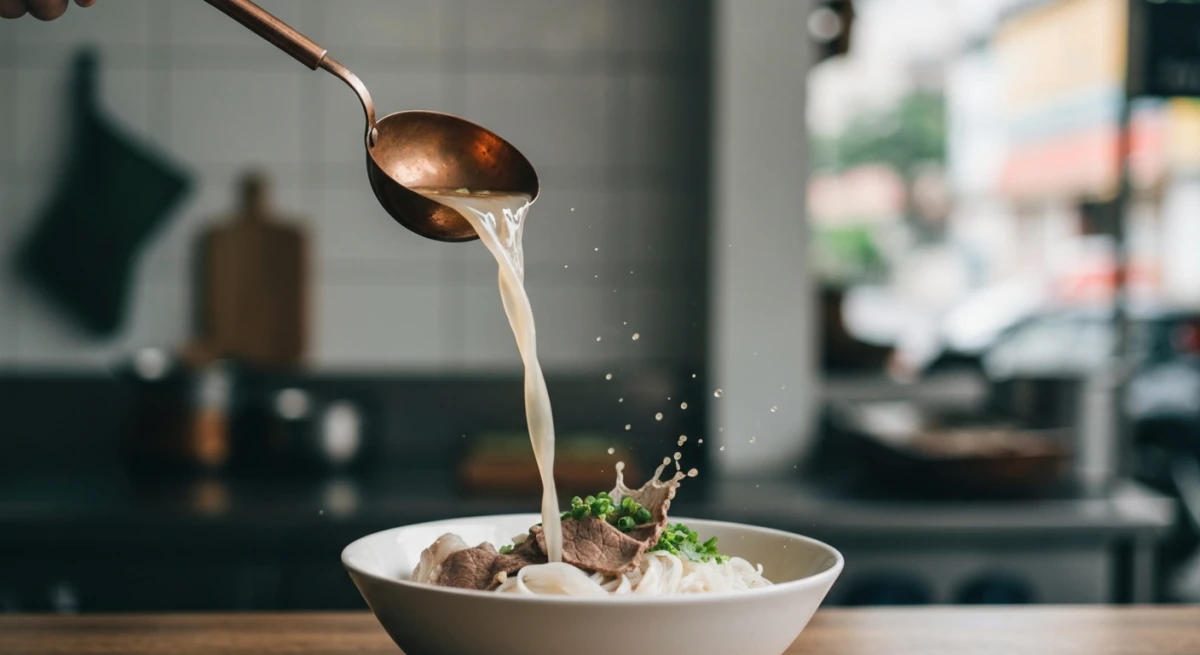
To the uninitiated, Pho is just Pho. But mention this to a local, and you’ll ignite a passionate debate about regional identities. While Northern Pho (Phở Bắc) is minimalist, focusing on a clear, clean broth and tender beef, Southern-Style Pho (Phở Nam) is a wild, maximalist affair.
In Ho Chi Minh City, the broth is richer, darker, and sweeter, heavily spiced with star anise, cinnamon, clove, and charred ginger. However, the biggest difference lies in the presentation. When you order Pho in Saigon, you are handed a virtual jungle of fresh herbs: Thai basil (húng quế), saw-tooth herb (ngò gai), rice paddy herb, and a mountain of blanched bean sprouts (giá).
How to eat it like a local: Do not just dump everything in immediately. First, taste the pristine broth. Then, pluck the leaves off the herb stems and tear them into the bowl to release their aromatic oils. Add a squeeze of lime. Next, squeeze a dollop of sweet hoisin sauce (tương đen) and spicy chili sauce (tương ớt) into a small side saucer. Dip your slices of rare beef (tái) or brisket (nạm) into this sauce before every bite, rather than squirting the sauce directly into the broth.
Where to eat it:
- Phở Lệ (413-415 Nguyễn Trãi, District 5): A legendary establishment in Chinatown (Chợ Lớn) that serves a rich, incredibly flavorful beef broth that perfectly encapsulates the sweet-savory southern profile.
- Phở Hòa Pasteur (260C Pasteur, District 3): Operating for decades, this busy multi-generational spot serves classic Southern Pho alongside plates of Quẩy (savory fried dough sticks) on the table, which you dip directly into your broth.
Bánh Mì
The ultimate symbol of French culinary colonialism turned Vietnamese masterpiece. The French introduced the baguette, pâté, and mayonnaise, but the Vietnamese lightened the bread by adding rice flour—making it incredibly airy and shatteringly crisp—and stuffed it with a savory explosion of local ingredients.
In Saigon, a classic Bánh Mì Thịt (mixed pork sandwich) is a masterpiece of layers: rich liver pâté spread across the bottom, a smear of yellow egg butter (mayonnaise), layers of headcheese, pork roll (chả lụa), and Chinese barbecued pork. To cut through the fat, it is topped with crisp cucumber spears, fresh cilantro, pickled carrots and daikon, and a fiery kick of fresh bird's eye chilies.
Where to eat it:
- Bánh Mì Huỳnh Hoa (26 Lê Thị Riêng, District 1): Known as the "heavyweight champion" of Saigon's sandwich scene. It is loaded with cold cuts and thick layers of rich pâté. Be prepared for a long line.
- Bánh Mì Hồng Hoa (54 Nguyễn Văn Tráng, District 1): A lighter, highly balanced alternative with exceptionally crispy baguettes baked fresh on-site.
2. Noon to Dusk: Iconic Lunch and Afternoon Snacks
Bún Thịt Nướng (Grilled Pork over Cold Rice Vermicelli)
When the midday Saigonese heat becomes oppressive, hot noodle soups can feel daunting. That is when locals turn to Bún Thịt Nướng, a cold rice vermicelli salad that is refreshing, savory, and incredibly textured.
In a single bowl, you get a base of shredded lettuce, aromatic herbs, and bean sprouts. This is topped with cold, silky rice vermicelli noodles (bún), followed by hot, smoky grilled pork slices (thịt nướng), and a crispy, deep-fried spring roll (chả giò). The bowl is garnished with crushed roasted peanuts, pickled carrots, and scallion oil (mỡ hành). To eat, you pour sweet, garlicky fish sauce (nước chấm) over the top, toss the entire bowl together like a salad, and enjoy the perfect harmony of hot and cold, crunchy and soft.
Where to eat it:
- Bún Thịt Nướng Chị Tuyền (195 Cô Giang, District 1): Renowned for its perfectly marinated grilled pork and decadent, crispy spring rolls. It has been a beloved local institution for decades and earned a Michelin recommendation.
Bánh Xèo (Sizzling Savory Crepe)
Named after the loud sizzling sound (xèo) the batter makes when poured onto a scorching-hot iron skillet, Bánh Xèo is an interactive culinary adventure. While Central Vietnam makes small, thick crepes, Southern-style Bánh Xèo is gigantic—resembling a golden, crispy, paper-thin sun.
The batter is made of rice flour, water, coconut milk, and turmeric powder, giving it its vibrant yellow color (often mistaken for egg). It is filled with pork belly, small shrimp, mung beans, and bean sprouts.
How to eat it like a local: This is a hands-on meal. Tear off a piece of the crispy crepe, placing it inside a large, fresh mustard green leaf (lá cải xanh) or lettuce leaf. Add a selection of fresh herbs (mint, sweet basil, fish mint). Roll it up tightly like a wrap, dip it into sweet-and-sour fish sauce, and eat. The bitter kick of the mustard greens beautifully cuts through the richness of the fried crepe.
Where to eat it:
- Bánh Xèo 46A (46A Đinh Công Tráng, District 1): Anthony Bourdain famously ate here, putting this alleyway gem on the international map. Watch them cook dozens of massive crepes simultaneously over open charcoal fires.
- Bánh Xèo Ăn Là Ghiền (74 Sương Nguyệt Ánh, District 3): A fantastic sit-down spot that serves massive, hyper-crispy crepes with premium fillings like mushrooms and seafood.
Bột Chiên (Pan-Fried Rice Cakes with Egg)
Originating from the Chinese-Vietnamese community in Chợ Lớn, Bột Chiên is the ultimate afternoon comfort food. It consists of thick, square-cut rice flour cakes that are fried on a flat iron griddle until the exteriors are golden-brown and crispy, while the interiors remain soft and chewy.
Once fried, the cook cracks a couple of eggs over the cakes to bind them together, scattering a handful of chopped green onions on top. It is served with a mountain of shredded green papaya to add a crisp freshness, alongside a sweet, dark soy-based dipping sauce.
Where to eat it:
- Bột Chiên Đạt Thành (277 Võ Văn Tần, District 3): A lively neighborhood stall where you can hear the rhythmic metal-on-metal clang of the spatulas as they fry up fresh batches of this savory snack.
3. Saigon After Dark: Shellfish, Offal, and Late-Night Alley Hunts
Ốc (Snails and Shellfish)
In Ho Chi Minh City, eating Ốc (snails) is not just about the food; it is a cultural phenomenon known as nhậu (the art of eating, drinking, and socializing with friends late into the night). Street-side snail restaurants open in the late afternoon and buzz with energy until the early hours of the morning.
Do not let the word "snails" intimidate you. A typical Ốc menu includes dozens of varieties of marine snails, freshwater snails, clams, scallops, crabs, and blood cockles. They are prepared in an array of bold sauces:
- Sốt Trứng Muối: A rich, velvety salted egg yolk sauce that you will want to wipe clean with a piece of French bread.
- Xào Sả Ớt: Stir-fried with fragrant lemongrass and spicy chilies.
- Rang Muối Ớt: Dry-roasted with salt and chili powder, creating a spicy, savory crust on the shells.
- Xào Tỏi: Sautéed in a mountain of sweet, caramelized garlic butter.
Where to eat it:
- Vĩnh Khánh Street (District 4): This street is the undisputed spiritual home of late-night snail feasts. Dozens of tables spill onto the sidewalks under neon lights, accompanied by street performers and lively local energy.
- Ốc Đào (212B/C79 Nguyễn Trãi, District 1): A slightly more hidden, highly popular alleyway spot that serves incredibly fresh shellfish with legendary garlic and butter sauces.
Hủ Tiếu Nam Vang (Phnom Penh Noodle Soup)
If Pho belongs to the North, Hủ Tiếu belongs to the South. Hủ Tiếu Nam Vang is a beautiful testament to Saigon’s multicultural history. The dish originated in Cambodia (Nam Vang is the Vietnamese name for Phnom Penh) but was adapted by Chinese immigrants and localized by Vietnamese chefs.
It features chewy, translucent tapioca noodles served with a complex, pork-bone-based broth that is sweet and deeply savory. The bowl is loaded with toppings: sliced pork, minced pork, whole shrimp, quail eggs, pork liver, and occasionally pork heart.
The "Dry" Option: You must choose between Nước (soup) or Khô (dry). If you order it dry (Hủ Tiếu Khô), the noodles are tossed in a savory, slightly sweet soy-and-oyster sauce glaze, served with the toppings and a small bowl of hot broth on the side. This is highly recommended as it allows you to enjoy the chewy texture of the tapioca noodles to their fullest.
Where to eat it:
- Hủ Tiếu Nam Vang Quỳnh (A65 Nguyễn Trãi, District 1): A popular, clean, and highly consistent restaurant that serves exceptional bowls of both dry and wet Hủ Tiếu.
- Hủ Tiếu Thanh Xuân (62 Tôn Thất Thiệp, District 1): Serving customers since 1946, this legendary spot is famous for its unique crab-claw sauce served with its dry noodles.
Phá Lấu (Offal Stew in Coconut Milk)
To understand Saigon’s street food culture on a deeper level, you must try Phá Lấu. This dish is a favorite among local high school and university students, who gather around small metal carts after class.
It is a rich, aromatic stew made from pork or beef offal (tripe, intestines, stomach, and lungs) simmered in a heavily spiced broth of coconut milk, lemongrass, star anise, and five-spice powder. The offal is cooked until incredibly tender, losing any harsh flavor and absorbing the creamy, savory spices of the broth. It is served piping hot with a crispy baguette (bánh mì) or instant noodles (mì gói), accompanied by a sweet-and-sour chili-tamarind dipping sauce.
Where to eat it:
- Phá Lấu Cô Thảo (243/29G Tôn Đản, District 4): Tucked deep inside the labyrinthine alleys of District 4, this legendary stall serves some of the most flavorful and clean Phá Lấu in the city.
4. Liquid Saigon: Coffee Culture and Sweet Escapes
Cà Phê Sữa Đá (Iced Coffee with Condensed Milk)
You cannot talk about food to eat in Ho Chi Minh without honoring its liquid lifeblood. Vietnam is the world's second-largest exporter of coffee, primarily growing the robust, high-caffeine Robusta bean. In Saigon, coffee is not a morning chore; it is an all-day social ritual.
Cà Phê Sữa Đá is made by slowly dripping dark-roast Robusta coffee through a metal filter (phin) directly onto a thick layer of sweetened condensed milk. Once the slow drip is complete, the mixture is stirred vigorously and poured over a glass of ice. The result is an incredibly strong, thick, sweet, and chocolatey brew that will jumpstart your senses.
Where to drink it:
- Cheo Leo Cafe (109/36 Nguyễn Thiện Thuật, District 3): Operating since 1938, this is Saigon’s oldest cafe. They still brew their coffee using traditional clay pots and cloth filters, giving the brew a uniquely smooth, retro flavor profile.
- Vy Cafe (277E Lê Thánh Tôn, District 1): A classic roadside spot where you can sit on low plastic stools facing the street, sipping strong coffee while watching the river of motorbikes pass by.
Chè (Vietnamese Sweet Soups)
For dessert, forget heavy cakes and pastries. Instead, seek out Chè, a broad category of sweet soups, puddings, and drinks. Southern Chè heavily incorporates rich coconut milk, pandan leaves, mung beans, taro, tapioca pearls, and seasonal fruits like durian or jackfruit. It can be served warm (like Chè Trôi Nước—ginger-scented mung bean dumplings) or poured over crushed ice to cool down on a humid evening.
Where to eat it:
- Chè Hà Ôn (85 Châu Văn Liêm, District 5): Located in the heart of Chinatown, this legendary spot specializes in traditional Cantonese-style sweet soups, offering unique options like sweet black sesame soup and gingko nut desserts.
5. The Insider’s Playbook: How to Eat in Ho Chi Minh City Like a Pro
To have the best possible culinary adventure, you need to understand the unwritten rules of Saigon's street food culture. Here is your tactical guide:
1. Embrace the Plastic Stool (Bàn Ghế Nhựa)
The absolute best food in Ho Chi Minh is rarely served in air-conditioned dining rooms with English menus. It is found on the curbside, prepared by a cook who has spent forty years mastering a single dish. When you see a crowd of locals sitting on tiny blue or red plastic stools that feel like they belong in a kindergarten class, grab a seat. That is where the magic happens.
2. The Cleanliness Check
Many travelers worry about "Saigon belly" (food poisoning). The key to staying healthy is observing the crowd. High turnover means the ingredients are fresh and do not sit out in the heat. Look for stalls where the preparation station is clean, the metal surfaces are wiped down, and there is a steady stream of local families buying food.
The Ice Myth: Most ice in Ho Chi Minh City is perfectly safe. It is commercially manufactured "tube ice" (đá bi) made from purified water. If you see clean, cylindrical ice cubes with a hole in the middle, it is safe to consume. Avoid crushed ice shaved from large blocks on the street, as those blocks are often transported under less-than-hygienic conditions.
3. The "Wet Towel" (Khăn Lạnh) Trap
When you sit down at many local restaurants, a wrapped, wet, scented wet wipe (khăn lạnh) will be placed on your table. It is not free. While it only costs about 2,000 to 5,000 VND ($0.10 to $0.20 USD), it will be added to your bill if you tear it open. If you do not want to use it, simply push it aside, or bring your own hand sanitizer.
4. District-by-District Culinary Cheat Sheet
- District 1 (The Core): Excellent for legendary, historic shops (like Bánh Mì Huỳnh Hoa or Bún Thịt Nướng Chị Tuyền) and high-end modern Vietnamese restaurants.
- District 3 (The Local Vibe): Filled with narrow leafy streets, historic alleys (such as the food alley at 287 Nguyễn Đình Chiểu), and iconic vintage coffee shops.
- District 4 (The Street Food Haven): A former port district that has transformed into a culinary wonderland. Walk down Tôn Đản or Vĩnh Khánh streets after dark for unrivaled street food energy.
- District 5 (Chợ Lớn / Chinatown): The place to go for Chinese-Vietnamese fusion, herbal soups, duck noodles, and Cantonese sweet desserts.
6. Frequently Asked Questions (FAQ)
What is the single most famous food to eat in Ho Chi Minh?
While Pho is globally famous, Cơm Tấm (broken rice with charcoal-grilled pork) is the definitive culinary symbol of Ho Chi Minh City. Locals eat it for breakfast, lunch, and late-night snacks.
Is street food in Ho Chi Minh City safe for tourists?
Yes, street food in Saigon is generally very safe, provided you follow basic precautions. Stick to busy stalls with high customer turnover, ensure hot dishes are served piping hot, and opt for commercially made tube ice rather than crushed ice.
How much does a typical street food meal cost in Saigon?
Street food in Ho Chi Minh City is incredibly affordable. A standard bowl of Pho or plate of Cơm Tấm costs between 40,000 to 80,000 VND ($1.60 to $3.20 USD). A Bánh Mì on the street typically ranges from 20,000 to 60,000 VND ($0.80 to $2.40 USD).
What is the difference between Pho in Hanoi and Pho in Ho Chi Minh City?
Northern Pho (Phở Bắc) features a clean, savory broth, thicker noodles, and minimal garnishes. Southern Pho (Phở Nam) features a sweeter, richer broth and is served with a mountain of fresh raw herbs, bean sprouts, hoisin sauce, and chili sauce, allowing diners to customize their own bowls.
Concluding Your Saigon Food Journey
Ho Chi Minh City is a city that feeds you with its soul. It is a place where culinary barriers do not exist, and where some of the world’s most complex, balanced, and memorable flavors are served on a humble street corner for a few dollars. Don't be afraid to wander down dark alleys, point at what locals are eating, and pull up a plastic stool. The real magic of Saigon is found one delicious, herb-packed bite at a time.