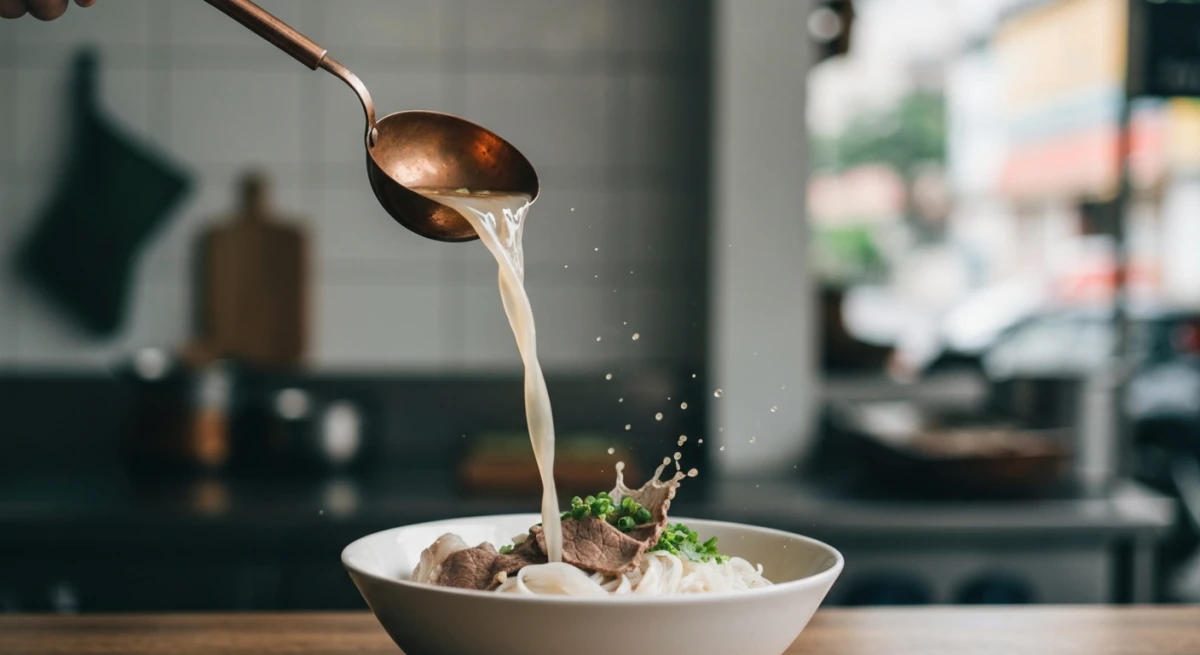
Hanoi is a city that runs on culinary obsession. If you are planning a trip to Vietnam's capital, you are probably wondering what you must eat in hanoi to truly experience its legendary culinary heritage. Unlike Saigon's sweet and bold flavors, Hanoi's cuisine is a masterclass in balance, restraint, and history. Here, cooks spend their entire lives perfecting a single dish, from the exact clarity of a bone broth to the perfect char on a pork patty. Walking through the Old Quarter is a multi-sensory adventure: the sweet smell of charcoal-grilled pork mixes with the rich aroma of star anise and roasted ginger, all punctuated by the hum of motorbikes and the clatter of chopsticks on low plastic tables.
To eat like a local in Hanoi is to embrace the street. In this comprehensive food guide, we'll move beyond the generic tourist recommendations to show you the deep culinary secrets of the city, complete with specific addresses, cultural context, and dining etiquette.
The Philosophy of Northern Vietnamese Cuisine: Restraint and Pure Flavors
Before diving into the must-eat dishes, it is essential to understand what makes Northern Vietnamese cuisine so distinct. If Saigon is a loud, vibrant party of flavors, Hanoi is a delicate, classical symphony.
The geography and history of Northern Vietnam have deeply influenced its culinary landscape. With a cooler climate and a long history of resourcefulness, Hanoian cooking focuses on simplicity and clean, pure tastes. You won't find heaps of added sugar, rich coconut milk, or an overwhelming assault of chili here. Instead, sweetness is derived naturally from hours of simmering marrow bones and vegetables.
Key elements of the Hanoian palate include:
- Clean Broths: The hallmark of a great Northern noodle soup is a broth that is crystal clear yet deeply savory. It should feel clean on the tongue, not oily.
- The Herb Trio: Hanoi meals are always accompanied by a basket of fresh herbs. The most critical are tía tô (red perilla), kinh giới (Vietnamese balm), and húng láng (a highly aromatic mint grown in the Láng village of Hanoi).
- Subtle Sourness: Instead of using sweet limes or heavy tamarind, Northern cooks achieve a delicate tang using dấm bỗng (fermented rice vinegar), quả sấu (dracontomelon fruit), or stewed tomatoes.
- Black Pepper Over Chili: While bird's eye chilies are available on every table, traditional Northern seasoning relies heavily on high-quality ground black pepper to provide a warm, fragrant heat.
1. Phở Bò & Phở Gà: The Sacred Ritual of Hanoi's Morning Broth
No trip to Vietnam is complete without Phở, but eating it in its birthplace of Northern Vietnam is an entirely different experience. Authentic Hanoi Phở is characterized by its minimalist presentation: flat, wide rice noodles (bánh phở), tender cuts of beef (phở bò) or chicken (phở gà), and a scattering of fresh green onions and cilantro. You will not see bean sprouts, basil, hoisin sauce, or Sriracha on a traditional Hanoi table. To add those would be considered an insult to the chef who spent 12 hours perfecting the broth.
The magic lies in the soup base. For beef pho, cooks simmer charred beef bones, roasted ginger, charred shallots, star anise, cinnamon, and black cardamom. The result is a pale gold, fragrant elixir that warms you from the inside out.
How to Eat Pho Like a Hanoian
When your bowl arrives, taste the broth first. Then, customize it sparingly. Add a squeeze of fresh lime or a spoonful of dấm tỏi (house-made garlic-infused vinegar), and a few slices of fresh red chili if you like heat. Order a side of quẩy (crispy, unsweetened fried dough sticks) to dunk into the broth, allowing them to soak up the savory soup like a sponge.
Where to Eat the Best Pho in Hanoi
- Phở Gia Truyền Bát Đàn (49 Bát Đàn, Hoàn Kiếm): This is the ultimate, legendary spot. Expect a queue of locals and travelers alike. The beef is sliced to order and the broth is incredibly rich and comforting.
- Phở Bò Khôi Hói (50 Hàng Vải, Hoàn Kiếm): Located on "Bamboo Street," this spot is famous for its premium cuts of beef, particularly the "lõi rùa" (highly prized, tender beef heel muscle).
- Phở Tiến (103 Nguyễn Trường Tộ, Ba Đình): If you prefer chicken, this local gem serves a spectacular phở gà. The chicken is exceptionally tender, and the broth is light, clean, and infused with lime leaves.
2. Bún Chả: Smoke, Caramelized Pork, and Plastic Stools
While Pho is Vietnam's national dish, many locals will tell you that Bún Chả is the true soul of Hanoi. Invented in the capital city, this dish consists of charcoal-grilled pork patties (chả viên) and caramelized pork belly slices (chả miếng) submerged in a warm, sweet-and-savory dipping broth. It is served with a plate of cold rice vermicelli noodles (bún), a massive mountain of fresh herbs, and a side of minced garlic and red chili.
The pork is marinated in fish sauce, sugar, and shallots, then grilled over open charcoal grates on the sidewalk. The smell of the sizzling pork fat dripping onto the hot coals is an olfactory siren song that fills the streets of Hanoi every lunchtime.
The "Obama Effect" vs. Local Authenticity
In 2016, Anthony Bourdain and President Barack Obama famously sat on blue plastic stools at Bún Chả Hương Liên to share a $6 meal and a cold Hanoi beer. While that restaurant remains incredibly popular for the novelty, many local food enthusiasts argue that the commercialization has diluted its charm. To experience the absolute pinnacle of Bún Chả, you must seek out neighborhood spots where the grill smoke never stops.
Where to Eat the Best Bun Cha in Hanoi
- Bún Chả Tuyết 34 (34 Hàng Than, Ba Đình): This is widely regarded by food writers and culinary insiders as the best Bún Chả in the city. Their secret weapon is wrapping some of the pork patties in aromatic xương sông leaves before grilling, which imparts an incredible, earthy, pine-like flavor.
- Bún Chả Ta (21 Nguyễn Hữu Huân, Hoàn Kiếm): A Michelin Bib Gourmand recipient, this family-run spot offers a slightly more comfortable, air-conditioned environment without sacrificing flavor. Be sure to order their crispy crab spring rolls (nem cua bể) to accompany your meal.
3. Cà Phê Trứng: The War-Time Miracle That Became a Dessert
Hanoi's coffee culture is legendary, but its most famous liquid export is Cà Phê Trứng, or Egg Coffee. The drink was invented in 1946 by Mr. Nguyen Giang, who was working as a bartender at the prestigious Sofitel Legend Metropole Hanoi. Due to a severe shortage of fresh milk during the First Indochina War, Mr. Giang resourcefully whipped egg yolks with sugar, condensed milk, and a touch of butter to create a rich, creamy substitute for milk foam.
He poured this velvety, custard-like mixture over a shot of hot, intensely bitter Vietnamese robusta coffee. The result is a stunning contrast of temperatures and flavors: a sweet, warm, meringue-like cloud that melts into a deep, dark espresso base. It is essentially liquid tiramisu in a cup.
Where to Experience Authentic Egg Coffee
- Giang Cafe (39 Nguyễn Hữu Huân, Hoàn Kiếm): This is the birthplace of the drink, hidden down a narrow alleyway. It is crowded, chaotic, and rustic, but drinking a cup here is an essential culinary pilgrimage.
- Cafe Đinh (13 Đinh Tiên Hoàng, Hoàn Kiếm): Run by Mr. Giang's daughter, this second-floor cafe overlooks Hoan Kiem Lake. It has a gritty, bohemian, artsy vibe and serves a slightly stronger, less-sweet version of the classic drink.
- Loading T (8 Chân Cầm, Hoàn Kiếm): For a modern, artisanal take, head to this stunning cafe set inside a crumbling French colonial mansion. The owners roast their robusta beans with cinnamon, which infuses the egg coffee with a delicate, spiced aroma that perfectly cuts through the richness of the egg yolk.
4. Chả Cá Lăng: Sizzling Turmeric, Dill, and Tableside Theater
If there is one dish that exemplifies the sophistication of Hanoian dining, it is Chả Cá Lăng (turmeric-marinated fish with dill). This dish is so famous that an entire street in the Old Quarter was renamed Phố Chả Cá in its honor.
Unlike most street foods, Chả Cá is a sit-down, tableside experience. Slabs of firm, meaty Hemibagrus catfish (cá lăng) are marinated in turmeric, galangal, ginger, and fermented rice. A server places a sizzling pan of oil atop a portable burner in the center of your table, dumps the golden fish inside, and heaps a massive mound of fresh dill and green spring onions on top. As the dill wilts and releases its sweet, anise-like fragrance into the hot oil, the magic happens.
How to Assemble the Perfect Bowl
In your individual bowl, place a small portion of cold vermicelli noodles, some roasted peanuts, and fresh herbs (mint and cilantro). Spoon the sizzling fish, wilted dill, and spring onions over the noodles. Finally, drizzle the mixture with mắm tôm (fermented purple shrimp paste whipped with lime juice, sugar, and chili until foamy). If the pungent smell of shrimp paste is too intimidating, you can opt for a light fish-sauce-based dipping sauce, but the mắm tôm is what provides the authentic, umami-packed contrast to the herbaceous dill.
Where to Eat the Best Cha Ca in Hanoi
- Chả Cá Thăng Long (6B Đường Thành, Hoàn Kiếm): While the original Chả Cá Lã Vọng on Cha Ca Street is historically significant, it has unfortunately become an expensive, poorly-reviewed tourist trap. For an exceptional, authentic meal, head to Chả Cá Thăng Long. This Michelin Bib Gourmand winner serves incredibly fresh, tender fish in a beautifully restored yellow townhouse, and the service is outstanding.
5. Bánh Cuốn: Translucent Steamed Rice Rolls
If you are looking for a delicate, comforting breakfast, Bánh Cuốn is the answer. These steamed rice rolls require immense culinary skill to prepare. The cook pours a thin, watery batter of fermented rice flour onto a piece of fabric stretched tightly over a pot of boiling water. Within seconds, the steam cooks the batter into an ultra-thin, translucent crepe. Using a long bamboo stick, the cook lifts the delicate sheet, places it on a flat greased surface, stuffs it with seasoned minced pork and wood-ear mushrooms, and rolls it up.
The rolls are brushed with fragrant shallot oil and topped with a generous handful of crispy fried shallots. They are served warm alongside slices of chả lụa (Vietnamese pork sausage) and a bowl of seasoned fish dipping sauce.
Where to Try Legendary Banh Cuon
- Bánh Cuốn Bà Xuân (16 Hòe Nhai, Ba Đình): This decades-old, Michelin-selected shop is famous for its silky, paper-thin wrappers. Be sure to order their unique specialty: a version where a whole, soft-poached egg is steamed directly inside the translucent rice sheet, creating a rich, runny yolk center.
- Bánh Cuốn Bà Hoành (66 Tô Hiến Thành, Hai Bà Trưng): For a different style, try the Bánh Cuốn Thanh Trì here. These are plain, unfilled rice sheets that are eaten cold, layered with hot grilled pork and dipped in an aromatic sauce traditionally seasoned with a drop of cà cuống (the rare, highly-prized essence of the giant water bug, which has a unique, pear-like fragrance).
6. Bún Bò Nam Bộ: Hanoi's Perfect Dry Noodle Salad
Although the name translates to "Southern-style beef noodles," this dry noodle dish has been embraced and perfected by Hanoi. If you are tired of hot soups in the humid weather, Bún Bò Nam Bộ is the ultimate refreshing alternative.
The dish is assembled in layers: a bed of fresh lettuce, cucumber, and herbs; a mound of cold rice vermicelli noodles; a generous helping of warm, wok-fried beef marinated in lemongrass, garlic, and fish sauce; and a topping of crunchy bean sprouts, pickled green papaya, roasted peanuts, and crispy fried shallots. The entire bowl is then drizzled with a warm, sweet, tangy fish sauce dressing. You toss everything together like a salad, resulting in an incredible contrast of warm and cold, crunchy and soft, sweet and savory.
Where to Get the Best Bun Bo Nam Bộ
- Bún Bò Nam Bộ Bách Phương (67-75 Hàng Điếu, Hoàn Kiếm): This multi-generational establishment is the undisputed champion. The kitchen is set up right at the front on the street, where cooks stir-fry beef in massive woks at lightning speed. The beef is incredibly tender, and the balance of the sweet-and-sour dressing is unmatched.
7. Bún Riêu Cua: Tangy Tomato and Paddy Crab Soup
For a noodle soup that is packed with complex, rustic flavors, seek out Bún Riêu Cua. This dish is a beautiful representation of Vietnam's agricultural heritage. The soul of the soup is freshwater paddy crabs, which are crushed and strained to create a rich, calcium-dense base. This crab liquid is simmered with stewed tomatoes and dấm bỗng (fermented rice vinegar), resulting in a broth that is wonderfully tart, sweet, and tangy.
The soup is topped with pillowy blocks of deep-fried tofu that soak up the sour broth, soft clouds of floating crab paste (riêu cua), fresh green onions, and sometimes additions like tender beef slices or crunchy snails (ốc).
Where to Find the Best Bun Rieu
- Bún Riêu Cô Hoàn Hàng Lược (14 Hàng Lược, Hoàn Kiếm): Tucked deep inside an atmospheric, narrow alleyway, this local favorite has been serving some of the finest Bún Riêu in Hanoi for decades. The broth here is a work of art—vibrant red from tomatoes, deeply savory from the crab, and beautifully sour. Be sure to order a plate of quẩy (fried dough) to dip into the soup.
8. Xôi Xéo: The Hearty, Comforting Sticky Rice
Xôi (sticky rice) is a staple of the Vietnamese diet, and in Hanoi, Xôi Xéo is the ultimate comfort food. It is easily recognizable by its bright yellow color, which comes from soaking the glutinous rice in water infused with ground turmeric.
The hot sticky rice is scooped onto a banana leaf, topped with a sphere of cooked, mashed mung bean paste that is shaved thinly over the rice using a sharp knife. The cook then generously drizzles the rice with warm liquid lard and scatters a handful of golden, crispy fried shallots on top. For a complete, incredibly hearty meal, you can ask for toppings like thịt kho (braised pork belly), shredded chicken, liver pate, or ruốc (salted shredded pork).
Where to Eat Legendary Sticky Rice
- Xôi Yến (35B Nguyễn Hữu Huân, Hoàn Kiếm): This multi-story institution is a legend in Hanoi's food scene. It is open from early morning until late at night, making it the perfect spot for a heavy breakfast or a comforting post-drinks snack. Customize your bowl with their melt-in-your-mouth braised pork belly and a fried egg.
9. Bánh Mì Hanoi: Minimalist Perfection and Comforting Beef Stew
While Saigon's Bánh Mì is famous for being stuffed to the brim with a dozen different cold cuts, cheese, mayo, and veggies, Hanoi's version is a study in minimalist perfection. A great Hanoi Bánh Mì focuses on a perfectly baked, warm, shatteringly crispy baguette filled with high-quality pork pâté, salted butter, cucumber, and a splash of local chili sauce.
Additionally, Hanoi has a unique variation called Bánh Mì Sốt Vang, which features a warm, crispy baguette served alongside a bowl of rich, slow-cooked beef stew infused with red wine, cinnamon, star anise, and five-spice powder (a delicious nod to French colonial influence).
Where to Find the Best Banh Mi
- Bánh Mì 25 (25 Hàng Cá, Hoàn Kiếm): Incredibly popular with international travelers, this spot is highly hygienic, consistently delicious, and offers a wide range of fillings, including excellent vegetarian options.
- Bánh Mì Trâm / Bánh Mì Sốt Vang Đình Ngang (252 Hàng Bông, Hoàn Kiếm): If you want to try the comforting beef stew version, this local institution is famous for its rich, tender beef stew and warm baguettes.
The Insider's Guide to Hanoi Street Food Etiquette & Safety
Navigating Hanoi's chaotic street food scene can be intimidating for first-timers. Keep these essential tips in mind to eat like a pro:
- Embrace the Blue Plastic Stool: The best food in Hanoi is eaten on sidewalks, inches away from buzzing traffic, sitting on low plastic stools. If a restaurant has a fancy air-conditioned interior and English-only menus, the food is rarely as good as the street stall next door.
- Look for the Crowd: The best indicator of food safety and quality is a high turnover of local diners. If a stall is packed with locals shouting orders, the ingredients are guaranteed to be fresh.
- Cash is King: Most street food stalls do not accept credit cards. Always keep a stack of small-denomination Vietnamese Dong (10,000, 20,000, and 50,000 VND notes) on hand.
- Learn the Table Condiments: Every table will have a tray of garlic vinegar, fresh limes, chili sauce, and bird's eye chilies. Watch what the locals are doing before customizing your bowl.
- Wipe Your Utensils: It is a common local practice to use a paper tissue to wipe your chopsticks and spoon before eating.
Frequently Asked Questions About Dining in Hanoi
Is Hanoi street food safe to eat?
Yes, Hanoi street food is generally very safe, provided you follow a few basic rules. Stick to busy stalls with high customer turnover, as their food doesn't sit around. Choose cooked-to-order dishes that are served steaming hot. Stick to bottled water, and ensure ice is made from purified water (indicated by clean, hollow cylinders of ice).
What is the most famous food in Hanoi?
Phở (beef or chicken noodle soup) and Bún Chả (grilled pork with rice vermicelli) are the two most famous dishes in Hanoi.
How much does street food cost in Hanoi?
Street food in Hanoi is incredibly affordable. A bowl of Pho or Bun Cha typically costs between 40,000 and 70,000 VND ($1.60 to $2.80 USD). A cup of egg coffee is around 25,000 to 45,000 VND ($1.00 to $1.80 USD).
Are there vegetarian options in Hanoi?
Yes! While traditional Northern cuisine is meat-heavy, Hanoi has a thriving Buddhist vegetarian culture. Look for signs that say "Quán Chay" or "Cơm Chay" (vegetarian food). Stalls like Bánh Cuốn Bà Xuân and Bánh Mì 25 also offer excellent vegetarian variations of their classic dishes.
Conclusion
Hanoi is a city that rewards the brave. By stepping away from tourist-heavy dining rooms and pulling up a tiny plastic stool on a busy sidewalk, you unlock a world of complex, deeply historic flavors. From the clean, comforting broth of a morning Pho to the sizzling tableside drama of Cha Ca, eating in Hanoi is not just about sustenance—it is an unforgettable cultural experience. Use this guide to navigate the labyrinthine alleys of the Old Quarter, and prepare to embark on one of the greatest culinary adventures of your life.