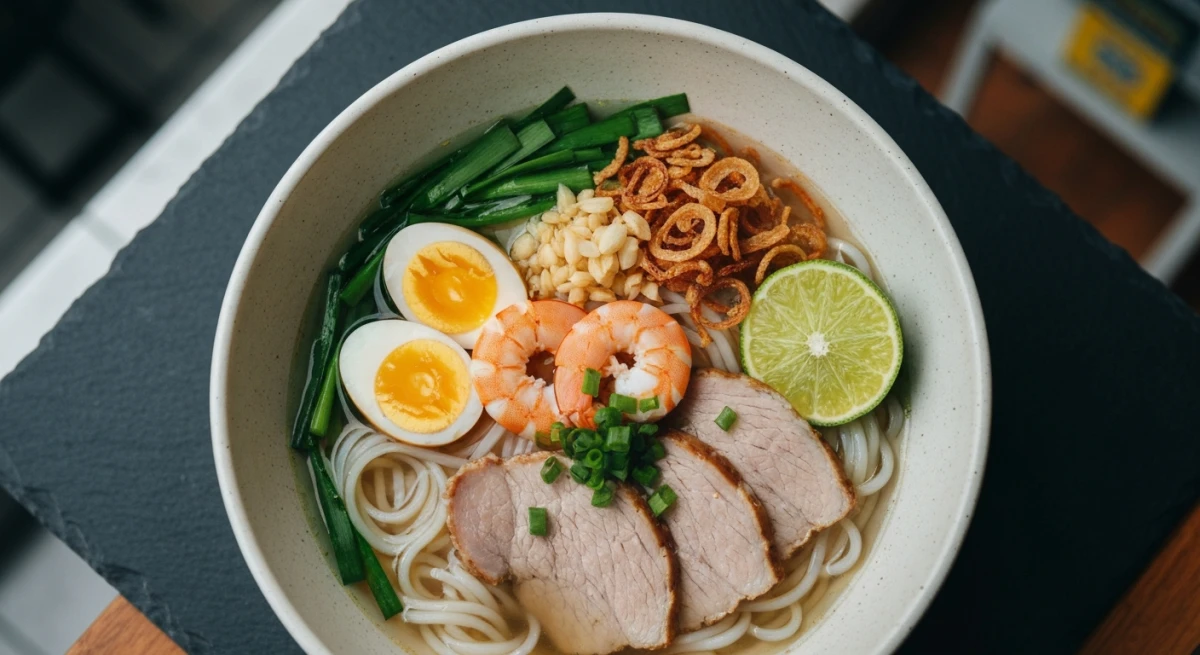
Hanoi is a sensory explosion. From the moment you step into the maze of the Old Quarter, your senses are assaulted by the roar of motorbikes, the aroma of burning charcoal, and the sight of steam rising from giant street-side cauldrons. If you want to experience the true heartbeat of the Vietnamese capital, exploring the legendary hanoi must eat dishes is your ultimate passport. Unlike the sweeter, bolder flavors of Southern Vietnam, Hanoi’s culinary scene is a masterclass in delicate balance, herbal freshness, and centuries-old tradition.
This is not a city for white-tablecloth fine dining; the best meals in Hanoi are served on low-slung plastic stools, six inches off the concrete pavement. In this comprehensive culinary guide, we will bypass the generic tourist recommendations and dive deep into the legendary, generation-spanning street institutions, Michelin-honored secrets, and local etiquette rules that competitors ignore.
1. The Sacred Trinity: Pho, Bun Cha, and Banh Mi (The Hanoian Way)
To understand the soul of Hanoi, you have to start with the classics. But there is a massive difference between the commercially prepared tourist versions of these dishes and the authentic, deeply complex variations that locals line up for every morning.
The Real Deal on Pho (Phở)
No dish is more synonymous with Vietnam than pho, but in Hanoi, beef noodle soup (phở bò) is treated with religious reverence. Unlike the southern style, which is served with a sweet, heavily spiced broth and a mountain of raw herbs, authentic Hanoian pho is a minimalist masterpiece. The broth is crystal clear, simmered for 12 to 24 hours with beef marrow bones, charred ginger, onions, star anise, and black cardamom. It is sweet not from sugar, but from the slow breakdown of bone collagen.
There is a strict cardinal rule when eating pho in Hanoi: do not add hoisin sauce or sriracha. To a Hanoian chef, dumping heavy, sweet sauces into a carefully balanced broth is an insult. Instead, enhance the natural flavors with a squeeze of fresh lime juice (or a splash of garlic vinegar, giấm tỏi, which is the traditional northern choice) and a few slices of fiery bird's eye chili.
- Where to go for Pho Bo: Head to Phở Bò Ấu Triệu (34 Ấu Triệu Street). Tucked next to the St. Joseph’s Cathedral, this family-run, Michelin Bib Gourmand eatery serves rich, slightly cloudy, and intensely savory beef noodle soup. The owner prepares every bowl at the doorstep, incorporating raw minced beef, tender flank, and melt-in-your-mouth tendon. Arrive before 10:00 AM, as they routinely sell out. Alternatively, join the legendary, self-service queue at Phở Gia Truyền (49 Bát Đàn Street), where you pay upfront and carry your own steaming bowl of clear-broth beef pho back to your table.
- Where to go for Pho Ga (Chicken Pho): If you prefer chicken, Phở Gà Nguyệt (5b Phủ Doãn Street) is an unmissable Bib Gourmand late-night spot. While their traditional noodle soup is exceptional, the real local insider order is Phở Trộn Ga (dry mixed chicken noodle). Tender cuts of shredded chicken are tossed with flat rice noodles, a sweet soy-based sauce, crispy fried shallots, roasted peanuts, and fresh coriander, served with a side bowl of aromatic chicken broth.
The Charcoal Magic of Bun Cha (Bún Chả)
If pho is the breakfast of Hanoi, bún chả is the undisputed king of lunch. This iconic street food comprises charcoal-grilled fatty pork belly and minced pork patties served floating in a bowl of warm, diluted fish sauce sweetened with sugar and tangy vinegar, garnished with crunchy slices of green papaya and carrot. It is accompanied by a mountain of delicate rice vermicelli noodles (bún) and a basket of fresh herbs (including perilla, Vietnamese balm, and lettuce).
While almost every tourist makes a pilgrimage to Bún Chả Hương Liên (popularly known as the "Obama spot" on Lê Văn Hưu Street where Barack Obama and Anthony Bourdain famously dined on plastic stools), locals know the spot has become a highly commercialized tourist trap.
- Where to go instead: Head to Tuyết Bún Chả 34 (34 Hàng Than Street). This Michelin Bib Gourmand gem grills their pork patties wrapped in wild betel leaves (lá lốt), which infuses the meat with a unique, earthy, herbal smoke that elevates the entire dish. Don't forget to order a side of nem cua bể (crispy deep-fried crab spring rolls) to crush into your dipping bowl. Another phenomenal option is Bun Cha Ta (21 Nguyễn Hữu Huân Street), which offers perfectly balanced dipping sauce and incredibly crispy fried seafood spring rolls.
- Local Eating Tip: To eat bun cha like a local, do not dump all your noodles into the herb basket. Instead, grab a small pinch of noodles with your chopsticks, dunk them directly into the warm bowl of broth and grilled meat, add a leaf of perilla and a slice of garlic, and take a big, savory bite.
The Minimalist Perfection of Banh Mi (Bánh Mì)
Hanoian banh mi is a masterclass in restraint. While the southern version in Saigon is packed with a salad bar's worth of pickled vegetables, chili paste, and multiple cold cuts, Hanoi’s banh mi focuses on high-quality pâté and a perfectly crispy, airy baguette.
- Where to go: At Bánh Mỳ Lãn Ông (8 Lãn Ông Street), the classic baguette is smeared with a thick, decadent layer of warm pork liver pâté, a swipe of rich mayonnaise, homemade butter, pork floss, and a simple garnish of cucumber and fresh cilantro. The result is a savory, buttery bite where the rich liver flavor is the star. For a budget-friendly option, Bánh My Tun in the Old Quarter is a tiny, family-run stall that serves some of the crispiest, freshly toasted baguettes in the city, accompanied by warm, friendly hospitality.
2. Beyond the Classics: 5 Deep-Dive Specialties
Most travelers stop at the big three, but Hanoi's real magic lies in its highly specialized, single-dish street institutions. These are the dishes that define the true culinary heritage of the capital.
Dish 1: Cha Ca (Chả Cá — Turmeric & Dill Fish)
This is not a grab-and-go meal; it is an interactive cooking experience. You will be seated at a table with a small portable gas stove and a sizzling brass pan. The server will bring out pieces of catfish (usually hemibagrus) already marinated in turmeric, galangal, and shrimp paste. As the fish sizzles, they will dump a mountain of fresh dill and spring onions into the pan.
Once the greens wilt, you assemble your bowl: start with cold rice vermicelli, add a piece of the buttery, aromatic fish, a generous helping of the cooked dill and spring onions, a sprinkle of roasted peanuts, and fresh herbs.
- The Sauce: The defining element of Cha Ca is the dipping sauce: mắm tôm, a pungent, fermented purple shrimp paste. Whipped vigorously with lime juice, sugar, and chili until it foams, it is the ultimate flavor enhancer. If the smell of fermented shrimp is too intimidating, you can request standard fish sauce (nước mắm), but trying the mam tom is a rite of passage.
- Where to go: Skip the overpriced and tourist-centric historic Chả Cá Lã Vọng and head straight to Chả Cá Thăng Long (Đường Thành Street), a Bib Gourmand restaurant where the service is pristine and the fish is consistently stellar.
Dish 2: Banh Cuon (Bánh Cuốn — Steamed Rice Crepes)
For a light, elegant breakfast or mid-day snack, bánh cuốn is a Hanoi must eat. These delicate steamed rice crepes are made from a fermented rice batter spread thinly over a stretched fabric lid on a steaming pot. Within seconds, the chef uses a long bamboo stick to lift the translucent sheet, fills it with seasoned minced pork and wood ear mushrooms, rolls it up, and brushes it with shallot-infused oil.
- Where to go: At Bánh Cuốn Bà Xuân (Hòe Nhai Street), you can watch this culinary dance happen in real time at the storefront. The crepes are served hot, topped with a generous handful of crispy fried shallots. You dip the rolls into a warm bowl of mild, slightly sweet fish sauce that is traditionally spiced with a drop of cà cuống (the essence of a giant water bug, which adds a unique, pear-like floral aroma) and eaten alongside slices of chả lụa (steamed Vietnamese pork sausage).
Dish 3: Pho Cuon (Phở Cuốn — Pho Rolls)
Originating from Ngũ Xã, a small peninsula on West Lake (Hồ Tây), pho cuốn is a modern classic. It was invented by a clever street vendor who ran out of soup broth but had leftover uncut sheets of pho noodles. The wide, uncut sheets of rice noodles are rolled around tender, garlic-fried beef, lettuce, and fresh coriander. Dipped in a sweet-and-sour fish sauce, it is the perfect light meal on a hot summer afternoon.
- Where to go: Phở Cuốn Chinh Thắng (7 Nguyễn Khắc Hiếu Street) is the original creator and remains the gold standard.
Dish 4: Bun Rieu Cua (Bún Riêu Cua — Crab and Tomato Noodle Soup)
For a flavor profile that is deeply complex, sour, and comforting, seek out Bun Rieu. The soul of this dish is its vibrant red broth, made from crushed freshwater crabs, simmered tomatoes, tamarind, and rice vinegar (dấm bỗng). The result is a tangy, sweet, and intensely umami broth packed with floating clouds of crab paste, golden cubes of deep-fried tofu, and round rice vermicelli.
- Where to go: At Bún Riêu Trang (11 Hàng Bạc Street), you can enjoy this masterpiece while balanced on a tiny stool on one of the busiest streets in the Old Quarter. You can customize your bowl with additions like tender beef slices, snails (bún ốc), or pork cartilage, but the simple crab and tofu version is a pure, unadulterated classic.
Dish 5: Xoi Xeo (Xôi Xéo — Mung Bean and Sticky Rice)
Finally, no deep-dive into Hanoi's street food is complete without xôi xéo. This is the quintessential Hanoian breakfast, designed to keep laborers full for hours. It consists of bright yellow sticky rice (infused with turmeric) topped with thin, shaved slices of a dense mung bean paste ball, fried shallots, and a generous drizzle of liquid pork fat.
- Where to go: The most famous place to experience this is Xôi Mây on Hàng Hòm Street. The female owner operates from a small corner, wrapping portions of warm xoi xeo in fresh banana leaves with blinding speed. It is rich, savory, and beautifully textured.
3. The Sweet Finish: Egg Coffee and Liquid Gold
Hanoi’s food culture is balanced by its equally legendary coffee culture. In Hanoi, coffee is not a quick caffeine fix; it is a slow, conversational art form. And no drink encapsulates this better than Cà Phê Trứng (Egg Coffee).
Invented in 1946 by Nguyen Van Giang during the First Indochina War when fresh milk was heavily rationed, egg coffee was a creative substitution. Giang, then a bartender at the luxury Metropole Hotel, whipped creamy egg yolks with condensed milk and sugar, pouring the luscious, frothy custard over a shot of strong, hot Vietnamese Robusta coffee.
- Where to go: To try the original recipe, head to Giảng Cafe (39 Nguyễn Hữu Huân Street). Tucked down a narrow alleyway, this multi-floor café is always buzzing with locals and travelers alike. The egg coffee is served in a small cup nestled in a bowl of warm water to maintain its temperature. It is thick, sweet, and luxurious — resembling a warm, liquid tiramisu. For a more rustic, nostalgic atmosphere, climb the narrow, creaky staircase to Cà Phê Đinh (13 Đinh Tiên Hoàng Street), run by Giang’s daughter, which offers a stunning, raw view of Hoàn Kiếm Lake.
- Modern Liquid Treats: If you are looking for a modern twist, keep an eye out for Cà Phê Muối (Salt Coffee), which originated in Central Vietnam but has taken Hanoi by storm, or the iconic coconut coffee slushy at Cộng Cà Phê, a vintage, military-themed chain that pays homage to Hanoi's subsidy era.
4. The Michelin Guide in Hanoi: Worth the Wait?
The arrival of the Michelin Guide in Hanoi has thrown a global spotlight onto the city's humble street food stalls. While some food purists feared that international recognition would ruin local spots, the results have largely been positive, particularly for the Michelin Bib Gourmand (value-for-money) category.
Establishments like Phở Gà Nguyệt and Phở Bò Ấu Triệu have proudly displayed their Michelin plaques while maintaining the exact same recipes and affordable pricing that made them local favorites. The main difference? The queues are longer, and they sell out earlier. If you want to visit these spots, plan to eat outside of peak hours — aim for mid-morning (9:00 AM to 10:30 AM) or late afternoon (3:30 PM to 5:00 PM).
The Starred Experience: Tầm Vị
For a more refined dining experience, book a table at Tầm Vị (Dong Da District). As one of the few restaurants in Hanoi to hold a Michelin Star, Tam Vi serves traditional northern home-style cooking (cơm gia đình) in a beautifully restored, antique-filled wooden house. The menu focuses on simplicity and nostalgia, offering dishes like caramelized pork belly with soft boiled eggs, sour fish soup, and seasonal stir-fried greens. It is warmly unpretentious and offers an incredible glimpse into what a home-cooked family meal tastes like in Northern Vietnam. Tip: Reservations are mandatory weeks in advance.
5. The Street Food Survival Guide: Local Rules and Etiquette
Most culinary guides tell you what to eat, but they ignore the practical mechanics of navigating Hanoi’s chaotic street stalls. To blend in and eat like a seasoned local, keep these key rules in mind.
- Rule 1: The Floor is Your Trash Can. In traditional street spots, you will see used napkins, squeezed lime halves, and wooden toothpicks scattered across the floor beneath the tables. In Hanoi, it is customary to drop your trash directly onto the floor. Keeping trash on the tiny tables is seen as cluttered and unhygienic for the next diner. The staff sweeps the floor clean between rushes, so do as the locals do and drop your napkins down.
- Rule 2: Sanitize Your Utensils. When you sit down, grab a tissue from the plastic box on the table and wipe down your chopsticks and metal spoon before eating. You will notice locals doing this automatically; some even squeeze a few drops of lime juice onto the tissue to sanitize their utensils.
- Rule 3: Decode the Signboards. Navigating Hanoi's alleys is infinitely easier once you decode the basic culinary vocabulary:
- Phở: Flat, wide rice noodles (typically served in hot broth).
- Bún: Round, thin rice vermicelli noodles.
- Bánh: Any starch-based food, from baguettes (bánh mì) to steamed crepes (bánh cuốn).
- Cơm: Cooked rice.
- Chay: Vegetarian or Vegan.
- Rule 4: Navigating as a Vegetarian. Hanoi is highly carnivorous, but Buddhist vegetarianism is deeply rooted. If you see a sign for Quán Chay or Cơm Chay, you are in safe hands. Be cautious at regular noodle stalls; even if they offer a tofu-only option, the soup broth is almost certainly simmered from animal bones. Always look for a dedicated vegetarian restaurant to ensure your meal is truly meat-free.
Frequently Asked Questions About Hanoi Street Food
Q: Is street food in Hanoi safe for foreigners?
A: Yes, Hanoi street food is generally very safe. The high turnover of popular stalls means the ingredients are bought fresh from local wet markets every morning and cooked immediately. To avoid an upset stomach, choose busy stalls with a high concentration of local diners, drink bottled water, and avoid raw vegetables if your stomach is highly sensitive.
Q: How much does a meal cost in Hanoi?
A: Street food is incredibly affordable. A bowl of Michelin-recommended pho or bun cha typically costs between 50,000 and 80,000 VND ($2.00 to $3.25 USD). A banh mi costs 25,000 to 45,000 VND ($1.00 to $1.80 USD). Expect to spend around $10 to $15 USD per day for a complete, high-quality culinary experience.
Q: What is the difference between Northern and Southern Vietnamese food?
A: Northern Vietnamese food (Hanoi) is more delicate, subtle, and savory, relying on black pepper and slow-simmered bone broths. Southern food (Saigon) is sweeter, bolder, and heavily incorporates sugar, coconut milk, and fresh herbs (which are served raw in massive baskets). Hanoians also lean heavily into using garlic vinegar (giấm tỏi) as a table condiment, whereas Southerners prefer hoisin sauce and sriracha.
Q: Do I need to tip at street food stalls in Hanoi?
A: No, tipping is not expected or customary at traditional street food stalls or local restaurants in Hanoi. Simply pay the exact amount listed or requested.
Conclusion: Pull Up a Stool and Dive In
Hanoi's culinary landscape is not meant to be analyzed from afar; it must be experienced at ground level. The real beauty of a hanoi must eat list lies not in checking off a tourist itinerary, but in the magic of the streets. Embrace the chaos, trust the crowds of parked motorbikes, and don't be afraid to squeeze onto a tiny plastic stool. Your taste buds will thank you.